




 View Count:8
 Date:2026-10-22
Should the anti-mould additive in stretch film go into the polyethylene or onto the surface? Into the resin. Polyethylene is not food for mould; the growth sits in the starch and oil on the surface and in the water between the layers, and a sprayed coat comes off the moment the film is stretched round a pallet. So iHeir-JS117 plastic anti-mildew powder goes in at 0.5%-1% of finished weight, the antimicrobial side uses iHeir-ECO at 0.3%-0.5% on the polyethylene, and this article sets out where each goes and how the levels are fixed.
1. Stretch film mould is on the surface and between the layers, not in the film
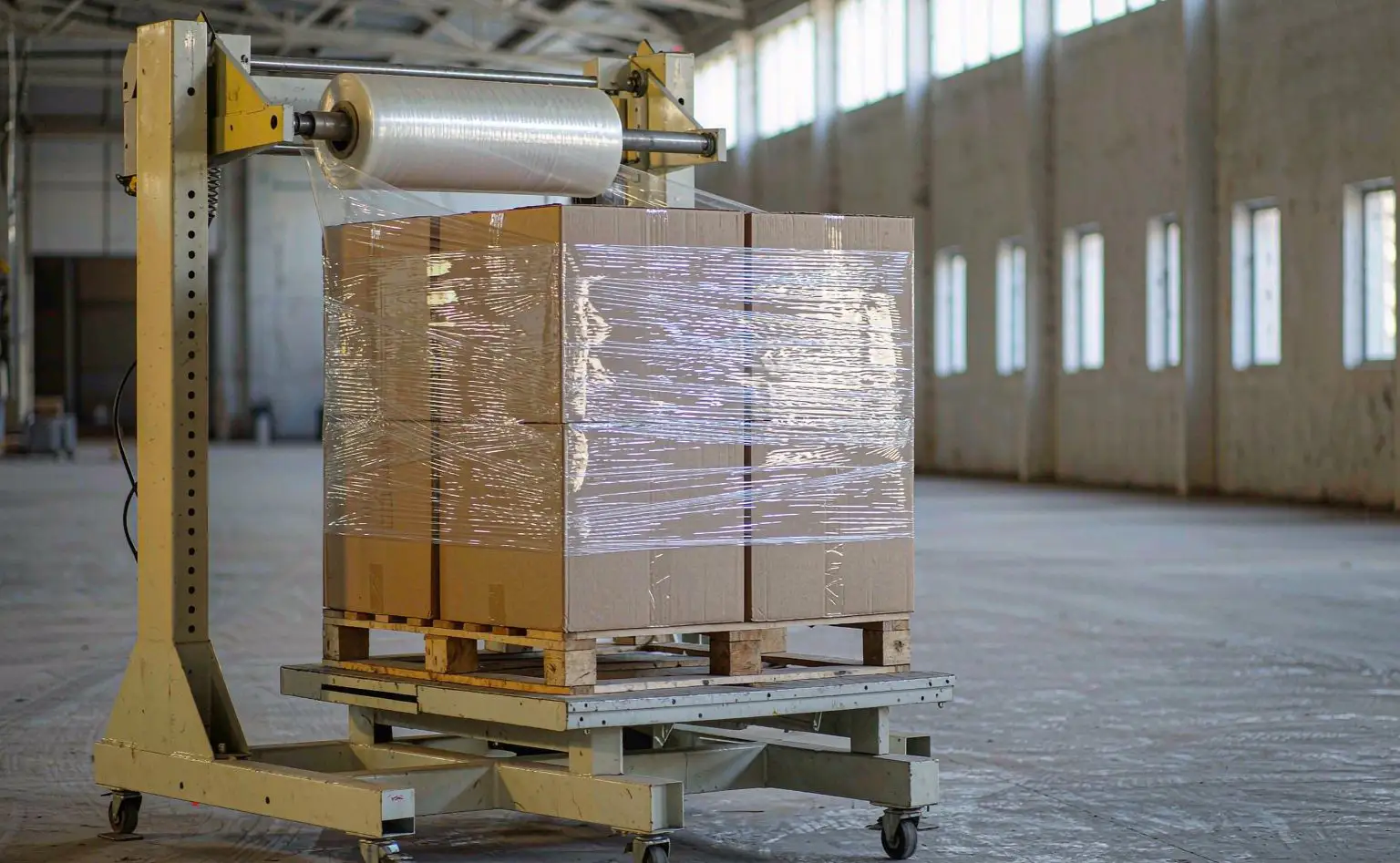
Name the problem correctly first. Polyethylene is a synthetic polymer with no enzyme that mould can use, so the film does not grow mould the way timber does. Three things do go wrong. Soil on the surface: dust from blowing and slitting, starch-based slip residue, oil from hands, all of it organic food. Water between the layers: high workshop humidity, or a roll moved from a cold store into a warm shop, gives condensation that is then sealed inside the roll. And the wrapped pallet: film turns a stack of cartons into a closed package, the moisture cannot escape, and the faces are spotted when the film comes off.
So the job is really two: the surface must not become a landing place for mould, and it must not carry bacteria. In a formulation those are two lines, one product each. The diagnostic is simple: take a roll that has sat three months with spots on the face, strip the outer two layers and look at the inner ones. A clean inside with a spotted face means surface soil and interlayer water, not polymer degradation.
2. Compound or spray: the two routes side by side
The table sets out the resin route and the surface route. This is where purchasing most often takes the wrong turn.
| Route | Where it goes | Level | Durability | Cost |
|---|---|---|---|---|
| In the resin, anti-mould | Compounding, plasticised with the resin | iHeir-JS117 at 0.5%-1% of finished weight | Inside the film body, so rubbing and stretching do not remove it | Needs a pre-blend |
| In the resin, antimicrobial | Compounding, mixed with the pellets | iHeir-ECO at 0.3%-0.5% on the polyethylene | Works by migrating to the surface | Temperature must stay under its limit |
| Surface spray | After winding or slitting | Set by the spray liquor, deposit hard to control | Comes off as the film stretches and rubs | Extra station and drying step |
| Packaging stage | Between pallet and cartons | Anti-mould paper or a desiccant pack | Travels with the load and covers the voyage | Extra pack material |
The conclusion is in the table: the film’s own function comes from the resin, a spray only achieves a clean surface on the day of dispatch, and the moisture inside a wrapped pallet still needs a measure at the packaging stage.
3. Into the resin: iHeir-JS117 at 0.5%-1% of finished weight, pre-blended first
iHeir-JS117 plastic anti-mildew powder is a white to pale yellow powder, specific gravity 1.21, more than 97% active, bulk density 380 kg/m3, mean particle size 110 microns (D50), built on a nitrogen heterocycle phenol-alcohol compound, effective in PVC, PU, silicone resin, polyolefins, polyester and TPE, resistant to leaching and free of arsenic. The level is 0.5%-1% of finished product weight, mixed into the resin before forming.
In stretch film the whole question is dispersion. The thinnest part of the film is a few microns, so one unmixed cluster becomes a gel spot and the film breaks there first on stretching. High-speed mix the powder with a small portion of the same PE grade for three to five minutes to make a pre-blend, then proportion it into the main stream; a masterbatch disperses even better. Tipping powder straight into the hopper does not work, because screw shear cannot break the clusters.
On levels: standard packaging film runs 0.5%-0.7%, export pallet film with a long dwell runs to 1%. Pro-rate the regrind, because edge trim and start-up film are recycled at a high rate, and without it half a batch comes out protected and half does not. JS117 is a powder, so the dosing area needs dust control.
4. The antimicrobial line: iHeir-ECO at 0.3%-0.5% on the polyethylene, watch the temperature
iHeir-ECO plastic antimicrobial agent is a grey-white powder of 100% purity, melting point 56-58C, specific gravity 1.58, thermally stable to 240C, active against Gram-positive and Gram-negative bacteria, and it works by migrating slowly to the surface. On stretch film the level is 0.3%-0.5% on the polyethylene, the polyethylene column in the ECO application guide; do not carry the 0.3%-1.0% figure for PU or PVC across to PE.
Temperature is where this stage goes wrong. ECO is stable to 240C, so the process stays under that limit and should avoid the extreme above 320C, where the additive decomposes, the film yellows, an odour appears and the antimicrobial performance is gone. Set the barrel zones for the resin, but treat 240C as a red line.
ECO stores sealed, dry and dark between 10C and 43C with a one-year shelf life, and should not be kept in steel containers. For food-contact packaging there are two food-grade reports applied for by our own company, C200323102001 to GB 4806.7 and C200323102002 to LFGB.
5. Blowing, winding and pallet wrapping: three actions decide the outcome
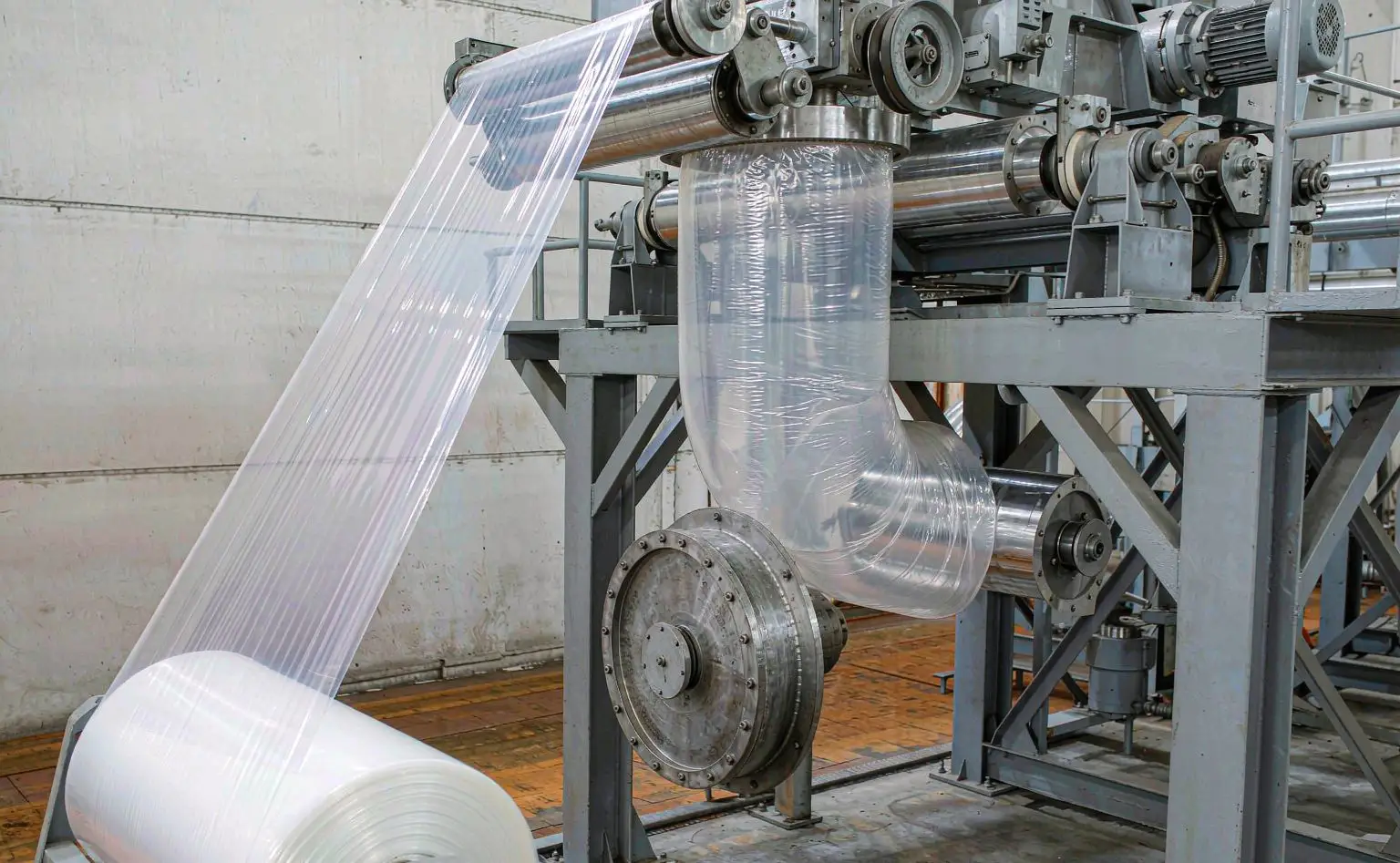
With the recipe right, three actions on the floor still cost performance. The first is winding: too much tension presses the layers together so interlayer water cannot escape, too little leaves a soft roll that takes moisture at the ends. Set tension against film thickness, aiming for a flat face and square ends.
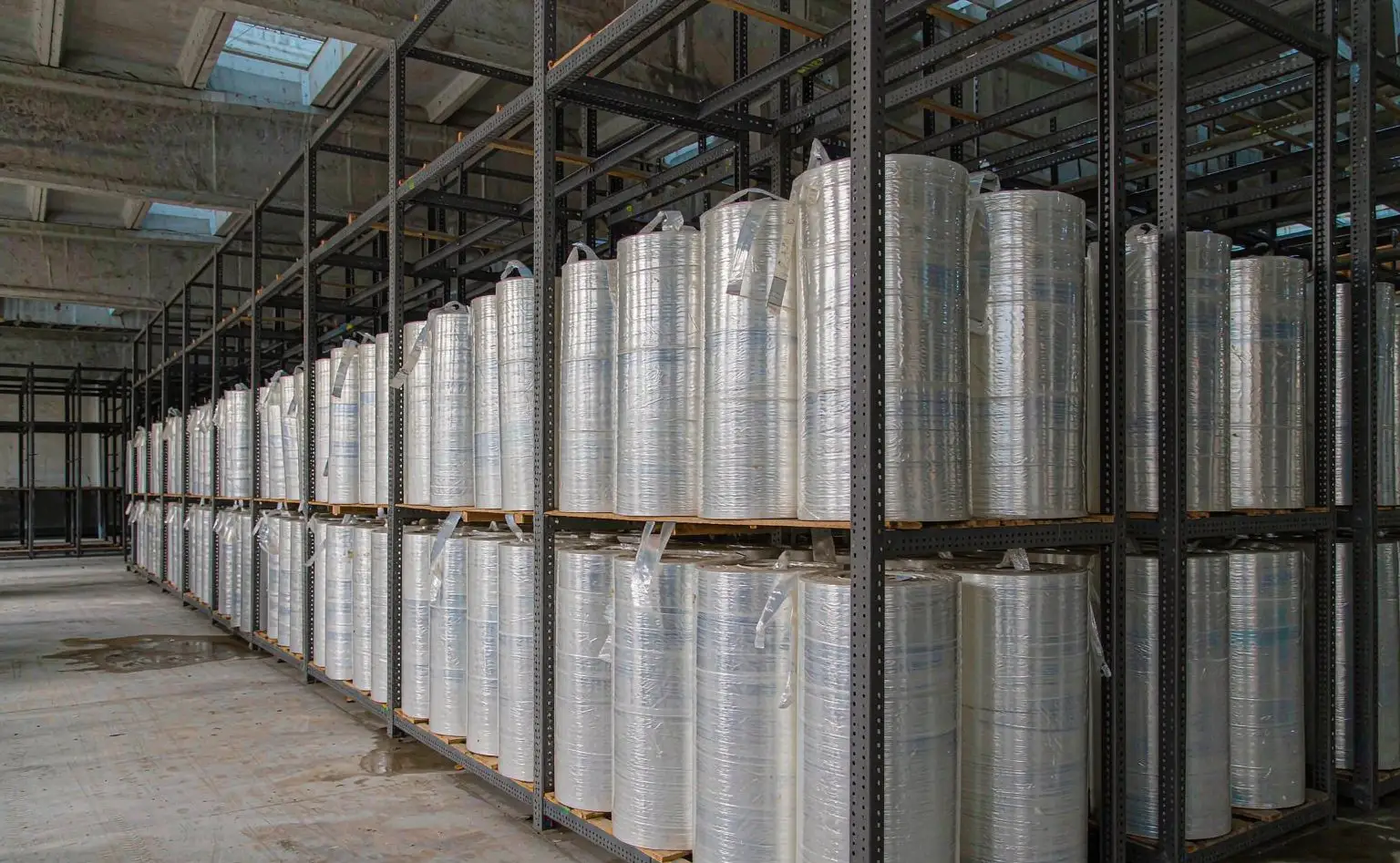
The second is roll storage: stand rolls upright, off the floor and away from the wall, never lying on bare concrete. Before moving a roll from a cold store into a warm shop, bag it and let the roll temperature come up slowly; that step does more than another 0.1% of additive. The third is the check before wrapping: the cartons must be dry, because wrapping a damp carton seals the water inside where no film can stop the board going mouldy. Unwrap two pallets before loading and look at the carton faces.
6. Questions: why not spray the finished film, and does 1% hurt stretch or clarity
Why not spray a finished roll? It is cheaper. PE has low surface energy, so a sprayed active does not bond, and the film is stretched and rubbed layer against layer within a few pallets. The mould also starts between the layers and in the surface soil, which a surface spray never reaches. Durability only comes from the resin.
Does 1% of powder cost stretch performance or clarity? At a 110-micron mean particle size, well dispersed, the optical effect is small. Loss of performance usually means poor dispersion. Split a batch into dosed and undosed portions, blow the same specification, and compare tensile strength, elongation at break and haze.
How are the effects verified? Mould resistance goes through ISO 846 or ASTM G21 for a growth rating, antimicrobial performance through ISO 22196, and plastic surfaces can also be run to GB/T 31402. Test finished film that contains the additive, not resin pellets.
Closing figures: iHeir-JS117 at 0.5%-1% of finished weight, 0.5%-0.7% for standard film and up to 1% for export pallet film, pre-blended or masterbatched with regrind pro-rated; iHeir-ECO at 0.3%-0.5% on the polyethylene with the process below 240C; rolls upright and off the floor with the temperature brought up before a move; and cartons confirmed dry before wrapping.


