




 View Count:30
 Date:2026-11-04
How do you treat mould on carton sealing tape? Two months in a store through the wet season and the adhesive film goes cloudy, the paper core grows fur, and the whole batch sells at a discount. Run iHeir-JS glue anti-mould agent at 1%-2% of adhesive weight in the compounding tank, and put iHeir-D vapour sheets in the core and the outer carton at 0.1-0.2g of active matter each. This article covers the dosing point, the moisture figure before rewinding and the export packing.
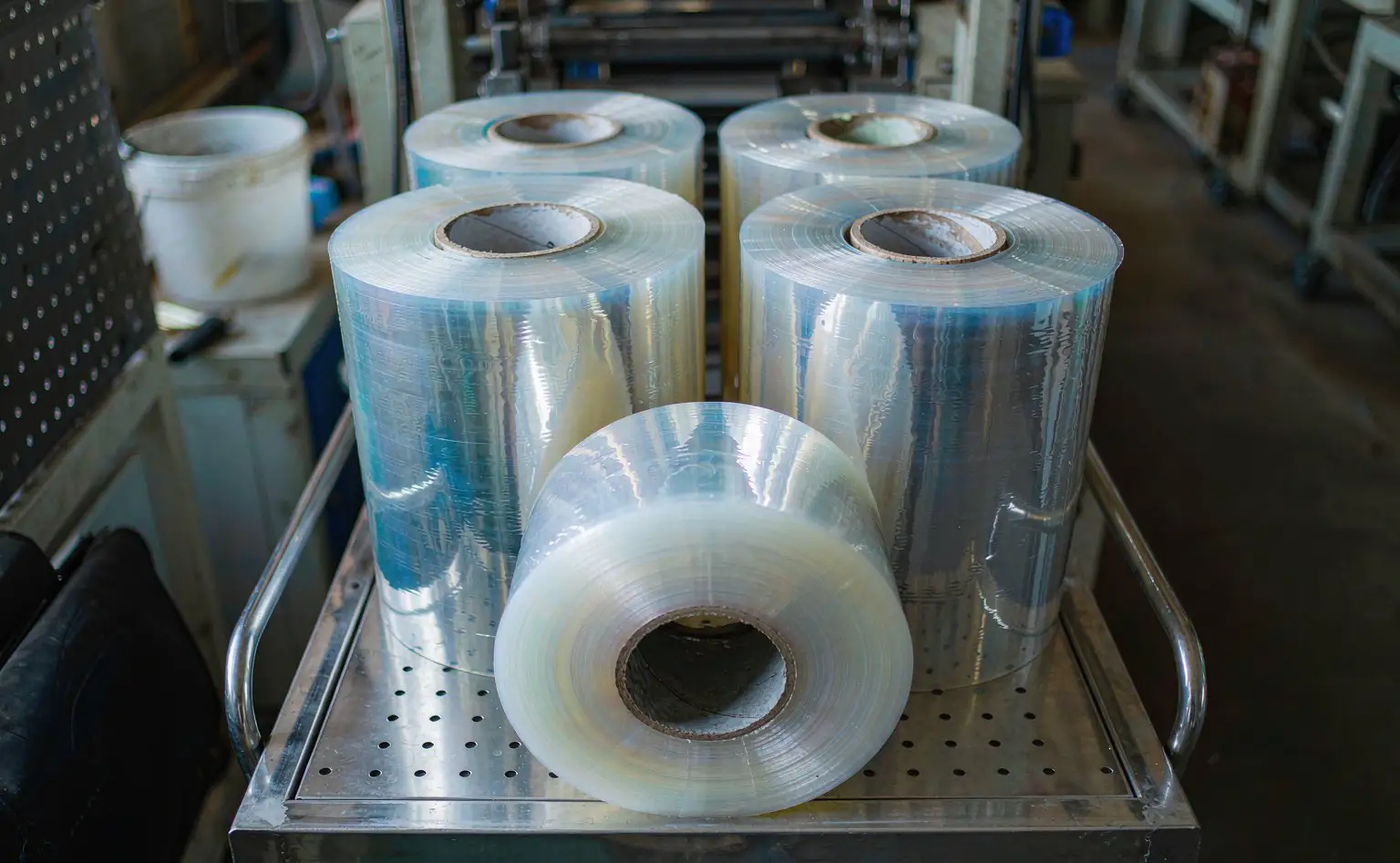
1. Mould grows in the adhesive and the core, not in the BOPP film
Take a log of carton sealing tape apart: BOPP base film, water-based pressure-sensitive adhesive, release layer, paper core, printed ink, outer carton. The BOPP film is polypropylene and carries nothing a mould can feed on. What fails is the adhesive layer, the paper core and the carton board.
The adhesive fails on water. A water-based PSA is an acrylic emulsion, and most of a tank is water. With only a standard preservative and no anti-mould design, the dry film clouds in a damp store and then spots. Once a spot sits in the adhesive, the tape leaves residue and loses grab.
The core fails on uptake. A paper core is paper; once it takes water, mould travels outwards through the laps. Logs sit on pallets with the core end down against the boards, where moisture escapes least, so the inner laps spot first, which is exactly what inspection misses.
The carton is the third place. Tape ships in cartons that may sit three months in a southern warehouse before loading. A closed carton is a small sealed volume: board takes water, the logs do not breathe, and both the wall and the tape face spot.
2. Agent in the tank, sheets in the core and the carton
The table lines up the adhesive, the core, the carton and the film. Adhesive is dosed on total weight, paper on active matter per sheet, and the two are not convertible.
| Part | Material | Product and level | Stage | Control point |
|---|---|---|---|---|
| Water-based PSA | Acrylic emulsion | iHeir-JS 1%-2% of adhesive weight | Compounding, before coating | Trial viscosity and peel first |
| Paper core | Paper, board | iHeir-D 0.1-0.2g per sheet | Before rewinding, at cartoning | Trial at three times the dose |
| Outer carton | Corrugated board | As above, sheet against the wall | Packing, sealing | Seal the carton the same day |
| BOPP base film | Polypropylene | No treatment | Slitting, rewinding | Hold the shop below 60% RH |
One boundary. Agent in the tank travels with the film and never reaches the inside of a core or the air in a carton; a sheet in the core never reaches the adhesive.
3. The water-based tank: dose at compounding, not at the coater
This stage takes iHeir-JS glue anti-mould agent at 1%-2% of product weight. Active matter is 45%, pH 6-7, viscosity 3cps at 25℃, a clear colourless liquid miscible with water in any ratio and soluble in most organic solvents.
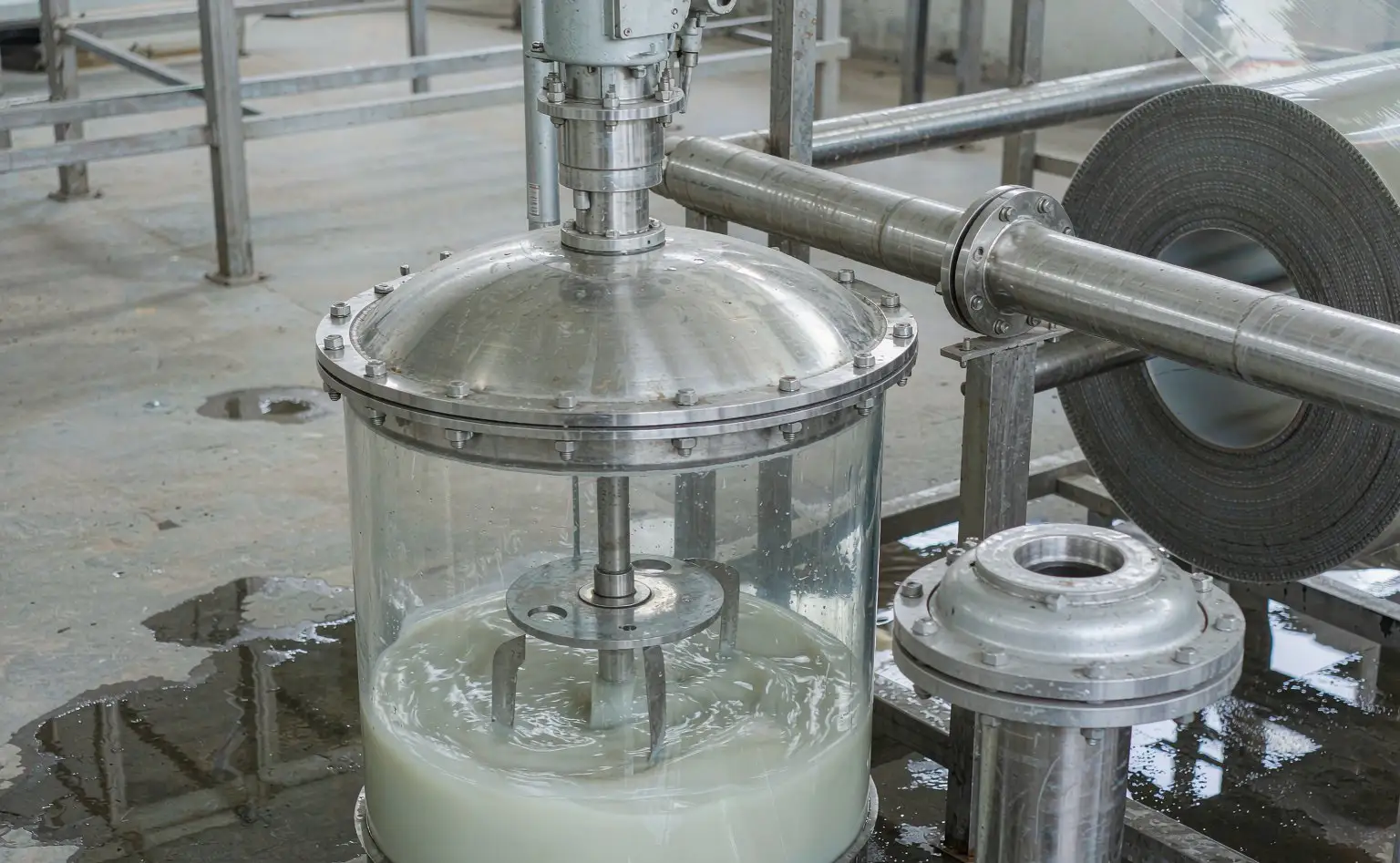
Where. Into the compounding tank, dispersed with the batch before it goes to the coating pan. Do not meter it into the circulating pan beside the coater: a water-based line circulates a large volume, so a trickle at the pan distributes unevenly, and the film ends up treated on one stretch and bare on the next.
How. Weigh the 1%-2%, thin it with a little water, and pour it slowly into the vortex rather than emptying a drum onto the tank floor; stir for ten minutes or more before transfer. JS sits at pH 6-7, close to the usual range of an acrylic emulsion, so extra pH adjustment is rarely needed; a batch that runs alkaline gets a small trial for coagulation before scale-up.
How much. Run one trial at 1% and one at 2%, coat both to film, measure peel and initial tack, and hold them 28 days at 30℃/85% RH to watch for clouding, whitening and spotting. Set the standard on the level that passes both. If a batch turns tacky and leaves residue, check the formula and the drying first.
4. Coating, drying and rewinding: moisture is the second switch
Agent in the adhesive does not make the log dry. Drying after coating is what drives the water out: oven temperature, air flow and line speed have to match the coat weight. A film that is surface-dry while the inner layer still carries water gets wound up with that water inside, and mould starts from the inner laps outwards. Judge it on a retained-moisture sample from inside the log, recorded by batch, not on feel.
Cool before rewinding. Film leaving the oven is still warm, and winding it straight away traps heat and moisture together. Pass it over chill rolls until the face is close to shop temperature, and taper tension as the log builds.
Condition the cores. Sample incoming cores for moisture by batch and dry any that run high; store cores in a dry area, off the floor and off the wall. A wet core is a sponge pushed into the centre of the log.
Shop conditions. Hold coating and slitting below 60% RH with dehumidifiers through the wet season, and bag finished logs promptly instead of leaving them open overnight.
5. Slitting, cartoning and export
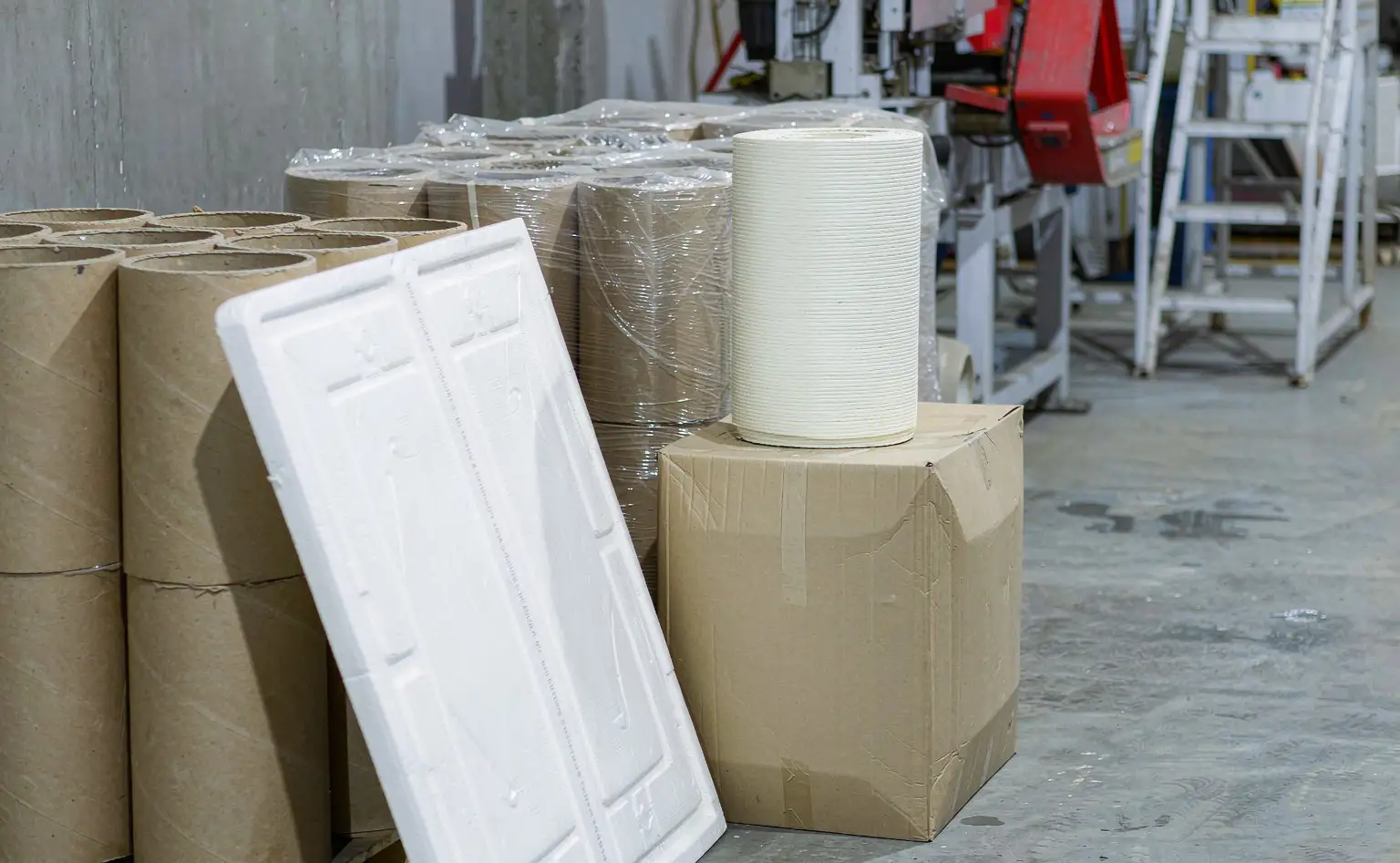
The paper stage uses iHeir-D gas-phase anti-mould paper, an ink carrying anti-mould particles coated onto paper that works once sealed with the goods. The dose basis is 0.1-0.2g of active matter per sheet: one sheet against the core wall, and one against each carton wall plus sheets between layers, taking the upper figure for large cartons with many layers.
Trial compatibility first. Tape faces carry printed ink and cores are dyed board. Put three times the normal dose into the carton under test, mist a little water, separate the sheet from the tape face with paper, close it and inspect after a few days for faded print, yellowed cores or dulled metal. Under damp conditions iHeir-D really can corrode poor-quality metal, so blister packs with a metal blade get the trial first. Sheet selection is covered in choosing anti-mould packaging paper.
At cartoning, bag the logs, pack the outer carton with a sheet inside, seal the same day, and keep pallets 10cm off the floor and off the wall. At sea, container condensation is far harsher than the inside of a carton, so leave an air path; absorbent packs help but do not replace the two stages. The adhesive side is covered in glue that has gone mouldy.
Release at three levels: adhesive film to ASTM G21, sampling one piece from each side of the coating run; cores and cartons to GB/T 24346-2009, sampling the core wall and the box wall; finished logs for 28 days at 30℃/85% RH, opening to check the inner laps. Tape properties go to GB/T 2792 for peel and GB/T 4851 for shear, measured before and after the change.
6. Questions on cores, spraying and peel strength
Q: With agent in the adhesive, can the core skip the sheet?
No. The agent travels with the film and never enters the core, which is a separate material line; sheets alone leave the adhesive to cloud as before.
Q: Can we just spray the finished log?
Not advisable. A sprayed layer does not stop water inside the adhesive, and it marks the face and the print; the agent has to go into the adhesive to mean anything.
Q: How many sheets are enough?
Stay inside 0.1-0.2g of active matter per sheet: one in a small carton, one per wall plus between layers in a large one. Piling sheets on raises the risk of faded print and corroded metal without adding protection.
Four points to take away: dose iHeir-JS at 1%-2% of adhesive weight in the compounding tank and stir before transfer; dry the film, chill it before rewinding, sample core moisture and hold the shop below 60% RH; sheet the core and the carton with iHeir-D at 0.1-0.2g of active matter each after a trial at three times the dose; seal cartons the same day and leave an air path in the container. A 1kg agent sample and a pack of sheets go out for a trial first, with MOQ and lead time on the iHeir-JS product page.


