




 View Count:36
 Date:2026-11-04
Can rubber hose mould be prevented? Coil it into the store through a wet season and the bore grows fur while the cover still looks clean, and the customer rejects the lot on the pressure test. Blend iHeir-JS117 plastic anti-mould powder into the inner tube compound at 0.5%-1.0% of weight, blow the bore dry after pressure testing, and put iHeir-D vapour sheets in the packing at 0.1-0.2g of active matter each. This article covers the mixing stage, the drying check and the export packing.
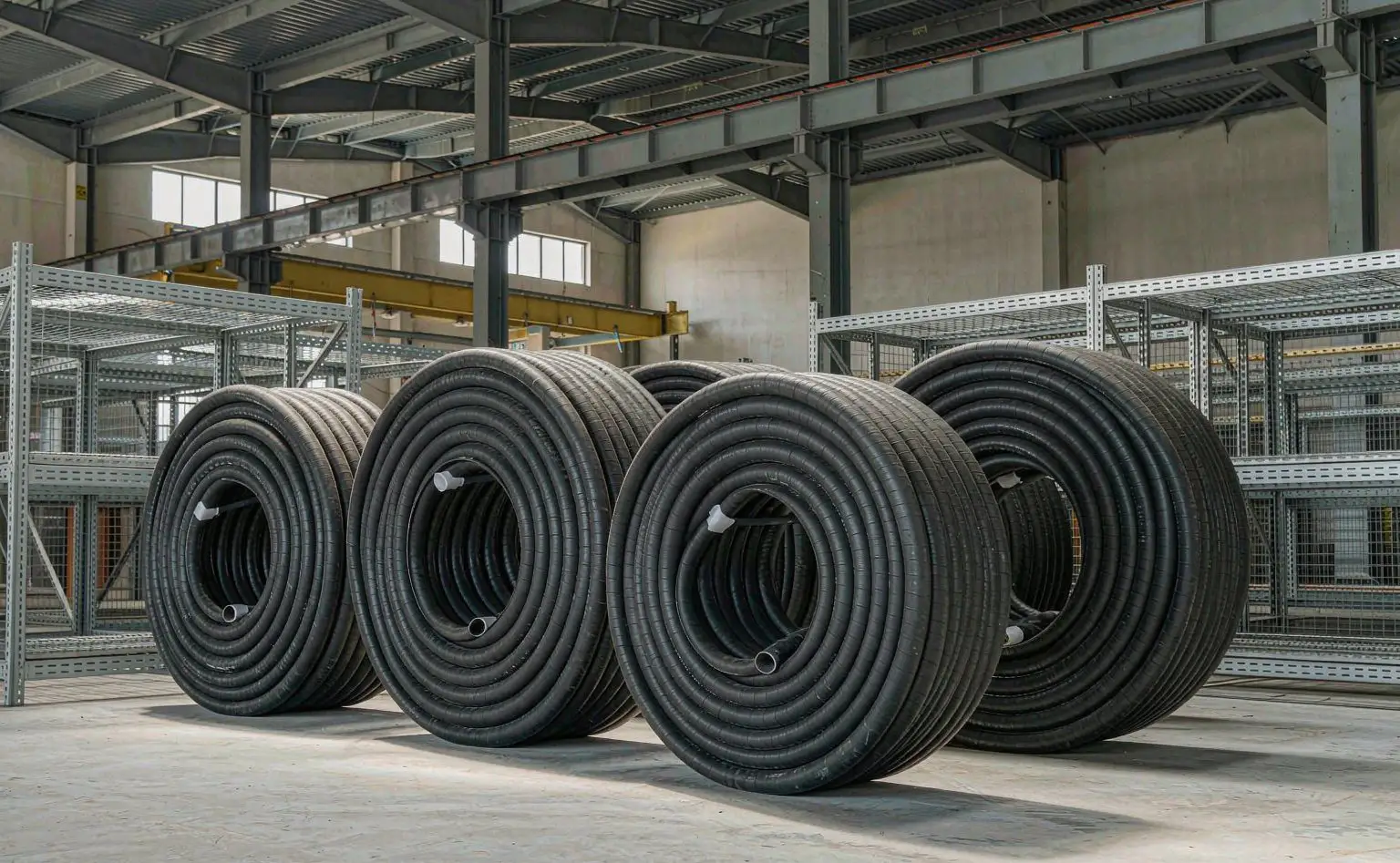
1. Mould starts on the inner wall, not on the cover
Take a hose apart: inner tube, reinforcement (polyester yarn or steel braid), cover, end fittings. The compound itself holds nothing a mould can live on directly. What fails is the bore, the yarn in the reinforcement and the water left after coiling.
The bore spots first. A hose carries water, air or slurry, so the inner wall is wet most of its life; plasticiser, antidegradant and mould release residue give a mould somewhere to settle. Spots on the bore do not show from the end, only on a cut section.
The reinforcement is second. Polyester yarn takes water, and once moisture enters the braid between the two rubber layers it cannot leave. Mouldy yarn loses interlayer adhesion, and the hose bulges or delaminates under pressure, which is not a repairable reject.
Standing water is third. Pressure testing, washing and rain before loading all leave water inside. Coiled with the centre down, that water collects in the innermost laps, and a warehouse at 30℃ turns the bore into a near-saturated chamber.
2. Powder in the inner tube, sheets in the packing
The table lines up the inner tube, the reinforcement and the packing. Compound is dosed on weight, paper on active matter per sheet, and the two are not convertible.
| Part | Material | Product and level | Stage | Control point |
|---|---|---|---|---|
| Inner tube | NBR, EPDM and similar | iHeir-JS117 0.5%-1.0% of compound | Mixing | Added with the filler, well dispersed |
| Reinforcement | Polyester yarn, steel | Moisture control only | Before braiding | Yarn stored below 60% RH |
| Packing | Paper, woven bag | iHeir-D 0.1-0.2g per sheet | Coiling, cartoning | Trial at three times the dose |
| Bore | Inner wall and water | No additive, drying only | After pressure test | Cap the ends, blow dry before coiling |
One boundary. Powder in the compound is leaching-resistant and travels with the rubber, but it never touches standing water in the bore, and drying the bore does not treat the compound.
3. Mixing: JS117 at 0.5%-1.0%, in with the filler
This stage takes iHeir-JS117 plastic anti-mould powder at 0.5%-1.0% of finished weight. It is a nitrogen heterocycle phenol-alcohol compound with more than 97% active matter, 380 kg/m³ bulk density, 110μm mean particle size, insoluble in water, leaching-resistant and arsenic-free.
Where. Into the internal mixer with the carbon black, filler and plasticiser, then thin it on the mill after discharge. Do not sprinkle it onto the mill as the sheet comes off: at 110μm the powder will not blend, and the inner tube comes out with powder specks and a matt patch that weeps first under pressure.
Temperature and dispersion. Keep the discharge temperature inside the normal range for the compound instead of running hot to carry more powder; dispersion comes from shear and time, not heat. Thin the batch three times and hold a sheet to the light: white specks mean it has not dispersed.
Choosing the level. Run trial sheets at 0.5% and 1.0%, measure tensile strength and elongation to GB/T 528, hardness to GB/T 531.1 and compression set to GB/T 7759.1, before and after treatment, and hold them 28 days at 30℃/85% RH. Drop the level that costs too much property, whatever it does for mould.
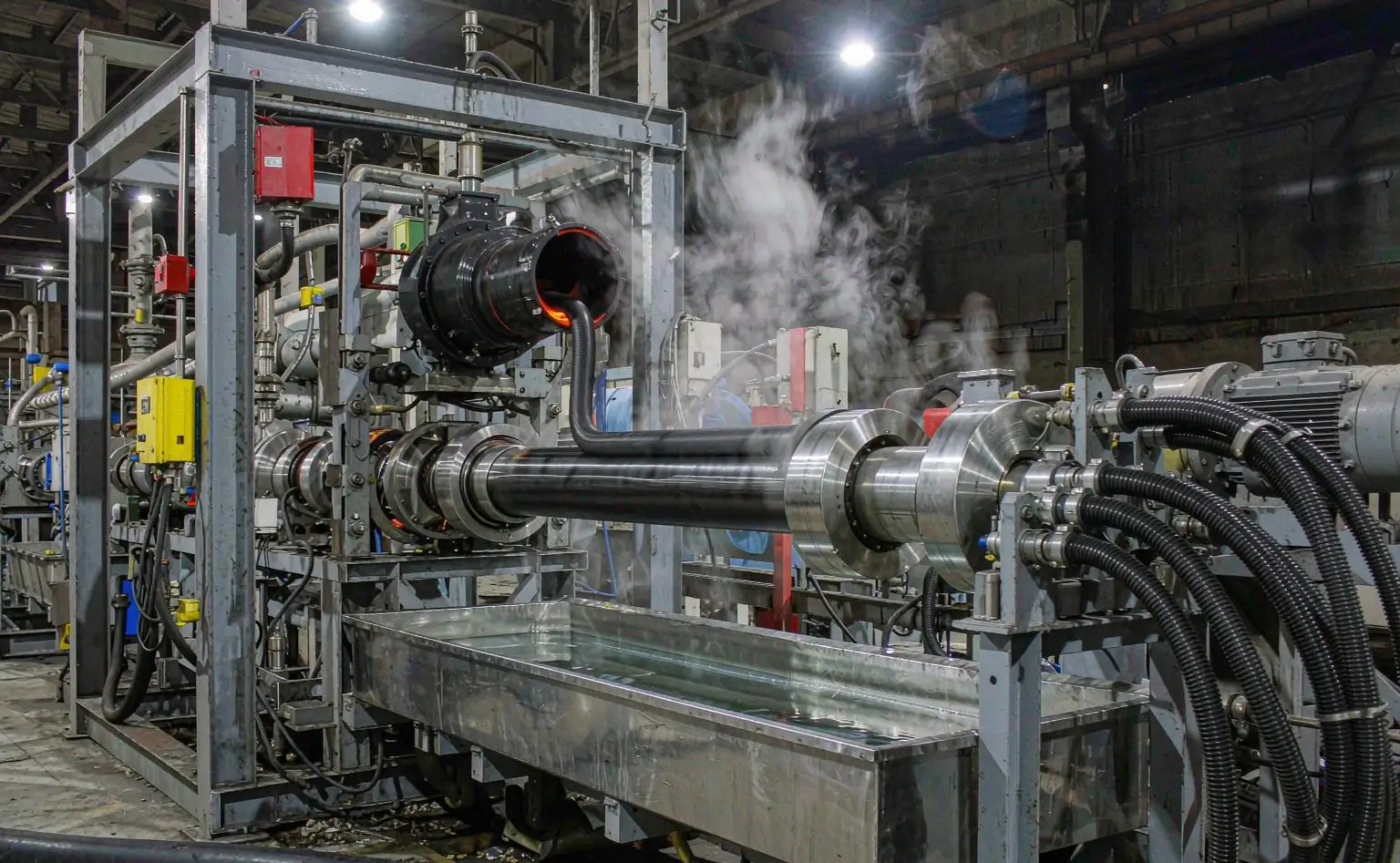
4. Extrusion, pressure test and drying
The extrusion stage is about bore finish: the inner tube is sleeved over a mandrel, and uneven wall or a matt patch is where water hangs. Set the temperatures for the compound, because an over-hot head scorches the surface and leaves fine cracks in the cured bore that hold water.
Blow dry after the pressure test. A hydraulic test to GB/T 5563 leaves the hose full of water. Blow compressed air through until no mist leaves the far end and a sheet of white paper held at the outlet stays dry; a production line wants a blow-off bench, one hose at a time, not a tilt and a drain. Cap the ends the moment the test is done instead of letting the bore sit open on its way to the store.
Look again before coiling. The centre of a coil faces down, so any water left collects in the innermost laps, which is the hardest place to find. Put a torch at the coiling station and check the bore for water marks and white spots; a hose with spots is isolated, not blended back into finished stock.
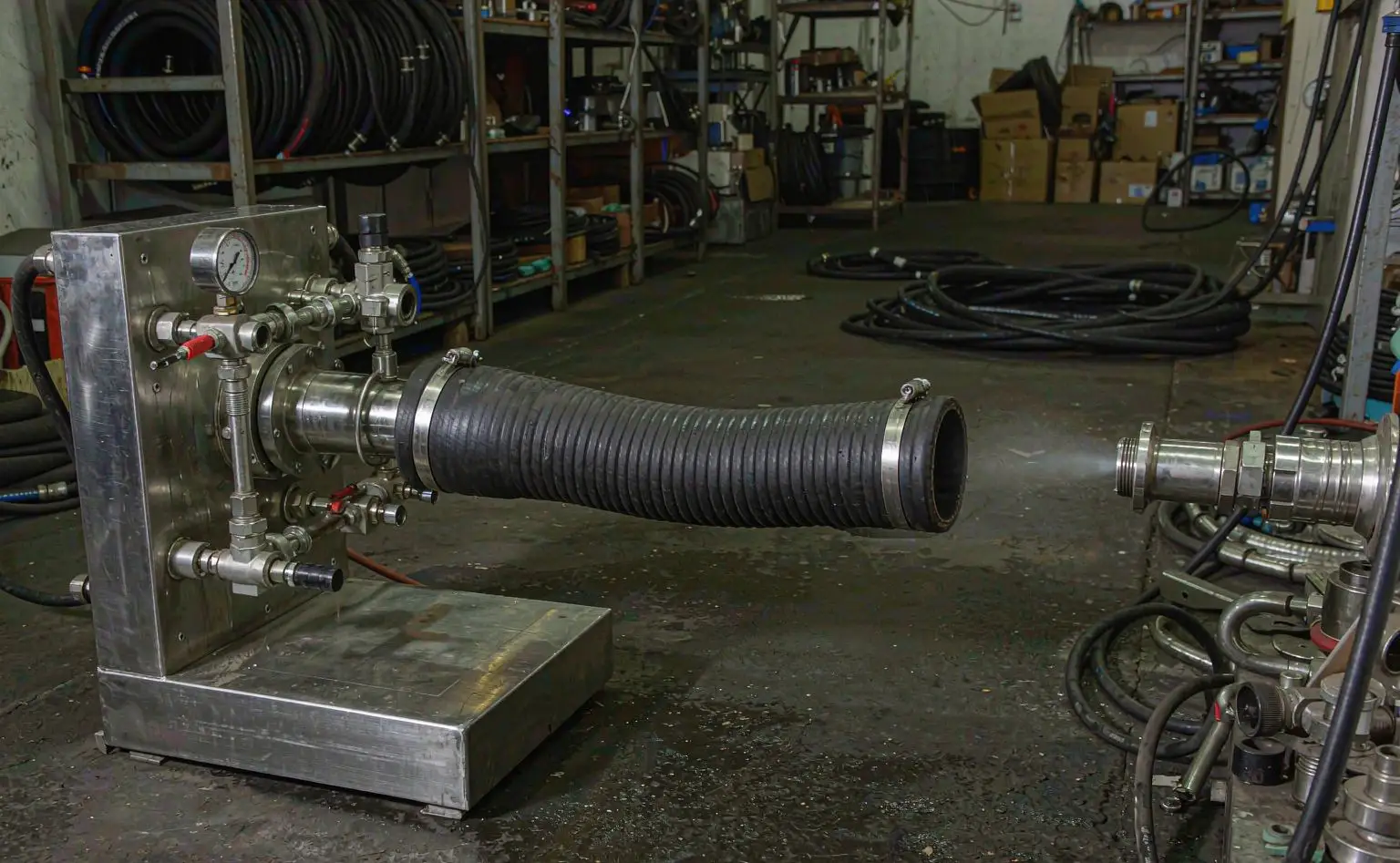
5. Coiling, packing and export
The paper stage uses iHeir-D gas-phase anti-mould paper, an ink coated onto paper that works inside a closed space. The dose basis is 0.1-0.2g of active matter per sheet: one in the woven bag or carton around each coil, and one inside the stretch-wrap of a pallet load.
Compatibility trial. Hose often ships with metal fittings, clamps and printed labels. Seal three times the normal dose with a finished hose, mist a little water, separate the sheet from the rubber with paper, and inspect after a few days for dulled fittings and faded labels. iHeir-D carries 70%±5 solids and under damp conditions it can corrode poor-quality metal, so galvanised fittings get the trial first.
Storage and loading: rack or pallet the coils 10cm off the floor and 10cm off the wall, and hold the store below 60% RH. Container condensation at sea is harsher than any warehouse, so leave an air path and keep coils off the container wall. Rubber compounding and rework are covered in mouldy rubber compound.
Release at three levels: inner tube to ASTM G21 or ISO 846, sampling from the bore; finished hose for 28 days at 30℃/85% RH, cut open to read the bore and the braid; properties to GB/T 528, GB/T 531.1 and GB/T 7759.1. Put all three on one shipping inspection sheet, with a set measured before and after the anti-mould change.
6. Questions on drying, adhesion and the cover
Q: With powder in the compound, does the bore still need drying?
Yes. The powder is leaching-resistant inside the rubber, but standing water in the bore is a separate problem and will spot the wall regardless.
Q: Does the powder hurt interlayer adhesion?
Inside the 0.5%-1.0% range and properly dispersed, usually not; undispered specks are the risk, which is why the three thin passes and the light check are not optional.
Q: Should the cover be dosed as well?
Only if needed. The cover does not see water, so treating it mainly covers storage and shipping; keeping treatment to the bore and leaving the cover to its surface finish also works, but the two formulas have to be recorded separately.
Q: Will the sheet fade the printing?
There is a risk, since poor inks react to the vapour; run the trial at three times the dose with paper between the sheet and the rubber before sealing.
Four points to take away: blend iHeir-JS117 into the inner tube compound at 0.5%-1.0% of weight in the internal mixer, thin three times and check a sheet to the light, comparing properties to GB/T 528, GB/T 531.1 and GB/T 7759.1; blow every hose dry after the pressure test, cap the ends and check the bore again before coiling; sheet the packing with iHeir-D at 0.1-0.2g of active matter each after a trial at three times the dose; keep coils off the floor and wall, the store below 60% RH and an air path in the container. A 1kg powder sample and a pack of sheets go out for a trial first, with MOQ and lead time on the iHeir-JS117 product page.


