




 View Count:54
 Date:2026-10-05
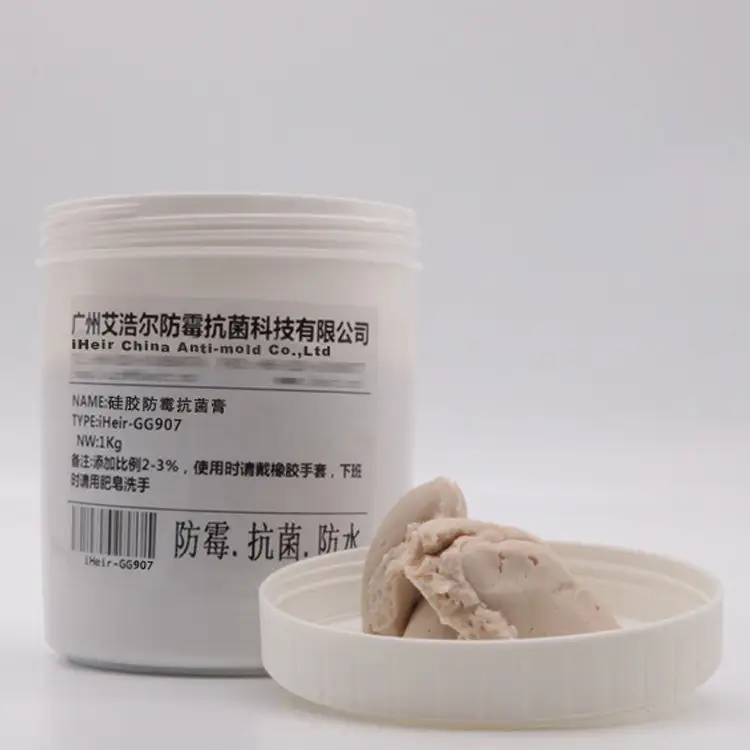
How should the anti-mould and antibacterial agent go into rubber without a rework? The point is to find the right entry: the agent has to go in with the compound during milling or with a liquid mix, because once the part is vulcanised there is no route for it to disperse. Silicone parts take iHeir-GG907 silicone rubber antimicrobial cream at 1.5%-2% while the compound is milled, and rubber and liquid systems take iHeir-GGTK silicone antimicrobial agent at 1%-2% (below 200 degrees) added directly. This article covers the three dosing points and the temperature ceiling.
1. Where rubber mould comes from: nothing is dosed at the mill, and nothing can be added later
Rubber is not a food source for mould. The growth sits on the dust, release-agent residue and oily marks the surface collects. Once rubber parts take up moisture in storage or on the way to the customer, pale patches and odour appear on the surface; silicone parts also pick up smell and exude oil, turn tacky, and fail the buyer’s incoming appearance check, which puts the batch into rework or downgrade.
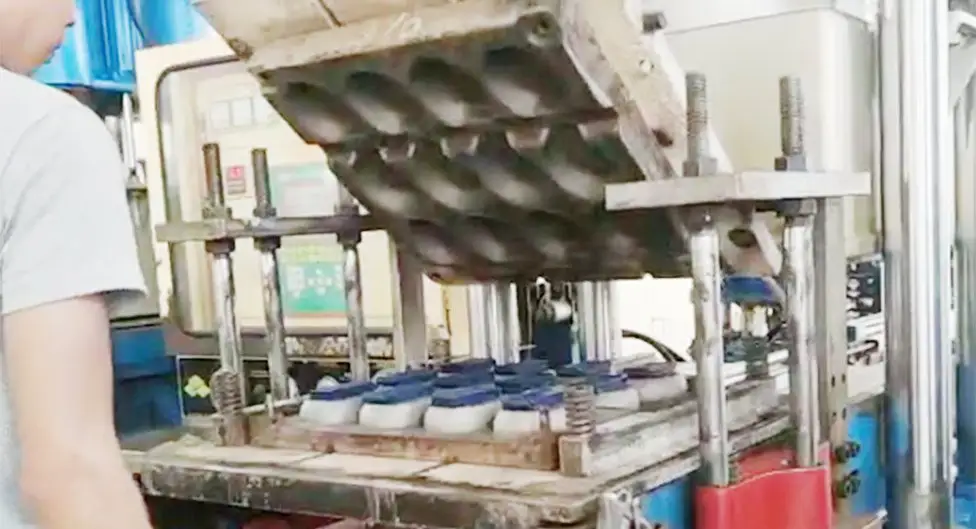
The real dividing line is the mixing stage. Mixing is where the raw rubber, the fillers and the auxiliaries go through the internal mixer and the open mill together, and it is the only entry at which an agent can be dispersed evenly and carried into the forming stage. Wipe or spray a finished part and the agent sits on the surface only, where rubbing, washing and ageing take it off before long.
So set the mixing stage first and look at the forming and vulcanising temperature second. A conventional agent has a heat ceiling; where the vulcanising temperature runs past its window, switch to an inorganic grade or to a low-temperature system. Put the temperature ceiling at the front, because finding out after a failed batch is too late.
2. The three dosing points at a glance: mill, forming and vulcanising, store
The table lines up the part, the stage, what is treated, the product, the figures and the points to watch. It is written to serve as the first draft of a process card.
| Part | Stage | Treated item | Product | Figures | Points to watch |
|---|---|---|---|---|---|
| Silicone compound (seals, strips) | Mixing and milling | Silicone rubber compound | iHeir-GG907 silicone rubber antimicrobial cream | 1.5%-2% on compound weight | Mixed in and milled through; pH 5-9 all workable; good compatibility with silicone adhesives |
| Liquid silicone and general rubber systems | Batching and mixing | Liquid system | iHeir-GGTK silicone antimicrobial agent | 1%-2% added directly | Stir thoroughly; add below 200 degrees; keep away from redox agents and strong acids or bases |
| Pale and clear parts | Mixing or batching | Pale or clear compound | Select to the appearance spec | On compound weight | Pale parts are sensitive to colour shift, so the choice is confirmed case by case and not shared with dark parts |
| Forming and vulcanising | Vulcanising | Temperature control | Control only (no agent) | Read the heat ceiling | If the vulcanising temperature runs past the agent’s window, change the grade; set the ceiling before the line starts |
| Finished-goods store | Stacking | Finished parts | Humidity control only | Keep the store below 60% relative humidity | Off the floor, away from the wall, air gaps between stacks; parts exude oil and pick up smell, so keep them out of the pale-fabric store |
| Export packing | Full container | In-container climate | Humidity control only | Set by box type and voyage | Rubber parts dry slowly once damp; skip in-container control and the mixing stage is wasted |
Six rows, one conclusion: the mixing and batching stage decides whether the compound carries any protection, vulcanising has to respect the ceiling, and the store and the packing hold what they built.
3. The mixing stage: getting GG907 into the silicone compound
A silicone part gets its protection while the compound is milled. Add iHeir-GG907 silicone rubber antimicrobial cream at 1.5%-2% on compound weight, mixed in and milled through; the loading can be adjusted to the product and the end use. It works across pH 5-9 and is compatible with silicone adhesives, and the cream is low in toxicity so normal protective practice is enough.
Three details decide the result. First, the figure is on compound weight, not finished-part weight, so a formula change means recalculating. Second, milling is the dispersion window: roll the compound through and thin it so the cream is worked even, because an undispersed pocket is a spot with no protection. Third, put the addition after the fillers and before the vulcanising agent, so the cure system is not disturbed; a small lab batch first confirms there is no cure delay.
4. Liquid and low-temperature systems: adding GGTK
Liquid silicone, general rubber systems and any process with a temperature limit run on a second product. Add iHeir-GGTK silicone antimicrobial agent at 1%-2% straight into the product and stir it through, with the addition recommended below 200 degrees and away from redox agents and strong acids or bases. It is a cationic anti-mould and antibacterial auxiliary with an active content of 20% or more, and it can go into coatings, latex, adhesives, rubber and plastics.
The timing is clear. One, the process temperature sits below 200 degrees. Two, the formula already contains a liquid phase so the agent can go in while stirring. The other way round, where the vulcanising temperature runs above 200 degrees for good, stay with the heat-tolerant cream or an inorganic route and never try to make up for temperature with extra loading, because losing activity to heat is not a concentration problem.
5. Choosing between the two, the temperature ceiling, and the store
The two products divide cleanly. iHeir-GG907 silicone rubber antimicrobial cream covers the silicone compound, mixed in at the mill at 1.5%-2% and pH 5-9. iHeir-GGTK silicone antimicrobial agent covers liquid and low-temperature systems, added directly at 1%-2% below 200 degrees. One looks after the solid milling stage, the other the liquid and low-temperature work, and the split follows the process temperature and the state of the compound. On the milling stage itself, see rubber compound mould and rework.
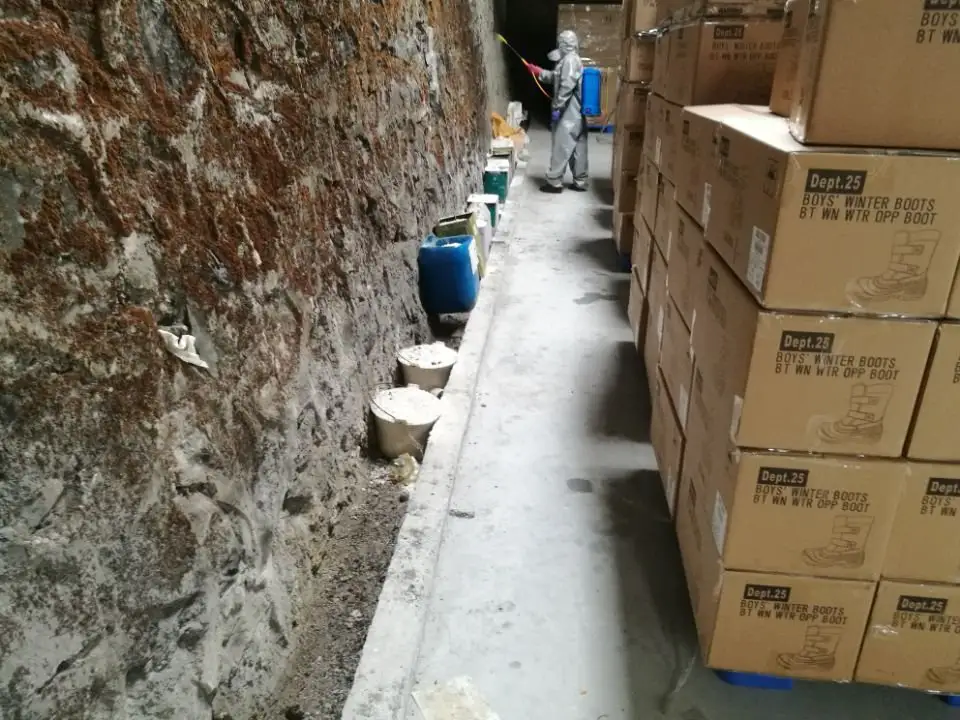
Once the parts are formed, the store doses nothing and relies on the environment to hold the earlier work. Keep the store below 60% relative humidity, load parts off the floor and clear of the wall, leave air gaps between stacks, run first in first out, and keep rubber out of the pale-fabric store, because parts exude oil and pick up odour. A full container needs humidity control sized to the box type and the voyage. On acceptance: a fresh sample passing does not mean the stacked goods will. Hold one sample per batch at 28 degrees and 85% humidity for 7 days and read the surface and the cross-section.
6. Questions that come up
Can the agent be added after vulcanising? No. Once the rubber is cured the agent cannot reach the interior and stays on the surface, where rubbing, washing and ageing take it off. The protection has to enter with the compound at mixing or batching.
Can silicone and general rubber share one product? Follow the process temperature and the state of the compound. Silicone compound takes GG907 mixed in at the mill; liquid systems and lines below 200 degrees take GGTK added directly. Using both on one line serves no purpose, so each stage takes its own.
Can extra loading make up for a high vulcanising temperature? No. Temperature past the window is a loss of activity, not a concentration problem; extra loading only raises cost and can affect appearance and performance. Change to a more heat-tolerant grade or adjust the vulcanising temperature.
The work sits in three stages: the mixing and batching stage puts the agent in with the compound (GG907 at 1.5%-2% mixed at the mill, or GGTK at 1%-2% added directly), vulcanising respects the agent’s heat ceiling, and the store and the container hold the result with humidity control. Samples and TDS sheets are available, and we are glad to run a trial on your own line.


