




 View Count:34
 Date:2026-09-22
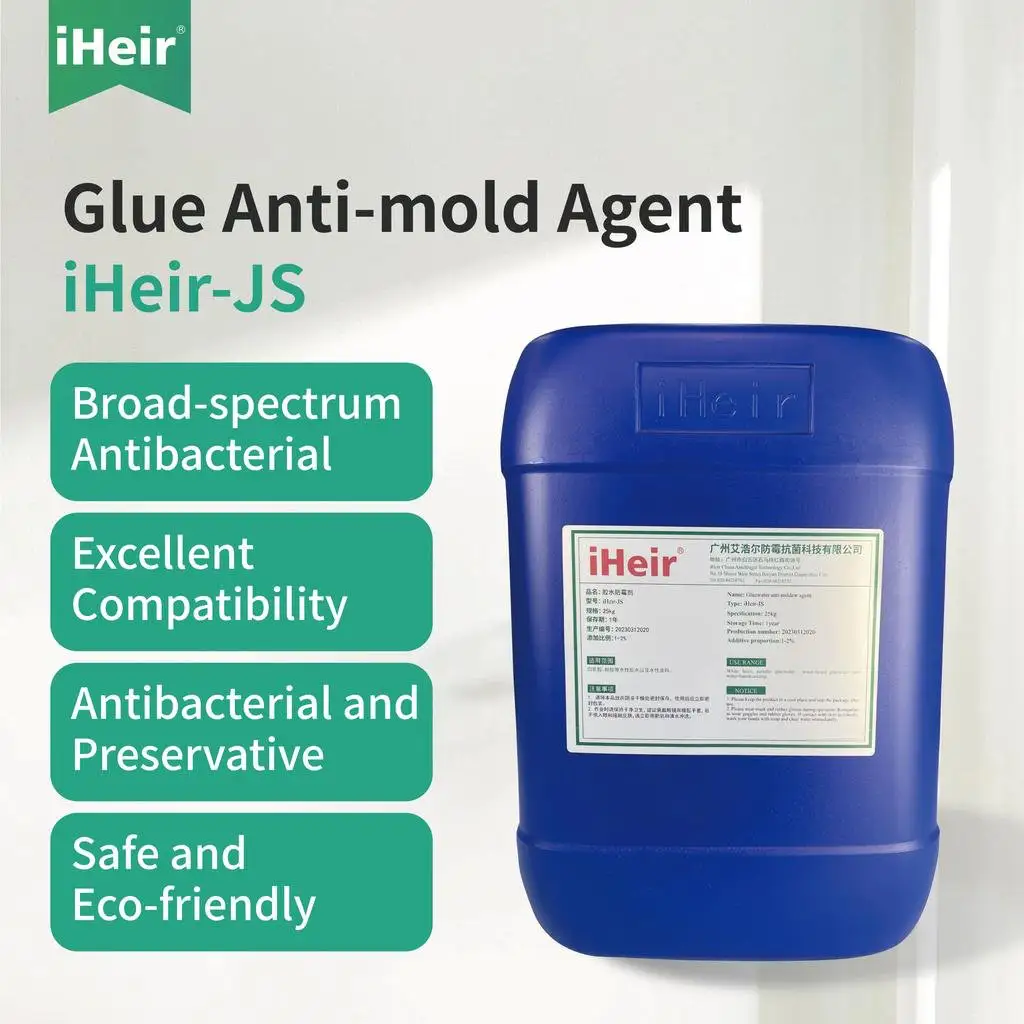
How should you handle adhesive mould: one general-purpose agent, or a family chosen by pH? Glues split into neutral, acidic and alkaline families, and the preservative has to clear pH first, because an agent outside its pH window breaks down no matter how much you add. Neutral water-based glues take iHeir-JS glue mildew inhibitor at 1-2% on total weight; acidic wood glues below pH 6 switch to iHeir-JS7 at 1-2%; alkaline starch glues use iHeir-G at 1-2% with pH held under 8. This article covers the family split, the rates and the dosing order.
1. Glue spoils harder than paint: a mouldy bond line cannot be reworked
The symptoms are familiar: a can that foams and smells sour, and black spots on the glue line. Inside the can the mechanism is the same as water-based paint. PVA and starch glues are water-borne organic systems, and the thickeners, gelatinised starch and co-additives are all food for mould and bacteria, so a warm store room is enough to start fermentation. The difference is that glue is a price-sensitive product, and many plants dose at the minimum or skip preservative altogether to save cost.
The second layer is worse. Once a glue film moulds it cannot be scraped off and recoated the way paint can. Mould in a wood glue creeps along the bond line into the board, and the finished furniture shows spots in the customer’s warehouse, so the panels and the glue have to be reworked together. Set the saving on preservative against the freight on one returned container and the arithmetic is not close.
The core issue is pH compatibility. Glue pH spans a wide band: PVA and laminating glues sit neutral to slightly acid, some wood glues are made acidic to speed setting, and starch glues are made alkaline so the starch gelatinises cleanly. Actives behave very differently across that band. Choose outside the window and the agent degrades slowly, so the batch passes outgoing QC and moulds at the customer, which is the classic delayed failure in this industry.
2. Clear the pH gate first: four products across three families
Before writing a formula, measure three things: pH, solids content and storage life. pH picks the product, solids content sets the denominator, and storage life decides whether a long-acting grade is needed. The table below sorts the products by family and can go straight onto the batching wall.
| Glue type | Typical pH | Product | Dose | Product pH range |
|---|---|---|---|---|
| Neutral water-based (PVA, laminating) | 4-8 | iHeir-JS | 1-2% | 3-10 |
| Neutral water-based (cost-driven) | 4-8 | iHeir-JS(OTB) | 0.25-1% | 3-10 |
| Acidic wood glue | 3-6 | iHeir-JS7 | 1-2% | 3-6 |
| Alkaline starch glue | 7-10 | iHeir-G | 1-2% | 3-8 (not above 8) |
The last column is the one people skip. Many plants remember “add 1-2%” and never check the product’s own pH window, then run an acidic-grade product in an alkaline starch batch and lose the whole charge. Starch glue deserves particular care: once process pH goes above 8, iHeir-G is out of range, so either pull the process pH back under 8 or move to the wide-window iHeir-W11, which covers pH 2-12.
3. Rates by glue type: where each product lands
Neutral water-based glues run on JS. iHeir-JS is dosed at 1-2% on total weight and holds from pH 3 to 10, making it suitable for PVA, laminating and label glues, covering can and bond line together. Compatibility matters most here: it does not change open time or initial tack, which is the property glue plants watch hardest.
Cost-driven lines run on JS(OTB). iHeir-JS(OTB) doses at just 0.25-1% across the same pH 3-10 band, which suits high-volume neutral glues under tight unit cost. The rate looks low because the active concentration is higher, so the cost per tonne of glue is lower as well.
Acidic glues run on JS7. For wood glues sitting between pH 3 and 6, do not force a general-purpose grade. iHeir-JS7 is dosed at 1-2% and is built for acidic systems, staying stable at low pH instead of releasing and degrading.
Long storage runs on JSTC. Where glue must keep for three months or more, or where summer stock temperatures are high, move to the long-acting in-can grade iHeir-JSTC at 1-2%, with active content above 20%, covering preservation and anti-mould together and cutting batch-to-batch variation.
4. Dosing order goes wrong more often than the dose itself
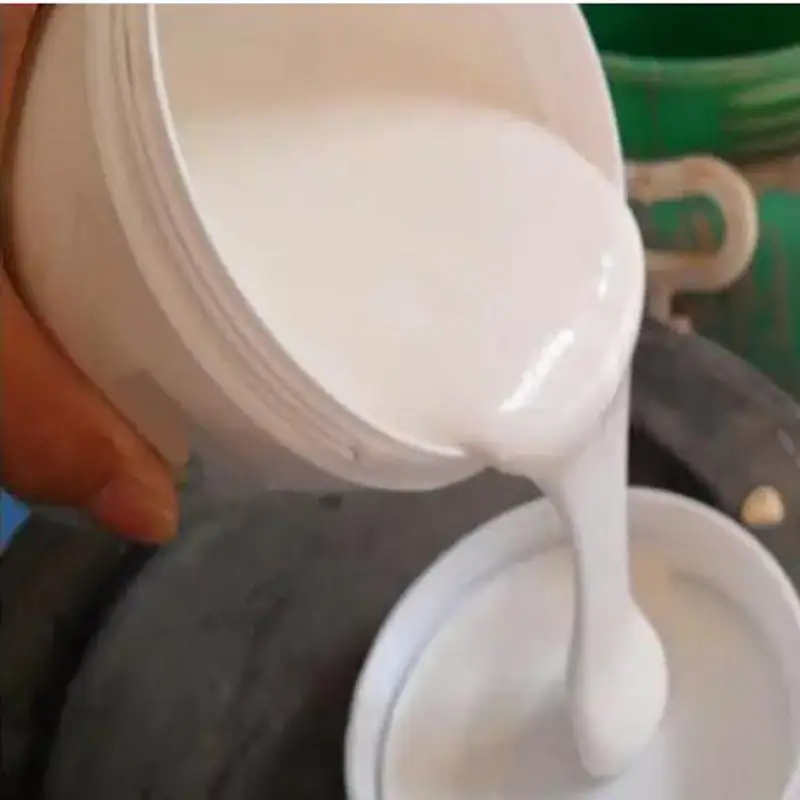
- Add after water, before thickening: viscosity is low and agitation is effective. Add after thickening and the agent collects in high-concentration pockets that never disperse.
- Dilute into water first: mix the agent into a small amount of process water before it meets the main vessel, so the neat liquid does not contact high-solids material directly.
- Control temperature and mixing: keep the batch moderate while dosing and follow the formula’s mixing time so the agent spreads through the whole charge.
- Check uniformity before filling: draw a sample and look for separation, flocculation or foaming before the batch goes to the filling line.
- Retain and accelerate a sample: hold one sample per batch at 35C for seven days and watch for foaming, separation or sour odour as the release criterion.
- Control the store: keep filled pails sealed, the warehouse shaded and temperature-controlled, and add desiccant sticks to export containers by container size.
5. Verification: accelerate the can, inspect the bond line
Test the two directions separately. For in-can protection run an accelerated storage test: hold a sample at 35C for seven days and compare odour, viscosity and appearance against an untreated control, failing the batch on any sour odour. For bond-line protection run a glued test piece: apply glue at the real spread rate, leave the panel in a humid environment, and check for spots along the glue line. That is closer to the real complaint than any instrument reading.
6. FAQ
Can one general-purpose agent cover every glue? Not recommended. The pH windows are printed on the products for a reason. Run an acidic grade in a neutral glue, or keep iHeir-G in a starch batch above pH 8, and you get the delayed failure of a batch that passes QC and moulds at the customer. Managing two grades costs far less than one return.
Is the top of the dose range safer? It depends on the direction. Long storage, hot summers or a customer in a humid region justify the upper end, but beyond the recommended range the gain is small and curing or appearance can suffer, so confirm on a small sample first.
The can already smells sour. Can it be saved? Once there is a clear sour odour the microbial load is high and a top-up only delays the problem, so the batch is normally downgraded or reworked. For handling a single spoiled glue batch, see glue that has gone mouldy.
Is an off-odour in PVA always mould? Not necessarily. An ammonia or sharp smell can come from a change in the co-additives as much as from microbial metabolites, so judge by smell, viscosity and visible growth together. See PVA glue that is mouldy or smelly for the diagnosis. If you run inks and adhesives on the same site, choosing an anti-mould agent for inks and adhesives compares the two.
There is really one landing point for adhesive mould: treat pH as the first filter, choose the product by family, set the rate by glue type, and hold release with two tests, an accelerated can sample and a glued test piece. iHeir-JS, JS(OTB), JS7, G and JSTC are all available as samples with minimum order details, so talk to us about your glue type and process parameters.