




 View Count:14
 Date:2026-10-21
Where does a dishwasher mould problem start? At the door gasket. Once the door shuts, the cabinet is a hot, wet, closed box, the moisture ends up in the folds of the seal, and the black strip cannot be reached or wiped, so spots appear there first. The tub and basket plastics follow, at the corners and on the coating. The gasket silicone takes iHeir-GGTK silicone antimicrobial agent at 1%-2% of the silicone weight, and the tub and basket plastics take iHeir-JS117 plastic anti-mildew powder at 0.5%-1%. This article gives both addition points, the process windows and the run-test routine.
1. Dishwasher mould starts in the gasket folds, the tub and basket come second
How the machine works decides where the mould goes. During a wash the cabinet is hot and saturated, and most users shut the door straight afterwards; as the cabinet cools, moisture condenses on whatever is coldest, and the coldest surfaces are the door frame and the gasket, so water sits in the folds and on the sealing face. Three things make that spot ideal: it cannot be wiped, it cannot dry, and it is warm enough, so once mould lands it stays. This is the most common source of the “musty smell when the door opens” complaint in after-sales.
The second location is the tub and basket: a plastic tub holds water at the corners and base ribs, and on the basket water seeps between the coating and the wire.
2. Gasket and plastic parts: where each addition goes
The table sets out both locations with material, addition point, level and process window.
| Location | Material | Addition point and level | Process window | Points to watch |
|---|---|---|---|---|
| Door gasket | Silicone seal | At the mixing stage, add iHeir-GGTK at 1%-2% | Added below 200C | Stir thoroughly; cationic, so run a compatibility trial first |
| Inner tub | Plastic tub | At compounding, add iHeir-JS117 at 0.5%-1% of finished weight | Mixed into the resin before moulding | Pre-blend the powder to avoid specks and agglomerates |
| Basket coating | Coated layer | As above, on the coated part weight | Mixed into the resin before moulding | Close the gap between wire and coating by design |
| Run test and packing | Finished unit | – | Blow the gasket and tub dry after testing | Water in the gasket folds has to be blown out |
The difference between the rows is temperature. Silicone goes through mixing and vulcanisation, so the additive has to survive the process heat, which is why GGTK is added below 200C. The plastic parts are compounded and then moulded, and JS117 is a powder whose whole job is even dispersion. Two different windows, so one product cannot serve both.
3. Tub and basket: JS117 at 0.5%-1% of finished weight, pre-blended first
iHeir-JS117 plastic anti-mildew powder is a white to pale yellow powder, specific gravity 1.21, more than 97% active, bulk density 380 kg/m3, mean particle size 110 microns (D50), with a nitrogen heterocycle phenol-alcohol active that works in PVC, PU, silicone resin, polyolefins, polyester and TPE; it resists leaching and contains no arsenic. The level is 0.5%-1% of the finished part weight, mixed into the resin before moulding.
Dispersion is the whole game here. Powder tipped straight into the hopper is not broken up by screw shear, and the parts come out with white specks and local brittle patches. A dishwasher tub holds water, so a micro-crack is worse than a mould spot. Pre-blend with a small portion of the same resin powder for 3-5 minutes in a high-speed mixer, then feed the main stream, and cut a few pellets before moulding to check the cross-section for specks.
On levels: the tub runs at 0.7%-1% and the basket coating at 0.5%-0.7%, and regrind is pro-rated the same way.
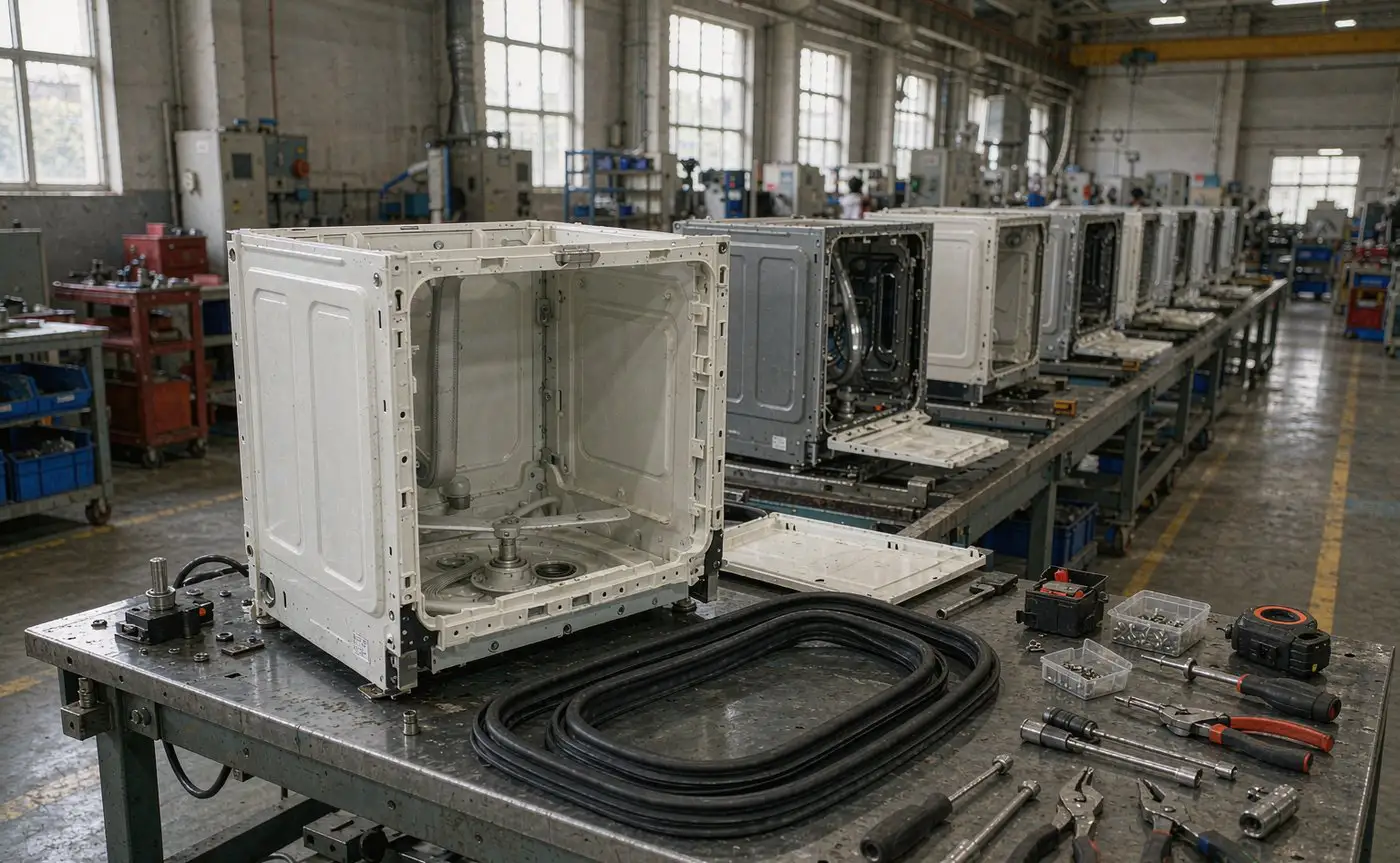
4. Door gasket: GGTK at 1%-2% of the silicone, added below 200C
The gasket is silicone, so it needs an additive built for silicone. iHeir-GGTK silicone antimicrobial agent is a clear, colourless to pale yellow liquid with a slight polyurethane odour, at least 20% active, specific gravity 1.05-1.15, and it is a cationic anti-mould and antimicrobial agent. The method is to add 1%-2% of the silicone weight directly and stir thoroughly, and the recommendation is to add it below 200C; that window belongs to GGTK and should not be read across to other products.
Three points: add during mixing so the mill shear disperses it, because a last-step addition leaves pale patches after cure; run 1%-1.5% on light compounds and up to 2% on dark export lots; and trial any anionic additive for compatibility, since GGTK is cationic.
GGTK comes in 25kg blue plastic drums, stores cool and dry with a one-year shelf life, and the drum should be resealed promptly after opening because a damp surface changes the liquid at the top. Its oral LD50 is above 5000mg/kg, so normal precautions are enough.
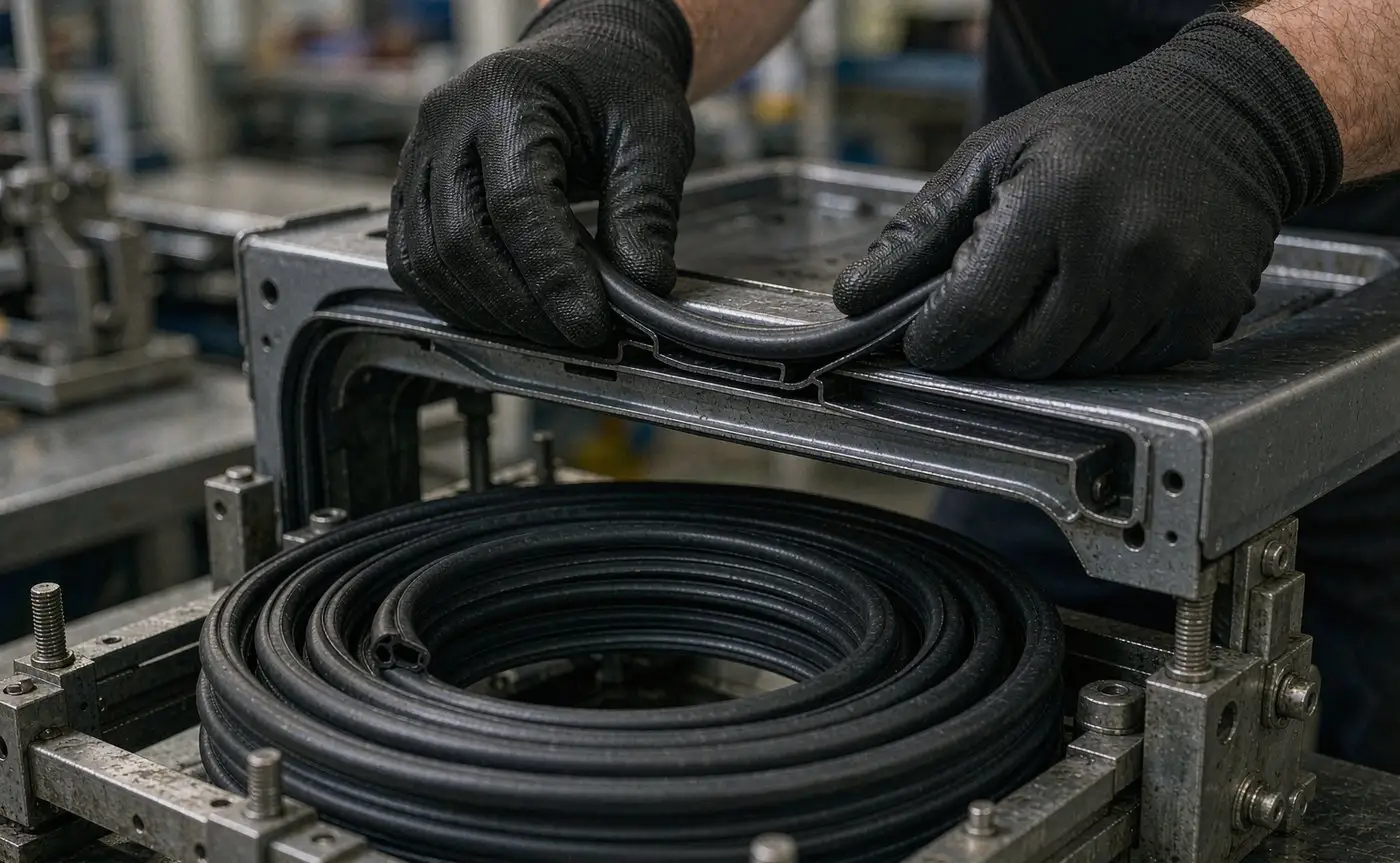
5. Assembly, run test and export: seating the gasket and packing
With the materials right, three actions can still undo the work: press the gasket fully home and run a hand along the seal for lifted edges; blow the gasket folds dry after the run test; and dry the carton liners before packing.
For export: dry liners, pallets off the floor, humidity held, absorbent material in the container, and two or three units opened for a smell check before loading.
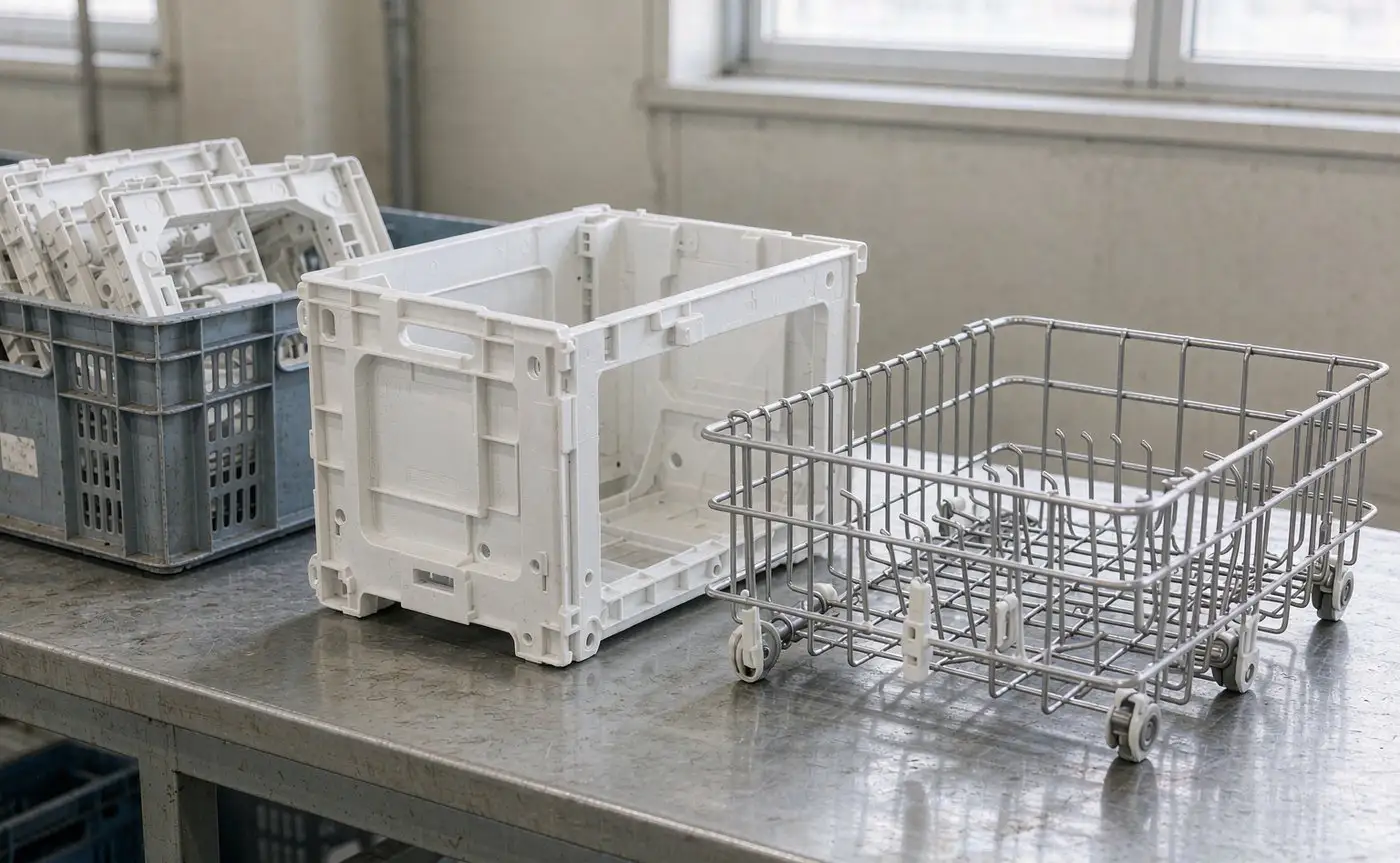
6. Questions: can the gasket be sprayed later, and what if the tub is stainless
Can a finished gasket be sprayed with an antimicrobial afterwards? Not really. Silicone has low surface energy, a sprayed active does not bond, and it comes off after one fitting and a couple of wipes; worse, the mould in a gasket starts inside the folds and on the sealing face, which a surface spray never reaches. The only way to cover this part is to put GGTK into the compound at the mixing stage.
The tub is stainless steel – is JS117 still needed? A steel tub does not mould, so the product then goes only to the basket coating and the plastic fittings. If the tub is plastic, it runs at 0.5%-1% of finished weight. Check the material list rather than applying one rule to every model.
How is the effect verified? Antimicrobial performance goes through ISO 22196 for inhibition rate, mould resistance through ISO 846 or ASTM G21 for growth rating, and the samples must be vulcanised sheet and moulded parts that contain the additive, not raw material. There is also a structural check that matches real use: run the machine, shut the door for 24 hours, then open it and smell. Samples and TDS are available for both products to check against your silicone grade and plastic grade.
Closing figures: door gasket dosed with iHeir-GGTK at 1%-2% of the silicone weight at the mixing stage, added below 200C, with a compatibility trial on cationic systems; tub plastics dosed with iHeir-JS117 at 0.7%-1% and basket coating at 0.5%-0.7% of finished weight, pre-blended; gasket run checked by hand for lifted edges after seating; gasket folds blown dry after the run test, absorbent material in the container.


