




 View Count:8
 Date:2026-10-22
How does honeycomb board get protected against mould? By treating the core and the facing as two separate jobs. The core draws moisture fast, so mould starts there; the facing is combined through glue, and water in that line comes second, so a pallet that goes mouldy in transit means a whole batch returned. The core trough takes iHeir-JS glue mildew inhibitor at 1.0%-2.0% of glue weight, the facing gets its own batch, and the store uses iHeir-D paper at 0.1-0.2g per sheet. This article gives the addition point and basis for each.
1. Honeycomb board mould starts in the core, the facing glue line comes second
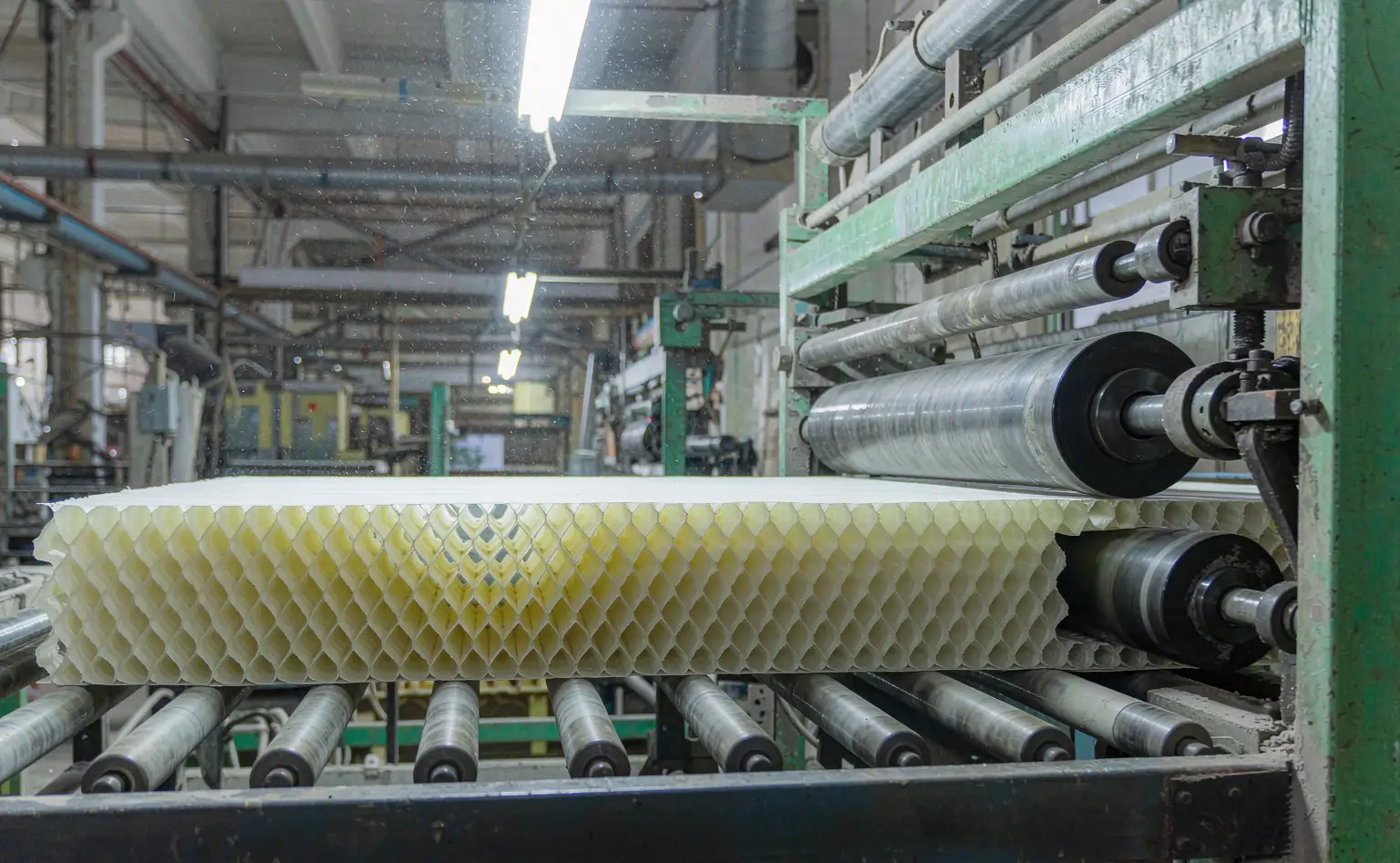
The structure decides where the mould goes. Top and bottom are facing sheets; the middle is paper stretched into hexagonal cells. Per square metre of board the core unfolds to several times the paper area of the facing, and every cell has cut edges, so it takes up moisture over a far larger face. Once workshop humidity climbs in the rainy season the core drinks first, the air inside the cells does not move, the water cannot leave, and mould grows on the cell walls.
The second location is the facing glue line: water left in that layer after the drying section has nowhere to go once the board is wound and stacked, so it sits along the glue line. The third is the store, where a board that was made correctly can still fail while it waits for a vessel in a damp warehouse, the base of the stack and the face against the wall taking up moisture first.
2. Core glue and facing glue: the two troughs side by side
The table sets out both troughs with the addition point, the basis for the calculation and the points to watch. Both use the same additive, but the basis differs, so one concentration cannot be carried from one end of the line to the other.
| Location | Glue | Addition point and level | Basis | Points to watch |
|---|---|---|---|---|
| Core glue | Water-based starch adhesive | At the circulation section, add iHeir-JS at 1.0%-2.0% | On total glue weight | Top up with the circulating glue |
| Facing combine | Same water-based family | Mix a separate batch at 1.0%-2.0% | On dry glue solids | Never use the paper weight |
| After drying | Board | – | – | Do not stack while tacky |
| Store and export | Packaging | Anti-mould paper with iHeir-D at 0.1-0.2g per sheet | On carton volume | Against the liner, not on the board face |
The difference is the basis. Core glue is a thin coat on the flute tips, so the additive per trough is small; the facing carries a heavier coat, so the same 1.0%-2.0% is several times larger in absolute terms. Two troughs, two calculations.
3. Core trough: 1.0%-2.0% of glue weight, topped up with the circulating glue
iHeir-JS glue mildew inhibitor is a clear, colourless liquid, 45% active, pH 6-7, specific gravity 1.02, viscosity 3cps, miscible with water in any proportion, and free of formaldehyde and formaldehyde releasers. It disperses through the glue system at 1.0%-2.0% of total glue weight, and the glue must then be stirred thoroughly: starch adhesive is thick and the additive will not spread on its own.
Three points. First, add at the circulation section, where the pump returns glue to the top of the trough, so the circulation does the mixing; poured into the bottom it sits in a dead corner and the concentration reaching the flute tips is wrong. Second, top up rather than mixing the shift at once: glue leaves the trough on the core all day, so calculate from the fresh glue added. Third, keep the concentrate out of unlined metal containers; the mixing drum should be plastic.
On levels: the core runs 1.0%-1.5% and the facing 1.5%-2.0%. The core is a thin coat over a large open area, so the middle of the range is enough; the facing layer is thicker and is the visible face, so it runs to the top. Regrind and wash-out glue have to be recalculated, or half a batch comes out protected and half does not.
4. Facing glue: switch the basis to dry glue solids, not paper weight
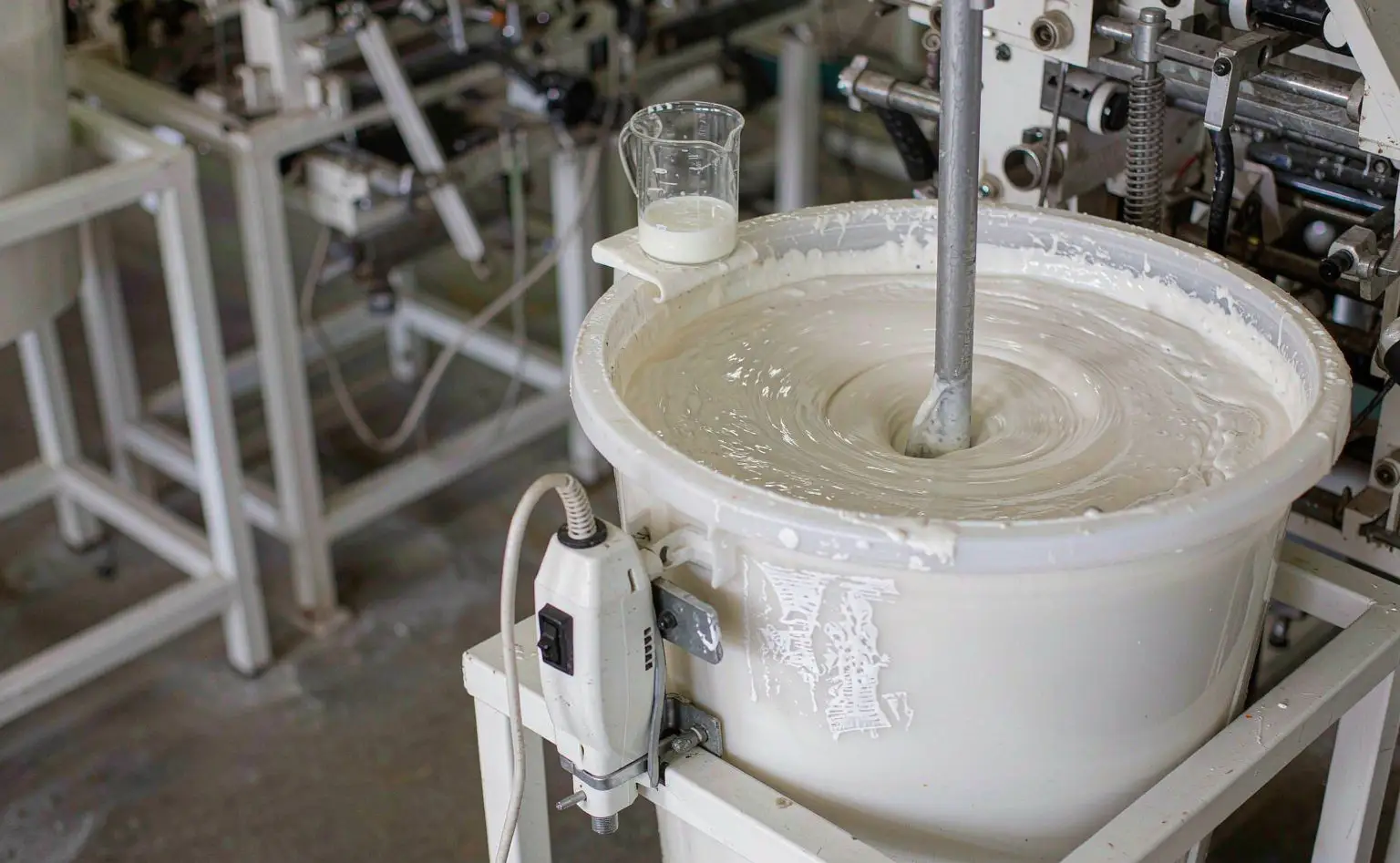
This is the stage most often miscalculated. Facing paper has a low grammage and takes glue quickly; the applicator roll does not look heavily loaded, yet the coat per square metre is substantial. Work the additive out on the weight of the facing and the figure comes out low, which leaves the glue line as the weak strip. The right basis is dry glue solids: establish the solids of the batch, take 1.0%-2.0% of that, convert back to wet glue and dose against the batch weight.
Uniformity is the second issue. The facing trough is smaller and turns over faster, so the glue spends little time in it and the additive can be applied before it has dispersed. Pre-mix in a small pail, stir the JS into part of the glue, then add that to the main trough; far more reliable than pouring it in direct. And do not wind while the line is tacky: water sealed into the wound roll sits at exactly the temperature a colony likes, so touch the back of a hand to the board first, warm but not tacky, then wind.
5. Store and export: iHeir-D paper at 0.1-0.2g per sheet
With the material right, the storage stage still has to be closed. iHeir-D gas-phase antimicrobial and mould inhibitor is a yellow liquid at 70%±5 solids carrying particles below 5 microns; it is an anti-mould ink used to make antimicrobial paper and coatings, and its vapour phase reaches the gaps between boards. The level is 0.1-0.2g per sheet of anti-mould paper or per sachet, set by carton volume and storage conditions.
Position it against the carton liner and between stacks of board, never pressed onto the board face, because vapour cannot reach what it covers. One or two sheets go in a standard carton, the upper end for sea freight. iHeir-D comes in 25kg drums with a one-year shelf life. Where boards carry metal corner protectors or strapping clips, run the compatibility test at three times the normal level, because D can corrode poor-quality metal in damp conditions.
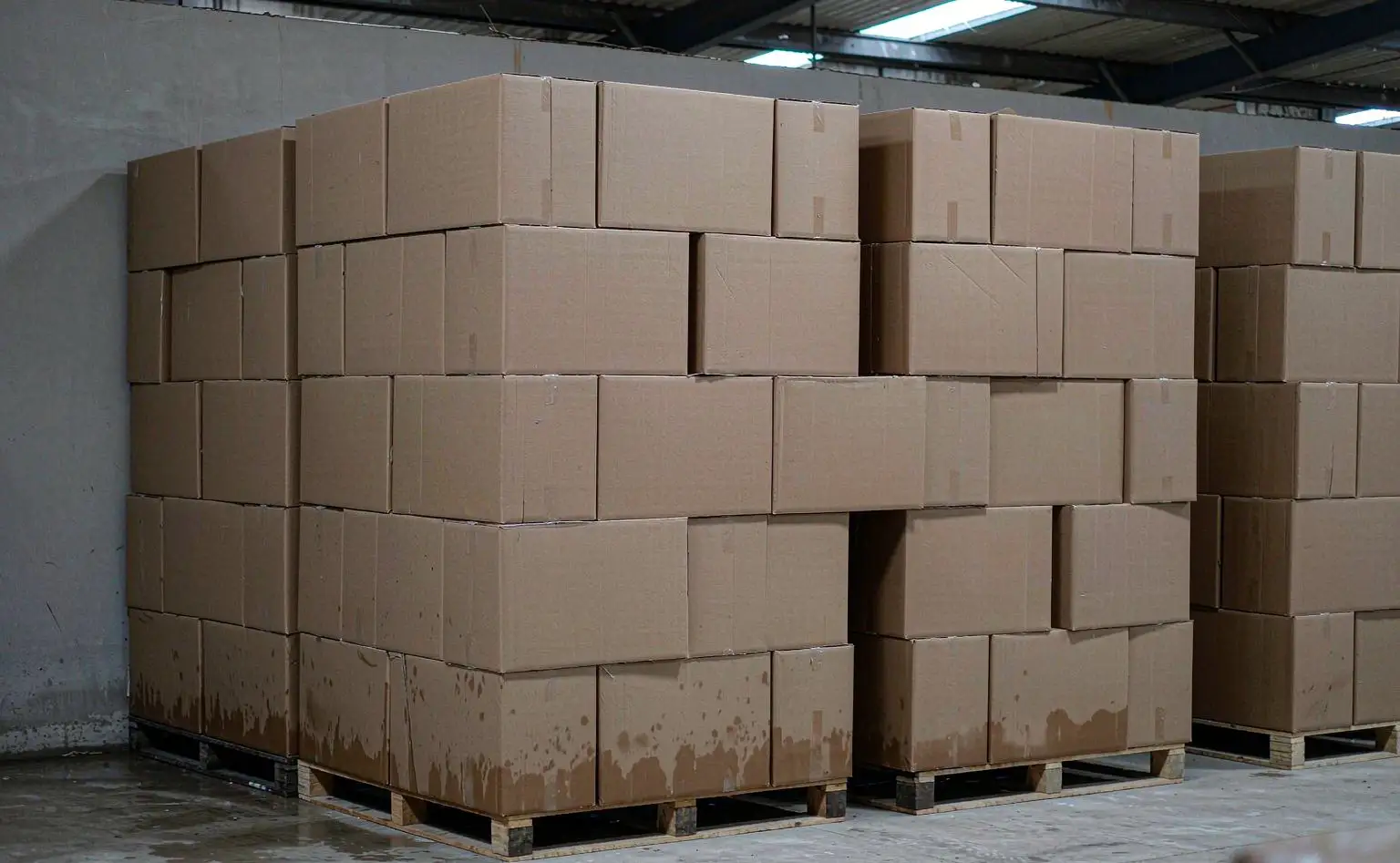
For the store and the container: pallets off the floor, a gap to the wall, humidity held down, absorbent material in the container and a ventilation path between the cartons and the wall. Open two cartons and smell them before loading.
6. Questions: can the facing be treated alone, and does 2% hurt the bond
Can the facing be treated on its own? No. Mould starts on the cell walls, and once they carry spots it spreads along the cut edges onto the combining face, where no amount of treatment on the facing side helps. Both locations have to be treated, at different levels.
Does 2% affect bond strength? JS is an in-can additive for water-based systems; at 1.0%-2.0% with proper stirring it has very little effect on compatibility. What decides the bond is the glue recipe, the coat weight and the combining pressure. Split one batch of glue into dosed and undosed portions, combine under the normal process and compare peel strength.
How is the effect verified? Mould resistance goes through ISO 846 or ASTM G21 for a growth rating on combined board containing the additive, not on raw paper; antimicrobial performance through ISO 22196. There is also a practical check: seal a small piece in a bag with a little water, leave it seven days, then look at the cell walls.
Closing figures: core trough at 1.0%-1.5% of glue weight, the facing at 1.5%-2.0% on dry glue solids, each calculated separately; the additive goes into the circulating return and is topped up with the glue added, in a plastic drum; do not wind while the board is tacky; the store runs iHeir-D paper at 0.1-0.2g per sheet against the liner.


