




 View Count:22
 Date:2026-10-20
Where does wooden stair handrail mould start, and which stages have to be treated? Three points decide it: the moisture in the bare timber, the cut ends, and what happens behind the paint film. Miss any of them and the rail spots from the back or from a joint after it is fitted. Bare sections take iHeir-M8 bamboo and wood fungicide at 1:20 for a 1-10 minute dip to a 10%-20% weight gain, the paint carries iHeir-YQ paint anti-mould and antibacterial agent at 1%-1.5%, and the cut ends get M8 again once the paint has dried. This article gives the three dosing figures, the moisture limit and the store requirements.
1. Handrail mould starts at the moisture, the cut end and the joint
A handrail line runs from cutting to planing, tenoning, drilling, dipping, drying, sanding, spraying and packing. Mould has three ways in. The first is moisture in the bare timber: if the section goes forward wet, water is locked in the fibre and the paint film closes over it, so spots lift from under the film a few months later. The second is the cut end: both ends are joined on site, the section leaves the factory with the end grain open, and once fitted it sits against a wall or faces the damp. The third is the joint and the screw hole: tenon, mortise and screw holes are all open sections, and damp enters there and travels along the grain.
The conclusion is simple: treatment on a handrail is not a splash of additive in the topcoat. The active goes into the timber while it is bare, the paint carries its own protection, and the ends and joints get a separate pass. All three in the factory cost far less than stripping a rail on site.
2. Bare-timber dip, in-can addition and end touch-up compared
The table lines the three stages up as a draft process card.
| Stage | What is treated | Product and ratio | Criterion | Points to watch |
|---|---|---|---|---|
| Bare-timber dip | Planned handrail sections | iHeir-M8 at 1:20, dipped 1-10 minutes | 10%-20% weight gain | Fully submerged; no metal containers |
| In-can addition | Primer and topcoat | iHeir-YQ at 1%-1.5% | Evenly dispersed, no floating layer | Add during milling or paint make-up, stir thoroughly |
| Ends and joints | Both end sections, tenons, mortises, screw holes | M8 bath at 1:20, brushed or sprayed | Full coverage, no dry patches | Do it after the paint, not before |
| Drying and store | Dipped timber and finished rails | – | Moisture below 25% | Below 25% moisture, M8 protection is rated at more than one year |
The first three rows are treatment, the last is drying and storage. Order matters: the end touch-up waits until the paint is dry, or the wet brush pulls the fresh film with it; drying sits between the dip and the spray line, because paint over wet timber wastes what went in.
3. The bare-timber dip: M8 at 1:20, 1-10 minutes, 10%-20% weight gain
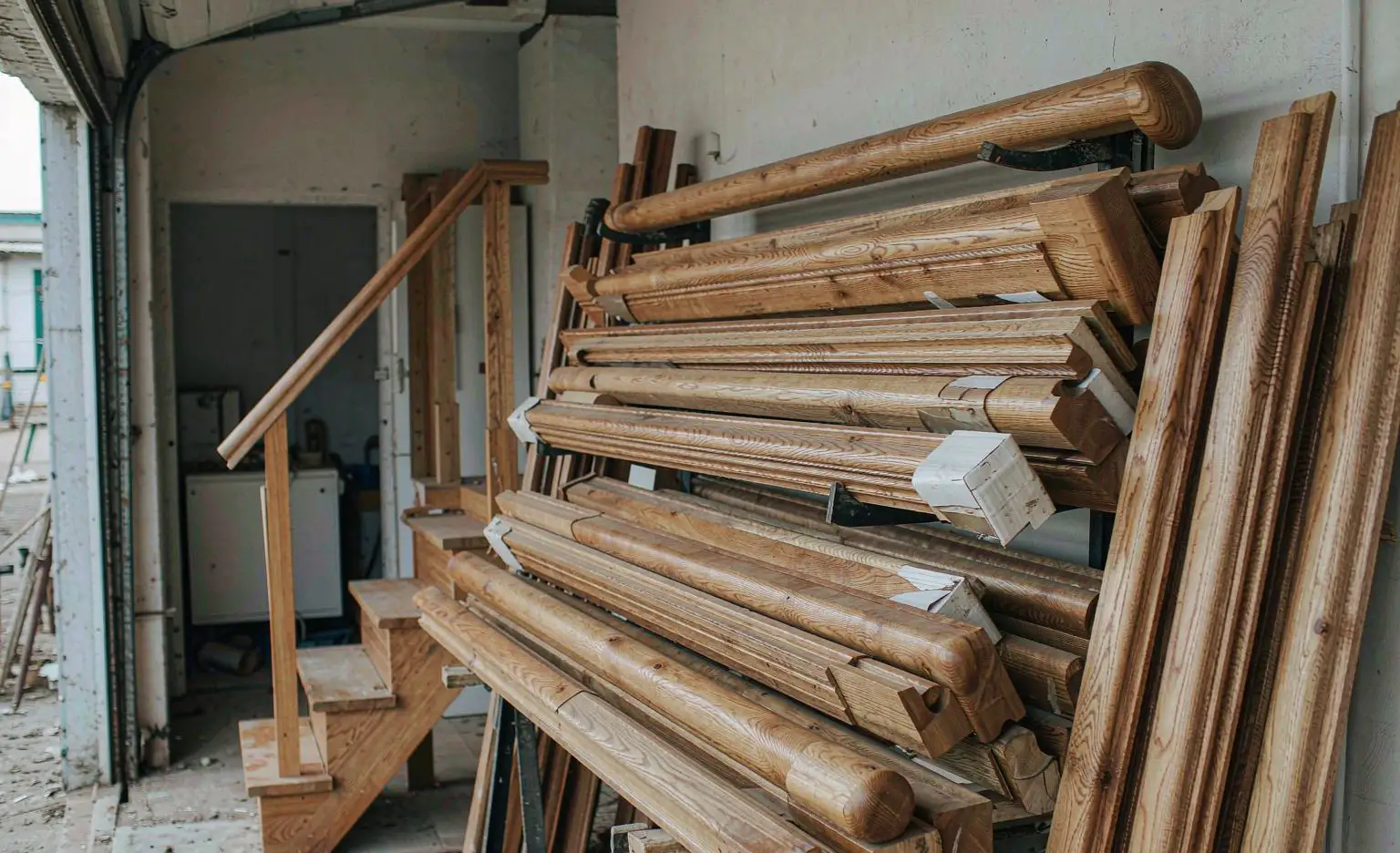
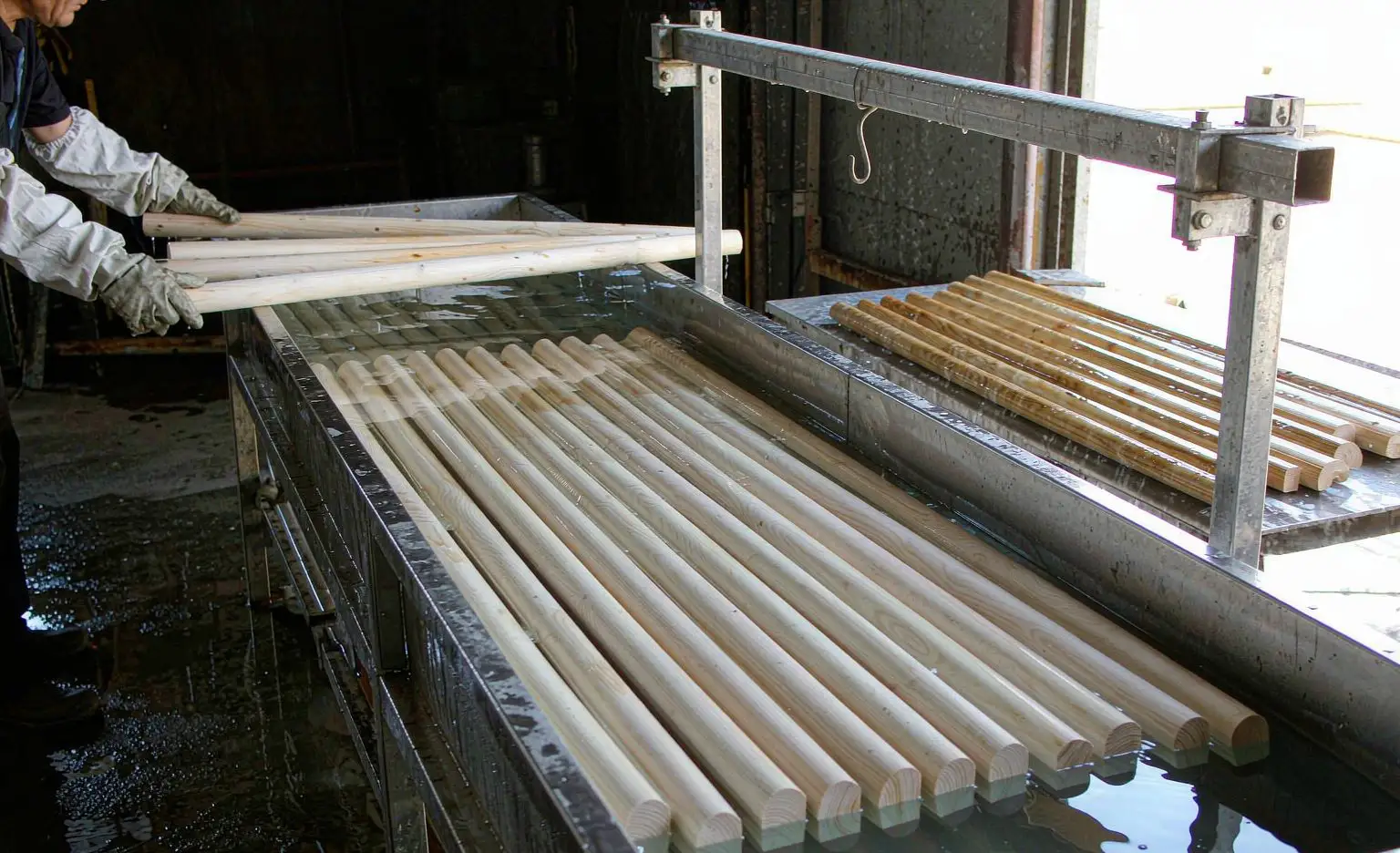
iHeir-M8 bamboo and wood fungicide is a clear amber liquid with a sharp acidic odour, its active fraction soluble at 5-7ppm in water and dispersing in the aqueous phase, stable below 60C for a year. Mix the bath at 1:20 (5kg of M8 to 100kg of water), submerge the sections completely, dip 1-10 minutes, and pull them out at a 10%-20% weight gain to drain, then air or sun dry. Packing is 25kg to the drum with a three-year shelf life.
Why 10%-20% here, lower than on thin bamboo? A handrail is a solid square section, thick and slow to take water; soak too long and the core holds water the kiln has to chase, which multiplies drying time and opens checks. At 10%-20% the layer is there and the water load stays workable. Judge by weight, not by the clock: weigh three sections as a batch baseline.
Three operating points. First, never store the concentrate in metal containers; use plastic tanks and crates. Second, the maximum use level is capped at 15ppm active substance, so do not chase performance with a stronger bath – concentration drives weight gain and drying cannot keep up. Third, bring the moisture below 25% before the spray line: the M8 data sheet rates protection at more than a year below that figure, and above it the stage is wasted.
4. YQ at 1%-1.5% in the paint, stirred in at make-up
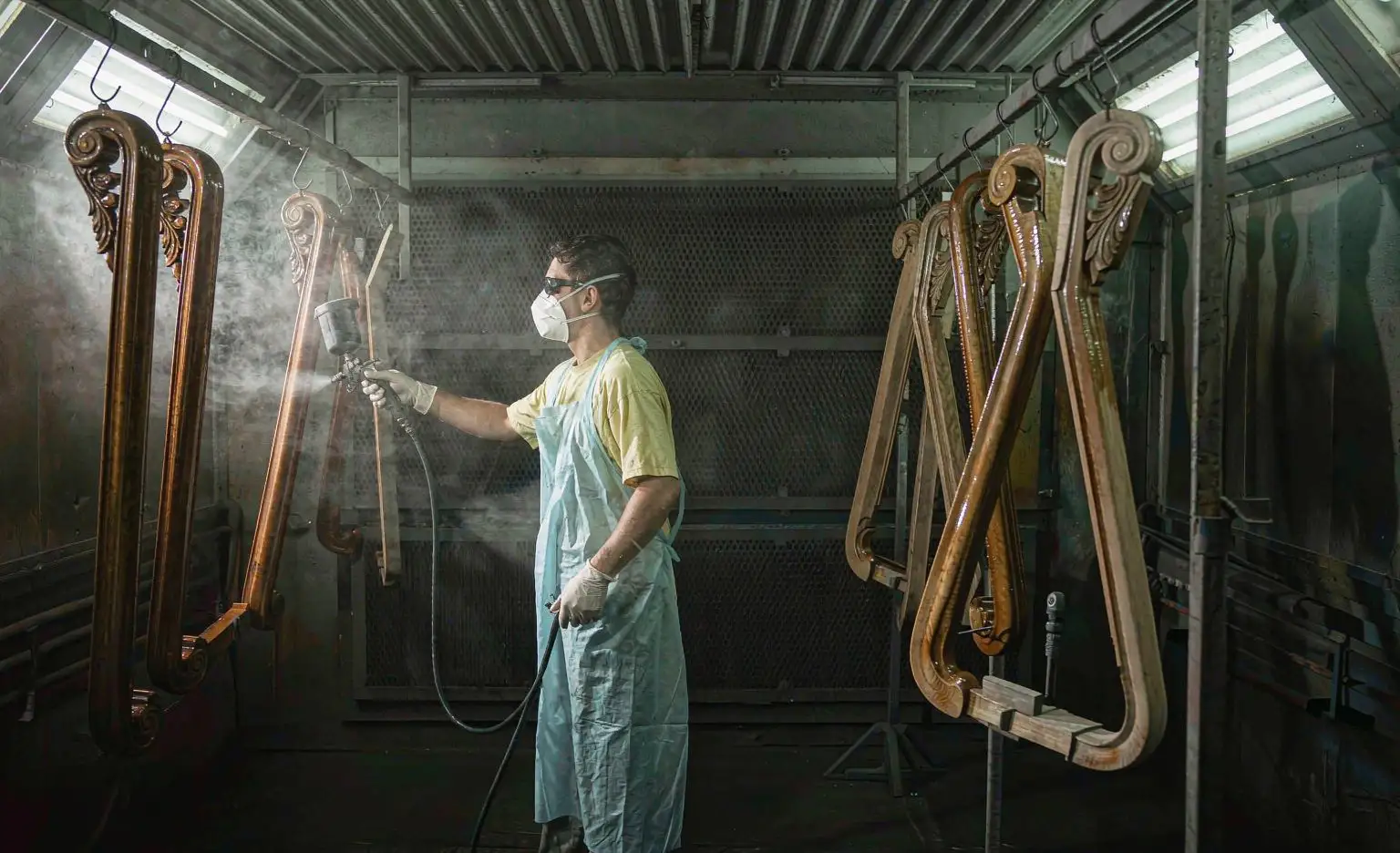
The film moulds too, especially water-based and matte finishes, where the surface holds dust and water and one wet season in a store is enough for pin-point spots. iHeir-YQ paint anti-mould and antibacterial agent is a natural-coloured liquid, 79.5% active, pH 4-7, 3cps at 25C; it goes in during milling or paint make-up at 1%-1.5%, and the paint must then be stirred thoroughly.
Two notes. The addition point is not critical, dispersion is: add slowly while the paint is moving and stir 10-15 minutes more. And do not go under the figure: 1% is the floor, export orders and matte finishes do better at 1.2%-1.5%, and above 1.5% there is nothing to gain.
Packing is 25kg and 160kg, stable for at least three years at normal storage temperature, and it should not sit in an unlined metal container. YQ contains no formaldehyde or formaldehyde releasers, a line that export declarations usually ask for, and the TDS and declaration are available on request.
5. Ends and joints: touch up after the paint, do not cover the section
The ends are the most neglected part of a handrail. The spray line hangs the section by both ends, so the clamped area never sees paint, and the end grain is an open section that takes water fastest. Once fitted, the ends sit against a wall and the joints hide inside the newel, the dampest and least ventilated spot in the run. So the touch-up gets its own slot: after the paint has dried, brush a 1:20 M8 bath onto both end sections, the tenons, the mortises and the screw holes, leave the section wet with no dry patch, and air dry before packing.
One trap in the sequence: never touch up before spraying. A wet end will not take paint and drags the bath into the film. The order is dip, dry, spray, dry, touch up, and the treated ends need no further coating.
Joints and screw holes need the same pass. A mortise is deep and a brush does not reach the bottom, so flood it with a syringe or a small jug, turn it once so the walls are wetted, and pour the excess back out.
6. Questions: is the dip still needed, and can brushing replace it
With YQ already in the paint, is the bare-timber dip still needed? Yes, because the two cover different places. YQ protects the film from moulding; M8 protects the timber inside. Once the film has a pinhole, a scratch or a knock on site, water enters through the gap and timber without additive moulds from within – the film still looks sound while the spot spreads underneath it.
Can brushing replace the dip? Not on a solid section. Brushing reaches the surface only, and the end grain and mortises are the parts that need it most; a dip loads the timber and the result can be weighed, which beats counting coats. Where a line has no tank, spray and turn is the fallback, but verify it by weight gain rather than by eye.
What about a rail that is already fitted and spotted? Locate the spot first. Mould on the film can be cleaned, dried and recoated with paint carrying YQ; mould lifting from under the film with the timber discoloured means stripping back to bare timber and repeating dip and spray. Samples and a TDS are available for both products to check the figures against your timber and paint system.
Closing figures: bare sections dipped in iHeir-M8 at 1:20 for 1-10 minutes to a 10%-20% weight gain, moisture below 25% before the spray line; iHeir-YQ at 1%-1.5% stirred in at make-up; ends, tenons, mortises and screw holes touched up with the M8 bath after the paint dries; rails on pallets off the floor, absorbent material in the container.


