




 View Count:28
 Date:2026-10-19
How is security door mould dosed, at the door-gap gasket and inside the core foam? Two compounds on the leaf actually grow: the sealing strip along the rebate takes spots first, and the foam core picks up damp through the lock cut-outs and hinge holes until the smell comes out of them. The gasket carries iHeir-GGTK silicone antimicrobial agent at 1%-2% in the compound, the foam carries iHeir-FP foam antimicrobial agent at 0.5%-1.5% in the component blend. This article gives the dosing point, the figure and the foam-line controls for each.
1. The spots start at the door-gap gasket and the core foam
The leaf is steel over an internal fill and the frame is folded steel, so the metal itself does not grow mould. What grows sits outside the metal: the sealing strip around the rebate and the foam fill inside the core. The strip is compressed when the door closes and springs back when it opens, so its face collects dust and water; the foam is a closed or semi-closed cell structure, and once water enters through a lock cut-out, a hinge hole or a top or bottom edge, it has no way out.
The two failures cost differently. Mould on the strip is a look problem, visible at buyer inspection, and it ends in wiping, replacement or rework. Mould in the foam is a smell problem: the door is already in a flat, and opening it brings the musty smell out, so the fix means taking the leaf apart. Both compounds have to be treated, but the dosing point, the basis for the figure and the temperature window are not the same.
2. Gasket and core foam: the two compounds side by side
The table lines up material, dosing stage, figure and the points to watch, as a first draft of the process card.
| Part | Material | Dosing stage | Figure | Points to watch |
|---|---|---|---|---|
| Door-gap gasket | Silicone or EPDM | Added in the mixing stage, before vulcanisation | iHeir-GGTK at 1%-2% | Add below 200C; cationic, never in the same bath as an anionic additive |
| Core foam | PU or polystyrene foam | Pre-added to the component blend (white side) | iHeir-FP at 0.5%-1.5% | On total foam weight; stable pH 1-11; cannot be added after the foam has risen |
| Lock and hinge cut-outs | Opened chamber | Blow clean and seal after cutting | – | A cut-out is a water entry; clear burrs and chips before the hardware goes in |
| Finished door and store | Complete leaf | Confirm the core is dry before packing | Store below 60% relative humidity | Stand upright with ventilation gaps; pallets off wall and floor; desiccant in the container |
The first two rows are two separate compounds, the third is the interface after cutting, the fourth is storage. Skip any one and the problem only appears once the door is on the wall.
3. Door-gap gasket: GGTK at 1%-2% in the mixing stage, below 200C
The gasket line uses iHeir-GGTK silicone antimicrobial agent at 1%-2%, added into the compound and stirred in thoroughly, at a temperature not above 200C. It is a clear to pale yellow liquid, active content not less than 20%, relative density 1.05-1.15, packed 25kg to the drum, stored cool and dry with a one-year shelf life.
The dosing point belongs in the internal mixer or the mixing stage so the additive travels through the die with the compound and the whole section carries protection. A spray pass on the finished strip is gone the first time the gasket is compressed or rubbed. Take the figure by door grade and destination: 1% for domestic stock on a short cycle, 2% for export, for long humid exposure and for project orders.
GGTK is cationic, so any anionic additive in the formulation has to be separated or replaced. Being a liquid it depends on stirring, and short mixing leaves patches with no protection – the usual reason one batch tests differently at the two ends of a strip. Oral LD50 is above 5000 mg/kg, yet it is still classified as harmful if swallowed and irritating to skin and eyes, so gloves and goggles belong on the line.

4. Core foam: FP at 0.5%-1.5%, carried inside the component blend
The foam uses iHeir-FP foam antimicrobial agent at a suggested 0.5%-1.5%, calculated on total foam weight. It is a clear, colourless to pale yellow liquid with no odour, stable across pH 1-11 and stable to light and heat; oral LD50 in mice is above 5000 mg/kg, it is non-irritant to skin with a sensitisation rate of zero, antibacterial rate reaches 99.99%, it ships 25kg to the pack and stores below 100F.
The dosing point is the whole argument: the additive is pre-mixed into the white component and stirred in before metering against the black component. Foaming is a reaction, the blend gels in seconds to tens of seconds inside the mould, and once the cells have closed a spray on the surface cannot reach the interior – it treats the skin only. At high blowing ratios, calculate on the foamed weight rather than applying the 0.5% floor to resin weight.
Take the figure by density and chamber thickness: 0.5%-1.0% for low density and thin chambers, 1.5% for high density, thick chambers and long export shelf life. The pH window is wide enough for most PU blends, but where the blend carries an acidic catalyst or a flame-retardant package, run a small sample first to confirm storage stability before scaling to a full tank.
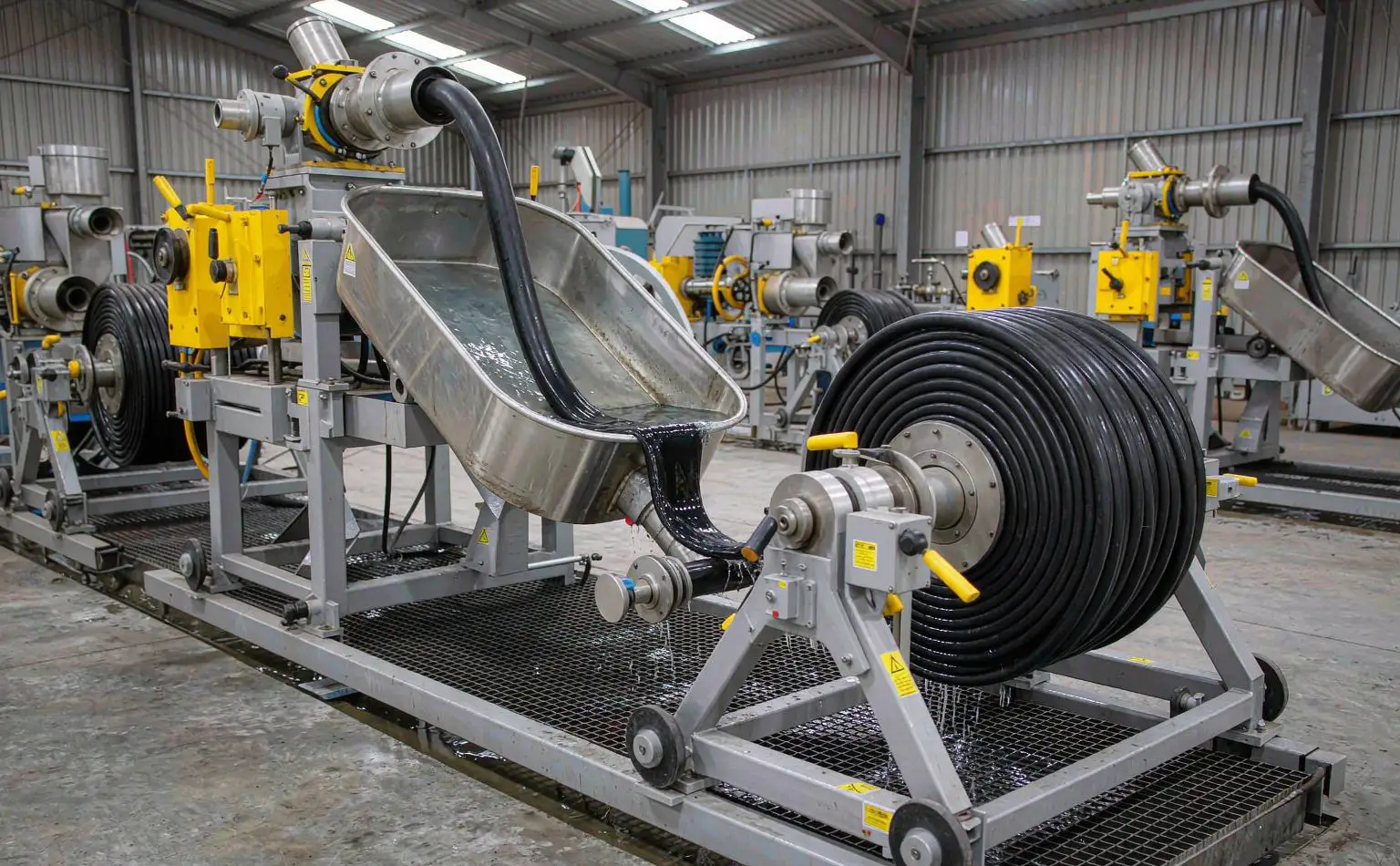
5. Foam-line temperature, curing and keeping water out of the chamber
Foam-line temperature decides cell structure and decides whether the additive survives. Hold the component temperature inside the supplier’s window and treat even mould temperature as more important than pushing it higher; after demoulding, give the leaf time to cure so the residual reaction finishes and moisture can diffuse out. Stacking too early traps that water in the core. Keep the curing area ventilated, with leaves standing upright and spaced, never flat-stacked.
Cut-outs are the other entry. After the lock, hinge and viewer holes are cut, blow the chips out and seal or dot-glue the edge so the foam section is covered – that section is open-cell and the most direct way in. No additive is needed at this step; the seal closes the door.
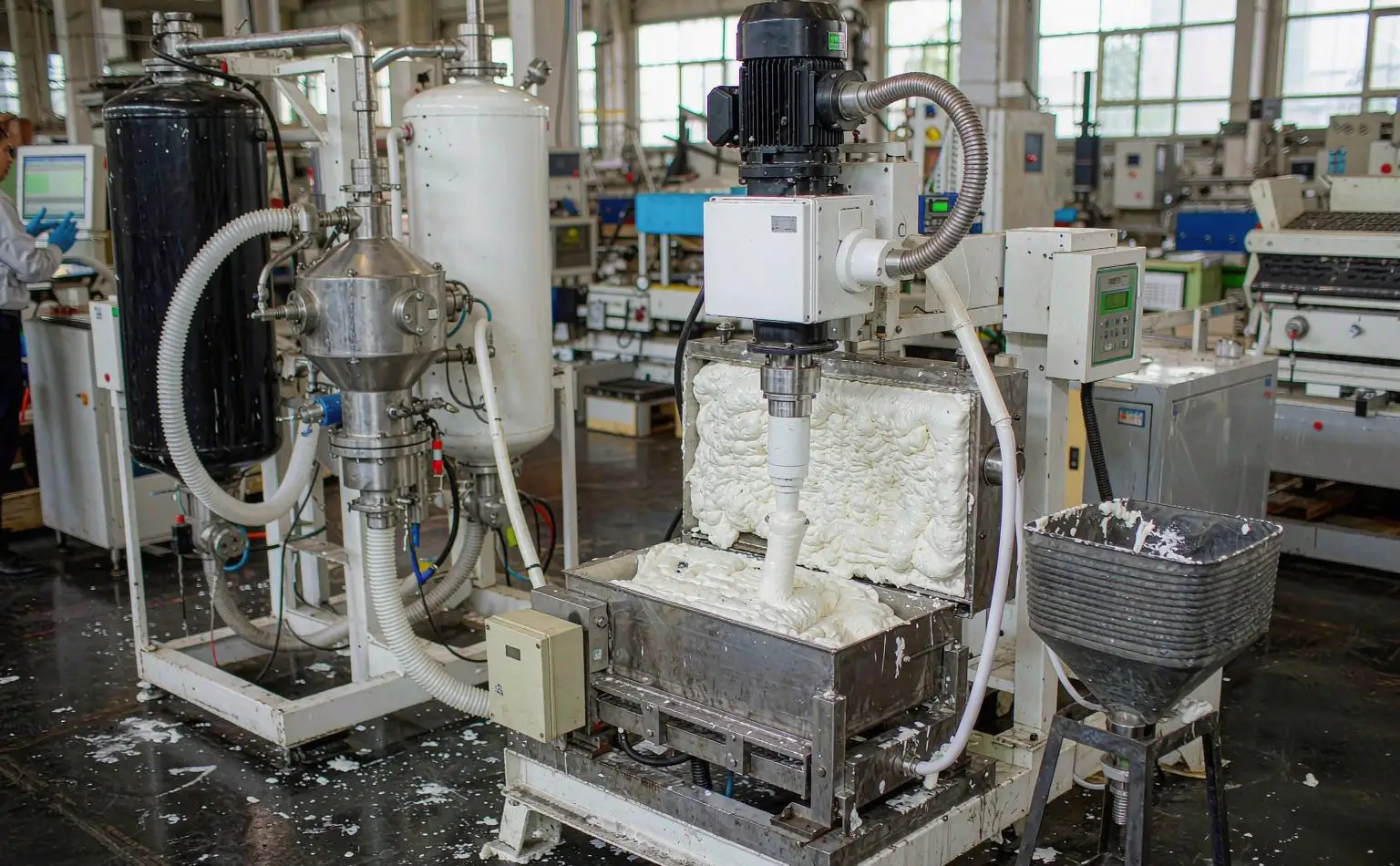
6. Questions: can a spray fix it later, and can one product serve both
Can the core be saved by spraying after the foam has risen? Not really. Once the cells are closed the additive stays on the skin while the interior remains untreated, and core mould usually starts from the cut section and the holes, which is the wrong place for a surface treatment. Dose it in the blend, the only point that reaches the interior.
Can one product serve the gasket and the foam? Not advisable. The gasket is a rubber system where the additive has to disperse in the compound and pass a window below 200C; the foam is a reactive system where it has to sit in the blend and stay stable from pH 1 to 11. Two products, each on its own basis, usually cost less in total. Samples and a TDS are available for both so the figures can be checked against your compound and your blend.
Four closing figures: iHeir-GGTK at 1%-2% on compound weight in the mixing stage, below 200C, never with an anionic additive in the same bath; iHeir-FP at 0.5%-1.5% on total foam weight, pre-mixed into the white component, stable pH 1-11; cut-outs blown clean and sealed so water has no entry; and the core confirmed dry before packing, with the store held below 60% relative humidity.


