




 View Count:48
 Date:2026-10-12
How should the compound be chosen for mould control on plastic houseware? Look at the colour first and the heat window second. Dark parts tolerate colour shift and take iHeir-PSZ104 inorganic plastic antimicrobial agent at 0.5%-1.0% on part weight, while pale and clear parts are sensitive to yellowing and haze and take iHeir-IPL inorganic plastic antimicrobial agent at 0.8%-1.0%, with whiteness above 90 and a particle size of 1-2μm. This article covers the selection for both part types and the figures, and explains why a surface finish is reinforcement rather than a substitute.
1. Clear parts and dark parts differ by more than colour
Plastic houseware covers a wide family of moulded parts: shells, liners, drawers, panels and fittings, in materials from PP and PE to ABS and PMMA. Change the colour or change the resin on the same mould and the same machine, and the selection has to be redone. The difference is not the colour itself but the two demands it brings: how much appearance shift the part tolerates, and what heat window the process runs at.
Dark parts tolerate colour shift and haze, so a standard inorganic plastic antimicrobial agent works, and the focus falls on heat resistance and dispersion. Pale and clear parts carry an extra appearance gate: the compound itself has to be white enough and fine enough, or the part yellows or hazes as soon as it is loaded, and no antimicrobial figure saves a part that fails visual inspection. Those two demands push the work onto two product lines.
Heat is the third line. The compound travels through the whole melt and moulding cycle, so once the process temperature passes the compound’s heat limit it breaks down first, and performance and appearance fail together. The order of selection is therefore: split by colour first, then check the heat window against the process.
2. The two part types at a glance
The table lines up the part type, the appearance demand, the recommended product, the figure and the points to watch, so it can serve as a selection sheet for the existing moulds and colours.
| Part type | Appearance demand | Product | Figure | Points to watch |
|---|---|---|---|---|
| Dark parts: shells, liners, drawers | Tolerates colour shift; heat and dispersion matter most | iHeir-PSZ104 inorganic plastic antimicrobial agent | 0.5%-1.0% on part weight | Whiteness above 90, particle size 1-2μm; heat resistant to 300-320℃, 25kg fibre drum |
| Pale and clear parts: panels, windows, clear covers | No yellowing, no haze, stable transmission | iHeir-IPL inorganic plastic antimicrobial agent | 0.8%-1.0% on part weight | Whiteness above 90, particle size 1-2μm; mix direct or make masterbatch, run a sample first |
| Coated and printed faces | Good adhesion, no dust trapped | None | — | The coating wipes off and cannot hold the compound; pre-treatment matters instead |
| Packing and finished store | No moisture, no fogging | None | Below 60% relative humidity | Dry parts before cartoning; check liner moisture and match desiccants to the carton |
One conclusion from the four rows: the first two split by colour with different figures and different metrics, while the last two dose nothing and rely on pre-treatment and humidity control. Change colour or resin on the same mould and both the choice and the loading have to be recalculated.
3. Dark parts: PSZ104 on total part weight
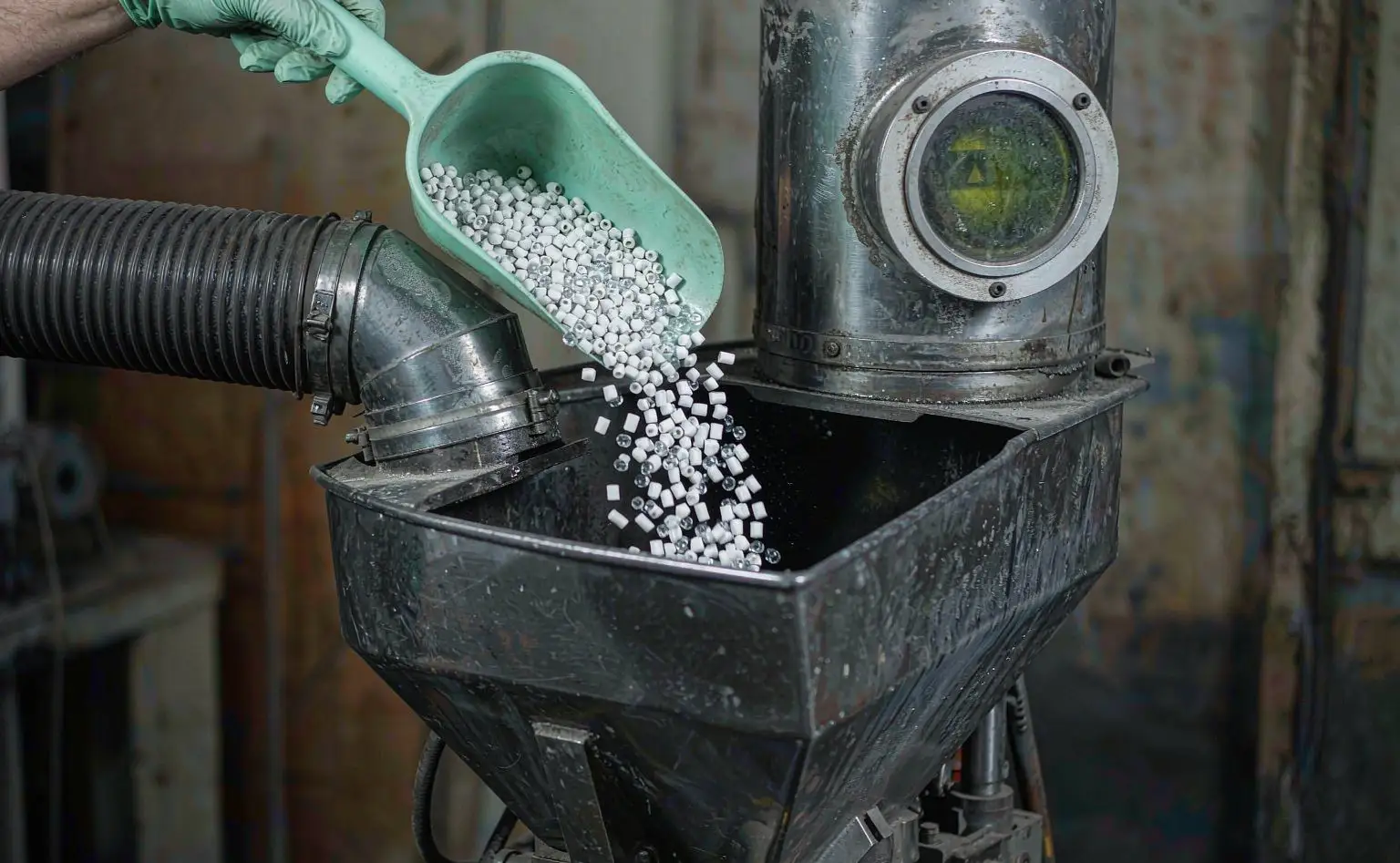
Dark shells, liners and drawers take iHeir-PSZ104 inorganic plastic antimicrobial agent at 0.5%-1.0% on total part weight. PSZ104 is a white powder with whiteness above 90 and a particle size of 1-2μm, withstands 300-320℃ without discolouring, and its fine, evenly distributed particles mix with a wide range of resins after surface treatment, with little effect on processing; it goes in with the resin or as an antimicrobial masterbatch, so the active ingredient is distributed through the part rather than sitting on the surface.
Three details. First, the figure is calculated on total part weight, regrind included, so a change in regrind ratio means recalculating. Second, dispersion matters even on dark parts, because dry-powder charging can leave colour specks in dead zones of the flow, and premixing or masterbatch is the safer route. Third, verification can follow a method in the ISO 22196 family on sample plaques, submitted together with the clear-part plaques against one data set.
4. Pale and clear parts: IPL on total part weight
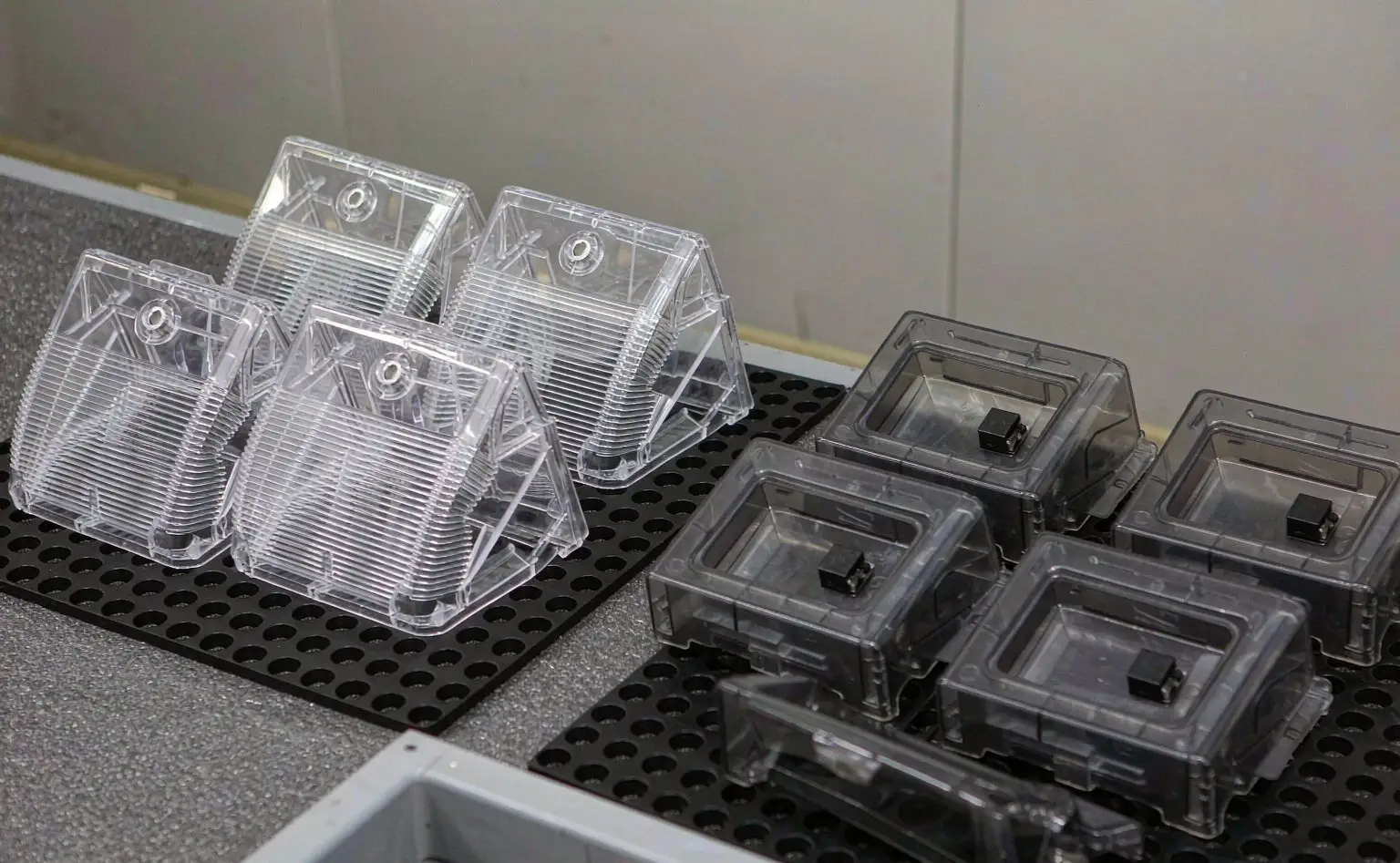
Pale and clear parts move to iHeir-IPL inorganic plastic antimicrobial agent at 0.8%-1.0% on total part weight. IPL uses an inorganic ion as its active core, reaches whiteness above 90 with a particle size of 1-2μm and a large specific surface area, withstands 300-320℃ without discolouring, and neither yellows nor hazes in pale and clear parts; it mixes directly with the resin or can be pre-made into masterbatch.
Three details. First, run a small sample on clear parts to check transmission and colour before a large batch, and never run a clear part on the dark-part grade. Second, screen regrind carefully, because contamination hazes the surface and pale parts show it first. Third, purge the barrel and mould when colours or materials change, since leftover resin is the commonest source of colour shift. IPL and PSZ104 are both inorganic grades with similar heat and appearance behaviour, so the practical difference lies in the loading range and in the trial colouring on the specific part.
5. A surface finish reinforces, it does not replace the resin stage
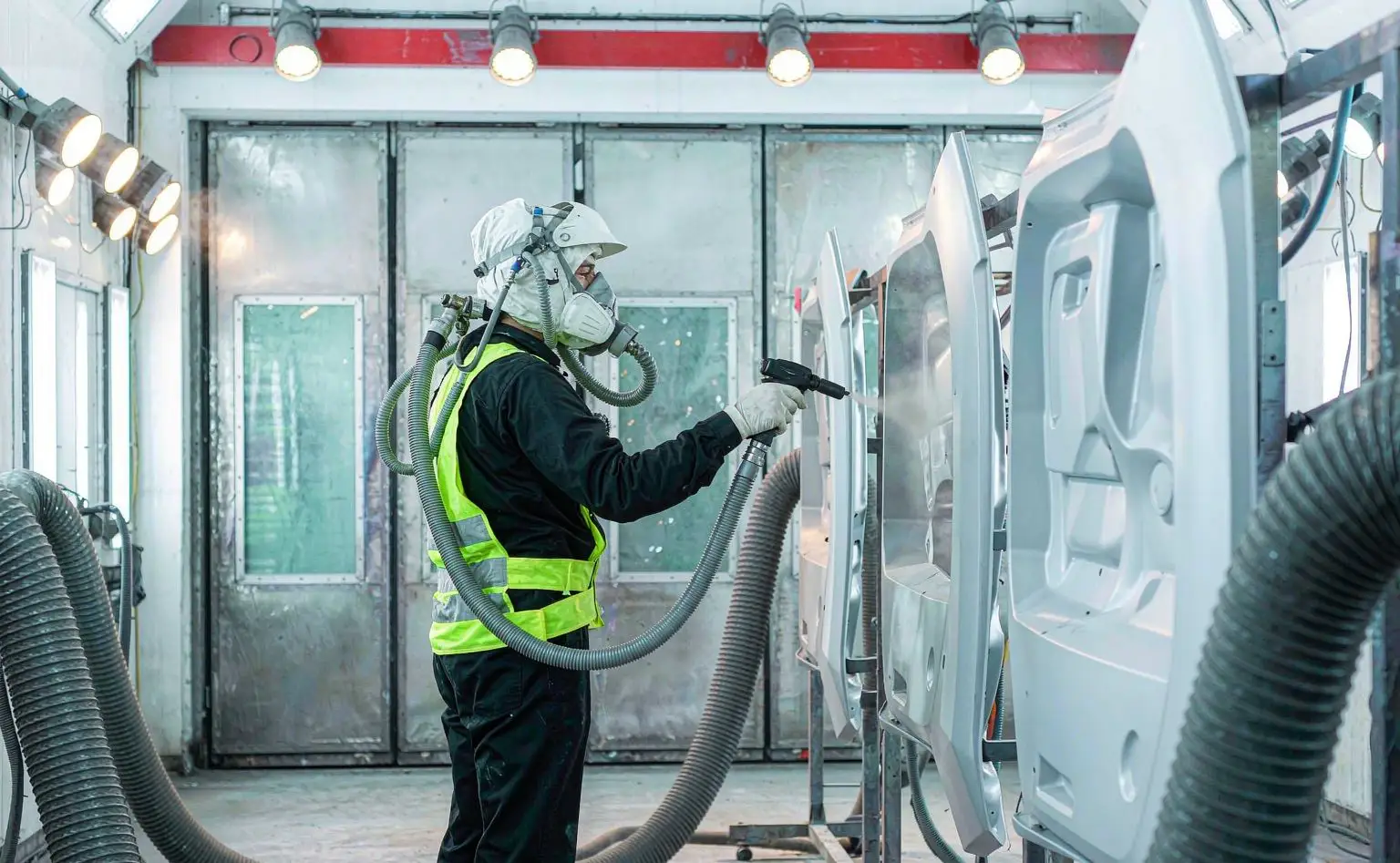
Plenty of lines want to use a spray finish to skip the resin stage, and that step deserves caution. Coatings and inks are thin, the active ingredient stays in the surface layer, and routine wiping and cleaning take it away, while the surface is exactly what gets wiped, washed and knocked through the life of the part. Relying on the surface means putting the protection where it wears off fastest.
The right role for the finishing stage is reinforcement: de-grease and de-dust, clear the release agent so the coating keys, and do not leave dust or grease that gives mould and bacteria a foothold. Where needed, treat a local area to cover corners the resin stage cannot reach. Reinforcement is fine; substitution is not, because on a part that needs long-term protection the layer inside the resin is the one doing the work.
6. Questions that come up: one grade for both, and recalculating after a change
Can dark parts and clear parts use the same grade? Technically yes, but the result has to be read by colour. Dark parts are tolerant and take the standard inorganic grade, while clear parts need a whiter, finer grade checked on a small sample; both are dosed on total part weight and neither the grade nor the figure transfers.
Does a colour change on the same mould mean recalculating? Yes. The figure is on total part weight with regrind included, so a change of resin or of regrind ratio moves the base, and a colour change moves the appearance tolerance as well, so clear parts also need a fresh sample.
Will a high process temperature damage the compound? It depends on the heat window. PSZ104 and IPL both withstand 300-320℃ and leave margin against a normal moulding window, but local overheating and long residence time still bring colour shift and breakdown, so the process ceiling follows whichever of resin and compound is lower.
Two points carry the work: dark parts take iHeir-PSZ104 inorganic plastic antimicrobial agent at 0.5%-1.0% on part weight and pale and clear parts take iHeir-IPL inorganic plastic antimicrobial agent at 0.8%-1.0%, both fed at the resin stage; the finishing and packing stages dose nothing and hold the result through pre-treatment, cleaning and humidity control. Samples and TDS sheets are available to run a colour trial against your moulds.


