




 View Count:56
 Date:2026-10-10
Automotive interior part mould after assembly is a damp problem, so how should the line and the vehicle store each be handled? Finishing the build does not end the risk: dehumidifying the line, holding the store and adding desiccants are three jobs, and miss one and the seats and the headliner suffer first. Hold the store and the export carton with iHeir-D gas-phase antimicrobial and mould inhibitor at 0.1-0.2 g per sheet, and T-1000 desiccant sticks at 8-10 per 20ft box. This article covers the two settings and the figures to check on arrival.
1. Where the damp comes from after assembly: the line and the vehicle store
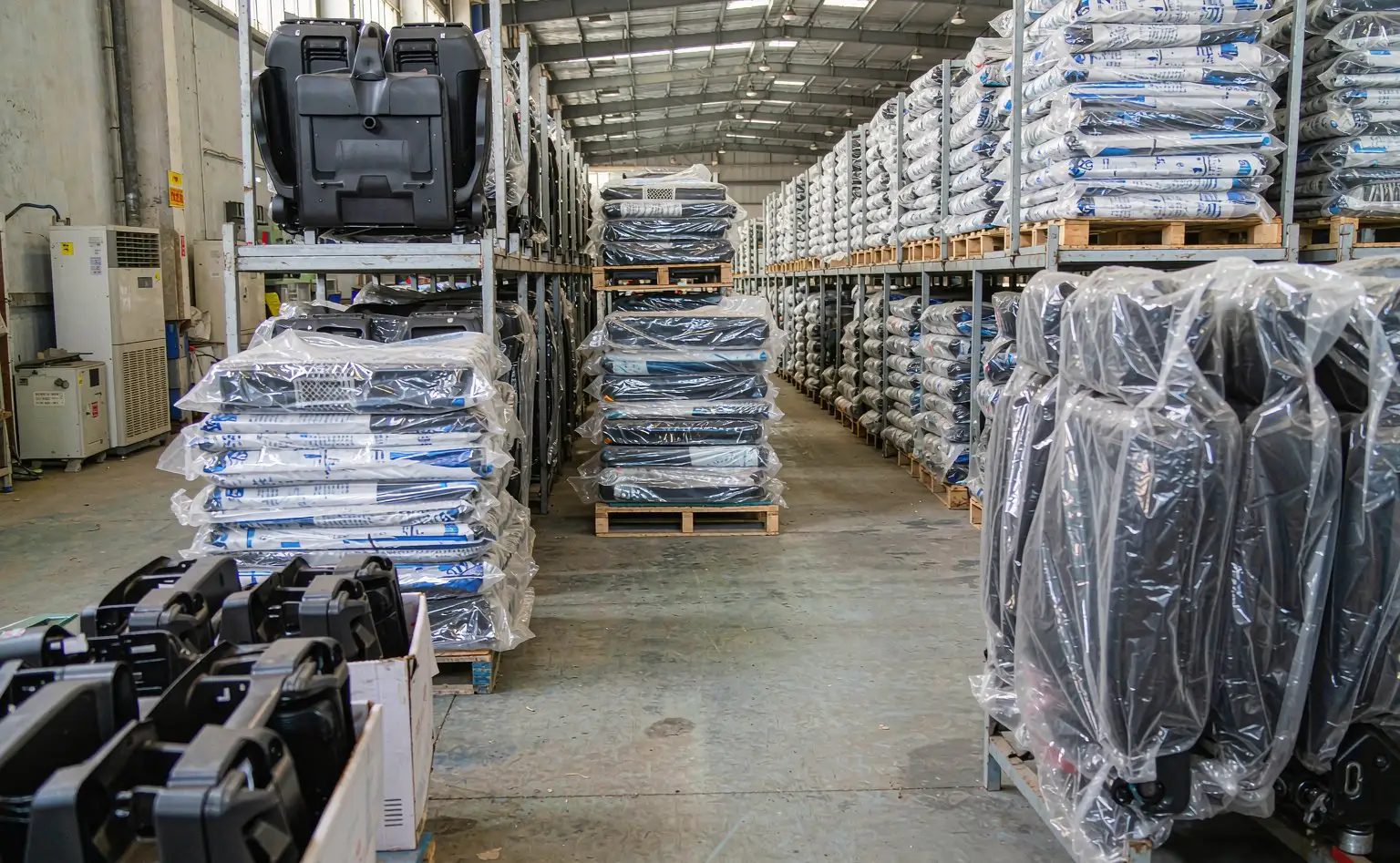
Damp damage on interior parts mostly happens after the build, not during it. The problem on the assembly line is the shop environment: washing and gluing stations nearby carry moisture into the air, benches and tote boxes hold dust and spores, and parts move to the next station before the surface has dried. The problem in the vehicle store is the sealed space: once the interior is fitted to the body, seats, headliner and door panels enclose an air pocket, and a day-to-night temperature swing condenses on the inner faces first.
Seats and headliner are the two big moisture sinks. The seat holds water at the interface between foam and fabric, and the headliner has a paper or composite backing behind the fabric cover, so its regain moves fastest with humidity and spots appear first. Export stacks another layer on top: a sea container swings far more than a warehouse, condensate runs down the container wall, and the first cartons to get wet are the ones stacked against that wall.
So the work splits into two places: hold the humidity on the assembly line so that no part leaves the station wet, then protect the finished vehicles and the parts waiting for the container with gas-phase anti-mould and desiccants inside the box. Leave one out and the spending on the other is cancelled out.
2. The two settings at a glance
The table lines up the node, what is treated, the setting and the figures, so it can serve as the first draft of a warehouse job card.
| Node | Treated item | Setting | Figures | Points to watch |
|---|---|---|---|---|
| Assembly line | Shop air and bench | Dehumidifying and cleaning, no agent | Below 60% relative humidity | Clean benches and totes on a schedule; let parts dry before they leave the station |
| Vehicle store | Sealed cabin air | iHeir-D gas-phase antimicrobial and mould inhibitor | 0.1-0.2 g of active ingredient per sheet | An ink-coated grade placed by part and by cavity; not a spray |
| Export packing, 20ft box | Container air and inner walls | T-1000 container desiccant sticks | 8-10 sticks | Hung on the wall, off the floor and clear of the cargo; cross-linked sodium polyacrylate SAP |
| Export packing, 40ft box | Container air and inner walls | T-1000 container desiccant sticks | 10-12 sticks | Chloride free, pH neutral; keep an air gap to the cargo |
One conclusion from the four rows: the assembly line takes no agent at all, while the store and the container run on gas-phase anti-mould plus in-box desiccants, and the two figures, per sheet and per stick, are never converted into each other.
3. The assembly line: dehumidifying and cleaning, nothing else
The line doses nothing and relies on the environment instead. Hold the assembly line below 60% relative humidity, clean benches and tote boxes on a schedule so dust does not carry spores, and give the gluing and washing stations their own extraction so moisture does not drift onto the fitting stations next door. Measure the surface moisture of the part before it leaves the station, and do not bag a warm part, because a temperature difference condenses inside the bag first.
What this stage buys is simple: no part goes into the store already wet. A part that arrives damp means every desiccant hung afterwards is only mopping up water that was there from the start.

4. Finished store and export packing: gas-phase anti-mould plus in-box desiccants
The store and the container use two products with separate jobs. iHeir-D gas-phase antimicrobial and mould inhibitor is an ink-coated grade at 0.1-0.2 g of active ingredient per sheet, and the vapour it releases builds an inhibiting atmosphere inside a closed space, which suits vehicle cabins, storage pockets and packing boxes; it is placed by part and by cavity rather than sprayed on the surface.
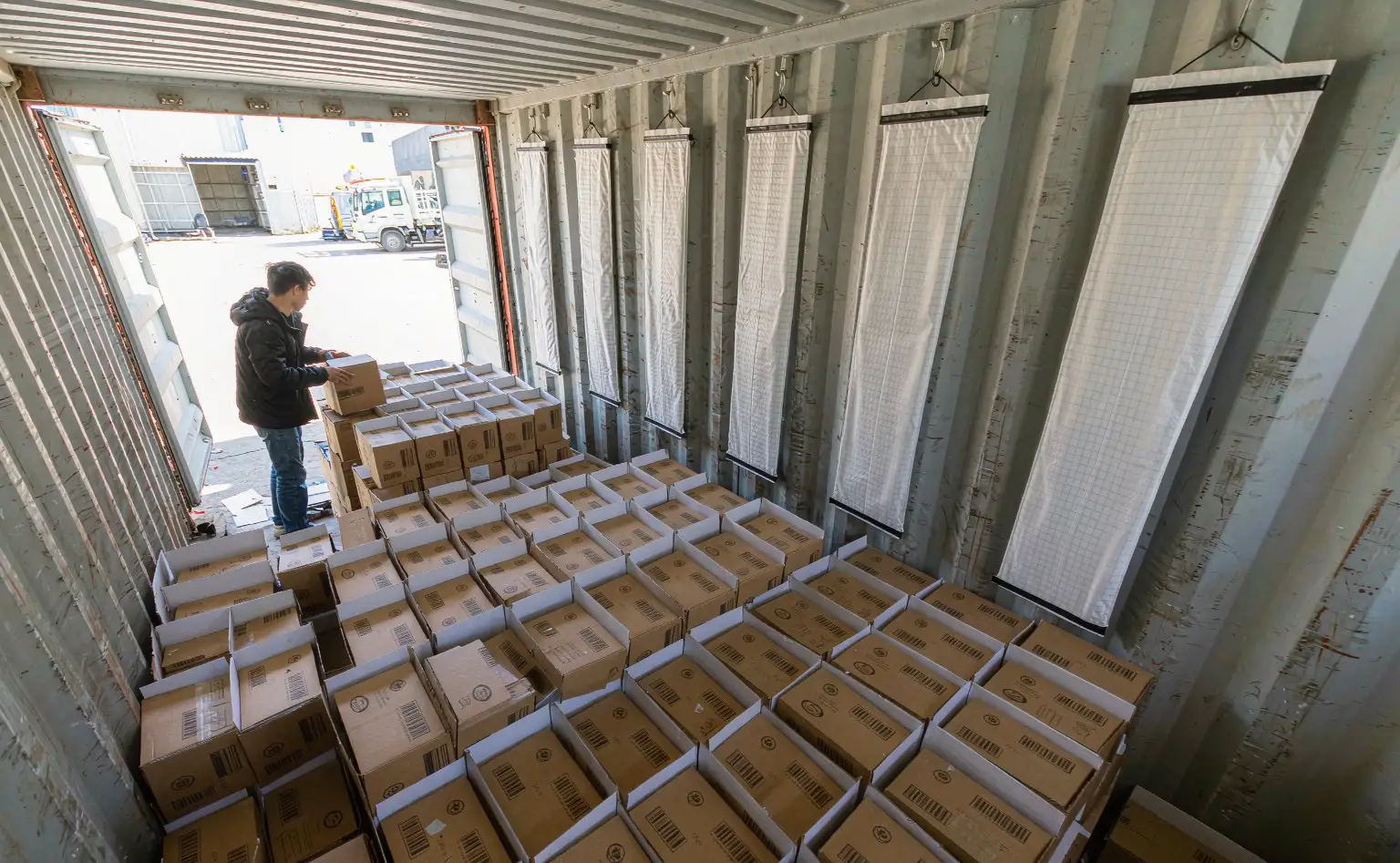
Container humidity goes to T-1000 container desiccant sticks: hang 8-10 in a 20ft box and 10-12 in a 40ft box, along the wall rather than on the floor or against the cargo, leaving an air gap. T-1000 relies on cross-linked sodium polyacrylate, a natural mineral, and contains no chloride, so it is pH neutral and does not leak after it takes up water, which keeps both metal fittings and electronic parts on the interior safe.
Three details. First, the two products cover different ground, one the mould inside a sealed cavity and the other the air and wall condensate of the box, so both are needed. Second, the sticks have to leave an air path, because stacking them by the door or burying them under cartons blocks the absorbing face. Third, measure the moisture content of the interior parts before loading, since no desiccant can catch up with water that is already inside the part.
5. Seats and headliner: the moisture content of the two big sinks
Seats and headliner are the two places that take up damp again fastest. The seat foam is porous and keeps a layer of water at the fabric interface, and the headliner has a paper or composite backing behind the cover whose regain is the most sensitive to humidity in the whole assembly. Measure both before export and move anything over the limit into a drying room rather than into the container.
Storage layout matters too: keep racks off the floor and off the wall, leave an air path between stacks, and do not push parts into the cold corner of the warehouse, because the cold wall is where condensate is heaviest. Keep export batches in their own zone on a first-in-first-out rule so that an old batch is not buried at the back through a whole rainy season. For batches that have already gone mouldy, the order of rework is set out in mould treatment for car interiors.
6. Questions that come up: extra sheets instead of dehumidifying, and how many sticks
Can extra gas-phase sheets replace dehumidifying the line? No. The water on the line comes from the shop air and from the parts themselves, while gas-phase anti-mould works inside a sealed cavity, so the two are not on the same level; without bringing the humidity down, the sheets are only covering for what leaks earlier.
How many sticks, and where do they go? By box type: 8-10 in a 20ft container and 10-12 in a 40ft container, hung along the wall with an air gap to the cargo rather than laid on the floor or against it. Too few does nothing, and too many block the air path and do nothing either.
A part is slightly damp already, can more desiccant save it? Measure the moisture content first. A slightly damp part goes into a drying room to bring the figure down and is then packed with the normal setting; in-box desiccants handle the air, not the water bound inside the part.
Two points carry the work: hold the assembly line below 60% relative humidity with benches and totes cleaned on a schedule, and hold the store and the export carton with iHeir-D gas-phase antimicrobial and mould inhibitor (0.1-0.2 g of active ingredient per sheet) for the sealed cavities and T-1000 container desiccant sticks (8-10 per 20ft box, 10-12 per 40ft box) for the container air. Samples and TDS sheets are available to match the setting to your box type and model.


