




 View Count:36
 Date:2026-10-12
How is mould control on plastic houseware handled when it lives in the constant damp of a bathroom or a kitchen? Moisture is high and washing is frequent, so the protection inside the material has to keep up. The resin stage carries it by colour and heat window: pale and clear parts take iHeir-IPL inorganic plastic antimicrobial agent at 0.8%-1.0% on part weight, and parts that need long weather and colour resistance take iHeir-IPI001 inorganic zinc-ion compound antimicrobial agent at 0.8%-1%, while the finishing stage only cleans and reinforces the contact areas. This article covers the selection for both stages and the verification figures.
1. Constant damp in bathrooms and kitchens, and what carries the part
What bathrooms and kitchens share is long-term humidity: vapour never quite clears, surfaces hold water, and washing happens often. Trouble in this setting is rarely a one-off event; it builds up through repeated wetting, with grey spots appearing on the surface first and seams and threads darkening before anything shows on the outside, by which point the material has already started to change.
Because the damp is long term, the selection weights two things: the protection has to keep up, and the appearance has to hold. Keeping up means the compound goes into the material and spreads through the whole part rather than sitting in a thin surface layer; holding appearance means the compound itself is white and fine enough to survive long exposure to light and washing without yellowing or hazing.
That lands on two stages. The resin stage is the dosing point, choosing IPI001 or IPL by colour and heat window, while the finishing stage doses nothing and handles pre-treatment and local reinforcement. Most of the spotting that comes back later traces to one of those two stages being left half done.
2. The resin stage and the finishing stage at a glance
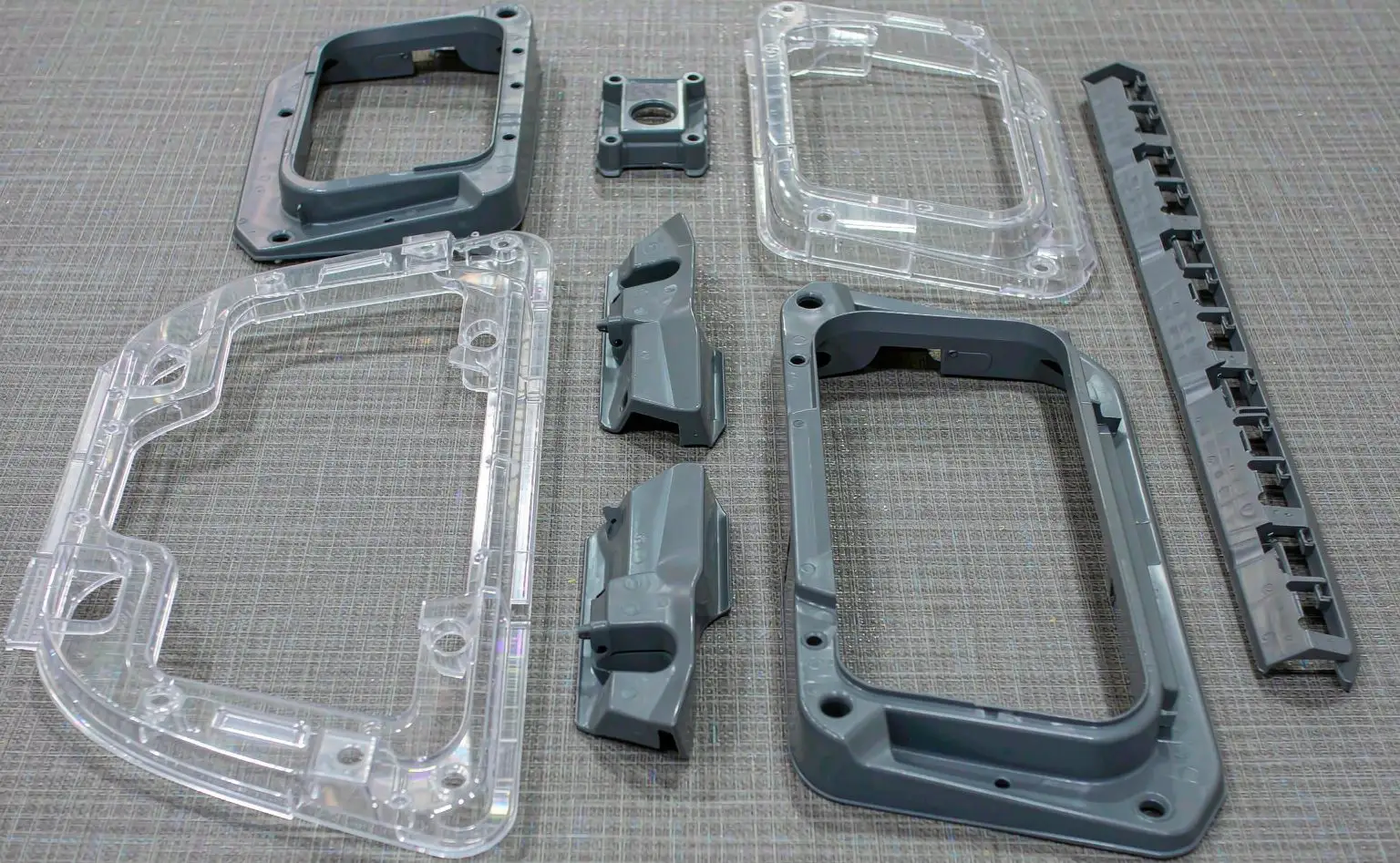
The table lines up the stage, the part type, the recommended product, the figure and the points to watch, so it can serve as the first draft of a process card.
| Stage | Part type | Product | Figure | Points to watch |
|---|---|---|---|---|
| Resin | Pale and clear parts: panels, windows, clear covers | iHeir-IPL inorganic plastic antimicrobial agent | 0.8%-1.0% on part weight | Whiteness above 90, particle size 1-2μm, heat resistant to 300-320℃; run a colour sample |
| Resin | Parts needing long weather and colour resistance: shells, brackets | iHeir-IPI001 inorganic zinc-ion compound antimicrobial agent | 0.8%-1% on total final product weight | Heat resistant above 380℃, particle size D90 below 3μm; colour and UV resistant, 10kg pack |
| Finishing | Contact areas and assembly faces | None, cleaning and reinforcement only | — | De-grease and de-dust; the coating wipes off and cannot carry the job |
| Packing and storage | Finished parts and carton liners | None | Below 60% relative humidity | Dry parts before cartoning; check liner moisture and match desiccants to the carton |
One conclusion from the four rows: the two resin rows split by part type, one carrying transmission and whiteness and the other long weather and colour resistance, while the finishing and packing rows dose nothing and hold the result through cleaning and humidity control. Lose one row and performance in constant damp drops with it.
3. Resin stage: IPL or IPI001 by colour and heat window
Pale and clear parts take iHeir-IPL inorganic plastic antimicrobial agent at 0.8%-1.0% on total part weight. IPL uses an inorganic ion as its active core: a white powder with whiteness above 90, a particle size of 1-2μm, an even particle distribution and a large specific surface area, it withstands 300-320℃ without discolouring and neither yellows nor hazes in pale and clear parts, mixing directly with the resin or pre-made into masterbatch.
Parts with higher demands on long weather and colour resistance take iHeir-IPI001 inorganic zinc-ion compound antimicrobial agent at 0.8%-1% on total final product weight. IPI001 uses an inorganic zinc-ion compound as its active ingredient: a white powder with whiteness above 90 and a particle size of D90 below 3μm, heat resistant above 380℃, with good colour resistance and UV resistance, dispersing without agglomeration into a wide range of substrates; it contains no arsenic and no tin and no VOCs, and ships in 10kg packs.
Two checks decide between them. The first is appearance: parts judged on transmission and whiteness go to IPL, parts judged on long light exposure and colour resistance go to IPI001. The second is heat: both sit above a normal moulding window, but local overheating and long residence time still bring colour shift, so the process ceiling follows whichever of resin and compound is lower. Once both checks are settled, the figure is calculated on total part weight.
4. Finishing stage: how the contact areas are reinforced
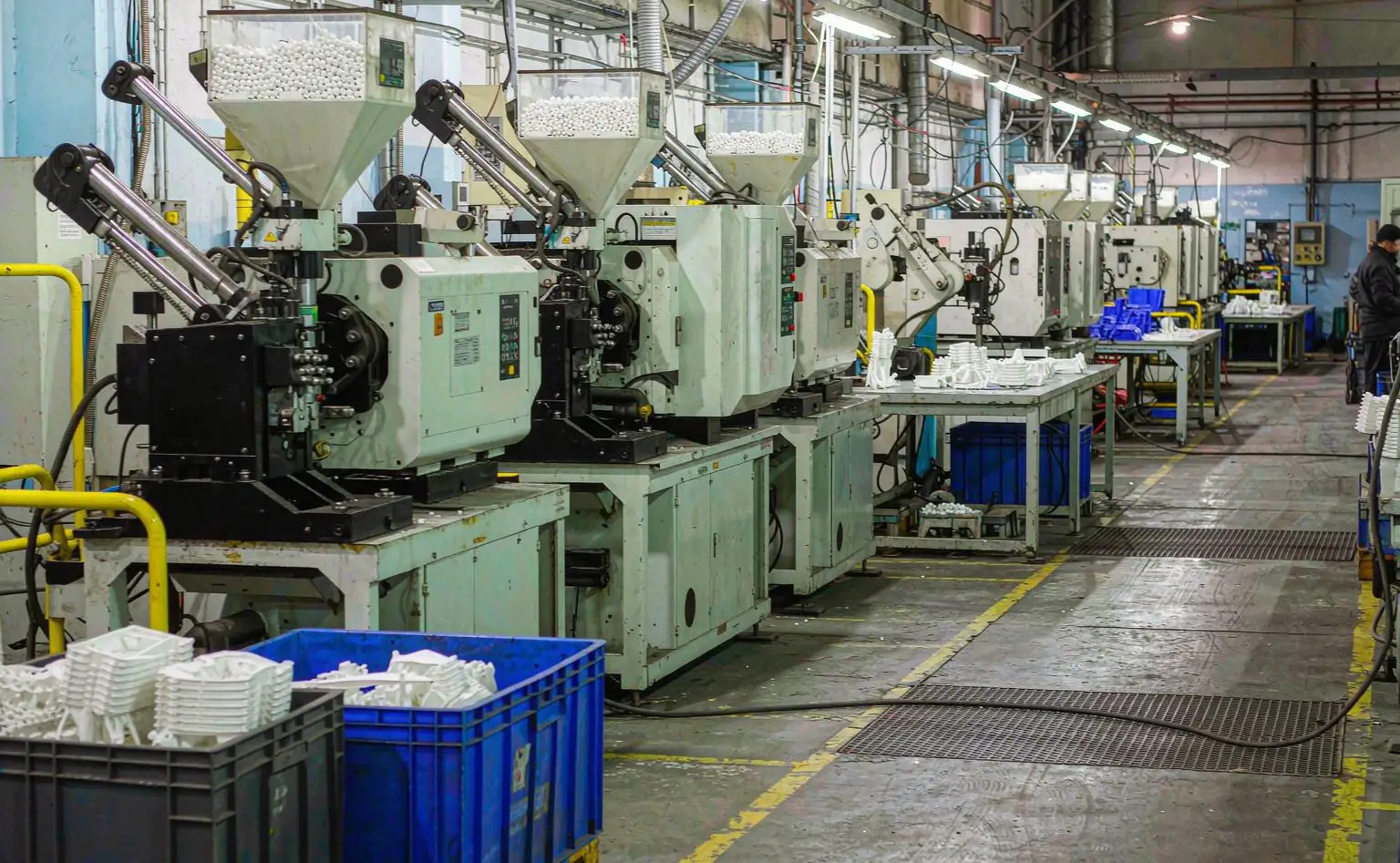
The finishing stage doses nothing and does pre-treatment and local reinforcement. Pre-treatment removes oil and dust and clears the release agent so coatings and prints key properly, and keeps dust and grease off the surface where mould and bacteria would settle. In a long-term damp setting the seams, threads and handles are the first to trouble, so a local treatment there covers the corners the resin stage cannot reach.
Reinforcement is fine; substitution is not. Coatings and inks are thin, the active ingredient stays in the surface layer, and routine wiping and frequent washing take it away, while the layer inside the material is what carries the part through constant humidity. A finishing stage that is clean and correctly placed simply stops the resin stage’s work being discounted.
5. Selection and verification: whiteness, particle size and sample plaques
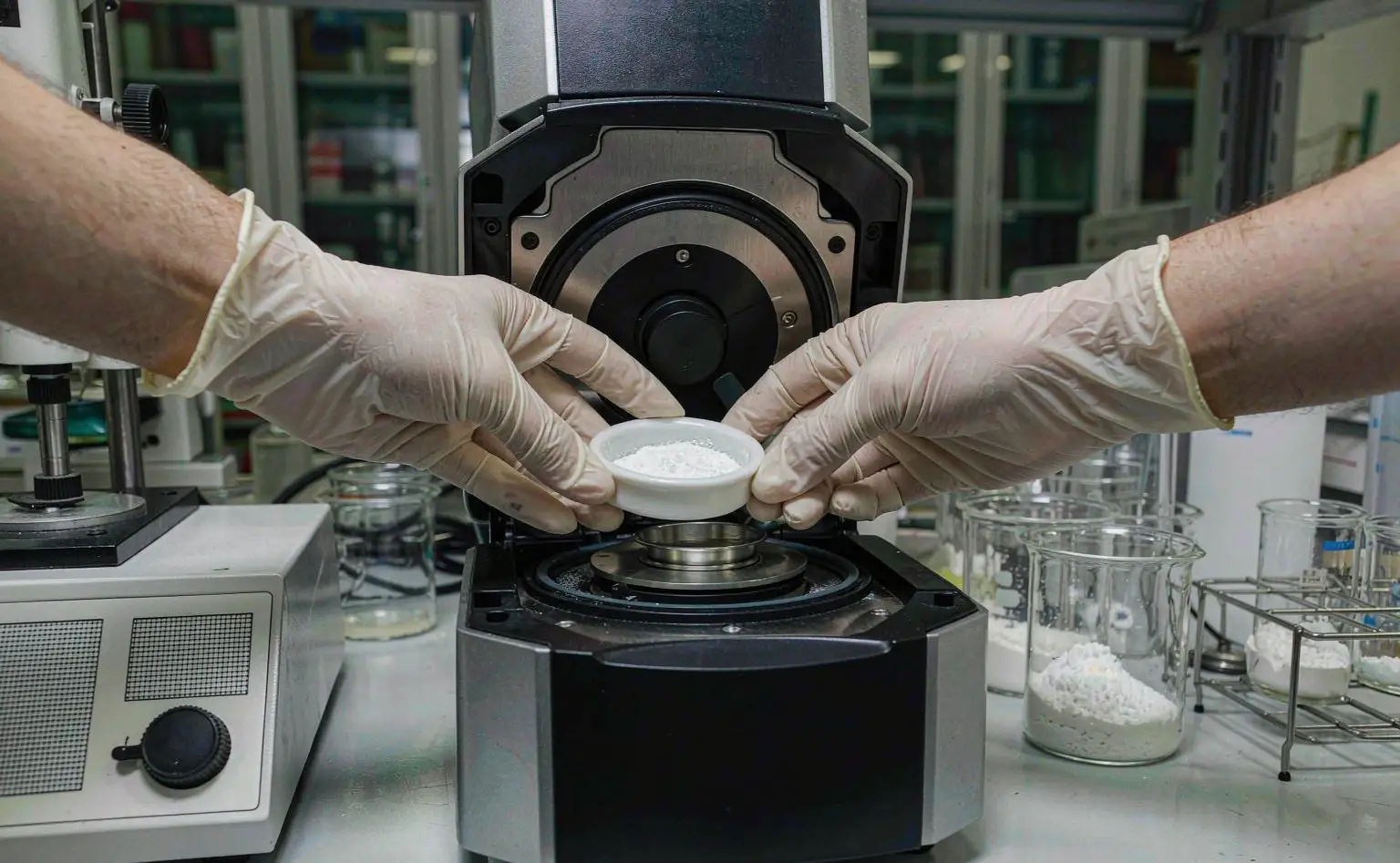
Selection rests on three parameters: whiteness, particle size and heat. Whiteness sets the appearance ceiling, particle size sets dispersion and haze, and heat decides whether the compound survives the process. IPL offers whiteness above 90, a particle size of 1-2μm and heat resistance to 300-320℃; IPI001 offers whiteness above 90, a particle size of D90 below 3μm, heat resistance above 380℃, plus colour and UV resistance, and those last two matter most on parts that sit in damp and in light at the same time.
For verification, a method in the ISO 22196 family can be run on sample plaques with the clear-part and weather-exposed plaques submitted together against one data set, and a colour and haze comparison added for appearance. For the differences between engineering plastics and commodity plastics, the selection logic is set out in antimicrobial selection for transparent engineering plastic parts.
6. Questions that come up: swapping grades, and dosing more for damp
Can IPL and IPI001 be swapped directly? Not advisable. Both are inorganic with a similar loading range, but they lean different ways: IPL towards transmission and whiteness, IPI001 towards long colour resistance and UV resistance. A swap means a fresh sample and a fresh look at both colour and haze.
Does constant damp call for a higher figure? Not as a fix. The figure is on total part weight and going past the recommended range does not improve the long-term result, it only hurts appearance and processing first; constant damp is handled by getting the material layer, the finishing stage and the packing stage all right.
Can the resin stage run alone without finishing and packing? Not in constant damp. The finishing stage covers cleaning and reinforcement of contact areas and the packing stage covers humidity, and missing either shows up before or after dispatch. The three work as one set, the resin stage for the body and the other two for the environment.
Two points carry the work: the resin stage doses by part type, with iHeir-IPL inorganic plastic antimicrobial agent at 0.8%-1.0% on part weight for pale and clear parts and iHeir-IPI001 inorganic zinc-ion compound antimicrobial agent at 0.8%-1% on total final product weight for parts needing long weather and colour resistance; the finishing and packing stages dose nothing and hold the result through pre-treatment, cleaning and humidity control. Samples and TDS sheets are available to check the selection against your part types and service conditions.


