




 View Count:48
 Date:2026-10-12
How much goes in at each step for mould control on plastic houseware? Of the three stages, only the resin stage carries an anti-mould compound, while finishing and packing run on cleaning and humidity control. Dose iHeir-ECO plastic antimicrobial agent at 0.3%-1.0% on part weight for dark parts, and switch to iHeir-IPL inorganic plastic antimicrobial agent at 0.8%-1.0% for pale or clear parts. This article covers the figures for each stage.
1. Which stage carries the compound
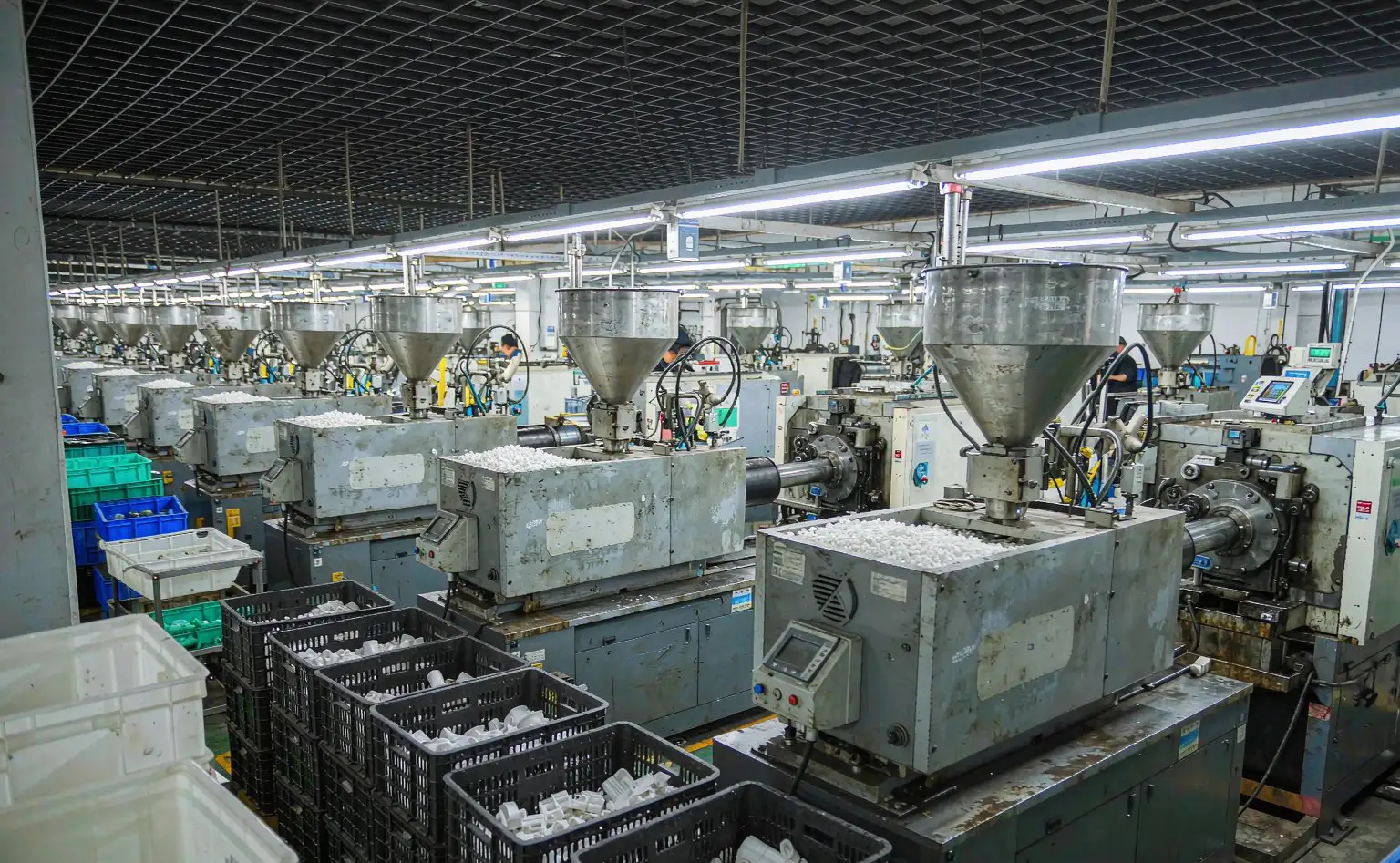
Production of plastic houseware splits into three stages: the resin stage (weighing, extrusion, moulding), the finishing stage (sanding, spraying, screen printing) and the packing stage (assembly, liner, carton). An anti-mould compound only works in the first one, because it has to pass through melt and moulding with the resin and ends up spread through the whole part instead of sitting on the surface. No amount of work on the last two stages brings back a part whose body already carries spores.
Dark parts and pale or clear parts have to be separated at the same stage. Dark parts tolerate colour shift and take a standard plastic antimicrobial agent; pale and clear parts are sensitive to yellowing and haze, so they need an inorganic grade with high whiteness and fine particle size. Choose wrong here and the appearance fails first, before anyone gets to measure antimicrobial performance.
The finishing stage and the packing stage carry no antimicrobial agent. Coatings and inks are thin, so the active ingredient cannot hold there and is wiped off in routine cleaning, which means putting the compound exactly where it wears away fastest. What the packing stage really fights is moisture, handled by humidity control and liners rather than by loading the part again. Get that split straight and the figures per stage start to mean something.
2. The three stages at a glance
The table lines up the stage, what it treats, whether it is dosed, the figure and the points to watch, so it can serve as the first draft of a process card.
| Stage | Treated item | Dosing | Figure | Points to watch |
|---|---|---|---|---|
| Resin | Dark shells, inner liners and housings | iHeir-ECO plastic antimicrobial agent | 0.3%-1.0% on part weight; 0.3%-0.5% for PE/PP | Feed with masterbatch or premix; heat stable to 240℃, stay clear of 320℃ |
| Resin | Pale and clear plastic parts | iHeir-IPL inorganic plastic antimicrobial agent | 0.8%-1.0% on part weight | Whiteness above 90, particle size 1-2μm, heat resistant to 300-320℃; run a small sample first |
| Finishing | Sprayed and screen-printed faces | None | — | De-grease and de-dust before coating; a surface compound wipes off and cannot carry the job |
| Packing | Finished parts and carton liners | None | Below 60% relative humidity | Let parts dry before cartoning; check liner moisture and match desiccants to the carton |
One conclusion from the four rows: only the first two are dosed, and they are split by colour, while the last two hold the result with cleaning and humidity control. Leave one out and part of what went in earlier is cancelled.
3. Resin stage: ECO for dark parts, IPL for pale and clear parts
Dark shells and liners take iHeir-ECO plastic antimicrobial agent at 0.3%-1.0% on total part weight, and general PE and PP take 0.3%-0.5%, fed with the resin or as an antimicrobial masterbatch. ECO bonds with the resin and spreads through the whole part, so washing and wiping do not remove it; it is heat stable to 240℃, processing should stay below 320℃, and a change of regrind ratio means recalculating the addition rate.
Pale and clear parts move to iHeir-IPL inorganic plastic antimicrobial agent at 0.8%-1.0% on total part weight. IPL uses an inorganic ion as its active core and reaches a whiteness above 90 with a particle size of 1-2μm, so it neither yellows nor hazes in pale and clear parts and is heat resistant to 300-320℃; it mixes directly with the resin or can be pre-made into masterbatch. Three details: run a small sample on clear parts to check transmission and colour; screen regrind carefully, because contamination hazes a clear part quickly; and purge the barrel and mould when colours or materials change, since leftover resin is the commonest source of colour shift.
Verification on the resin stage can follow a method in the ISO 22196 family on sample plaques, with the dark-part and clear-part plaques submitted together so both read against one data set.
4. Finishing stage: no compound, just pre-treatment and cleaning
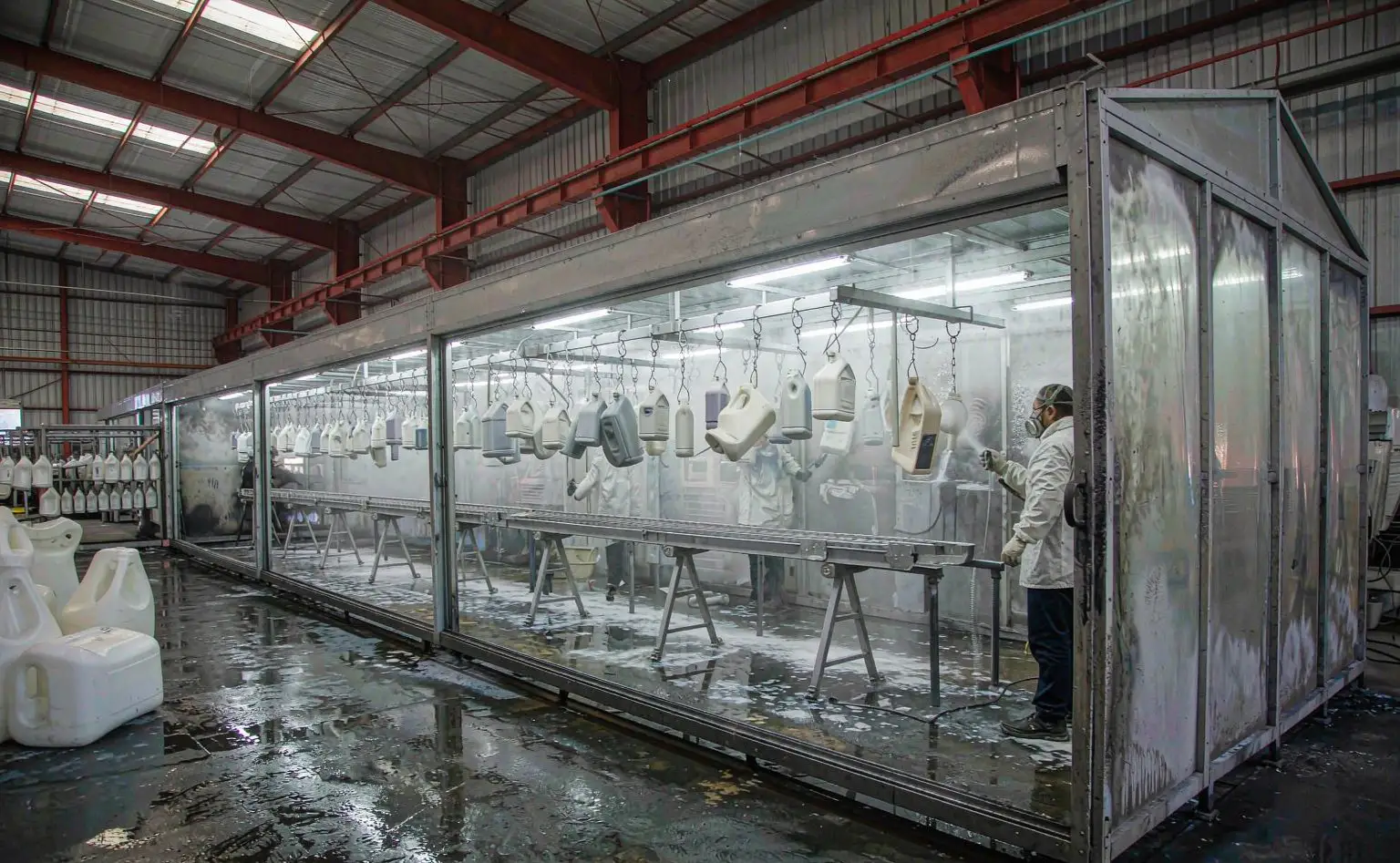
The finishing stage, whether sanding, spraying or screen printing, doses nothing. The reason is plain: the coating and ink film is thin, the active ingredient cannot hold there, and routine wiping and cleaning take it away, while the part that needs long protection is the body, and that is the resin stage’s job. What the finishing stage owes is pre-treatment: remove oil and dust, clear the release agent so the coating keys properly, and do not leave dust or grease on the surface, because that is where mould and bacteria settle.
The shop environment matters the same way. Give sanding and spraying their own extraction so moisture does not drift to the neighbouring transfer area, and clean tote boxes and racks on a schedule so dust does not carry spores. A clean finishing stage simply stops surface soil from masking what the resin stage achieved.
5. Packing stage: humidity and liners, two jobs
The packing and storage stage doses nothing either and runs on humidity control. Hold the finished-goods store and the assembly area below 60% relative humidity, carton only parts that have dried, and do not bag a warm part, because a temperature difference condenses inside the bag first. Measure the moisture content of liners and cards before cartoning and move anything over the limit into a drying room rather than into the carton.
Export adds another layer: sea voyages are long, a container swings far more than a warehouse, condensate runs down the container wall, and the first cartons to get wet are the ones stacked against it. Match desiccants to the container type and let them work with the liner to hold the packing stage. For batches that have already spotted, decide first whether the spores came in with the resin or grew from a damp environment before choosing rework or downgrading; the order of work is set out in plastic parts going mouldy in stock before export.

6. Questions that come up: resin stage only, and choosing for clear parts
Can we run the resin stage alone and skip the other two? No. The resin stage covers the body of the part, while surface soil and packing moisture are outside its reach, so a part cartoned damp or left greasy still spots. The three stages work as one set.
Can clear parts simply follow the dark-part figure? No. Clear parts are sensitive to yellowing and haze and need an inorganic grade with whiteness above 90 and a particle size of 1-2μm, checked on a small sample for transmission and colour; the dark-part grade and its figure do not transfer.
With the compound in, is humidity control still needed? Yes. Protecting the body and controlling ambient moisture are separate jobs, and the resin additive cannot reach the water inside a carton, so storage and packing controls stay in place.
Three points carry the work: dosing happens only at the resin stage, with iHeir-ECO plastic antimicrobial agent at 0.3%-1.0% on part weight for dark parts and iHeir-IPL inorganic plastic antimicrobial agent at 0.8%-1.0% for pale and clear parts; the finishing stage carries no compound and manages pre-treatment and cleaning; and packing and storage hold below 60% relative humidity with liner moisture checked. Samples and TDS sheets are available to run a trial against your line and colours.


