




 View Count:58
 Date:2026-10-06
How should courier bag mould be treated so it does not come back? A courier bag is a PE or co-extruded blown film, and the film itself does not mould; the spots come from damp resin on one side and a damp store on the other. The film takes iHeir-ECO plastic antimicrobial agent at 0.3%-0.5% on resin weight in the blown-film stage, and the store takes iHeir-D gas-phase sheets at 0.1-0.2 gram per sheet. This article covers the film stage and the store, with the figures.
1. Where the mould comes from: the film does not mould, the resin and the store do
A courier bag is a film article blown from PE or co-extruded PE, and the resin carries no starch or protein that a mould can feed on, so the film itself does not mould. The trouble is at the two ends. At the resin end, a high regrind ratio, damp pellets and the organic residue carried in by anti-block and colour masterbatch all feed mould. At the store end, rolls and finished bags are stacked tight, and in the wet season or in a sealed container the core of a stack takes up moisture which then condenses on the film surface, so the deposits on it take up water and become a culture medium.
That is why the spots usually appear as pale rings on the film, most often on the outer wrap of a roll, on the seal edge of a bag and on the outer layer of a finished stack. Those places have something in common: they either meet the damp air most, or they have collected dust and hand sweat. An antimicrobial built into the film holds down organisms growing on the surface, but it cannot hold down a damp store, and that end has to be handled separately with a gas phase and humidity control.
The order matters. The antimicrobial goes in at the blown-film stage and bonds with the plastic, distributed through the whole film layer; the gas-phase sheet belongs to the finished-goods stage. Merge the two into one figure and the percentage meant for the resin gets spent on the air instead, which is wrong at both ends.
2. The two controls at a glance: the film stage and the store
The table lines up the part, the stage, what is treated, the product, the figures and the points to watch, so it can serve as the first draft of a process card.
| Part | Stage | Treated item | Product | Figures | Points to watch |
|---|---|---|---|---|---|
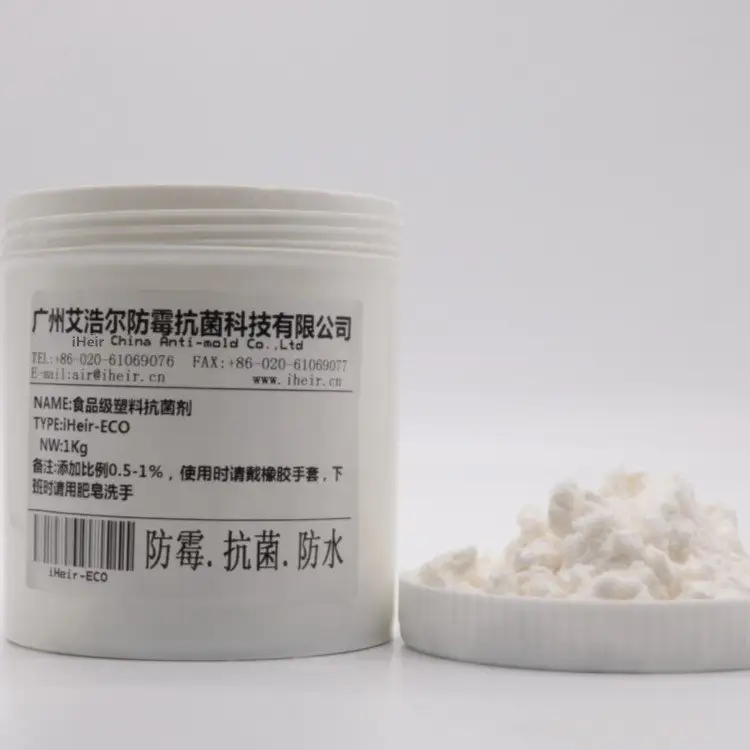
| PE co-extruded film | Blown-film stage | Film resin | iHeir-ECO plastic antimicrobial agent | 0.3%-0.5% on resin weight | In with the antimicrobial masterbatch or a premix; run a small trial on dispersion and film appearance |
| Blowing and winding | Forming | Temperature control | Control only (no agent) | Read the agent’s heat ceiling | ECO holds to 240 degrees and should stay clear of 320; set the ceiling before the line starts |
| Finished rolls, finished-bag stack | Stacking in the store | Air inside the stack | iHeir-D gas-phase antimicrobial and mould inhibitor | 0.1-0.2 gram per sheet | Placed by stack, kept apart from the goods by liner paper; run alongside humidity control |
| Export container | Full container | In-container climate | Humidity control only | By box type and voyage | Condensation inside the box is the ignition point; bring the roll moisture and the store temperature down before loading |
Four rows, one conclusion: the film takes its protection at the blown-film stage, the air inside the stack is held in the store, the temperature row respects the agent’s ceiling, and the container climate preserves both.
3. The film stage: ECO into the hopper at 0.3%-0.5% on PE resin
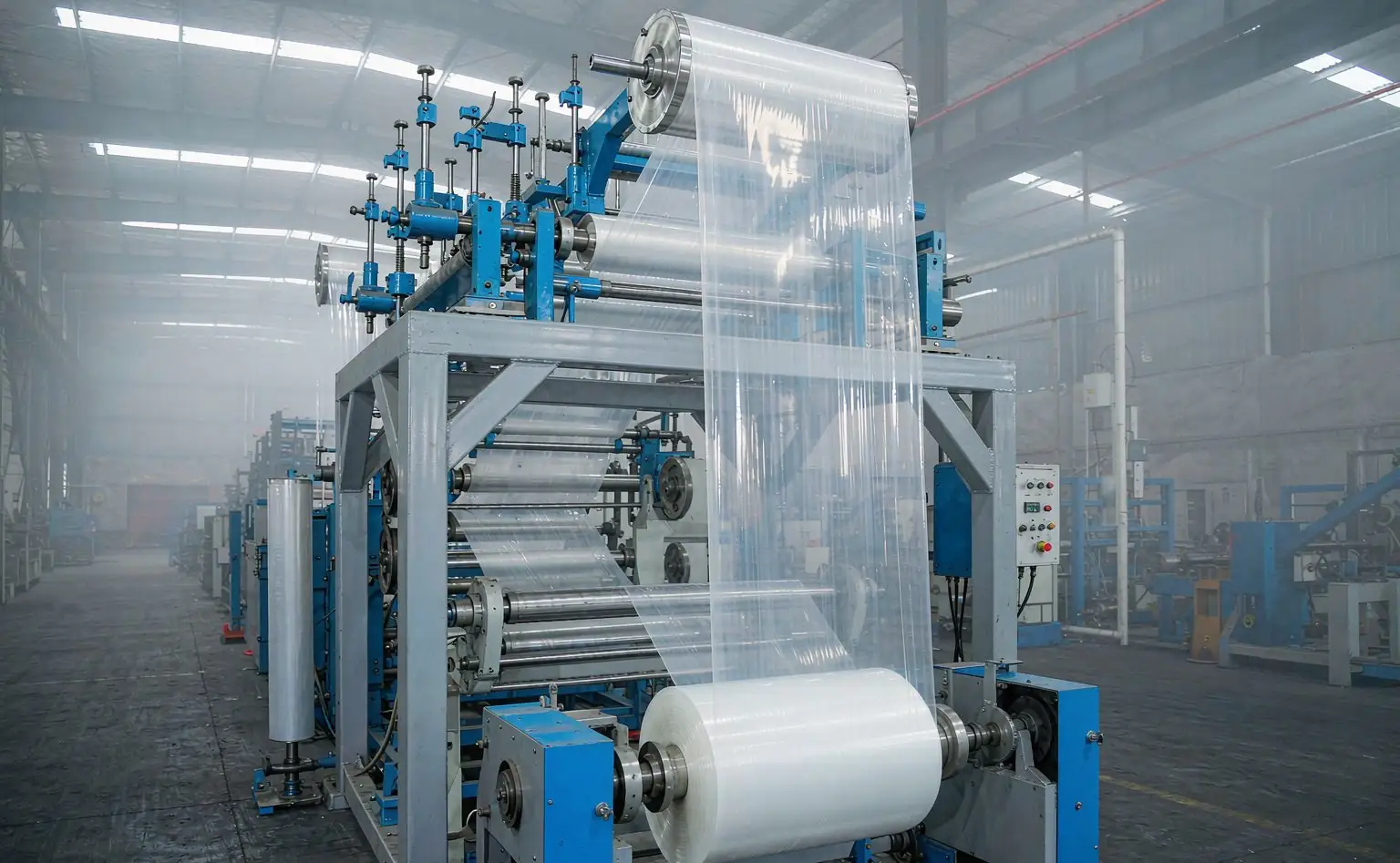
The film is protected as it is blown. Add iHeir-ECO plastic antimicrobial agent at 0.3%-0.5% on PE/PP resin weight, made up first as a masterbatch in a matching carrier or premixed with the pellets before the hopper. The additive bonds with the material and is distributed through the whole film layer rather than sitting on the surface, so converting, sealing and the wear of use will not rub it off. Thermal stability reaches 240 degrees, and the process temperature should stay clear of 320 degrees.
Three details decide the result. First, the figure is on total resin weight, regrind included, so any change in the regrind ratio means recalculating, and high-regrind batches belong at the top of the range because the residue and moisture they bring in feed mould. Second, a courier film is thin and has to stay clear, so it can only be dispersed through a masterbatch or a premix; powder fed straight in agglomerates, and an agglomerate is both a blank spot and a visible gel on the film. Third, run a small trial on dispersion and film appearance before full production.
4. The store and the container: iHeir-D gas-phase sheets by stack
Treating the film is not the end of it; the store is the second line. Finished rolls and bags are stacked tight and air moves poorly through them, so ventilation alone will not carry moisture out of the core of a stack, and a gas-phase product suits the job: have iHeir-D gas-phase antimicrobial and mould inhibitor made up as sheets or sachets and place them by stack, each sheet or sachet carrying 0.1-0.2 gram, so the vapour spreads into the gaps and holds down mould and yeast. See mould spots on film and woven bags for the rework side.
Three points to watch. First, the sheet has to stay separated from the goods by liner paper, not pressed onto the film or the printed face. Second, it works on the air in the space, so the pack has to be reasonably closed; left open it does nothing. Third, iHeir-D can fade some printing inks and dye-sensitive materials slightly, so run a compatibility test at three times the normal loading on a new colourway first.
5. Questions that come up: how much, one figure or two, spraying a finished bag
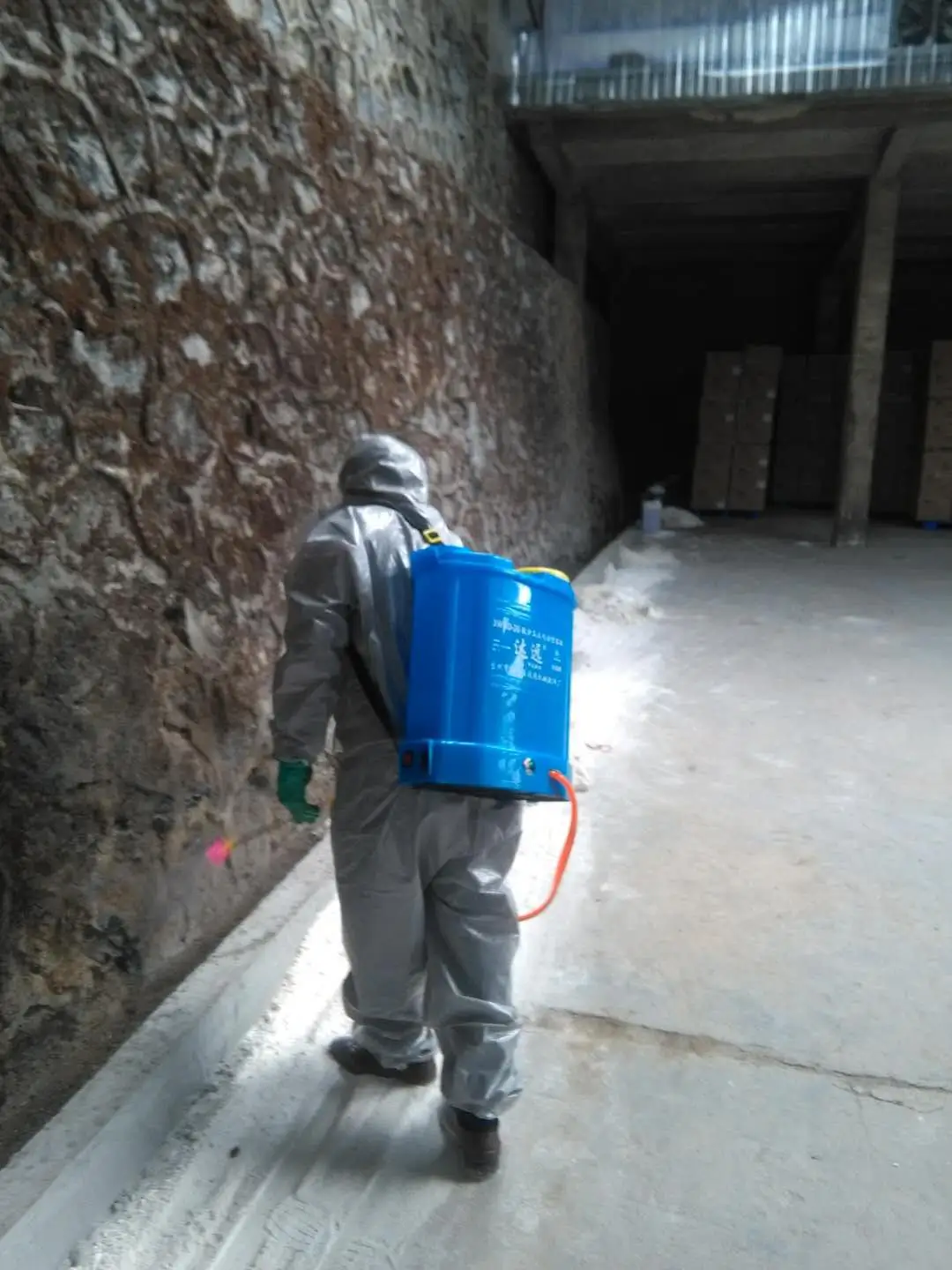
Can a spray on a finished bag make up for it? It reaches the film surface only. The spray cannot enter the film layer, and rubbing, sealing and the creases of use take it off, so the bag is unprotected; the protection has to go in with the resin at the film stage.
Can the resin percentage be used as the space figure? No. The 0.3%-0.5% at the film stage is on resin weight and the 0.1-0.2 gram per sheet in the store is on space, so the denominators differ and copying the number either overshoots or falls short.
Can extra loading make up for a high blowing temperature? No. Temperature above the agent’s ceiling is a loss of activity, not a concentration problem, and extra loading only raises cost while affecting the mechanical properties and clarity of the film. Change to a more heat-tolerant grade or adjust the blowing temperature.
Two dosing points carry the work: the film goes in with the masterbatch at the blown-film stage (iHeir-ECO at 0.3%-0.5% on PE/PP resin, thermal stability 240 degrees, clear of 320 degrees), and the store holds the air in the core of the stack with iHeir-D sheets at 0.1-0.2 gram per sheet, with humidity control and a drop in temperature before loading preserving both. Test the long-term growth by a method such as ASTM G21 and hold a complete sample per batch. Samples and TDS sheets are available for a trial on your own line.


