




 View Count:35
 Date:2026-09-17
Mouldy leather work in progress is a routine rework job every wet season, and the difficulty is the sequence rather than the work itself: clean, sand, recolour and re-protect in the wrong order and the batch comes back a second time. Reinforce inside the system with iHeir-PF at 0.05%-0.2% on hide weight, and treat the finished surface with iHeir-Spray(M3D) and iHeir-QF. This article covers grading, the rework sequence and retesting to ASTM G21.
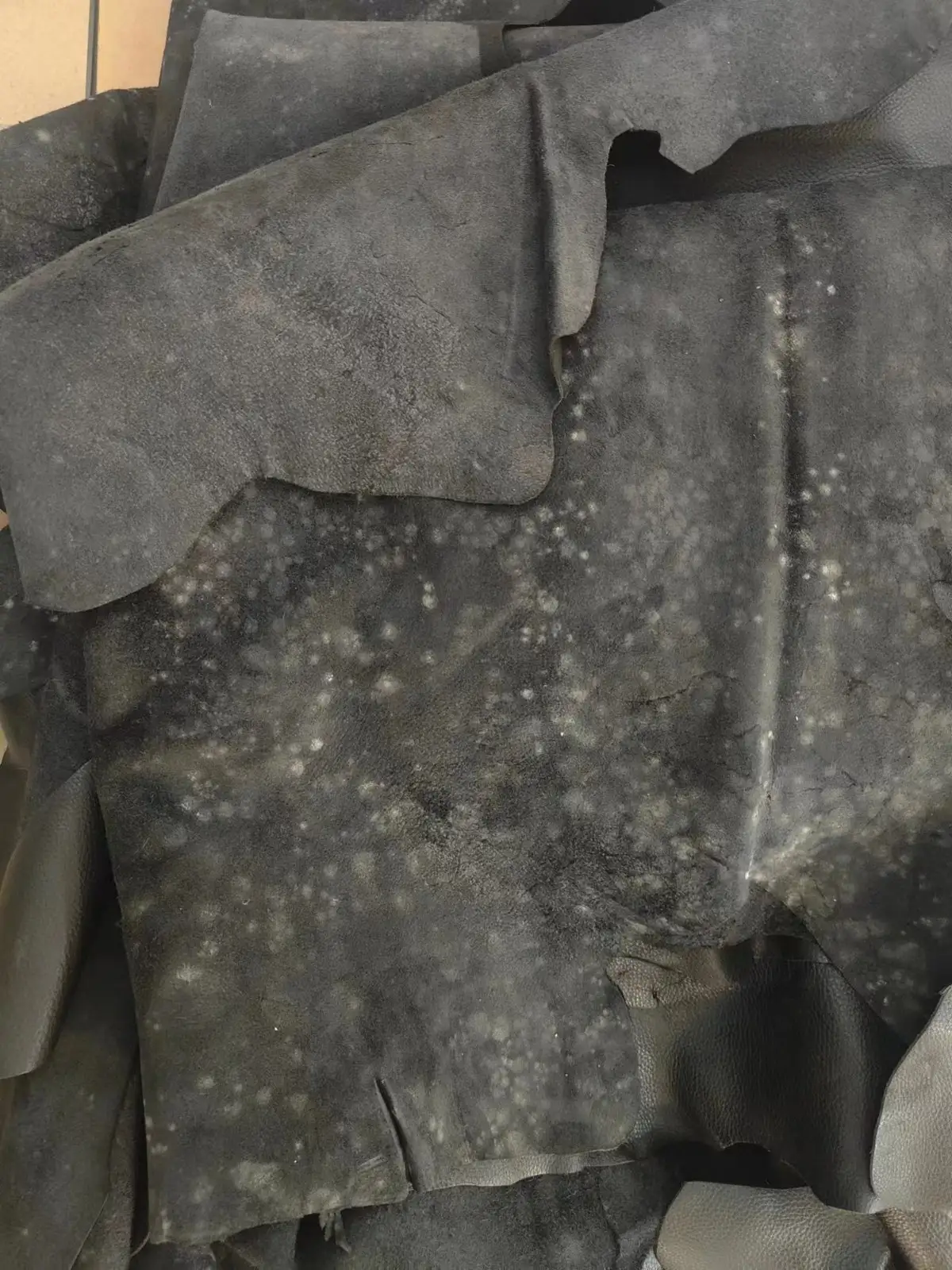
1. Grade it first: is the mildew on the surface or in the finish?
Grade one (surface mildew): frosty or spotted growth that wipes off with an ethanol swab, no colour loss, no tack. This is most of what we see, and cleaning plus re-protection is enough. Grade two (in the finish layer): wiping leaves etched spots or colour difference, so local sanding and recolouring are needed. Grade three (into the grain): etching is deep, the surrounding leather is brittle or discoloured, and sanding would cut through the finish into the middle layer. Those pieces are downgraded to small cut parts or scrapped.
| Grade | What you see | Route | Cost scale |
|---|---|---|---|
| 1 | Frosty spots, lifts with ethanol swab, leather intact | Clean plus surface re-protection | Tens of RMB, under 1 percent of crust value |
| 2 | Etching or colour difference after wiping, finish layer only | Local sanding plus recolouring plus re-protection | Hundreds of RMB including colour materials |
| 3 | Etching into the grain, brittle edges | Downgrade to small parts or scrap | Loss at crust value, batch traceability required |
Two steps decide the grade: one ethanol swab to see whether it lifts, then a magnifier to judge etching depth. From there the route and the man-hours go to sales in one message, and purchasing and QC argue over the same table instead of three opinions.
2. The rework sequence: clean, sand, recolour, re-protect
The classic failure is a beautiful sand-and-recolour job that mildews again two weeks after it goes back to the warehouse. Cleaning removes the visible growth, not the spores sitting on the leather and in the room. Reworked stock without re-protection is half a job. Run the four steps in this order.
Step one, clean: dilute iHeir-Spray(M3D) water-based anti-mould agent with water as needed, wipe the affected areas with a soft cloth and let the leather air dry, never in a hot oven, to avoid shrinking the crust. Step two, sand: skip for grade one; for grade two, fine grit along the grain until the etching disappears, no further. Step three, recolour: prime and topcoat to the original finishing recipe, spot-spray small areas. Step four, re-protect: once dry, spray or wipe a full coat of the agent over the whole piece. This is what keeps reworked stock from relapsing.
A leather-goods factory in South China found three thousand pig crust skins mouldy in April. On this sequence the grade-one pieces went back to the warehouse the same day after cleaning and re-protection, grade two took two days of sanding and recolouring, grade three was downgraded to lining stock, and nothing came back twice. Their QC team now has the grading table posted at the WIP warehouse door.
3. Where the agent goes: PF in the process, Spray and QF on the surface
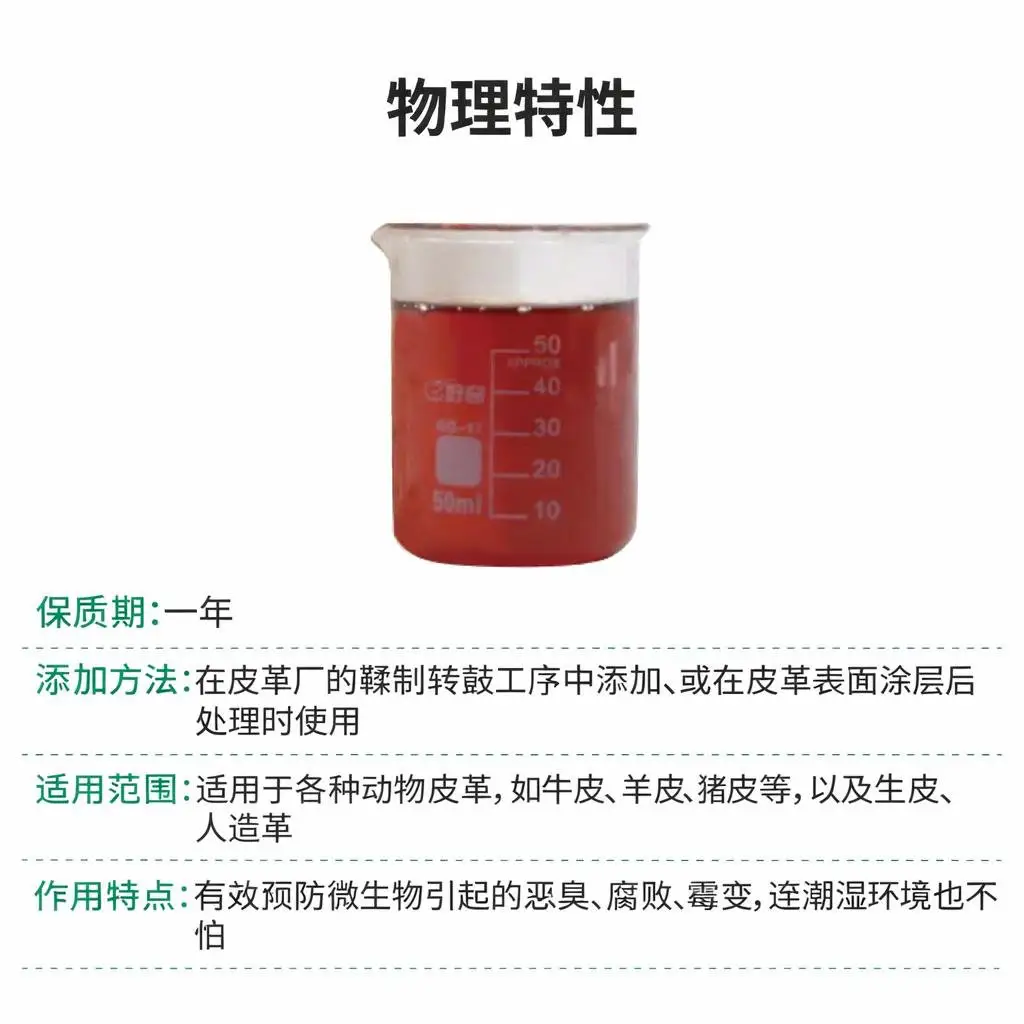
Surface rework treats the symptom. The durable fix is dosing the process. iHeir-PF leather anti-mould agent, active substance TCMTB, is dosed at 0.05 to 0.2 percent of leather weight, added straight into the processing liquor at any of three stages: chrome tanning (wet blue), fatliquoring or finishing, and mixed in evenly. Pour the agent into the water, never water into the agent, never use it above pH 8, and have operators wear rubber gloves.
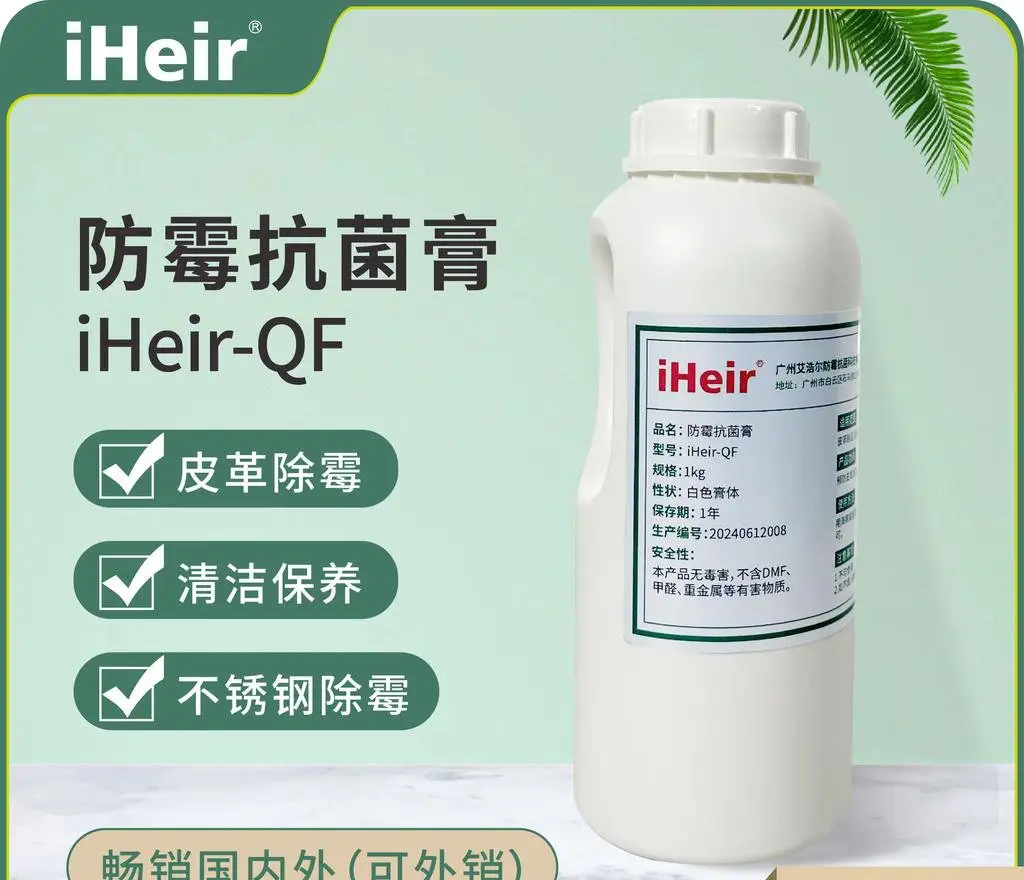
Surface protection for crust, wet blue and finished leather runs on two products. Spray(M3D) works from pH 4 to 10, diluted with water, applied by spray or wipe, low odour, and it fits the environmental requirements of export orders. For small areas and finished goods such as bags, iHeir-QF anti-mould cream is wiped on with a soft cloth or sponge, air dried, applied at room temperature without disturbing later processes, and it dilutes in water or ethanol as needed.
4. Verification: retest, retain samples, keep the chain
Both reworked and dosed batches need records. Fungal resistance goes through ASTM G21, graded by growth on the specimen, with grade 0 to 1 as the internal requirement. Export orders add a sea-freight simulation, 14 days at 30 degrees and 90 percent relative humidity, dosed and blank samples photographed side by side. For PF batches we recommend keeping the liquor concentration and leather weight per stage; for surface batches keep the dilution ratio. When a claim lands, the evidence chain goes out in one file.
As the supplier, we send samples first: leather type, process step and photos of the mildew are enough for a grading and dosing plan. For the whole route from tanning to finished leather, see our Haining leather factory anti-mould programme.
5. FAQ
Q: Will sanding damage the grain?
Grade-two etching sits in the finish layer. Fine grit along the grain, stop when the colour difference disappears, and the grain is untouched. If the magnifier shows etching into the grain, downgrade it as grade three and do not sand.
Q: Why does reworked stock relapse without re-protection?
Cleaning and sanding remove visible growth, but spores and hyphae remain on the leather and in the room, and they regrow the moment humidity rises. A fresh coat of anti-mould agent closes the loop.
Q: Can PF go in after pickling or neutralisation?
Yes, the limit is liquor pH of 8 or below. Pick any of the three stages, chrome tanning, fatliquoring or finishing, dose at 0.05 to 0.2 percent of leather weight, and fix the level with a trial first.
Q: How do samples and orders work?
PF, Spray(M3D) and QF ship as samples first, then in standard pack sizes once confirmed. For dosing, quotation and lead time, see our professional rework service process, test first and scale after.
Send us the leather type, the process step and photos of the mildew, and we will come back with a grading and rework plan before quoting volume. Contact us.