




 View Count:22
 Date:2026-10-27
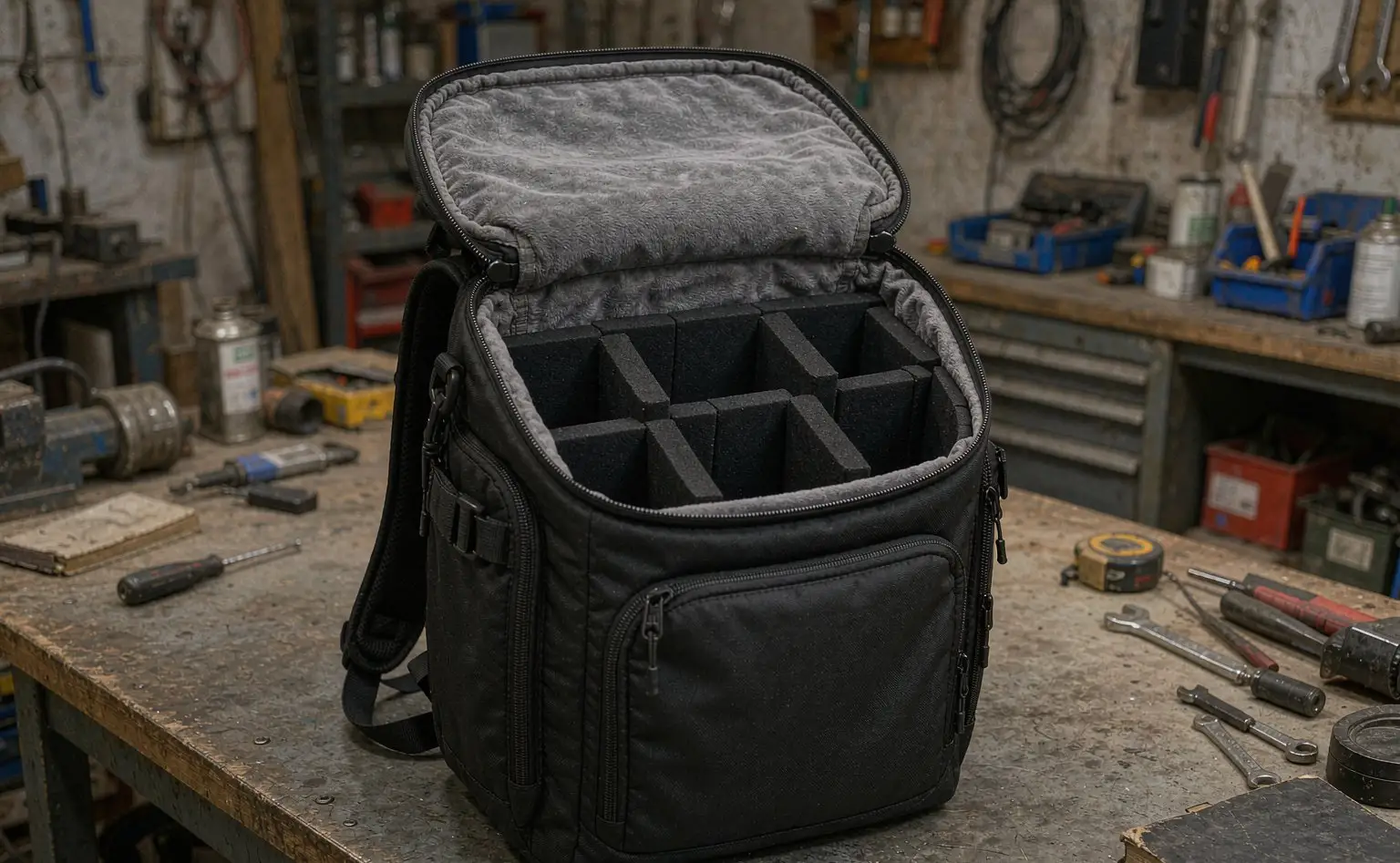
Camera bag mould: how should the lining be treated, and what dose goes into the foam dividers? A shipment opened after a sea leg had the outer canvas spotless, while a ring of spots had formed on the lining inside and green patches had appeared on the cut edges of the foam dividers — the lenses were fine, the bags were not. The lining is dipped with iHeir-BJ at 2%-3% o.w.f. and the foam takes iHeir-PSZ104 at 0.5%-1.0% of foam weight. This article covers the dip, the foaming stage and packing.
1. Mould starts on the lining and the foam
A camera bag is three layers: a water-repellent nylon or canvas outside, foam and sponge for cushioning in the middle, and a plush or knitted lining inside. The outer coating keeps rain out and does nothing about water already inside — if anything it seals moisture in, so humidity inside runs higher.
The first location is the lining. Plush and knit have fine fibres and plenty of pores, and damp from camera and body, sweat on hands and the humidity of a wet day all stay in that layer; a bag is a semi-closed space opened and closed all day, so moisture goes in and does not come out. The second is the foam divider: open-cell foam soaks water like a sponge, and a cut edge exposes the cells, which is exactly where mould settles.
The third is the zip and the binding. Zip tape is woven, binding tape is laminated, both take up water, and the zip line is the one channel that opens and closes for the life of the bag. All three come to the same conclusion: the textile part and the plastics part have to be treated separately, and one additive asked to cover both covers neither.
2. Lining and foam are separate questions
The table sets out lining, foam divider, outer fabric and packing. The lining takes a textile finish, the foam takes a plastics antimicrobial, the outer fabric takes nothing, and packing is about humidity control.
| Location | Material and stage | Product and level | Addition point | Basis |
|---|---|---|---|---|
| Lining, plush | Knitted or plush, dip finishing | iHeir-BJ 2%-3% o.w.f. | Dip bath | Fabric weight (o.w.f.) |
| Foam dividers | EVA or PU foam | iHeir-PSZ104 0.5%-1.0% | Masterbatch or mixing stage | Foam compound weight |
| Outer fabric | Water-repellent nylon or canvas | No additive | — | Coating and humidity control |
| Packing and export | Bagging, carton, container | Desiccant plus store humidity control | Packing and loading | Carton volume and container type |
Two boundaries. First, the two additives use different units: the lining is o.w.f. on fabric weight, the foam is a weight percentage on compound weight, and the bases cannot be swapped. Second, nothing goes into the outer fabric: a water-repellent coating and an antimicrobial in the same layer interfere with each other, and the outer layer’s job is to keep rain out while protection sits on the lining and the foam.
3. Dipping the lining
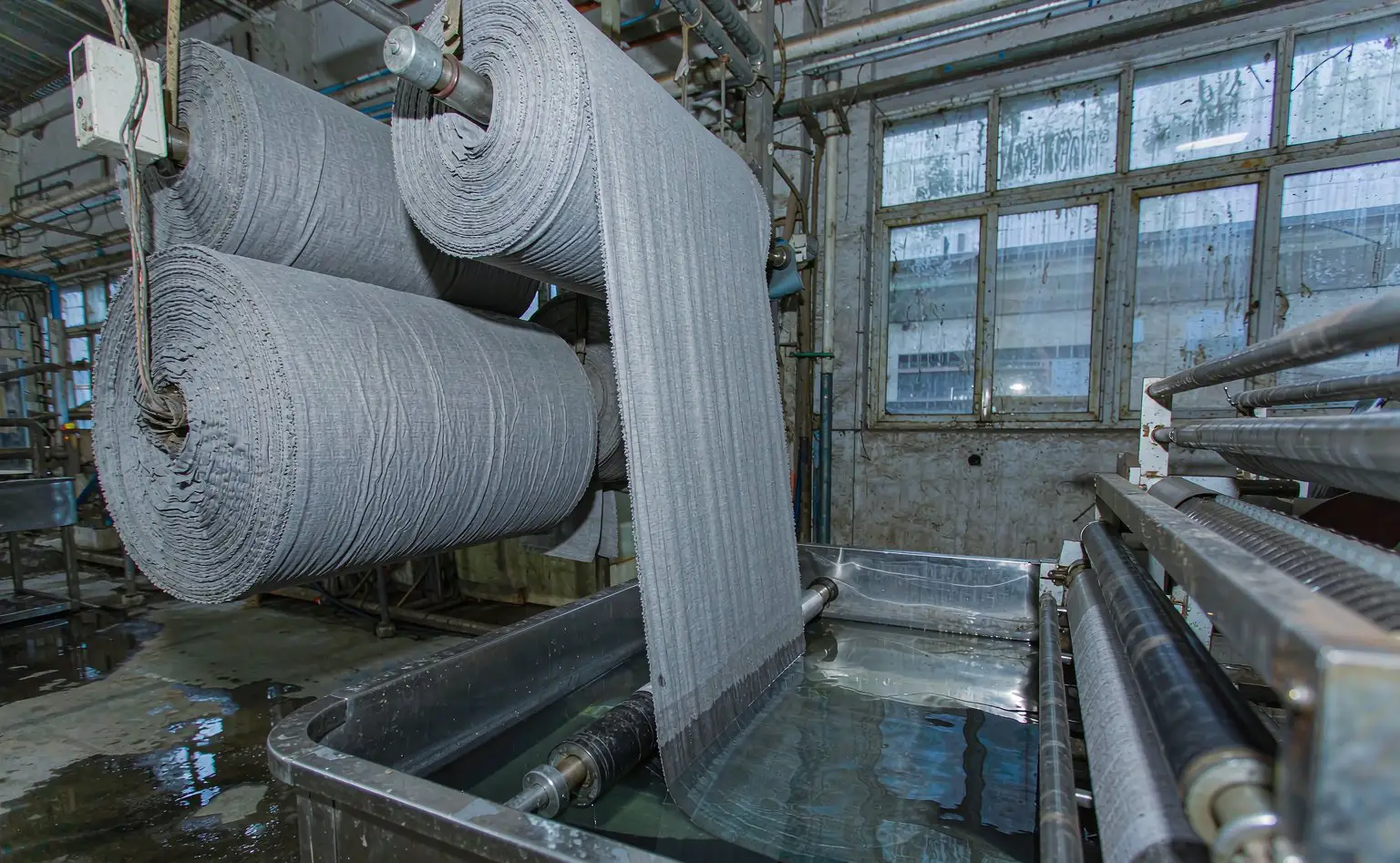
The lining uses iHeir-BJ at 2%-3% o.w.f. on fabric weight, bath 21-50℃, pH 4.5-8.5. Premix BJ with 9-13 times its volume of water, add 0.1% wetting agent and make up the bath; concentrate poured straight in gives local over-concentration and marks on the cloth.
Plush behaves differently from a flat weave: it wets slowly and carries a lot of liquor, so soak long enough and keep the mangle pressure down — too much pressure crushes the pile, stiffens the hand and squeezes out the very liquor being applied. Dry to below 8% moisture before closing, and keep drying moderate or the pile flattens and the colour dulls.
Hard constraint: BJ is cationic and must not share a bath with an anionic auxiliary. Lining finishing usually involves a softener, and an anionic one meeting BJ flocculates — scum in the bath, no pickup on the cloth. Schedule the two separately or confirm compatibility on a small sample. Before the line starts, a drop of bromophenol blue solution shows within two minutes whether the finish is there.
4. Foam dividers and the inorganic antimicrobial
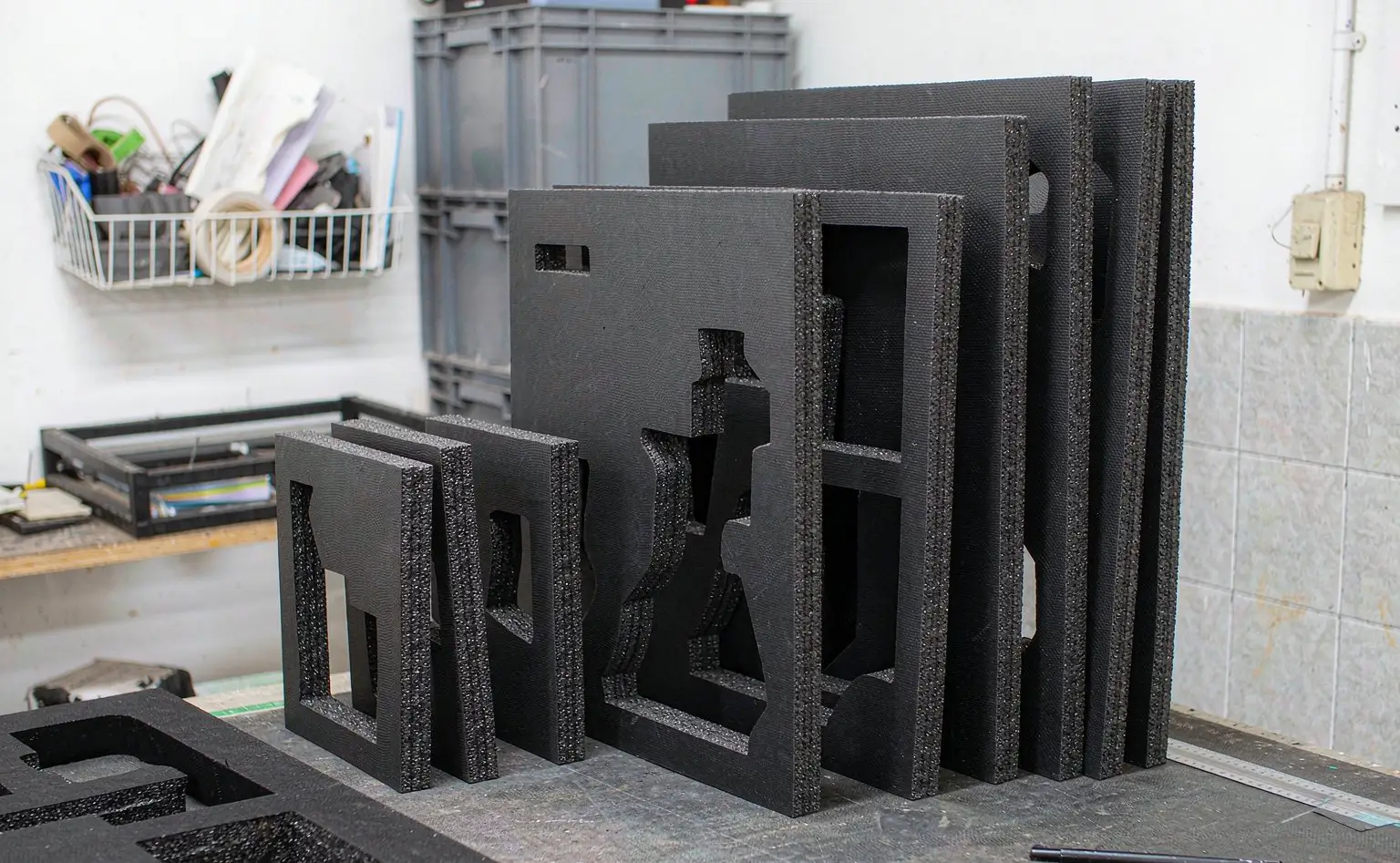
The dividers take iHeir-PSZ104 at 0.5%-1.0% of foam compound weight. It is a silver-ion inorganic grade with whiteness above 90, a particle size of 1-2μm and a specific surface of 10-15 m²/g; it withstands 300℃ and can take processing at 300-320℃, and is available as an antimicrobial masterbatch or a dispersion. It ships in 25kg fibre drums and keeps for twelve months.
Why not an organic anti-mould powder in the foam? Because foaming and lamination run hot. EVA foam is moulded around 170-190℃ and the lamination pass adds another heat history; an organic grade breaks down and discolours at those temperatures, and dividers come in grey, orange and olive as well as black, so one discoloured batch is scrap. The inorganic carrier survives it, and that decides the selection.
Feed it as an antimicrobial masterbatch, with the let-down worked back from the masterbatch’s stated content to a final 0.5%-1.0% — not “1% masterbatch” read as “1% antimicrobial”. Three details: dispersion, because at 1-2μm with a high specific surface an incompatible carrier piles up on the cell walls; cut edges, because dividers are cut and the exposed cells show any uneven dispersion as a colour difference first; and closed cell over open cell, since closed-cell foam takes up less water and holds protection more reliably at the same dose.
5. Packing and export
Three things at packing. First, desiccant inside the bag, sized to the bag volume, in a non-woven bag in a compartment, off the lining. Second, bag each piece in breathable paper or perforated film and then bag the carton — a fully sealed film bag locks the moisture in. Third, no damp tissue in the bag: it is there to hold the shape, and damp paper is a charge of water; open the pack as needed and keep it sealed.
Leave an air path in the container: no carton against the wall or ceiling. A thirty-day sea leg condenses water on the ceiling and it runs down the wall, so the cartons at the wall come back damp first. The moisture that matters comes from inside the carton, so container dehumidification and bag desiccant go together — the coating alone does nothing. The packing side is set out in our note on mould prevention for export bags and luggage.
Verify at three levels. Lining: bromophenol blue to confirm the finish, then a mould resistance grade to GB/T 24346. Foam: ISO 22196 for antimicrobial rate, plaques taken from the divider body and a second set from a cut edge. Finished bag: 30 days at 30℃/85% RH in a damp heat chamber, then inspect the lining, the divider edges and the zip tape.
6. Questions on hand feel, colour and bags that already have mould
Q: The plush lining went stiff and flat after dipping. Can it be recovered? Usually too much mangle pressure or too high a drying temperature. Lower the pressure and hold drying below 80℃ and the pile generally comes back; fabric that has already been flattened and set is a downgrade to an internal divider, not an outside face.
Q: Will the antimicrobial change the colour of the foam dividers? A silver grade with whiteness above 90 is effectively invisible in black and dark grey; light grey, orange and olive need a colour plaque comparison, and the masterbatch should be kept out of the light and used within the shift once opened.
Q: Can a bag that already has mould be saved? Mould on the surface of the lining and dividers can be brushed off, dried and given a fresh finish or surface treatment. Where the filaments have gone into the plush and left permanent staining, the lining is replaced. Any rescued batch needs a fresh anti-mould treatment, or the next sea leg brings it back.
Four points to take away: lining at 2%-3% o.w.f. iHeir-BJ, bath 21-50℃, pH 4.5-8.5, premixed with 9-13 times water plus 0.1% wetting agent; foam at 0.5%-1.0% iHeir-PSZ104 on compound weight via masterbatch with a colour plaque check; keep the cationic agent on its own run; desiccant inside the bag, a breathable bag per piece, an air path in the container.


