




 View Count:52
 Date:2026-10-07
How is EPE foam mould best handled, and how do you keep bacteria down at the same time? EPE foam is a closed-cell foam that does not absorb water itself, but the cut edges, bonded faces and seams between stacked sheets hold damp, and the mould usually starts there, so a spray on the surface never reaches the inner layers. The approach puts the antimicrobial in at the foaming stage: iHeir-ECO plastic antimicrobial agent at 0.3%-0.5% on PE resin weight in the masterbatch, or iHeir-FP foam antimicrobial agent at 0.5%-1.5% on foam weight, with humidity control in the finished-goods store. This article covers the two lines.
1. Where the mould comes from: the foaming stage, the cut edges and the store
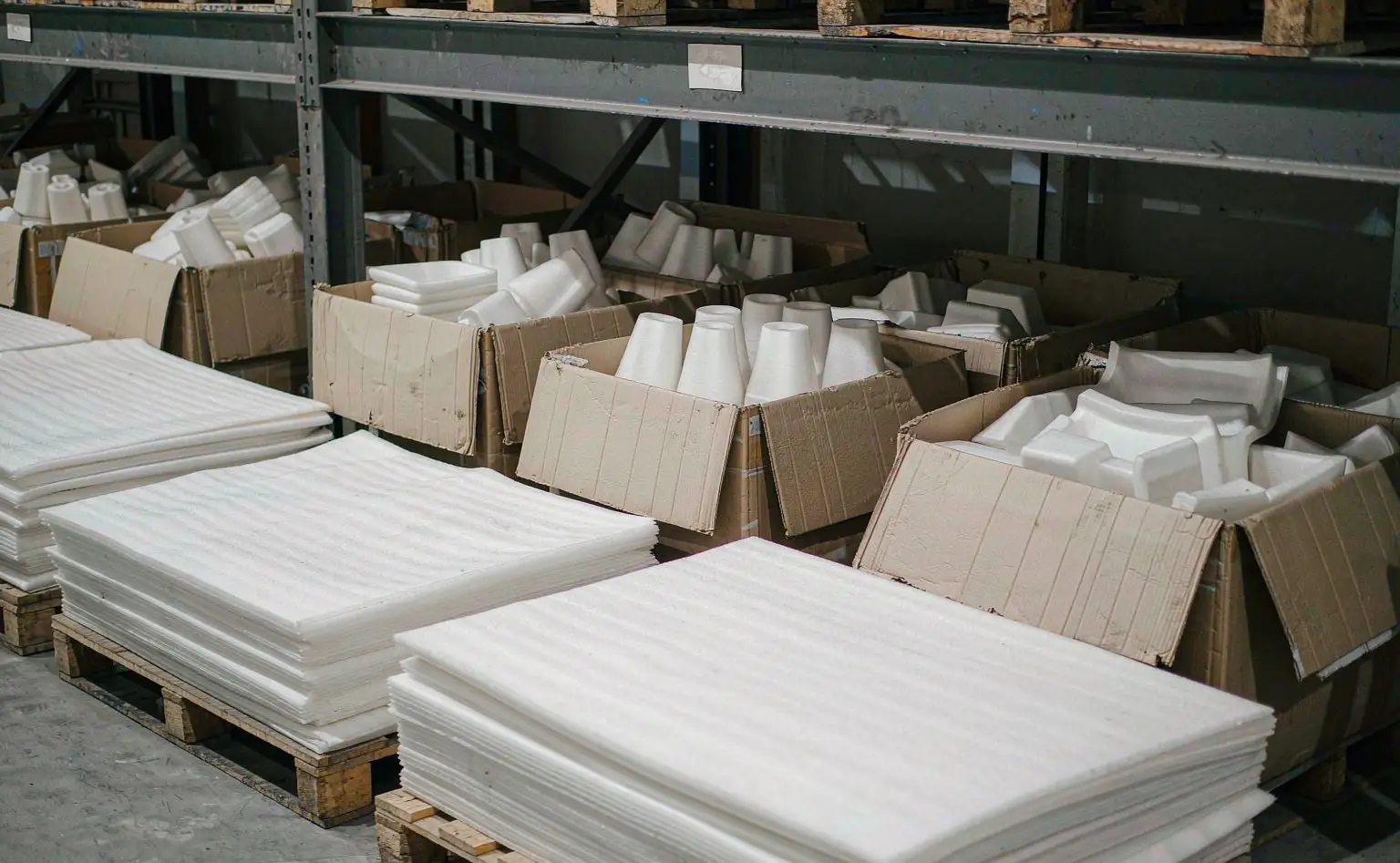
EPE foam looks clean, but three places take up damp. First, the sheet leaves the die hot with residual aids on the surface, and winding it straight away traps moisture in the roll. Second, once it is cut, die-cut and bonded into a shaped insert, the cut edge is an open face that takes up moisture more readily than the skin, and the bonded seam holds water best. Third, the store and the sea freight: foam is bulky and packs tight, so damp cannot leave the core of a stack, and on a long voyage the day-night swing makes the box condense and the mould start in the insert.
Those three places mean the work has to be done at the foaming stage and in the store. The foaming stage drives the antimicrobial into the material so that wherever it is cut or rubbed there is protection, and the store preserves that with humidity control and gas-phase sheets.
Order matters: foaming-stage addition happens before the sheet is formed and goes in with the material, while the store and loading come last and are about environment. Spray the insert after bonding and boxing and only the exposed skin is touched, leaving the cut edges and the inner layers dry of protection.
2. The two lines at a glance: the foaming stage and the store
The table lines up the stage, the way the agent is added, what is treated, the product, the figures and the points to watch, as a first draft of a process card.
| Stage | How it is added | Treated item | Product | Figures | Points to watch |
|---|---|---|---|---|---|
| Foaming (masterbatch) | Compounded with PE resin | PE resin | iHeir-ECO plastic antimicrobial agent | 0.3%-0.5% on resin weight | Thermal stability 240 degrees, clear of 320 degrees; in with the masterbatch or a premix |
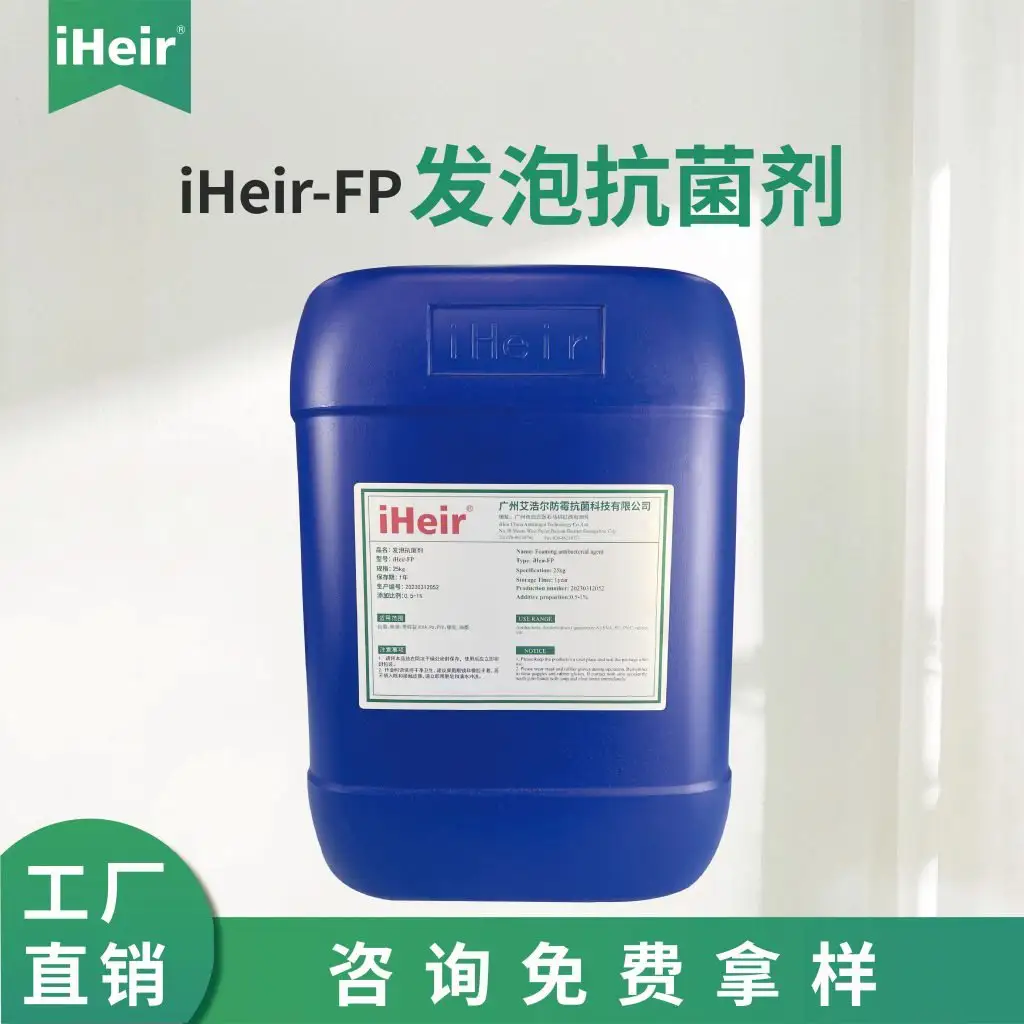
| Foaming (foam grade) | Added with the foam | Foamed plastic | iHeir-FP foam antimicrobial agent | 0.5%-1.5% on foam weight | Stable pH 1-11; antibacterial rate up to 99.99%, sensitisation rate 0% |
| Cut and die-cut faces | Settled at the foaming stage | Open faces | In-material protection (no extra dose) | By the foaming-stage figure | The cut edge is an open face and takes up damp best; protect it in the material, not with a spray |
| Bonded and laminated faces | Before bonding | Seams | In-material protection (no extra dose) | By the foaming-stage figure | Bonded seams hold water; confirm the bonding adhesive with the supplier |
| Finished store and container | Stacking / full container | Air in the stack and the box | Humidity control only | Below 60% relative humidity | Bulky and tightly packed; sheets by stack and desiccants by container type |
Five rows, one conclusion: the foaming stage builds the antimicrobial into the material so the cut edges, die-cut faces and bonded seams all carry protection, while the store takes no agent and is held on humidity control.
3. The foaming-stage masterbatch line: ECO at 0.3%-0.5% on PE resin
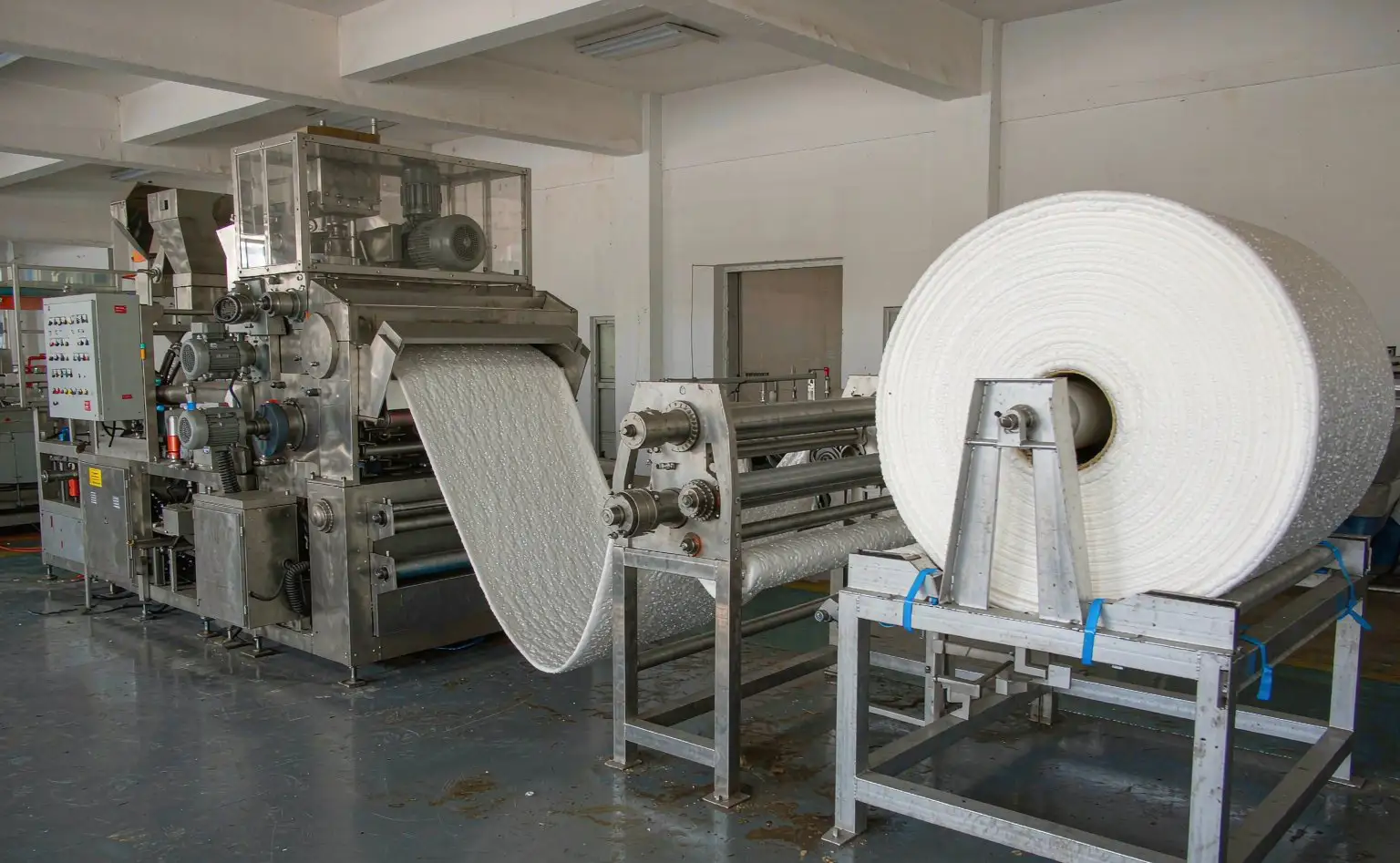
The masterbatch line is the main way to add the agent at the foaming stage. Take iHeir-ECO plastic antimicrobial agent at 0.3%-0.5% on PE resin weight, made up first as a masterbatch and premixed with the pellets before the hopper. The additive bonds with the material and is distributed through the whole sheet rather than sitting on the surface, so wherever it is die-cut the protection is there. Thermal stability reaches 240 degrees, and the process temperature should stay clear of 320 degrees.
Three details. First, the figure is on total resin weight, regrind included, so high-regrind batches belong at the top of the range. Second, foam runs at a high expansion ratio with thin sheet, so it can only be dispersed through a masterbatch or a premix; powder fed straight in agglomerates. Third, purge the barrel when changing material grades. See dosing an antimicrobial into foam versus a post-treatment for the approach.
4. The foaming-stage foam grade: FP at 0.5%-1.5% on foam weight
The foam grade suits adding the agent directly at the foaming step. Take iHeir-FP foam antimicrobial agent at 0.5%-1.5% on the total weight of the foamed plastic; it is stable across pH 1-11 and stable to light and heat, and a small addition reaches a high antibacterial rate (up to 99.99%) with a sensitisation rate of 0%, supplied in 25 kg packs. For shaped inserts and thin sheets at a high expansion ratio, the foam grade is easier to blend evenly.
Three details. First, its figure is on total foam weight, a different denominator from the resin weight used by the masterbatch line, so the two sets never swap. Second, use one way of adding it per batch; running both raises cost and makes the effect hard to attribute. Third, run a small trial on a pilot line to check expansion ratio, sheet appearance and antibacterial performance before fixing the volume figure. For the common pitfalls with foam and sponge parts, see antimicrobials for foam and elastomers.
5. Cut edges, bonded faces and the store: the finishing stretch with no dose
The cut edges, die-cut faces and bonded seams are not dosed on their own; they are settled by the in-material protection from the foaming stage, which is why that stage has to be done. The store is handled by environment: foam is bulky, packs tight and stacks high, so damp cannot leave the core of a stack; place gas-phase sheets by stack, keep them apart with liner paper, and hold the store below 60% relative humidity. A sea voyage is long and the day-night swing is wide, so container desiccant sticks stabilise the humidity inside; dry the goods before loading, because condensation inside the box is the ignition point.
6. Questions that come up: which line, and can a spray fix the cut edge
Masterbatch line or foam grade, how do you choose? Look at the adding habit and the part. Where the line already compounds with the resin and needs general protection, take the ECO masterbatch line (0.3%-0.5% on PE resin weight); where the agent goes in at the foaming step and the part is a thin, high-expansion sheet, take the FP foam grade (0.5%-1.5% on foam weight). Pick one per batch.
If the cut edge and bonded face go mouldy, can a spray fix it later? No. The cut edge is an open face and the bonded seam sits inside the material, so a spray reaches the exposed skin only; the protection has to go in with the material at the foaming stage.
Can extra loading make up for damp in shipping? No. Damp and condensation are an environment problem, not a concentration problem, and extra loading only raises cost. Hold the store on humidity control, place sheets by stack, use desiccants by container type, and dry the goods before loading.
Two dosing points carry the work: the foaming stage builds the antimicrobial into the material (the masterbatch line uses iHeir-ECO at 0.3%-0.5% on PE resin, thermal stability 240 degrees, clear of 320 degrees; the foam grade uses iHeir-FP at 0.5%-1.5% on foam weight, stable across pH 1-11), and the store and container preserve it with humidity control, gas-phase sheets and desiccants. Test the long-term growth by a method such as ASTM G21 and hold a complete sample per batch, since testing the skin alone or a slice alone does not count. Samples and TDS sheets are available for a trial on your own line.


