




 View Count:56
 Date:2026-10-06
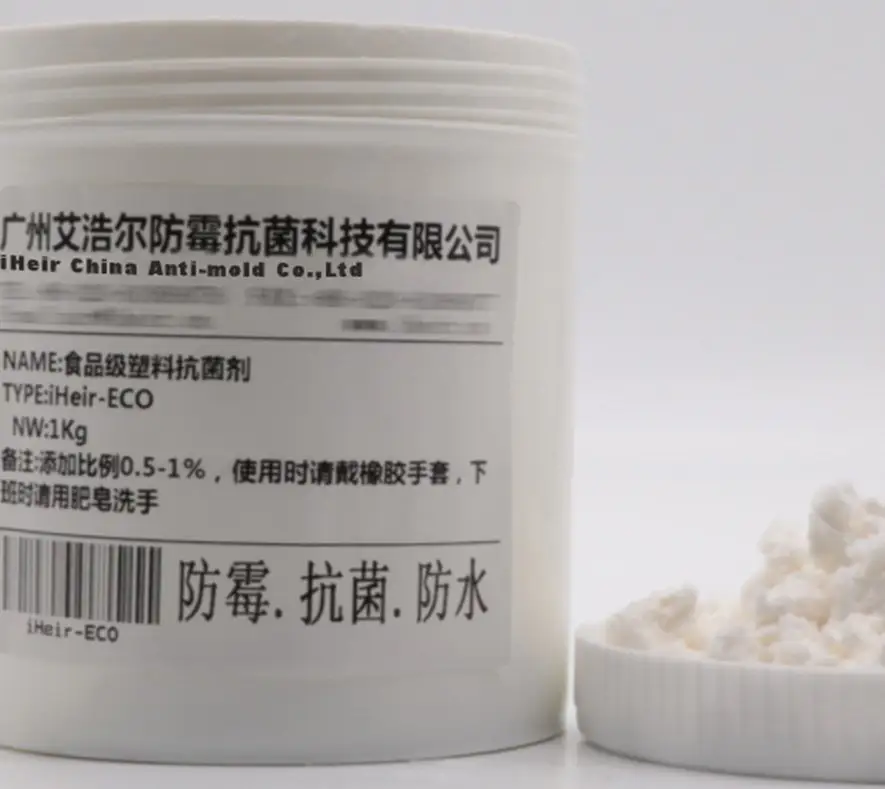
How can PVC inflatable mould be held down on a bed or a pool that is wet and sweaty in use, where the spots start in the heat-sealed seam and the folds? The film compound takes iHeir-ECO at 0.5%-1.0% on PVC resin, and the surface and the seam take iHeir-Spray(M3D) at pH 4-10. This article covers the two dosing points and the figures.
1. Where the mould comes from: the heat-sealed seam and the folds start first
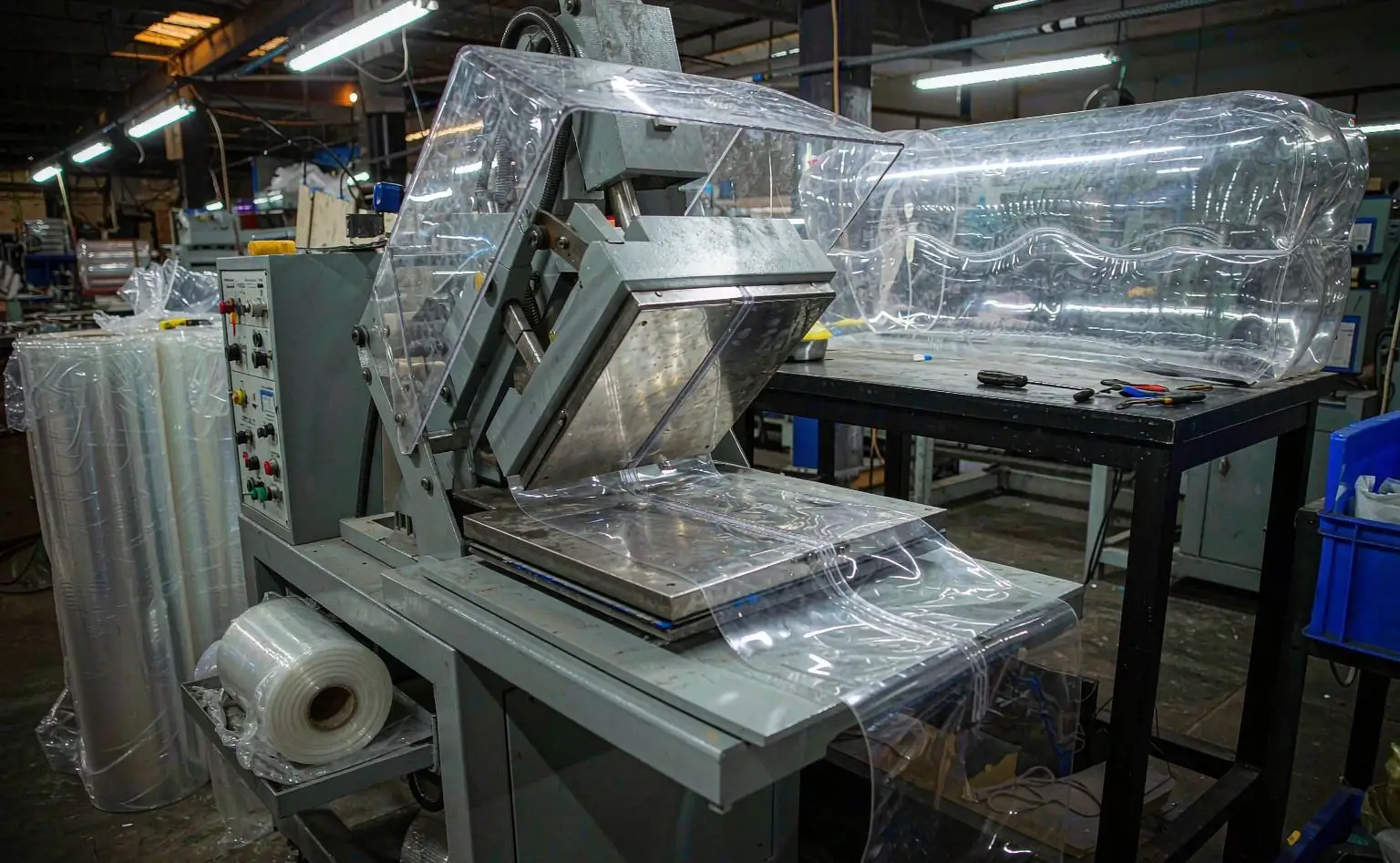
A PVC air bed or pool is a film article heat-sealed at high frequency, and the film face is smooth and continuous, so it does not mould by itself; the trouble is in two structural places. One is the heat-sealed seam, where two films are fused under a high-frequency current, thinning the film at the seam and leaving microscopic channels, so water and sweat work in along the seam and it darkens from the inside first. The other is the fold, because an inflatable is deflated and folded the same way again and again, and the film at the crease carries stress and small cracks that collect dust and water.
The conditions of use push it further: an inflatable meets water and sweat for long periods, and it is often folded and stacked while still damp, so moisture stays sealed between the two film layers. The spots show as dark lines or patches at the seam and the crease, with the film face still sound and the inside of the seam already gone, which is what the buyer finds on opening.
Where the piece is genuinely dry, clean and aired through before storage, there is rarely a problem. That points to the approach: the film takes its protection at compounding, the seam and the surface take a second line, and the rest is storage and packing humidity control.
2. The two dosing points at a glance: the film compound, the seam and the surface
The table lines up the part, the stage, what is treated, the product, the figures and the points to watch, so it can serve as the first draft of a process card.
| Part | Stage | Treated item | Product | Figures | Points to watch |
|---|---|---|---|---|---|
| PVC film compound | Compounding and calendering | Film resin | iHeir-ECO plastic antimicrobial agent | 0.5%-1.0% on PVC resin weight | In with the antimicrobial masterbatch or a premix; holds to 240 degrees, stay clear of 320 |
| Heat-sealed seam and surface | Surface treatment | Seam and film face | iHeir-Spray(M3D) water-based anti-mildew agent | Spray or wipe on the surface, works at pH 4-10 | Cationic, so it must not be mixed with anionic surfactants or polymers; treat the seam first |
| Calendering and heat sealing | Forming | Temperature control | Control only (no agent) | Read the agent’s heat ceiling | Too high a sealing temperature damages the film face and the coating; set the settings before the line starts |
| Folding and packing | Folding and packing | Creases and the air in the carton | Humidity control only | Below 60% relative humidity | Dry the piece before folding, use sheets by stack, and treat in-container condensation as the ignition point |
Four rows, one conclusion: the film takes its protection at compounding, the seam and the surface take a second line at surface treatment, the temperature row respects the agent’s ceiling, and folding and packing preserve both.
3. The film compound stage: ECO at 0.5%-1.0% on PVC
The film line is completed at the compounding and calendering stage. Add iHeir-ECO plastic antimicrobial agent at 0.5%-1.0% on PVC resin weight, made up first as a masterbatch in a matching carrier or premixed with the pellets before the hopper. The additive bonds with the material and is distributed through the whole film layer rather than sitting on the surface, so sealing, folding and the wear of use will not rub it off. Thermal stability reaches 240 degrees, and the process temperature should stay clear of 320 degrees.
Three details decide the result. First, the figure is on total PVC resin weight, regrind included, so any change in the regrind ratio means recalculating, and high-regrind batches belong at the top of the range. Second, PVC carries more processing aids and runs at its own temperature range, so dispersion depends on a masterbatch or a premix; powder fed straight in agglomerates, and an agglomerate is a blank spot. Third, run a small trial on dispersion and film appearance, confirming there is no colour shift and no gel, before full production.
4. The seam and the surface: M3D and the pH 4-10 range
The seam and film-face line is completed at surface treatment. Apply iHeir-Spray(M3D) water-based anti-mildew agent by spraying, wiping or dipping it onto the film surface and the seam, working at pH 4-10, with the seam as the priority. It contains no TCMTB and no phenols and has low odour; on spots that have already formed, the diluted product is applied and then wiped off to remove the growth and the marks.
Three points to watch. First, M3D is cationic, so it must not be mixed with anionic surfactants or anionic polymers, or it fails, and the cleaning before and after has to be thorough. Second, surface treatment is a supplement that does not enter the film layer, so the film-compound line still has to be done, because the two do different jobs. Third, air the piece through after treatment before folding it away, rather than folding a damp article straight into a carton. See mould spots on film and woven bags.
5. Folding, packing and the store: the three places no agent is dosed
How an inflatable is put away bears directly on the result. Air the surface and the seam through before folding, and do not keep the crease pressed in the same place; at packing, place gas-phase sheets by stack, kept apart from the goods by liner paper, and hold the store below 60% relative humidity. In a full container, condensation inside the box is the ignition point, so bring the moisture of the goods and the store temperature down before loading. See container moisture and mould in shipping.
None of these three places takes an agent; they work through process and store. Drying before folding is moisture control, the sheets work on the air in the carton, and humidity control looks after the store. Whether the protection taken at the compounding stage and at surface treatment lasts until the buyer opens the carton depends on all three.
6. Questions that come up: how much, surface only, and temperature
Can a single spray on the finished article do the job? It reaches the film face and the outer part of the seam only. The inside of the film layer has no protection, folding and rubbing take the surface layer off, and the inner seam still takes up moisture, so the film-compound line has to go in with the masterbatch.
Can the PVC figure be used on another plastic? No. The ECO application guide gives the ranges by material: polyethylene and polypropylene at 0.3%-0.5%, PVC at 0.5%-1.0%. The denominators and the materials differ, so copying the number either overshoots or falls short.
Can extra loading make up for a high sealing temperature? No. Temperature above the agent’s ceiling is a loss of activity, not a concentration problem, and extra loading only raises cost while affecting the mechanical properties and handle of the film; change to a more heat-tolerant grade or adjust the sealing temperature.
Two dosing points carry the work: the film goes in with the masterbatch at the compounding stage (iHeir-ECO at 0.5%-1.0% on PVC resin, thermal stability 240 degrees, clear of 320 degrees), and the seam and surface take a second line with iHeir-Spray(M3D) at pH 4-10, with folding, packing and the store preserved by drying and humidity control. Test the long-term growth by a method such as ASTM G21 and hold a complete sample per batch, because testing the film alone does not cover the seam. Samples and TDS sheets are available for a trial on your own line.


