




 View Count:3
 Date:2026-10-31
Why does a cosmetic bag look clean outside and spot through the lining? Most linings carry a water-repellent coating that lets vapour in and will not let it out, so mould sits behind the film, and the zip tape is the one part almost everyone forgets. Shell, lining and zip tape can all go through one bath of iHeir-BJ at 2%-3% o.w.f., run at 21℃-50℃ and pH 4.5-8.5 with a 70% pick-up, before coating and lamination. This article covers the bath, the zip tape and the packing rules.
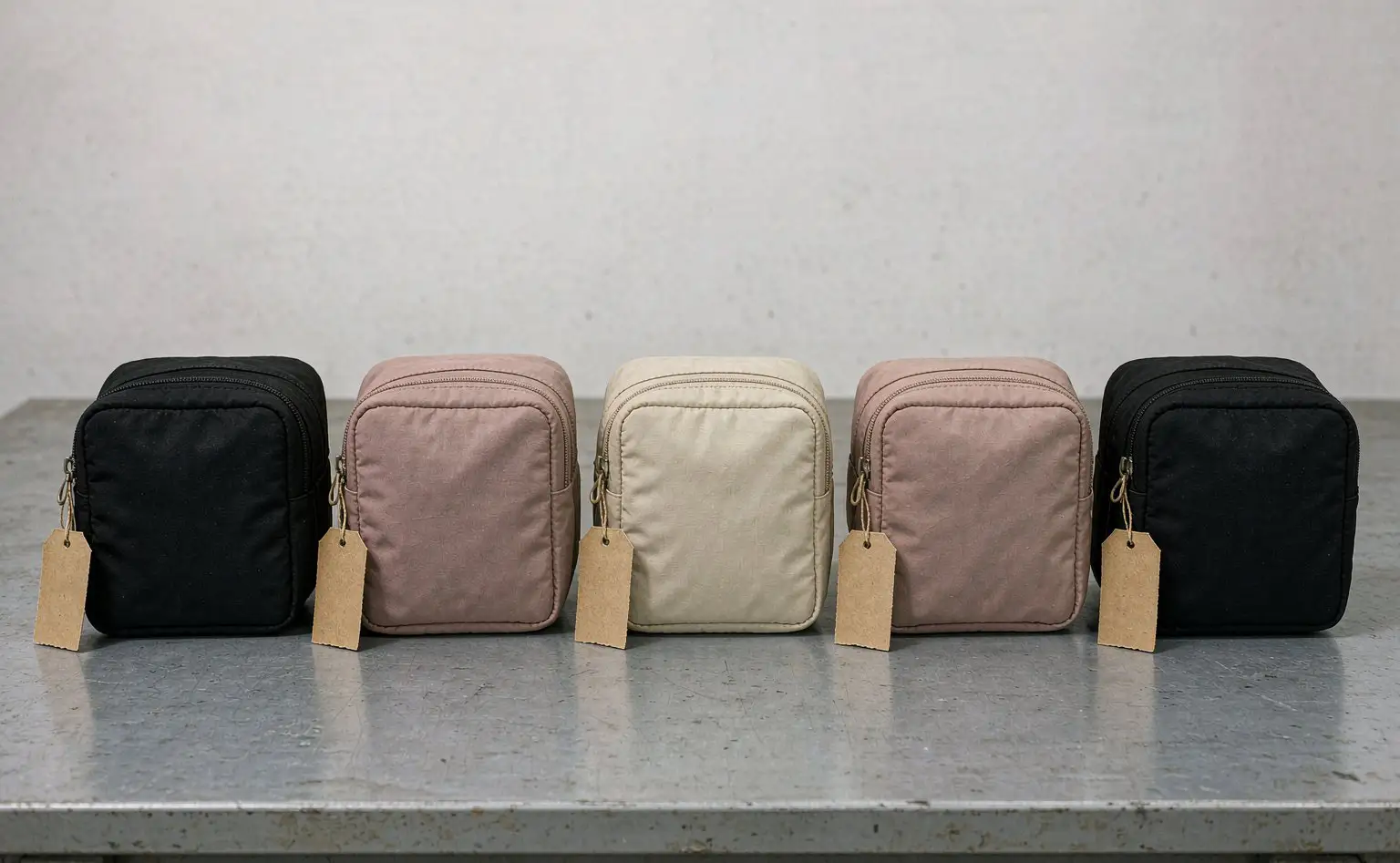
1. Mould is trapped behind the coated lining
The build: a polyester or nylon shell, a coated lining fabric, a thin foam or non-woven interlayer, plus zip, webbing and labels. Metal pulls and plastic parts do not grow mould; the shell, the lining and the zip tape do.
The coating cuts both ways. It keeps water out and also keeps water in. A pouch usually carries a damp sponge, wet wipes or a leaking bottle, so vapour is sealed against the inside of the coating, and warmth turns the bag into a closed chamber. Open it for inspection and the shell is still clean while the lining has spotted.
Zip tape is the blind spot. The tape on one zip is a fair amount of fabric, woven from filament polyester or nylon: it does not wet fast but it holds water long, and it is sewn along the opening where vapour collects. Most factories finish the shell and the lining, then assemble the zip as a bought component, so the tape never sees the bath.
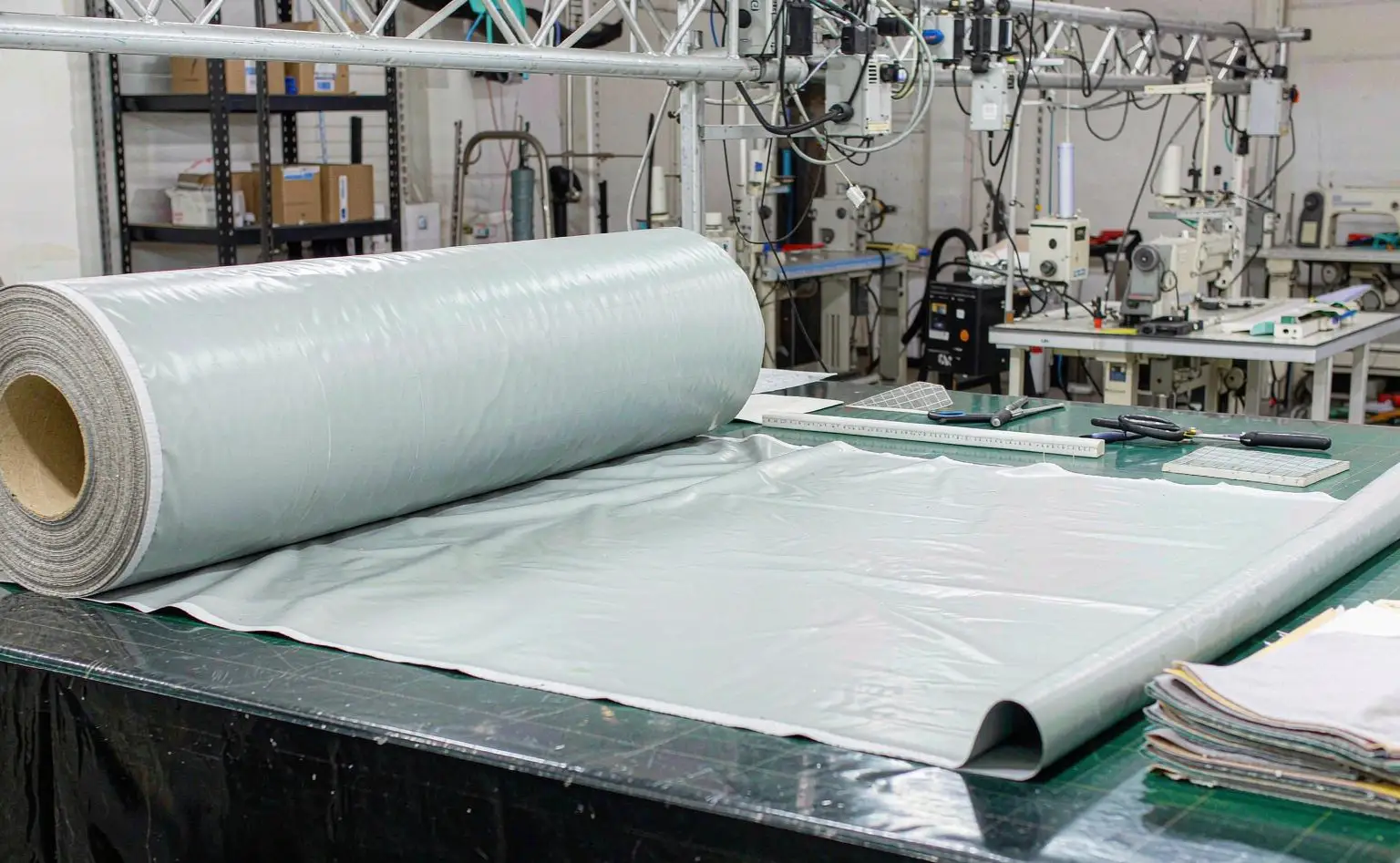
2. Shell, lining and zip tape share one bath
The table lines up shell, lining, zip tape and packing. All three run in the same tank, but their thickness and pick-up differ, so the bath is calculated for each.
| Part | Material | Product and level | Stage | Control point |
|---|---|---|---|---|
| Shell fabric | Polyester/nylon | iHeir-BJ 2%-3% o.w.f. | Finishing bath | 70% pick-up, no anionic auxiliaries |
| Lining fabric | Polyester base, coated later | Same bath, on fabric weight | Before coating | Finish first, then coat |
| Zip tape | Polyester/nylon tape | Same bath, run through together | Before assembly | Open the rolls, no tight stacking |
| Packing and dispatch | PE bag, carton | Dry, bag each piece | Cartoning, storage | Store below 60% RH |
One boundary. One bath is not one condition: thin shell wets fast, the lining has to go through before coating because a film stops the agent reaching the fibre, and dense zip tape needs opening out and more time. All three treated is what “one bath” means; shell alone is the same as doing nothing.
3. The bath: dose and pick-up
Dose at 2%-3% o.w.f. on the weight of the goods. The bath runs at 21℃-50℃ and pH 4.5-8.5, ideally near 6, with a 70% wet pick-up; on that basis 3kg treats 100kg of fabric. Pre-mix with 9-13 times its water and add in portions for a more even take-up.
Three conditions. Soft water, because calcium and magnesium compete with a cationic system. Compatibility, because BJ is cationic and cannot share a bath with anionic auxiliaries, so softeners and antistats must be cationic or non-ionic or the bath breaks and leaves oil spots. Sequence, because oil and dust must be washed off before the bath; loading dirty goods seals the soil into the fibre.
One common misjudgement. Pushing the dose to 4%-5% for reassurance makes the fabric stiff and the hand feel worse, and cut edges go brittle. To extend protection, even out the pick-up and dry properly instead of raising the concentration.
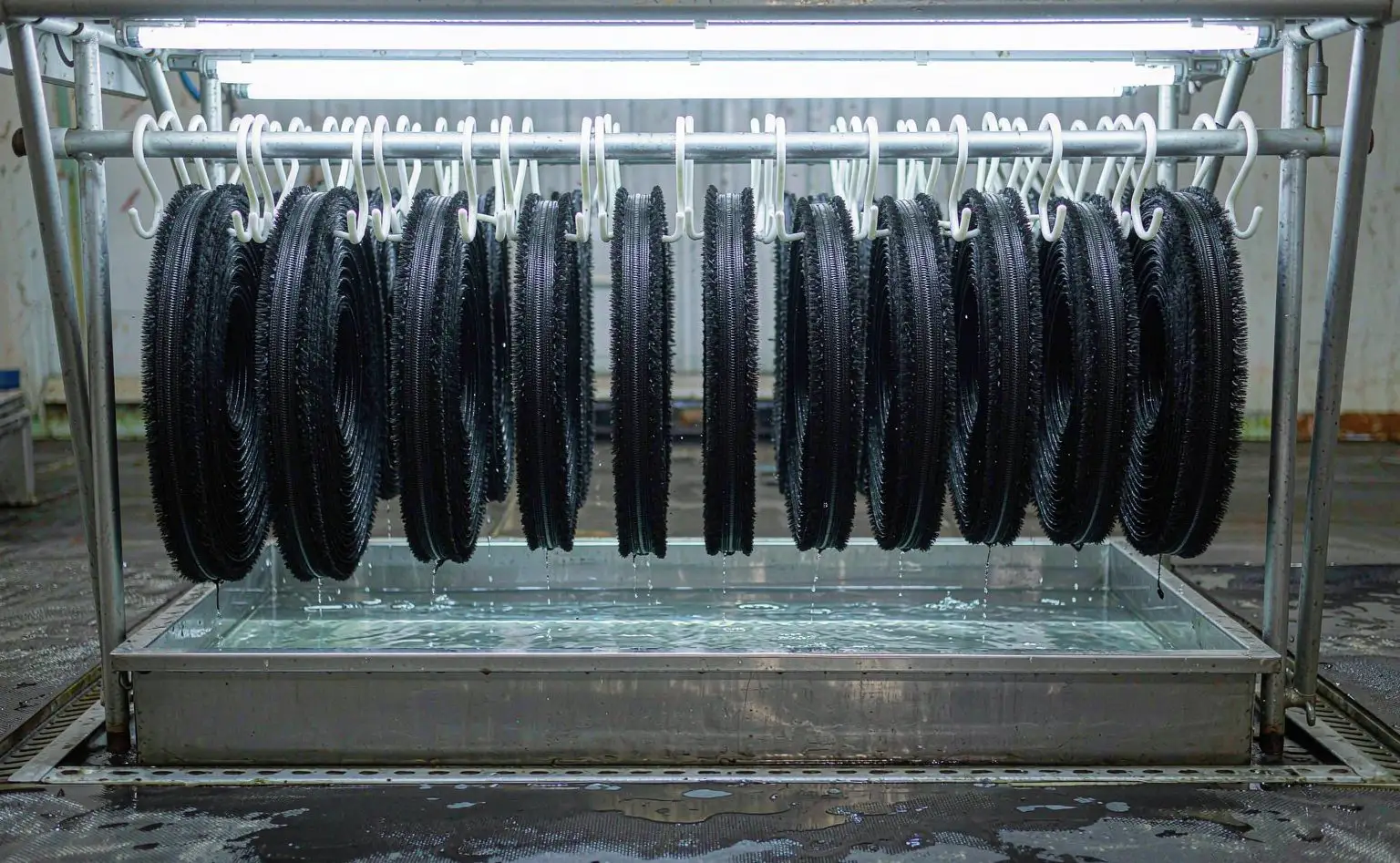
4. Zip tape: the part most often left out
The problem is not the pull, it is the tape. Filament-woven tape is tight: water goes in slowly and leaves slowly, and it is sewn along the opening where vapour concentrates. Open and close the bag and the tape flexes, the coating cracks first, and mould enters at the cracks.
How to treat it. Open the roll, run it through the bath, dry it, then load the zip machine. Do not wait until the zip is sewn into the bag and spray it, because the spray never reaches the seam root or the tooth channel. Rolls dropped in tight trap the middle plies, so loosen them, hang in layers and allow 2-3 minutes more.
One way to prove it. Take a treated length and an untreated length, hold both at 30℃/85% RH for 7 days and compare for spotting. That comparison is more convincing to a buyer than a data sheet.
5. Sewing, packing and dispatch
Work in progress is where damp returns: cut panels, lining and zips in totes overnight, shop humidity rising. Cut the day you sew, raise the totes, dehumidify the bench and bag finished pouches the same day.
At packing, bag each pouch in PE, add a moisture barrier inside the carton, and keep cartons on pallets 10cm off the floor and wall below 60% RH. In a full container, condensation does more damage than shop humidity, so leave an air path and keep cartons off the wall; see preventing container rain, and the full process in bag and luggage export mould prevention.
Release at three levels: shell and lining to GB/T 24346-2009, sampling the face and the back of the coating; zip tape to AATCC 30 over 28 days; complete pouches for 30 days at 30℃/85% RH, opened to check lining, opening and zip tape.
6. Questions on coated lining, hand feel and spotted lots
Q: The lining is already coated. Can it still be treated?
Only before coating. A film stops the agent reaching the fibre, so a coated roll can only be surface treated, with less effect and less durability. On a new style, put the finish before the coating; it is the cheapest place to solve it.
Q: Shell and lining feel different. Does one bath compromise either?
One bath, separate accounting. Dose on the combined weight, but check pick-up separately: thin shell takes less, thick lining more. Weigh both off the bath and run an extra pass on whichever is short.
Q: A pouch has spotted. Can we just wipe the lining?
Wiping removes surface bloom only, and the mould root is behind the coating. Rework means strip, clean, re-treat and re-laminate; wipe only, and it returns within days of bagging.
Four points to take away: run shell, lining and zip tape through iHeir-BJ at 2%-3% o.w.f. with the bath at 21℃-50℃ and pH 4.5-8.5, a 70% pick-up, pre-mixed with 9-13 times its water; finish the lining before coating and loosen the zip rolls into layers for 2-3 minutes more; cut panels the day they are sewn, raise the totes and dehumidify the bench; store below 60% RH with an air path in the container. A 1kg sample can go out for a trial first; MOQ and lead time are on the iHeir-BJ product page.


