




 View Count:35
 Date:2026-10-24
Coin box mould is usually in the lining, not in the wood, so why does re-sanding the body never clear it? Because the water sits in the adhesive layer behind the flocked cloth, and in the air inside a closed case. The lining is replaced and the inside is protected with an anti-mould sachet at 0.1-0.2g of iHeir-D, while the wooden body is sprayed with iHeir-M8 at 1:20. This article covers the order of work on the lining, the spray level on the timber and the metal compatibility test.
1. Coin box mould starts in the lining, not in the body
A coin box is a wooden body, a lining and a glass panel in the lid. The body is solid timber or veneered board, the lining flocked cloth, felt or EVA foam. When spots appear the first instinct is that the timber has taken up water, so the body is sanded and brushed with a preservative, and the next batch blooms again.
The first location is the lining. Flocked cloth has a large pile surface and is glued into the case, and the adhesive layer between cloth and wall holds water better than anything else in the box; once bagged, that water cannot leave. Spots start at the edge of a recess, as pale specks that come back after wiping. The second location is the air inside: close the lid and the case is a small sealed volume, with timber, cloth and adhesive all releasing moisture into it.
The third is the body itself, mostly at the outside faces and the end grain, where ends were never treated after cutting or the board was coated before its moisture came down. So the order is check the lining, control the air, then treat the timber, and starting with the wood spends the effort on the third-ranked problem.
2. Lining and body: two locations
The table sets out object, measure, product and acceptance for both. The lining is a replace-and-separate job; the body gets treated.
| Location | Object | Measure and product | Acceptance | Watch out for |
|---|---|---|---|---|
| Lining, foam | Flocked cloth, felt, EVA | Replace the cloth plus iHeir-D vapour phase | Check the back of the cloth for spots | Never reuse damp lining |
| Air inside the case | Case cavity, recesses | 0.1-0.2g of D per sachet | Open and re-check after 30 days | Close and bag at once |
| Wooden body | Solid timber, veneered board | iHeir-M8 sprayed at 1:20 | Moisture below 25% | Extra pass on ends and inner faces |
| Metal parts | Hinges, clasps, magnets | Compatibility test with D | Test at three times the dose | Keep the sachet at a distance |
| Export carton | Packed cases | Desiccant and container humidity control | Humidity inside the carton held | No tight shrink film |
Two boundaries. A lining cannot be saved by spraying it: the cloth is bonded in, and a spray only mats the pile while the mould sits in the adhesive, so the action is replacement, with the cavity blown dry first. And treating the timber is prevention, not rework: a body that has bloomed is graded first, and mould into the wood means a downgrade.
3. Lining: replace the cloth, then manage the air
The lining is easier to judge than it looks: open one case and look at the back of the cloth. If the face wipes clean and the back still carries spots, the water is between cloth and adhesive and the batch has to go. With new cloth, blow the cavity dry, apply the adhesive thin, let it come touch-dry and press it home; a thick layer is simply more water sealed inside.
With the lining replaced, the air inside is handled by iHeir-D gas-phase inhibitor at 0.1-0.2g per sachet, set by the cavity volume. D is an anti-mould ink used to make antimicrobial paper and sachets, and its vapour covers the gaps inside the case; solids are 70% plus or minus 5, packing is 25kg drums, used up once opened.
Three points on placing it. Position: inside the lid or under a recess, not on top of the coin, because a covered area gets no vapour. Timing: pack, close and bag in one movement, since an open sachet vents its vapour. Quantity: one for a single-coin case, two for a multi-recess case, at the upper level for sea freight. Where the lid is loose the vapour will not stay, so fix the lid design first.
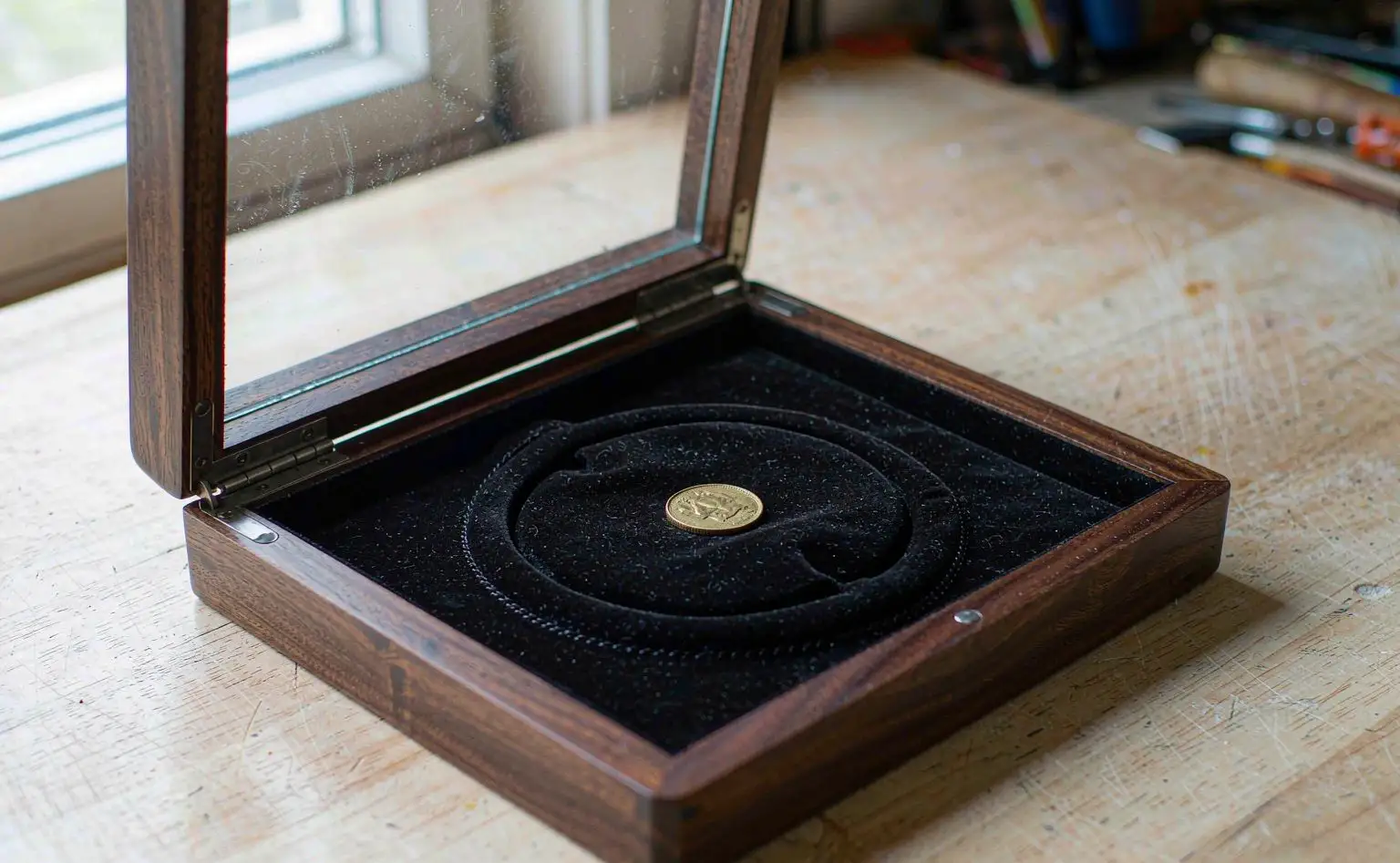
4. Wooden body: iHeir-M8 sprayed at 1:20
The body takes iHeir-M8 bamboo and wood fungicide, sprayed at 1:20, applied to the inner walls, both faces of the base and the cut ends until fully covered, then left to dry. Mixed liquor is used within a month, and it throws a surface film on standing, so shake before use.
Four details. Moisture content: with the timber below 25% after treatment, protection lasts more than a year, so the board is dried to spec before spraying. Ends and inner faces: the ends take water fastest and the inner faces ventilate least, so both get a second pass. Coating order: treat and dry first, then lacquer or veneer, because a film over the liquor wastes the work. And colour: treated timber darkens slightly, so a natural finish needs a colour trial.
On veneered board the work centres on the cuts and the exposed core: the veneer takes up little, while the core at a cut is the doorway, so concentrate on the cuts and pass lightly over the face. A solid case is sprayed inside and out, especially the underside of the base, which sits against a bench and dries slowest. The wider practice is in rework and dosing for mouldy bamboo and wood.
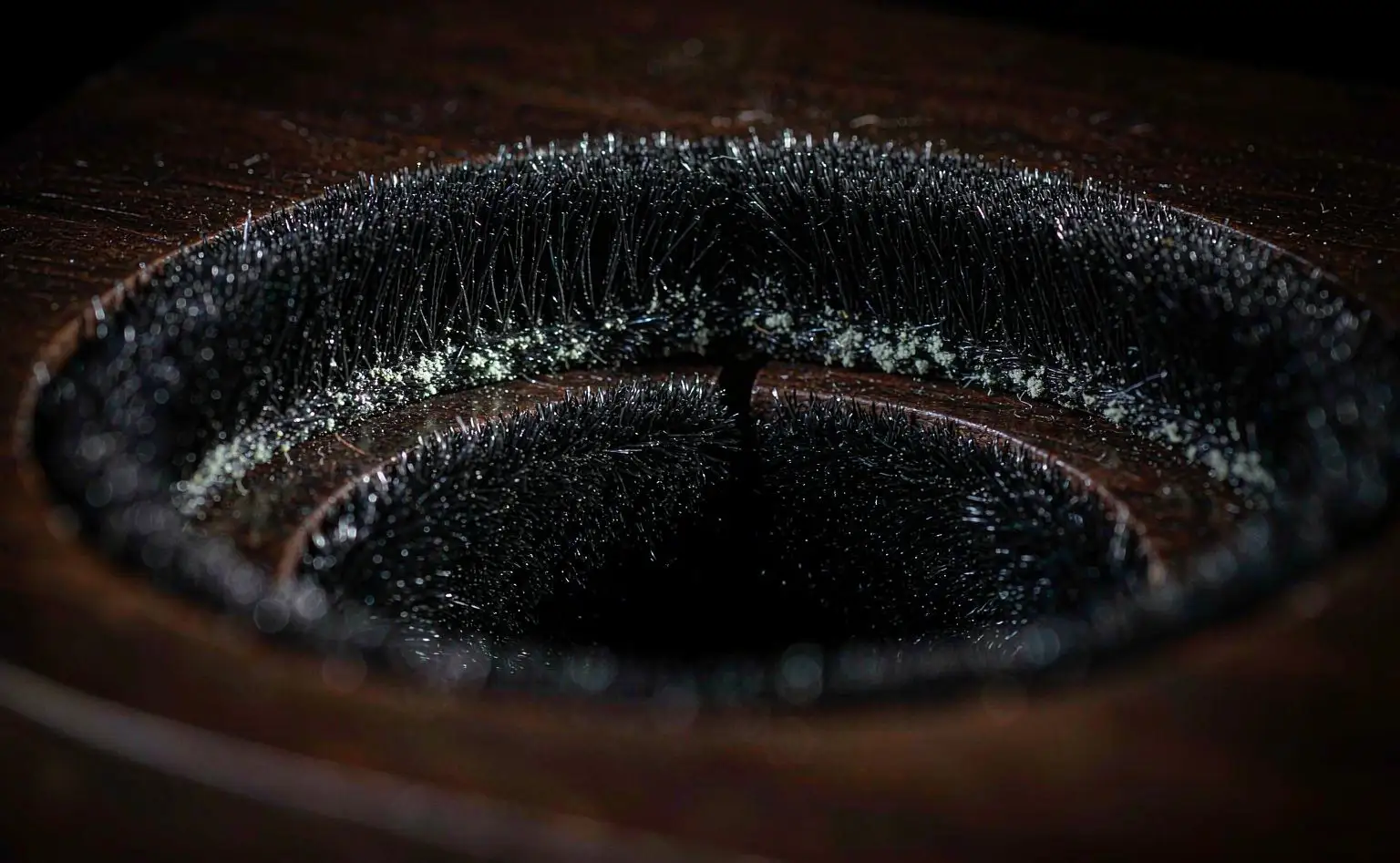
5. Vapour phase and metal parts: test before you ship
A coin box also holds hinges, clasps, magnets and the coin itself. Under damp conditions D can corrode poor-quality metal, so test first: a compatibility test at three times the normal dose, sealing the batch of hinges and clasps with 3x D plus sample coins in damp heat, then checking for discolouration, blackening and white corrosion. The sample coins matter most, because silver is sensitive to sulphur and blackens faster than it moulds.
A failed test leaves three options: change the part for a thicker plating; separate them, with a layer of lining between sachet and metal; or reduce the dose to 0.1g and make up the difference with humidity control. They can be combined, but the test is not skipped.
Two more points belong to humidity control: blow the cavity dry before the coin goes in, because closing over wet adhesive seals the water inside; and add desiccant to the outer packing, especially for sea freight. The container side is in carton and printed box protection for export.
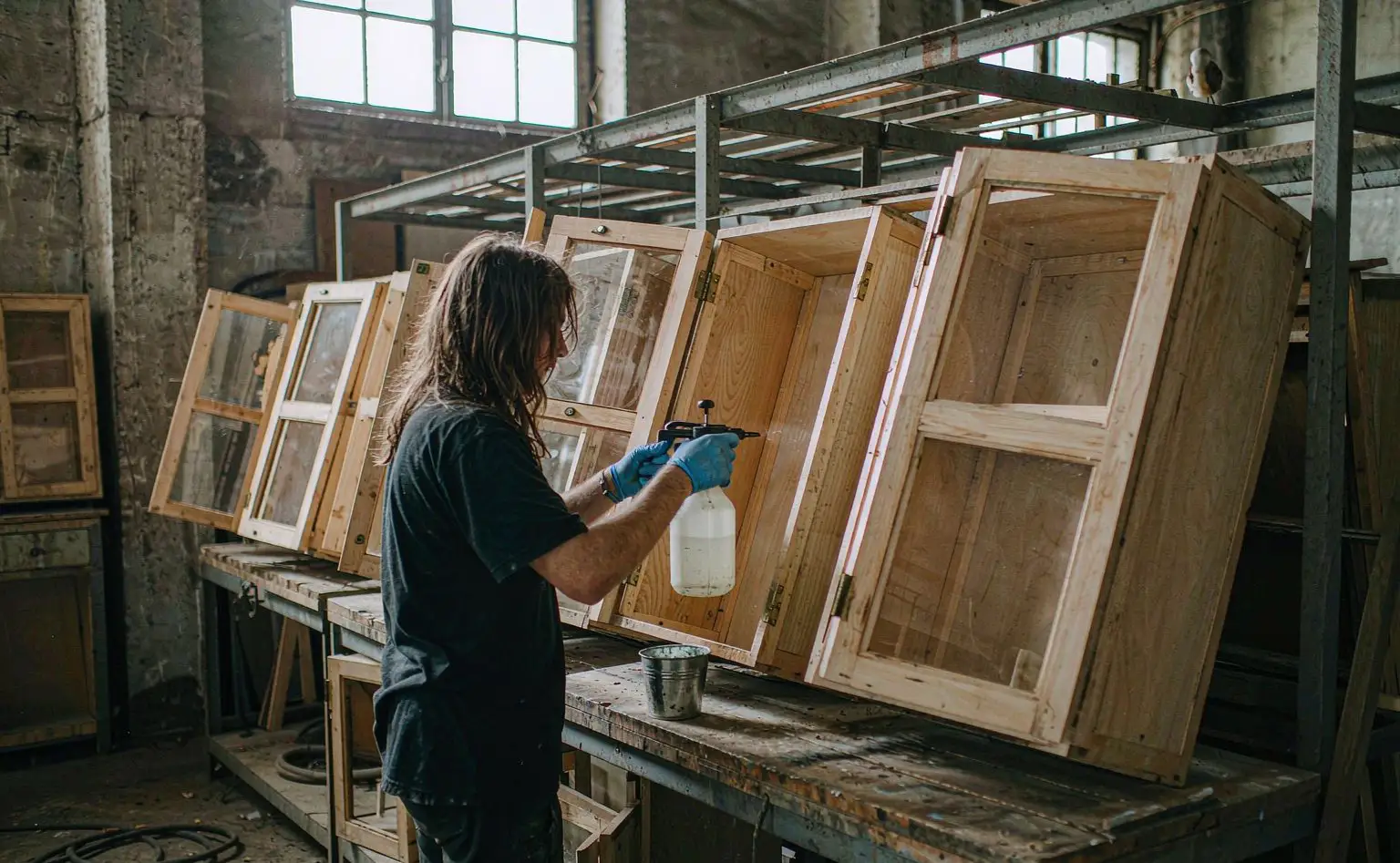
6. Questions we get: will a new lining stay clean, and can we coat straight after spraying
The lining is new and a sachet is in, so will it stay clean? That depends on where the water comes from. Wet adhesive, high body moisture or a bag that does not seal: any one brings the mould back. Measure moisture before packing and open a few bags to look for condensation.
Can the body be veneered or lacquered straight after spraying M8? No. It has to dry below 25% first; coating over a wet surface seals water under the veneer, mould starts at the cut and the veneer lifts. Confirm on a sample: spray three boards, leave them 24 hours and read the moisture.
How is the effect verified? Timber follows GB/T 18261, reading growth on inoculated specimens; the case goes through a whole-box simulation, packed, closed and bagged at 30C and 85% relative humidity for thirty days, then opened to inspect the lining, the recesses and the metal.
Four points: check the back of the lining and replace spotted cloth, blowing the cavity dry; one sachet of 0.1-0.2g iHeir-D in the lid, bagged at once; spray the body at 1:20 in iHeir-M8, a second pass on ends and inner faces, dry below 25% before coating; and test hinges, clasps and sample coins at three times the dose.


