




 View Count:32
 Date:2026-11-17
How is folding screen mould handled? Deal with the board behind the cloth first: soak the core board in iHeir-M5 at 1:40 to a 15%-20% gain, finish the cloth at 2%-3% o.w.f., and stretch it only after the glue dries. Moisture comes through the cloth into the board, and a mouldy board pushes the cloth out, so nothing shows until the panel is stripped. This article gives the dip conditions, the frame sequence and three checks.
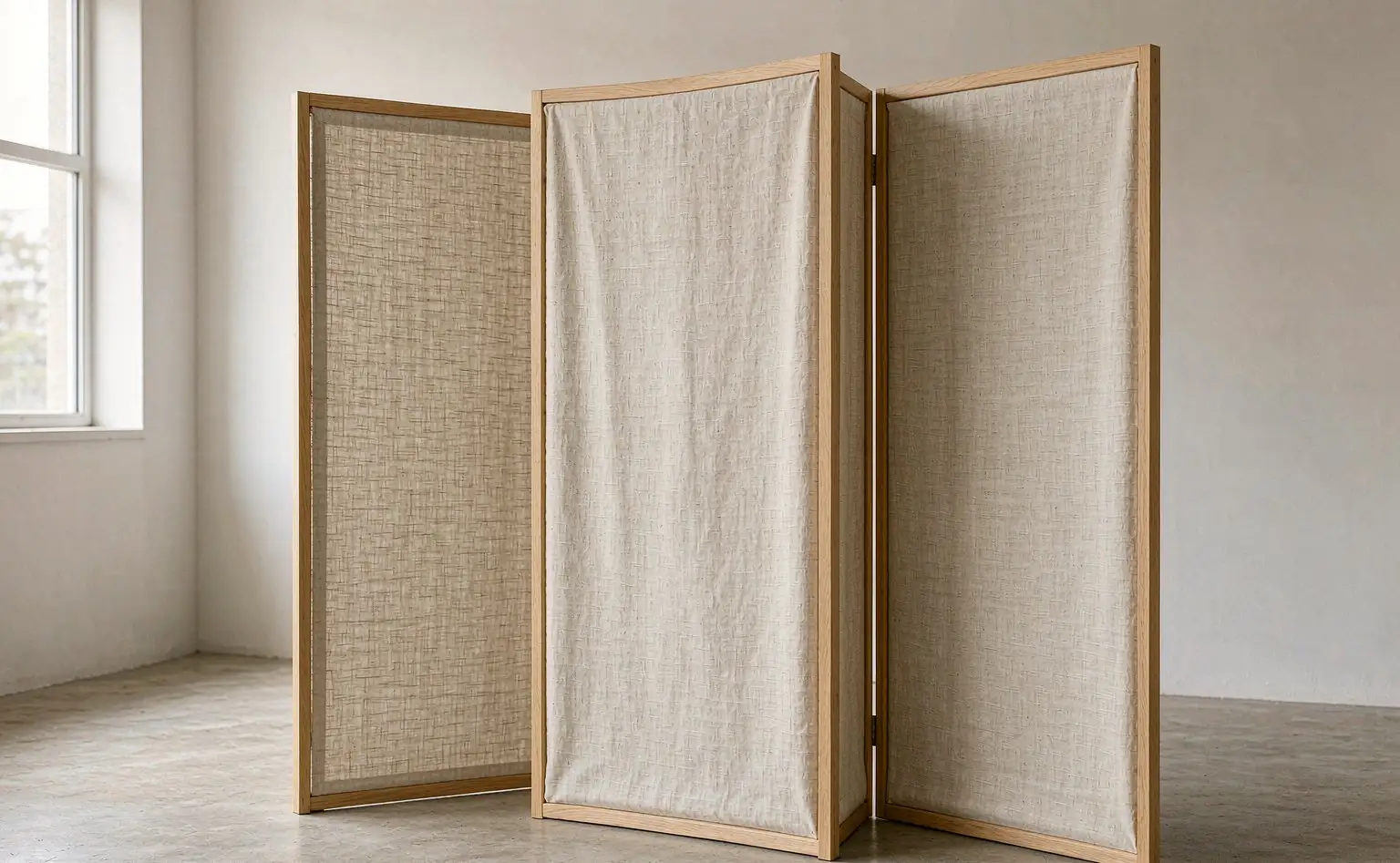
1. Where the mould comes from
The board takes water first. Core boards are usually plywood or MDF, and the end grain is open and takes water fast. Cloth keeps dust out but not moisture: in a container the humidity rises, water crosses the cloth into the board, and the mould that follows lifts the cloth into a blister.
The cloth takes moisture itself. Jacquard and linen hold water in the weave, so a damp store or showroom puts a white haze on the surface first; on dark cloth the spot leaves a mark even after wiping, and the panel has to be re-covered.
The glue line returns moisture. Frame glue based on starch is a food source in itself, and the gap between glue and frame holds water, so mould grows out of the seam and stains the cloth edge first.
The three are in series: if the board is not soaked through, the best cloth is wasted; if the glue carries nothing, the seam grows mould anyway.
2. Soaking the core board
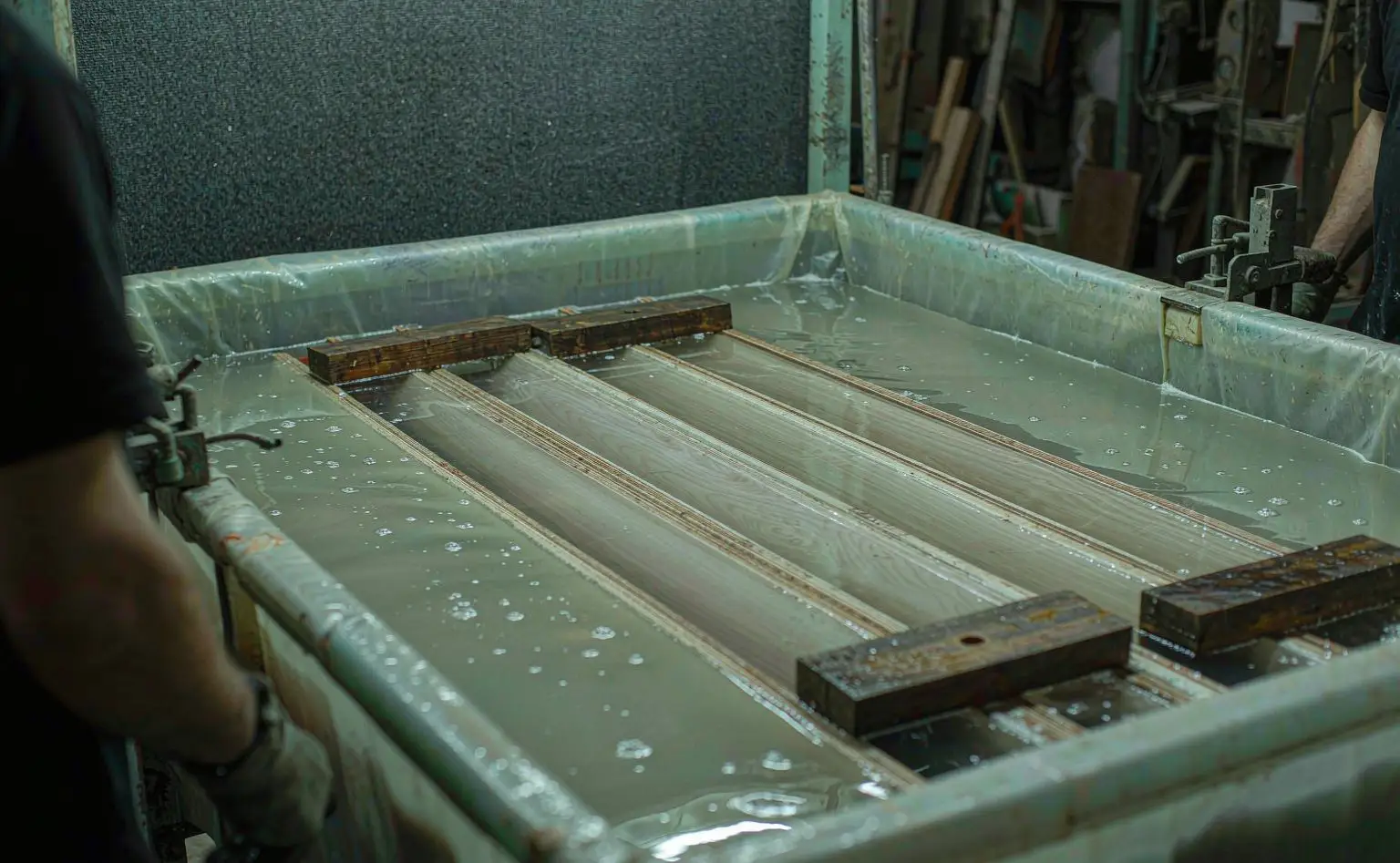
Mix the bath at 1:40. Five kilos of M5 concentrate to a hundred kilos of water. Use a plastic or FRP tank rather than steel, and keep alkaline auxiliaries out, because M5 is acidic and loses its effect in alkali.
Keep every board under the surface. Separate them with stickers or a mesh basket so the liquor reaches all four faces, and weight down anything that floats.
Soak to a 15%-20% gain. About 5-10 minutes at room temperature. Weigh three dry boards, then weigh them drained; an 18 mm MDF board takes twice as long as a 5 mm ply, so batch by thickness.
Drain before the next stage. Stand the boards 10-15 minutes until they no longer drip, then go to the dryer; stacked flat while wet, the liquor between boards dries patchy.
Brush the ends and cut edges. After cutting, brush the end grain, slots and hinge holes twice with the same liquor; these faces never see the bath, and mould starts there.
3. Finishing the cloth: 2%-3% o.w.f., bath at 21-50
The cloth runs on the same line as dyeing and setting, not in a separate bath.
Dose on dry fabric weight. Add iHeir-BJ textile mildew inhibitor at 2%-3% o.w.f.. Three kilos treat a hundred kilos of fabric; at a 70% pickup, premix with 9-13 kg of water and add it in stages.
Bath conditions. Hold 21-50℃ and pH 4.5-8.5; BJ is cationic, so it must not share a bath with anionic auxiliaries, and the previous stage has to be checked for residue.
Dry through the setting route. Not at low temperature: the cloth stays wet while the finish is unfixed and the agent washes out. Check shade on dark cloth and re-run any batch that blooms white.
Test the finish. Run finished cloth to GB/T 24346 or ASTM G21; screens are wiped, not washed, so the ten-rub test is the useful one.
| Part | Material | Product and dose | Stage | Control point |
|---|---|---|---|---|
| Core board | Plywood / MDF | iHeir-M5 at 1:40 | Whole board before cutting | Fully under, 15%-20% gain |
| Board ends and slots | Same board | M5, same mix | Brushed twice after cutting | Second coat after the first dries |
| Cloth | Jacquard / linen | iHeir-BJ 2%-3% o.w.f. | One finishing bath | 21-50℃, pH 4.5-8.5 |
| Frame glue | Starch-based glue | Inhibitor in the glue, on glue weight | Added while mixing | Stirred before use |
| Container | 20 / 40 ft | Drying sticks inside | Loading | Inside the doors, clear of cargo |
One boundary. M5 covers the board, BJ covers the cloth, the inhibitor in the glue covers the seam; miss one and the mould starts in the gap.
4. Covering the frame: let the glue dry first
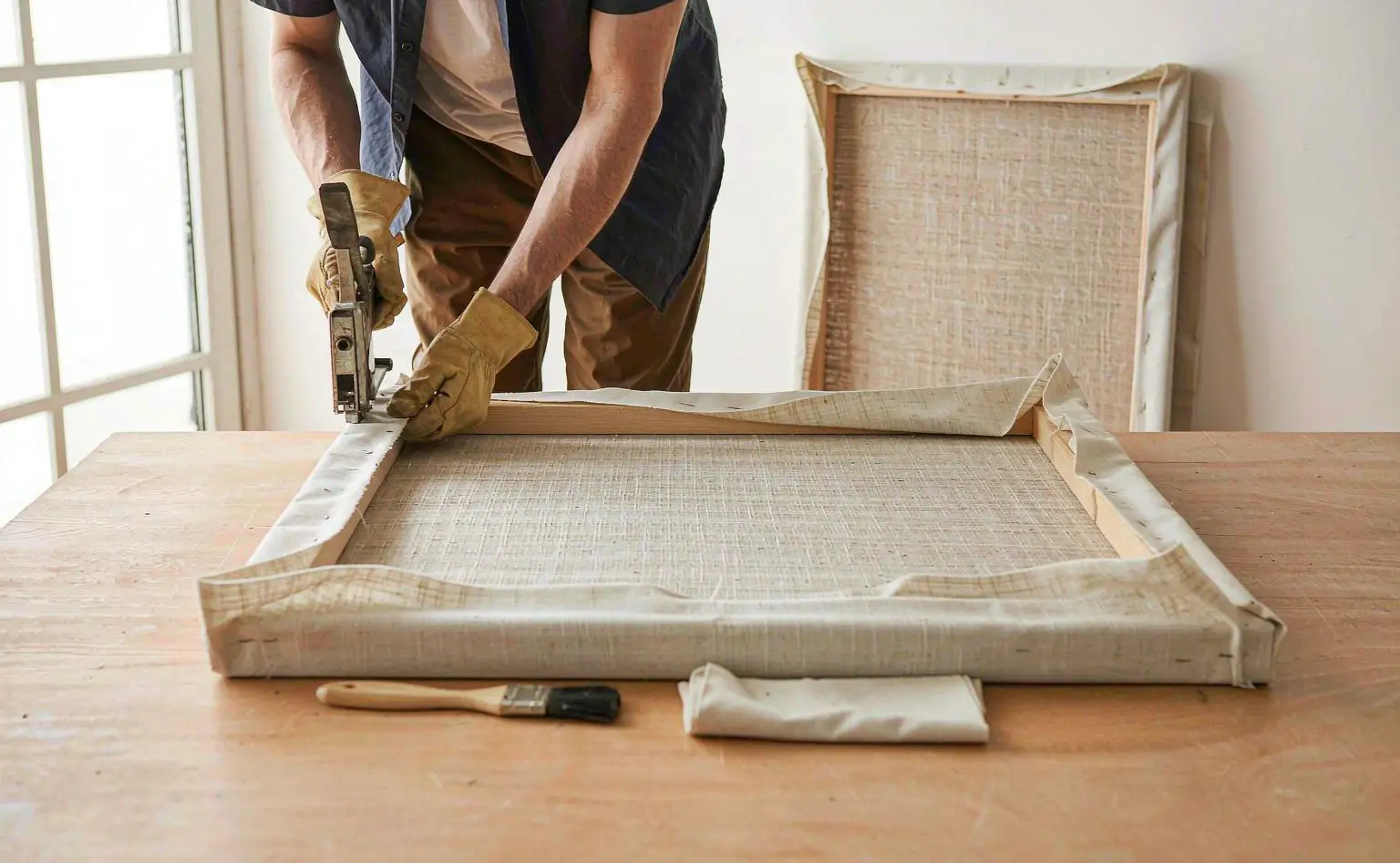
Bring the board to moisture content first. Dry soaked boards to the plant’s equilibrium moisture content, usually 12%-14% in a southern plant; re-dry if three readings spread over two points.
Cover only on dry glue. Wait until the film is not tacky; laid over wet glue, the water is sealed between cloth and board and the face blisters within a fortnight.
Increase tension in steps. Full tension in one go distorts the cloth; tighten in two or three passes, then stand the panel 24 hours.
Keep water out of the hinge holes. Brush the bottom of each hole with the same M5 mix and blow it dry before fitting; one drop rusts through a sea voyage.
5. Packing, storage and the container
Wrap each panel. Bubble film or pearl foam with corner protectors, so the corners carry the load rather than a stiffener on the cloth.
Stand, do not stack. Panels upright on racks 10 cm off the floor; stacked flat, the lower ones carry the weight on their cloth.
Hold the store dry. Below 60% RH with a dehumidifier in the rainy season; screens often sit three months, and a damp store re-infects a treated panel.
The container. Eight to ten pallets in a 20 ft and ten to twelve in a 40 ft, drying sticks inside the doors; meter it before loading and ventilate above 65% RH.
6. Inspection and questions
Look at the board face. Strip the cloth from one panel and look for black spots, water marks and fuzz, especially at the board edge and slots.
Flex the glue line. Flex the frame joint by hand and look for a white, powdery layer; powder means the glue carried no inhibitor, or it was not stirred in.
Wipe the cloth edge. Wipe the seam with a damp cloth and leave it 24 hours; a finished cloth dries quickly and the seam stays dry.
All three are quick on the inspection floor, and in the checklist they cost far less than a replacement after a complaint.
The questions below come up on every purchase order, so they belong with the checks.
Questions buyers ask
Q: Can cloth be laid on a board that has been soaked in M5?
A: Yes, once the board is dried to equilibrium moisture content. Cloth over a damp board does not bond and seals the water in.
Q: Does BJ change the handle of the cloth?
A: Not at 2%-3% o.w.f. Over-dosing stiffens it and can bloom white on dark shades, so keep to the middle of the range.
Q: Does an inhibitor in the glue weaken the bond?
A: At a low ratio on glue weight, stirred in, it does not; run a small bond test first, and shorten the pot life because a high dose retards cure.
Q: For sea freight to Europe, what else goes in?
A: Drying sticks in the container, per-panel wrap with corner protectors and optionally a gas-phase sheet in the carton; a northern winter route condenses more than a tropical one.
Mix M5 at 1:40, keep every board under the surface for 5-10 minutes to a 15%-20% gain, and brush the ends and slots twice with the same mix after cutting; finish the cloth in iHeir-BJ at 2%-3% o.w.f. with the bath at 21-50℃ and pH 4.5-8.5, drying through the setting route; dry the board to equilibrium, cover only on dry glue, and stand the panel 24 hours; wrap each panel, stand the store below 60% RH and load drying sticks in the container. Mould resistance can be verified to GB/T 24346 and ASTM G21, and the mix is on the iHeir-M5 product page.


