




 View Count:27
 Date:2026-11-17
How should microphone mould be handled? Close off the way water gets in: finish the grille cloth at 2%-3% o.w.f. in the bath, and put a 0.1-0.2 g iHeir-D gas-phase sheet beside the circuit board in the handle cavity. The cloth catches dust and water alike, and a microphone put away damp still has a damp grille next morning; the cavity holds a circuit board, where condensation brings hum and howling. These failures drive more returns than any electronics fault. This article covers the bath conditions and the inspection checks.
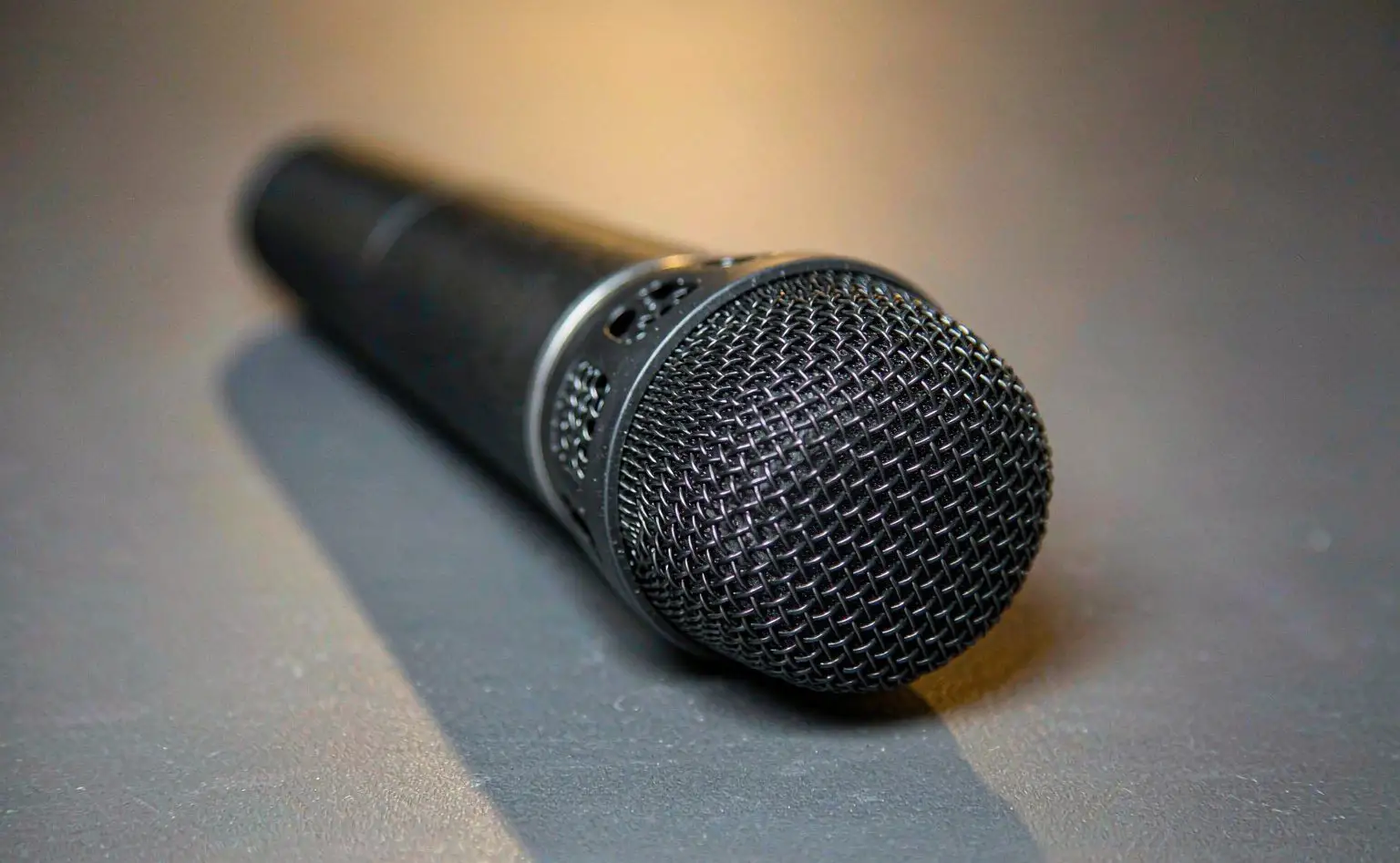
1. Where microphone mould comes from: the cloth, the cavity, the box
A dynamic microphone is a grille, cloth, capsule, handle shell, board, switch and connector. The grille is covered with cloth, then tested, boxed and shipped.
The cloth takes water first. Cloth is porous, keeping dust out and taking water and oil in; hand grease, stage humidity and condensation collect in it, and it sits over the capsule, pressed closer every time the microphone is held.
The cavity condenses. The shell is closed, with a board, a switch and wiring inside. In a rainy season or on a sea freight the shell condenses as temperature swings, and moisture lands on the board and joints, giving hum at best and a short at worst.
The packing locks it in. The colour box has a foam or blister insert, and foam holds moisture itself; sealed up, the water stays inside for the whole voyage.
Three different answers: the cloth by a finishing bath, the cavity by a vapour-phase sheet, the packing by desiccant. What a microphone suffers is the sound, not the spot.
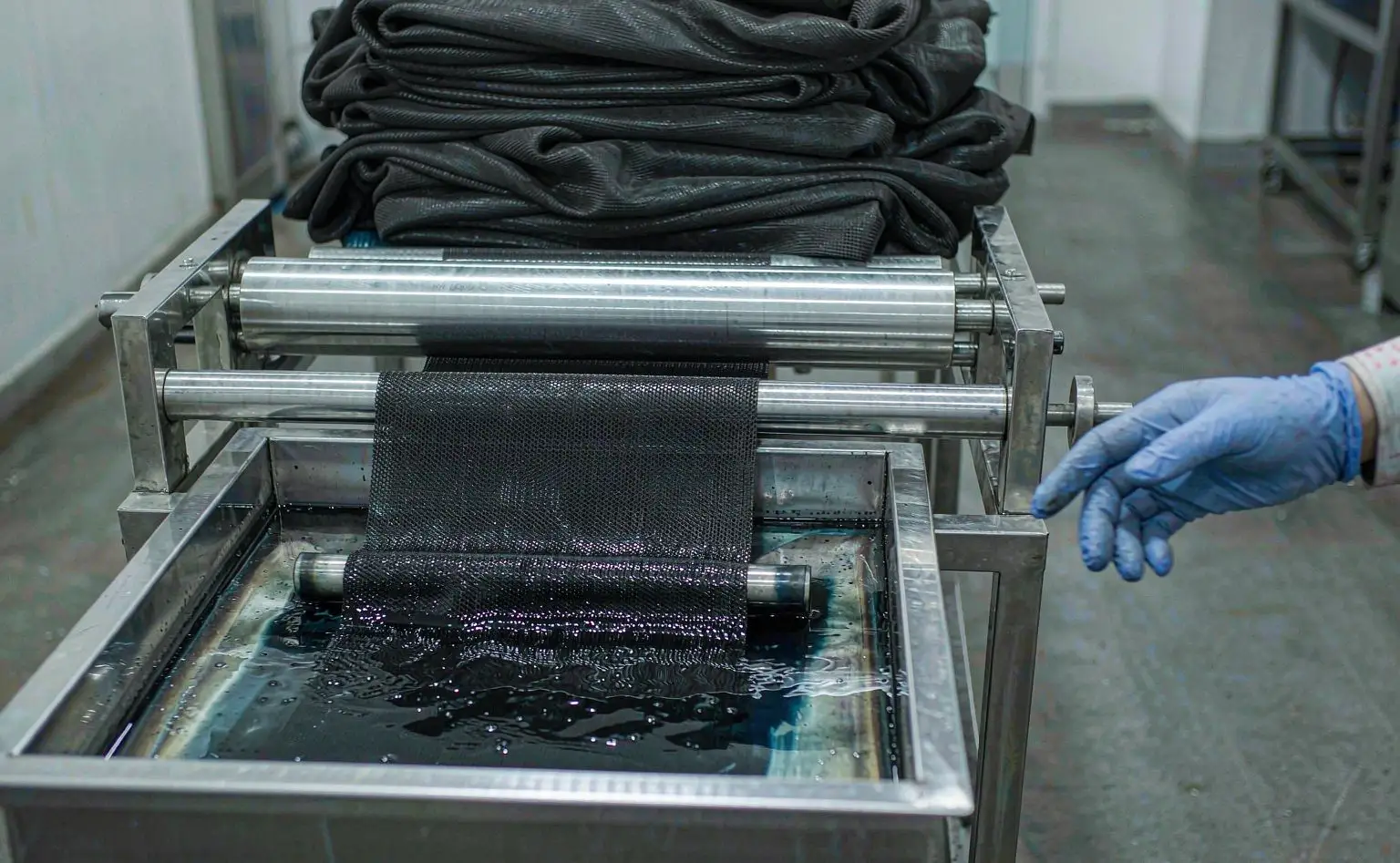
2. How to finish the cloth: 2%-3% o.w.f., bath at 21-50℃, pH 4.5-8.5
The cloth is small, but a wrong ratio means nothing was done; the figure is on dry fabric weight.
Use on weight of fabric. Add iHeir-BJ textile mildew inhibitor at 2%-3% o.w.f.. Three kilograms treats 100 kg of fabric, and at a 70% wet pickup that means premixing the agent with 9-13 kg of water and adding it to the bath in stages; tipped in at once it concentrates locally and adsorbs unevenly.
Bath conditions. Hold 21-50℃ and pH 4.5-8.5, and run the cloth through the setting bath rather than a separate one. BJ is cationic and must not share a bath with anionic softeners, so check the previous stage for residue.
Dry it properly. Dry through the setting route rather than hanging at low temperature: slow drying keeps the cloth wet before the finish fixes, and the agent washes out. Check handle and shade, especially on black cloth.
Test the finish. Run the finished cloth to GB/T 24346 or ASTM G21, and add a rub test: grilles are not usually washed, but users wipe them with a damp cloth, so the finish should still work after ten rubs.
3. Where the sheet goes: on the wall, off the board, one per unit
The cavity is small, where a vapour-phase sheet works best, but in the wrong place it does nothing.
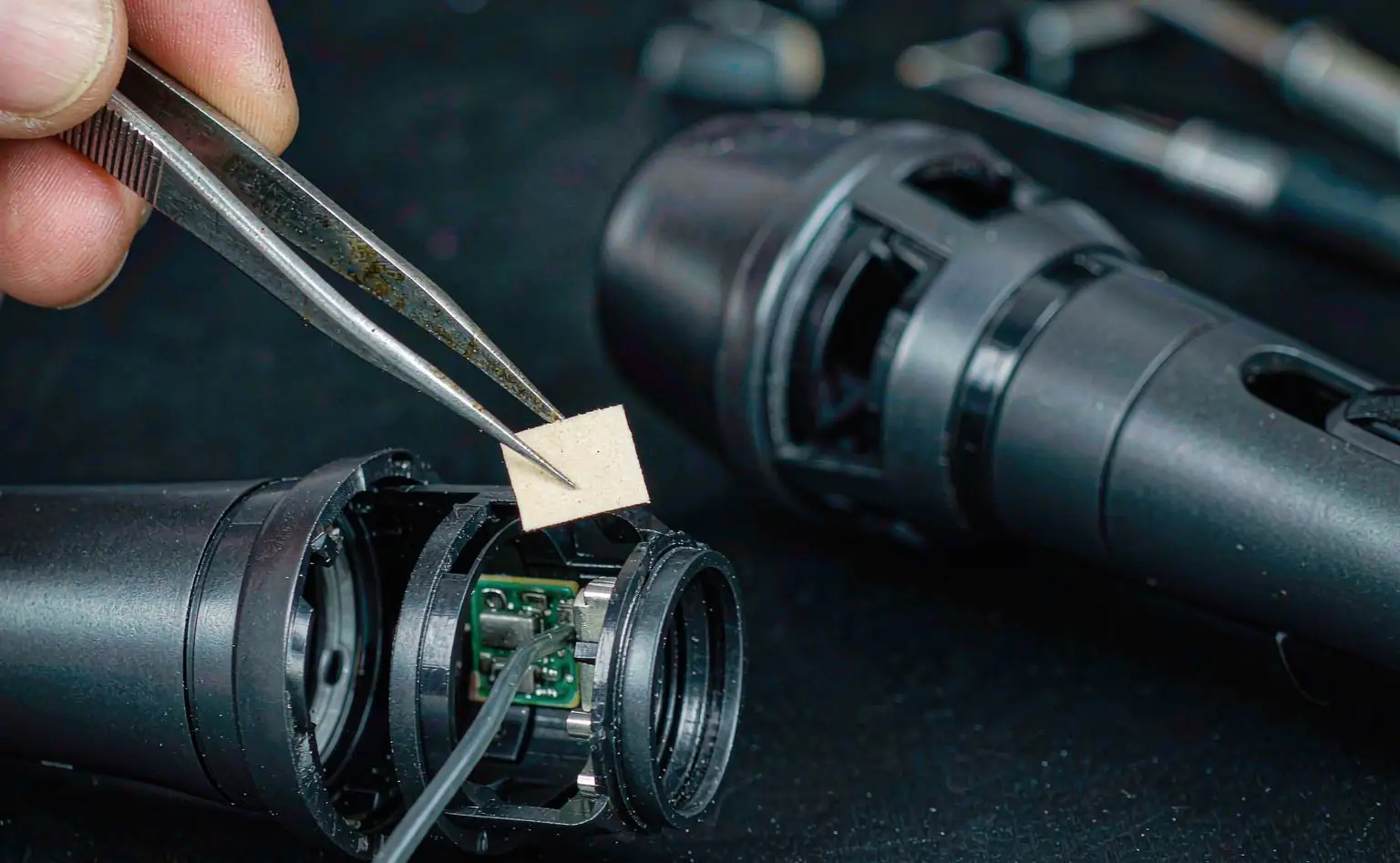
On the wall, not on the board. Cut the sheet small and stick it inside the shell near the tail end, clear of the board. The vapour diffuses through air, and one day is enough in a cavity this small.
One per unit. One sheet per handle cavity at 0.1-0.2 g. Do not add a second for safety: stacked sheets evaporate less and take up assembly room.
Watch the joints and plating. Vapour-phase paper can corrode poor metal in damp, and the cavity holds joints, switch contacts and a connector. Where plating is thin or copper bare, put the sheet on the furthest wall and run a seven-day bag test at three times the normal dose.
Assembly order. Stick the sheet, let the adhesive dry, fit the board, and leave the shell open ten minutes before closing it.
| Part / stage | Material | Product and level | Stage | Control point |
|---|---|---|---|---|
| Grille cloth | Polyester / blend | iHeir-BJ 2%-3% o.w.f. | Setting bath | 21-50℃, pH 4.5-8.5 |
| Handle cavity | ABS shell and board | iHeir-D 1 sheet (0.1-0.2 g) | Assembly | On the wall, off the joints |
| Colour box | Foam / blister insert | iHeir-D 1 sheet | Packing | Clear of the grille |
| Shipper | Corrugated carton | Desiccant to carton count | Boxing | Barrier film inside |
| Container | 20 ft / 40 ft | Sticks in the container | Loading | On the door, off the cargo |
One boundary. The bath covers the cloth fibre, the sheet covers the cavity air, the desiccant covers packing and container.
4. Packing and storage: dry the insert, film the carton
Packing takes up more moisture than the product, which buyers miss.
Dry the insert. Meter incoming foam and blister inserts, bake or replace a damp batch, and put paper between insert and product.
A sheet in the box. Put one iHeir-D sheet on the upper inner wall of the colour box, clear of the grille, and one between layers in a carton of several units.
Film the carton. Line the carton with barrier film and press the tape down; the film is not there for waterproofing but to hold the box air apart from the warehouse air so the vapour stays inside.
Storage. Hold the store below 60% RH and run a dehumidifier in the rainy season; keep cartons flat, off the wall, with gaps between stacks, and smell one at outbound sampling.
5. What to check: rub, smell, open one cavity
Mould does not show on a finished unit, so inspection opens one up.
The rub test. Wipe the grille cloth with a damp cloth ten times and leave it 24 hours; a properly finished cloth dries quickly and is not tacky.
The smell. Open a carton and smell at the top: packing should smell of plastic and adhesive only. Musty or sour means humidity inside is already high.
One opened cavity. Take a unit apart: water marks on the wall, green on the joints, and whether the sheet is still firm. A soft, wrinkled sheet took up water in transit.
All three need no instruments, and written into the checklist they save the guessing about hum after arrival.
6. Questions buyers ask
Q: Can a finished grille cloth still be washed?
A: Grilles are usually not washed, only wiped, so test ten rubs and accept the finish if it still works. If the customer washes them, run the test to their actual practice.
Q: Does a sheet in the handle affect the switch or the sound?
A: On the wall and clear of joints and switch contact, at the normal level, it does not; the risk is a sheet catching in the switch travel.
Q: Is finishing the cloth enough without a sheet?
A: No. The bath covers the fabric surface, while the cavity is a closed space of its own and condensation on a joint has nothing to do with the cloth.
Q: For sea freight to Southeast Asia, what else goes in?
A: Sticks in the container, barrier film in the carton, a sheet in the colour box, at the top of the normal range on a hot, humid route.
Finish the grille cloth in iHeir-BJ at 2%-3% o.w.f. with the bath at 21-50℃ and pH 4.5-8.5, premixing with 9-13 kg of water before adding it in stages, then dry it through the setting route and test ten rubs. Stick one iHeir-D sheet at 0.1-0.2 g to the inside of the handle shell, clear of the joints and switch, with a three-times-dose bag test where plating is thin; sheet the colour box, film the carton and hold the store below 60% RH; inspect by rubbing, smelling and opening one cavity. Mould resistance can be verified to ASTM G21 and GB/T 1741, and the bath details are on the iHeir-BJ product page.


