




 View Count:38
 Date:2026-09-01
How to make food-grade antibacterial cling film? Cling film wraps food directly – it must preserve freshness and be safe. If the film itself suppresses bacteria, food stays fresh longer. “Antibacterial cling film” is now a hot food-packaging trend. This article covers why film needs antibacterial treatment, how to choose safe agents, and how to implement it in production.
1. Why Does Cling Film Need Antibacterial Treatment?
- Film can be a bacteria hub: condensation forms on the inside of film in the fridge; water film + food residue = ideal bacteria conditions – ordinary film only isolates physically, it does not suppress growth;
- Consumer demand: extending freshness and reducing food waste matter more than ever; antibacterial film keeps meat fresh 2-3 days longer – a visible difference;
- Industry trend: antibacterial food packaging is an upgrade direction; early movers earn differentiated selling points.
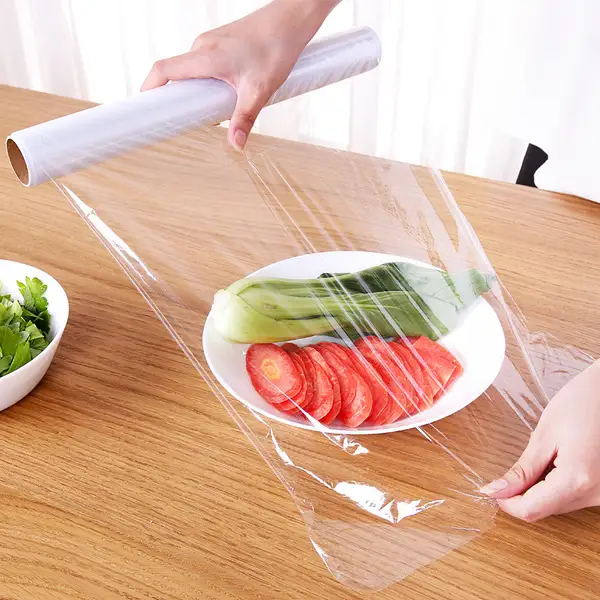
▲ PE cling film with antibacterial properties
2. How to Choose Food-Grade Agents? (Safety First)
Because film touches food directly, agent selection is stricter than ordinary plastics – three points:
| Point | Requirement | Why |
|---|---|---|
| Compliance | Listed in GB 9685 (food-contact additives standard) | Food-contact materials must use listed additives – otherwise illegal |
| Migration test | Pass specific migration tests with limits respected | Agents must not migrate from film into food |
| Process tolerance | Stable at blown-film temperatures (PE about 150-220℃) | Choose heat-rated masterbatch so it survives processing |
Common food-grade agents include silver-based (broad-spectrum, heat-resistant, e.g. iHeir-PA1000) and zinc-based (moderate cost, white-friendly). Key checks: GB 9685 listing and complete migration test reports.
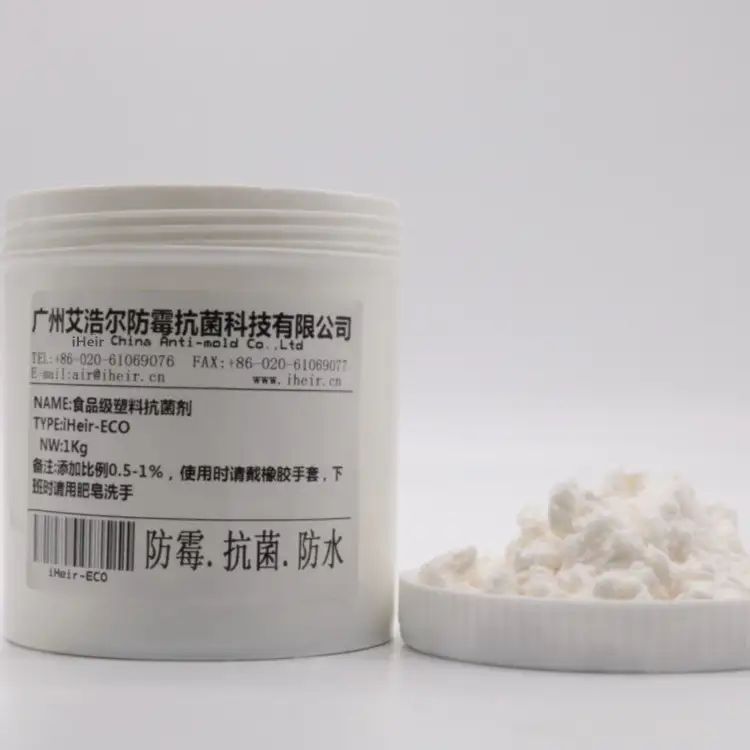
▲ Food-grade plastic antibacterial agent
3. How Do Film Makers Implement It? (Production)
- Add masterbatch: blend food-grade masterbatch (e.g. iHeir-ECO food-grade) with PE at 2%-5% before blowing – underdosing fails the 99% rate;
- Even dispersion: mix masterbatch and resin for 10-15 minutes so actives are uniform – uneven mixing leaves unprotected film areas;
- Blown-film forming: use the original process (PE at 150-220℃); food-grade inorganic agents handle it without degradation;
- Verify: submit to ISO 22196 (surface antibacterial) plus food-contact migration tests – obtain the dual “99%+ rate + migration-compliant” report;
- Batch control: retain masterbatch samples and monitor rate fluctuation.
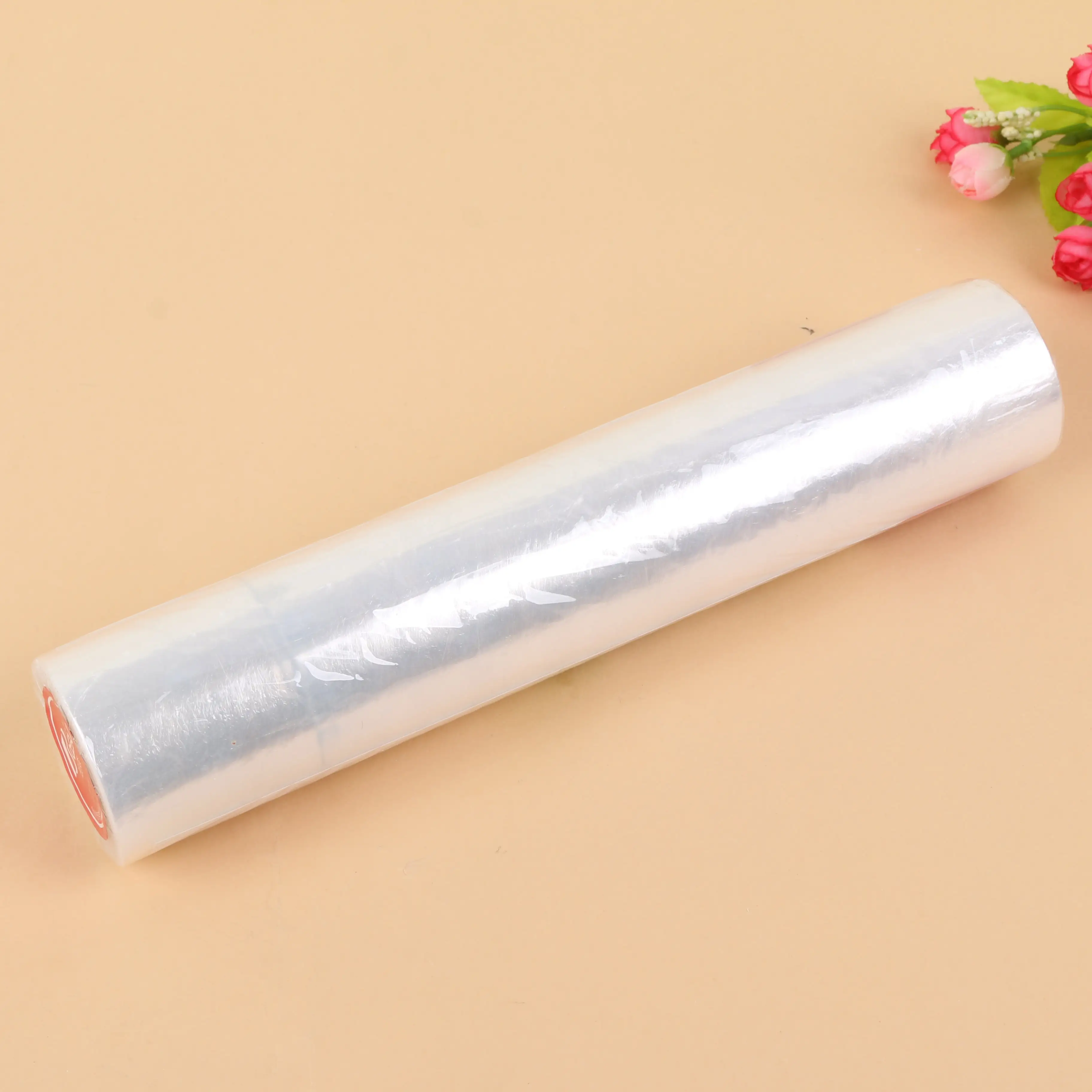
▲ Antibacterial cling film application
4. How to Market Antibacterial Film?
- Speak with data: “99%+ antibacterial rate (ISO 22196)” beats empty claims;
- Bind to scenarios: highlight “meat/seafood stays fresh 2-3 days longer”, “less food waste”;
- Compliance backing: state “compliant with GB 9685 food-contact standard” to ease safety concerns;
- Careful wording: say “antibacterial”, not “disinfecting”, to avoid false advertising.
5. What Should Each Role Do?
- Film makers: position “food-grade + antibacterial” as a product-line upgrade with dual reports attached;
- Food packaging plants: offer customized antibacterial packaging for fresh food and prepared dishes to boost customer retention;
- Brands/retailers: verify GB 9685 compliance and migration reports when sourcing antibacterial film.
Last year a film maker’s pilot batch used ordinary (non-heat-rated) agents and failed the antibacterial test, scrapping the run. After switching to food-grade heat-rated masterbatch, the rate stabilized above 99.5% and the product entered two supermarkets’ cold zones. For the rigor of food-contact standards, see Medical Device Mold Prevention.
6. FAQ
Q1: Does the film’s odor affect food?
A: Food-grade odorless agents do not affect flavor; include an odor check after production.
Q2: Can antibacterial film replace refrigeration?
A: No – antibacterial reduces reproduction to extend the freshness window; fridge temperature remains the base. Combine for best results.
Conclusion
Food-grade antibacterial film is three phrases: GB 9685-compliant agent, 2%-5% masterbatch, dual-report verification. For food-grade solutions, contact us or browse the product range; related: Types of Plastic Antimicrobial Agents.