




 View Count:8
 Date:2026-09-15
The goods have sat in the warehouse for a month and a buyer inspection lands tomorrow. The plastic parts come out of the carton with dark patches across the surface. Two wrong reactions cost real money here: scrapping everything and writing off a perfectly usable batch, or wiping the parts down and shipping them, only for the spots to return two weeks into the sea voyage and trigger a claim worth more than the shipment.
1. Grade first: surface growth, penetration, or bloom
The same dark patch has three different causes and three opposite responses. Three criteria settle it: how the mark reacts to wiping, how the substrate feels, and how the pattern is distributed.
Surface growth shows as dots or threads that lift easily with a cloth carrying mould remover, leaving a flat surface with no tackiness underneath. The organisms colonised the surface only, and the part remains usable after rework.
Penetration is different. The mark will not wipe off, or lifting it leaves a pale depression; the substrate feels tacky, turns fuzzy, and may show fine crazing. The hyphae have entered the surface layer, so appearance and mechanical properties are both affected. Rework cannot restore original quality, and the part must be downgraded or scrapped.
Bloom is white, evenly spread, and returns within days of wiping, because it comes from additive migration rather than organisms. Bloom needs no mould remover and no anti-mould additive; what it needs is a change in the lubricant and plasticiser balance of the formulation.
One detail that gets missed: a single carton usually contains all three. Parts near the carton wall and at the bottom take the most moisture and tend to be penetrated, while upper layers stay at surface level. Grading a whole carton as one block either wastes material or misses treatment. Sample at least three parts from the top, middle and bottom layers before deciding.
2. The three routes: rework, downgrade, scrap
Once graded, the action follows the table below.
| Grade | Trigger (any one is enough) | Action |
|---|---|---|
| Scrap | Depression left after wiping; tacky or fuzzy substrate with crazing; spots covering more than one third of the part | Scrap the batch without rework. Rework cost and complaint risk exceed salvage value |
| Downgrade | Broad patches but a sound substrate after wiping, only slight loss of gloss | Clean and dry, then ship as a downgrade for non-critical orders or non-visible surfaces, disclosed in writing before dispatch |
| Rework | Dot and thread growth only, substrate intact after wiping | Clean, dry and re-inspect, then refill the anti-mould protection before the parts return to the finished-goods store |
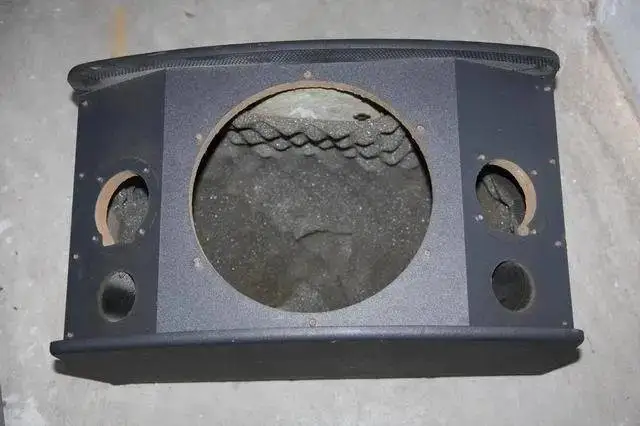
The rework itself: load a cloth or brush with a small amount of iHeir-Clean mould spot cleaner, wipe the affected areas evenly, repeat with light pressure on stubborn patches, then air dry naturally. Avoid forced hot air, which concentrates stress at the surface. iHeir-Clean is soluble in water, ethanol, ketones, esters, hydrocarbons and chlorinated hydrocarbons, and can be diluted to suit the process. Run a production-scale trial before batch use to fix the best conditions.
Keep the rework area separate from the normal line, with dedicated cloths, brushes and tote boxes that are replaced on a schedule. Plenty of workshops find that reworking makes the problem worse, and the cause is almost always mixing reworked parts back with sound ones and carrying contamination around the shop floor. Cleaning effluent from rework should not go back into the production water loop either.
3. What to refill after rework, and at what dosage
Cleaning solves today. The next batch turning mouldy is where the real cost sits. Refilling protection on reworked parts and dosing the compound at source are two separate jobs.
For the next production run, add iHeir-JS117 plastic anti-mildew powder at the mixing stage. With an active content above 97.0%, it suits PVC, PU, silicone resin, polyolefins, polyester, thermoplastic elastomers and rubber, recommended at 0.5%-1.0% by total part weight, blended evenly with the resin before normal forming. Compounds carrying wood flour, starch-based fillers or a high regrind ratio take the upper end; straight polyolefin parts take the lower end.
For light-coloured and transparent parts, use iHeir-IPL inorganic plastic antimicrobial agent, which delivers a reduction of at least 99.99% against E. coli, Staphylococcus aureus and Candida albicans, recommended at 0.8%-1.0%. It can be blended straight into the resin or pre-made into a masterbatch or dispersion. Inorganic grades shift the hue of light and clear parts very little, which is the main reason export orders favour them.
For already-moulded stock, there is no way back into the compound. Surface treatment is the only option and it is temporary by nature, rarely lasting a full sea voyage. Do not rely on it to clear a reworked batch. Manage reworked and new parts separately, and dose the new batch at source.
When comparing quotes, keep the categories straight. An anti-mould powder and an antimicrobial agent serve different functions and should be quoted separately. Ask about minimum order quantity and lead time as well, because on an order chasing a vessel booking, waiting for a production batch costs more than a small price difference.
4. How to test the antimicrobial rate
Third-party testing. Antibacterial performance is reported against ISO 22196, the measurement of antibacterial activity on plastics and other non-porous surfaces, with an in-house threshold usually set at 99% or higher. Anti-mould performance is reported against ASTM G21, the standard for determining resistance of synthetic polymeric materials to fungi, where grade 0 or 1 is the usual export contract requirement. Samples must come from the same batch and the same process conditions, and treated parts should be submitted alongside untreated ones so the report carries a real comparison.
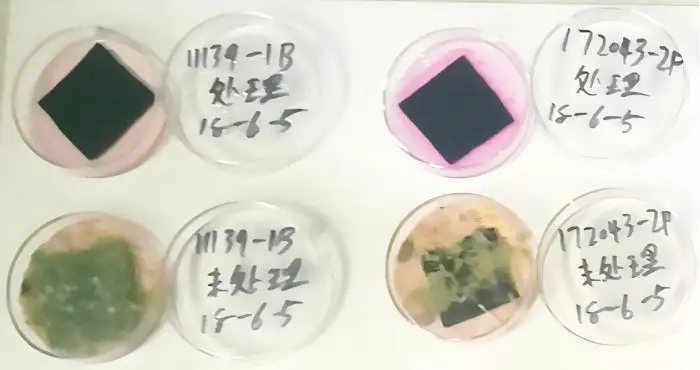
In-house screening. Without a testing budget, a petri dish method gives a reliable trend. Place treated and untreated parts in the same incubation environment, observe them side by side for 7-14 days, and record when spots appear and how far they spread. It will not deliver a certified number, but it is enough to flag an abnormal batch or to check whether a formulation change worked. For the general procedure, see how mould testing is normally carried out.
One trap catches a lot of plants: testing antibacterial performance and skipping mould resistance. The two cover different organisms, and formulations that pass an antimicrobial rate while failing a mould resistance grade are not rare. Understand the difference between a mould inhibitor and an antimicrobial agent at the selection stage rather than after a complaint.
5. Preventing a repeat: storage and export moisture control
Rework and dosing fix the parts. The environment brings the problem back if it is ignored. Three measures are the easiest to implement. Keep finished-goods storage below 65% relative humidity, treat or raise the floor and keep cartons off the ground with an air gap from walls. Line cartons with moisture-barrier material and match container desiccant to the container type on long sea routes. And re-inspect any batch held longer than 60 days, so the mould risk surfaces in your own warehouse rather than the customer’s.
The cost arithmetic is worth putting in front of the management team. For a 20-foot container of plastic parts, dosing anti-mould powder at 0.5%-1.0% works out to an additive cost in the hundreds to low thousands of RMB per container, under 1% of shipment value. One full rejection for mould costs the entire shipment value, plus return freight, rework and lost credibility, which usually equals the additive cost of dozens of containers. That comparison deserves a line in the annual budget, not only in the purchase price list.
6. Frequently asked questions
Q: Can parts wiped clean be shipped straight away?
Not recommended. Cleaning removes the spots present today, but the part itself has no mould resistance, and the heat and humidity inside a sea container are enough to bring growth back before arrival. Reworked parts should have protection refilled and re-enter the finished-goods store, or be explicitly downgraded with written notice to the buyer.
Q: Is an antimicrobial rate the same as a mould resistance grade?
No. The antimicrobial rate covers bacteria and is measured by ISO 22196; the mould resistance grade covers fungi and is assessed by ASTM G21 or GB/T 1741. Export orders often ask for both reports, and submitting only one gets held up at inspection.
Q: Why did a batch with antimicrobial agent still grow mould?
Three common reasons: an antibacterial was used without an anti-mould agent; the loading fell below what the compound actually needs; or storage humidity stayed above 75% and condensed on the surface. Check those three before changing product.
Q: How should export parts be protected inside the container?
Line cartons with moisture-barrier material, match container desiccant to the container size, and confirm wooden pallets and cartons are dry before loading. Record container humidity when the box is opened on arrival, and use those readings to adjust the next shipment. Source dosing, rework discipline and packaging moisture control together are what actually bring export mould claims down.