




 View Count:10
 Date:2026-11-21
Where does headlamp mould start once the LED and the circuit are ruled out? It sits in the strap and the lamp housing. The strap is elastic webbing that takes up sweat as readily as water, and the housing carries a seal, so moisture taken in at assembly has nowhere to go. The routine is to run the strap through the finishing trough with iHeir-BJ at 2%-3% o.w.f., then sheet the housing and the colour box with iHeir-D at 0.1-0.2 g per sheet. This article covers the bath, the sheeting and the inspection.
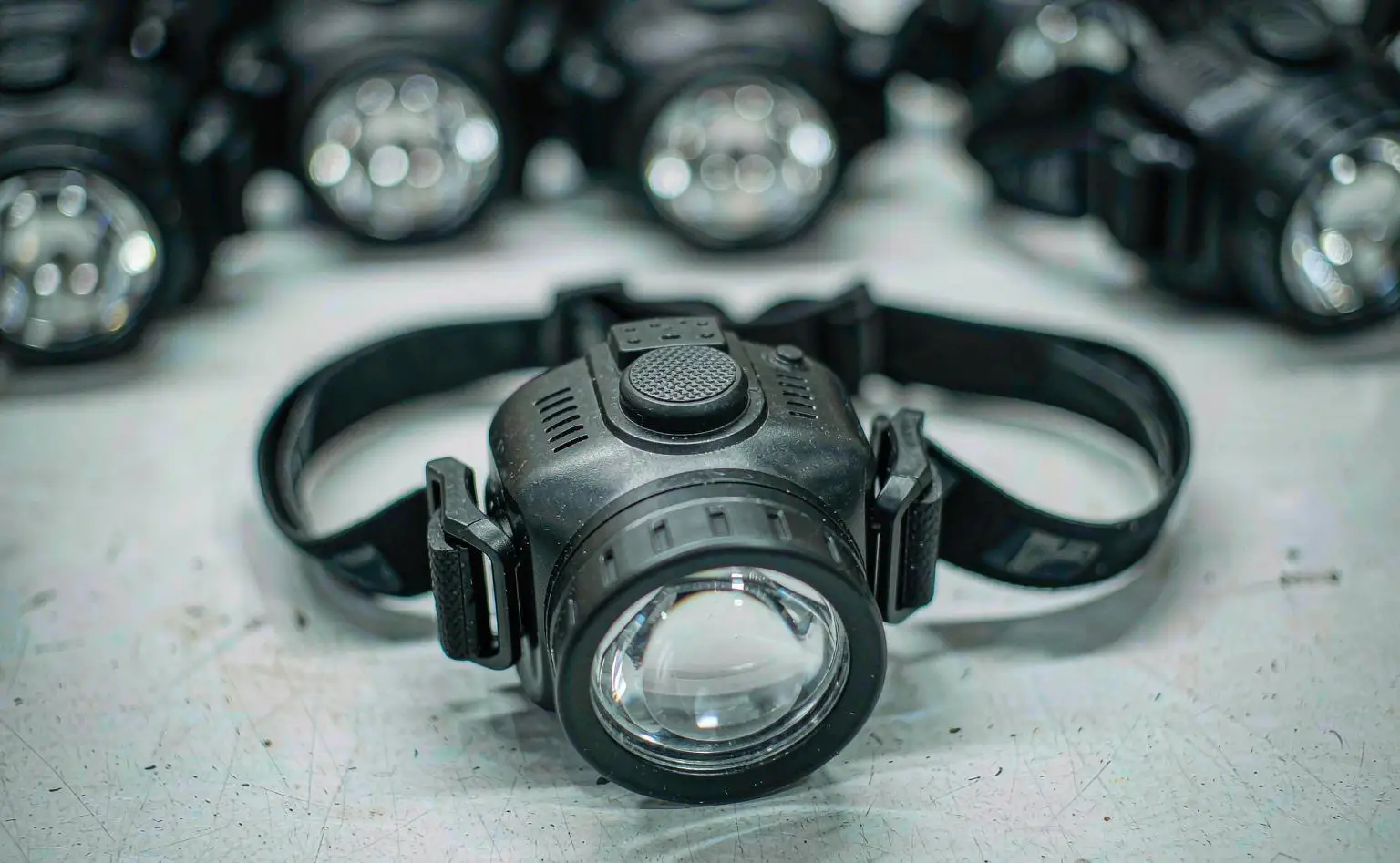
1. Where the growth comes from: strap, housing, pulp tray
Webbing takes up sweat and moisture. Headlamp straps are usually polyester-elastane webbing, and they leave weaving and dyeing carrying process residue. A try-on on the line or a pull from a carton puts hand moisture on them, and that is the foothold.
The housing is half closed. A lamp housing contains a seal, a battery compartment and a switch, and once the back cover is on there is almost no air movement. Moisture carried in at assembly can only come out by opening the unit.
Pulp trays take up water. Colour box trays are usually moulded pulp, and in the wet season a whole pallet arrives damp. A box with no sheet inside is a humidity chamber with a headlamp in it.
Sea freight amplifies it. In a container the air warms by day and condenses at night, so strap and tray both take up moisture. The carton is opened to a white bloom on the webbing and a musty smell in the housing, and the buyer rejects on sight.
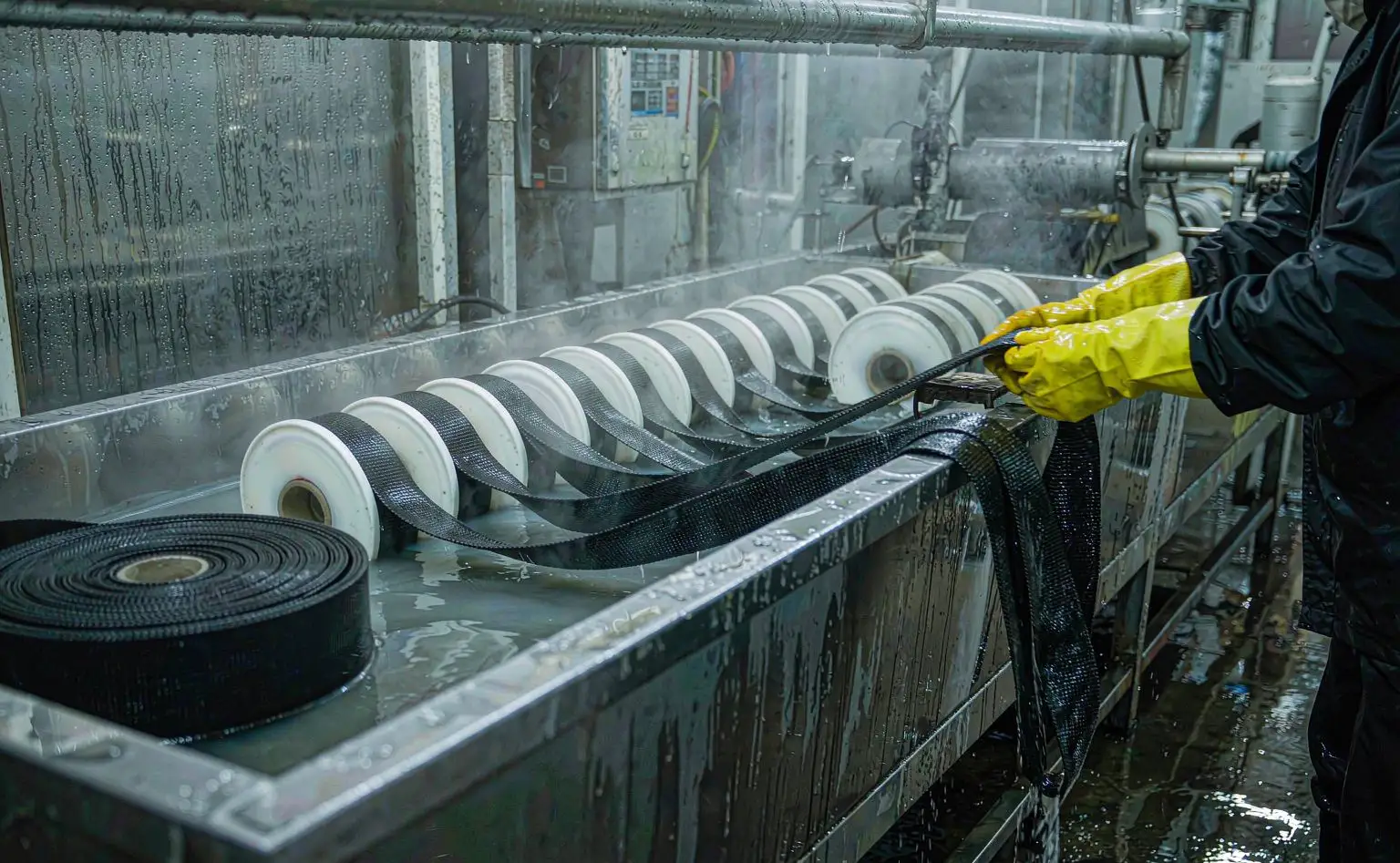
2. The strap: through the finishing trough at 2%-3%
Dose on dry fabric weight. Standard anti-mould finishing for iHeir-BJ is 2%-3% o.w.f. on dry fabric weight: the lower end for thin elastic, the upper for heavy and dark webbing.
Make a pre-mix, then add in portions. Make up BJ with 9-13 times its volume of water and add it to the trough in portions. Dumping it in at once creates a local spike, the webbing takes it up unevenly, and the roll ends up treated in one stretch and bare in the next.
Bath conditions. Run the trough at 21-50°C and pH 4.5-8.5. Set the water to pH 4-6 first, add 0.1% cationic wetting agent on bath weight, then add the BJ in portions. Below 21°C uptake is slow; above 50°C elastic webbing loses its stretch.
Pick-up and drying. Squeeze the excess off through the mangle to the pick-up on the process card, then dry and set. Webbing that goes onto the roll damp takes up moisture again, and the whole bath is wasted.
| Stage | Material | Product and level | Process | Control point |
|---|---|---|---|---|
| Elastic strap and headband | Polyester-elastane webbing | iHeir-BJ 2%-3% o.w.f. | Once through the trough at 21-50°C | pH 4.5-8.5, pick-up on the card |
| Lamp housing | Cavity and battery bay | iHeir-D 0.1-0.2 g per sheet, 1 sheet | In before the back cover closes | Clear of seal and contacts |
| Colour box tray | Moulded pulp | As above, 1 per box | Under the tray when boxing | Tray above 12% moisture is dried |
| Export carton | Corrugated | 1-2 sheets per carton | Placed before closing | Moisture film, seams taped |
| Sea container | Container air | Desiccant sticks by container size | Hung after loading | Humidity read before loading |
One boundary. BJ works on the organisms inside the webbing, sheets work on the air in the housing and the box, and shop humidity is a dehumidification job. Treating the strap is the root fix; sheeting the housing covers the half that the bath cannot reach.
3. The housing: where the sheet goes
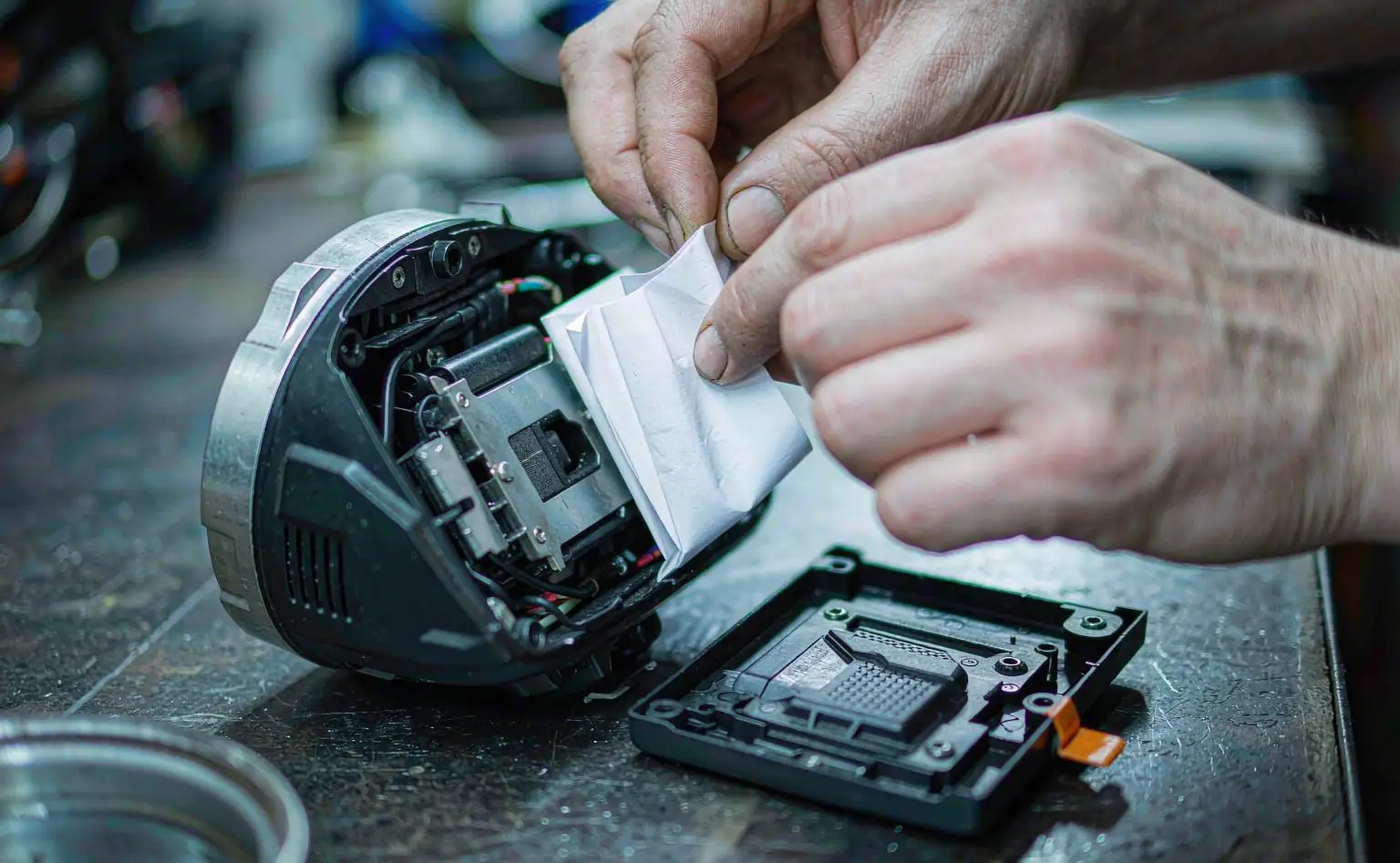
One sheet to start, more by volume. Each iHeir-D sheet carries 0.1-0.2 g of active. A standard headlamp cavity is small and one sheet is enough; a model with a rear battery box or a large reflector has twice the volume and takes two. Count by cavity volume, not by lamp weight.
Above the battery bay, clear of the seal. Fold the sheet into a strip and tuck it along the top of the cavity or inside the back cover, clear of the O-ring and the metal contacts. Pressed onto a seal it leaves the sealing face uneven and the waterproof test fails.
Run a compatibility test. Three times the normal rate, sealed in a bag with an assembled lamp, 3-5 days at room temperature, then check the reflector wall and the contacts for darkening or tackiness. A headlamp carries a circuit; nothing goes inside without this test.
Check before the cover closes. Wipe the cavity wall with white paper before closing. If the paper comes away coloured or tacky, change the part; a sheet will not suppress growth that has already started.
4. Colour box and tray: sheet under the tray
Off the lamp body. The box sheet goes between tray and box wall so it works on the air in the box without touching the lamp or the strap, which avoids any marking in long storage.
Dry the trays. Check incoming pulp trays for moisture and dry anything above 12% before use. Damp pallets are normal in the wet season, and three to five pieces pulled at random will show it.
Do not seal the box at once. Leave the packed box in the shop for two hours so the air inside equalises. A warm part boxed straight from a drying line condenses inside a closed box, and the sheet absorbs exactly that water.
Carton and container. Line the carton with a moisture film and add 1-2 sheets; the container takes sticks separately. Comparable outdoor gear is covered in exported lighting fixtures and hiking backpack foam panels.
5. Inspection and rework: three places first
The strap first. Look for a white bloom on the surface and black spots along the stitching. The strap is the first to go and the hardest to rework, because it means stripping the whole lamp.
Then the housing. Open the back cover and check the cavity wall and contacts. A musty smell means treatment is needed even where no spots are visible, because it means biological activity.
Then the tray. Blackened tray corners and contact faces mean the box has been humid for a long time, so check the warehouse humidity log rather than reworking this batch alone.
How to rework. Light surface growth on a strap is wiped with a neutral cleaner, dried and passed through a dilute bath again; a blackened cavity wall means replacing the part. Keep reworked lamps separate and box them the same day.
6. Questions from the buyer
Q: Why does the strap go before the lamp body?
A: The strap is fabric: it takes up sweat and moisture and carries process residue from weaving and dyeing. The body is plastic and metal with a smooth surface that water cannot cling to, which is why the strap has to be treated in finishing.
Q: Does the bath make the strap stiff?
A: Not at 2%-3% o.w.f. with the specified pick-up. Stiffness and lost stretch come from too high a concentration or too much liquor on the roll, which is why the bath is made up as a pre-mix and added in portions.
Q: Does a sheet in the housing affect the waterproofing?
A: Not if it sits along the top of the cavity or inside the cover, clear of the seal. Pressed onto the O-ring it makes the sealing face uneven and the waterproof test fails.
Q: How many sheets does one headlamp need?
A: One in a standard cavity, one in the colour box and 1-2 per carton. A large-cavity model takes two, counted by cavity volume rather than lamp weight.
Run the strap through the finishing trough with iHeir-BJ at 2%-3% o.w.f., bath at 21-50°C and pH 4.5-8.5, made up 9-13 times and added in portions, then squeeze and dry to the card; put one iHeir-D sheet at 0.1-0.2 g along the top of the housing cavity, clear of the seal and contacts, and two on large-cavity models; put one sheet under the tray in each colour box and dry trays above 12% moisture; add 1-2 sheets and a moisture film per carton. Levels and bath ratios are on the iHeir-BJ product page.


