




 View Count:10
 Date:2026-11-21
Is battery pack mould avoidable? Yes, and it comes down to the housing compound and the small volume of air inside the pack. Most returned packs have good cells: what failed is a film of spots on the housing and a blackened cardboard insert, and the whole batch goes back to strip and rebuild at more labour than the parts cost. The routine is iHeir-IPL at 0.8%-1.0% of compound weight in the housing, plus iHeir-D sheets at 0.1-0.2 g in the pack and the colour box. This article covers dosing, sheeting and inspection.
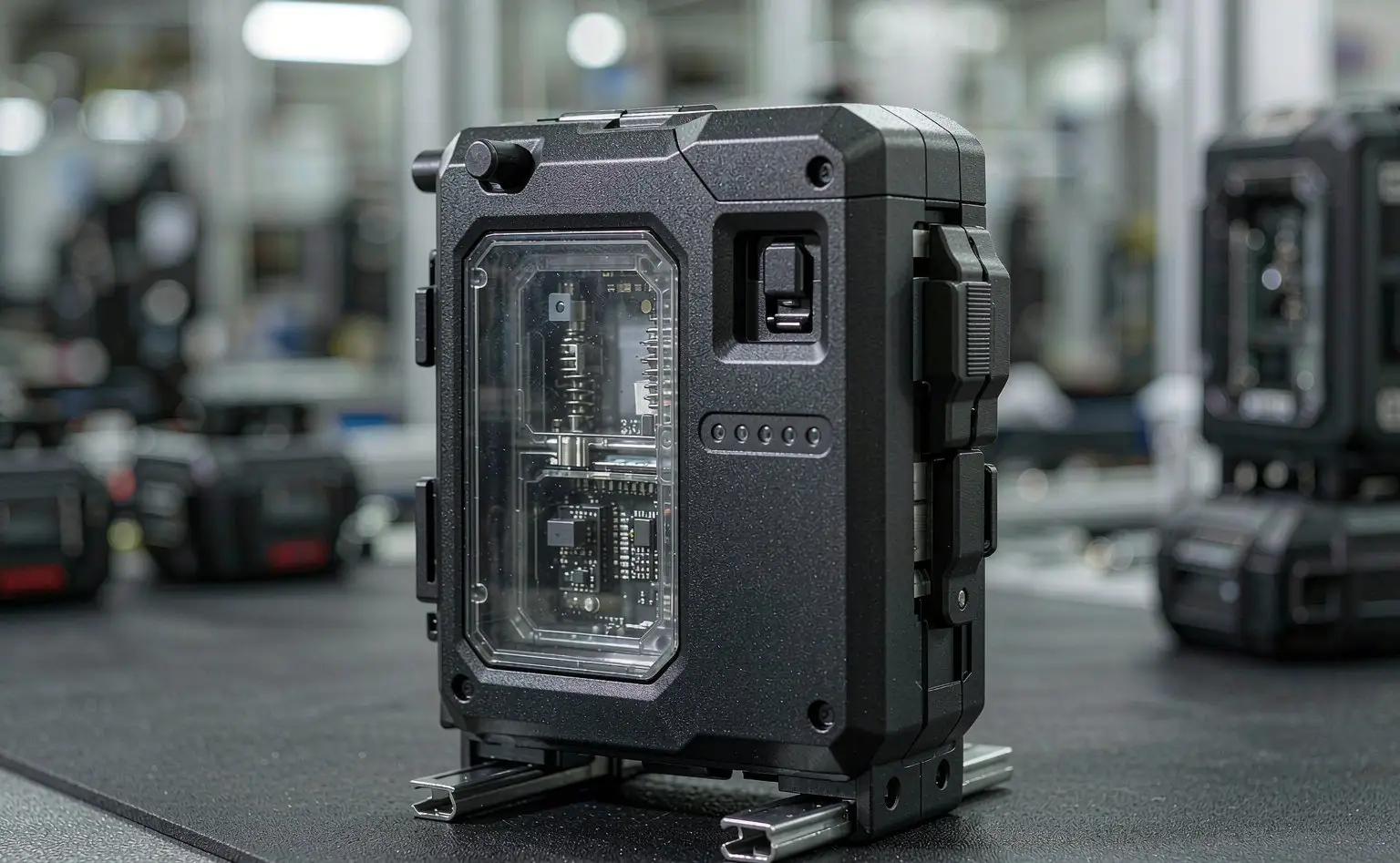
1. Where the growth comes from: housing, holder gaps, box liners
The compound carries no protection. Power tool battery housings are usually PC/ABS or glass-filled PA, none of which is antimicrobial by nature. The moulded part is only wiped down off the machine, and the wipe leaves hand moisture behind, so the pack ships with organisms already on it.
Gaps in the cell holder. The holder, nickel strip and wiring leave air pockets inside the pack. In a humid assembly shop the moisture goes in and cannot get out, and a half-closed volume condenses on every temperature swing.
Damp liners in the colour box. Trays are usually moulded pulp or thermoformed plastic, and pulp takes up water. A box with no vapour sheet and no desiccant is a humidity chamber for a battery pack.
Warehouse and sea freight add up. In the wet season a finished-goods store sits above 80% RH for weeks, and a container swings from 50°C by day to condensation at night. Spots start in the texture and the logo recesses, which is where water sits longest.
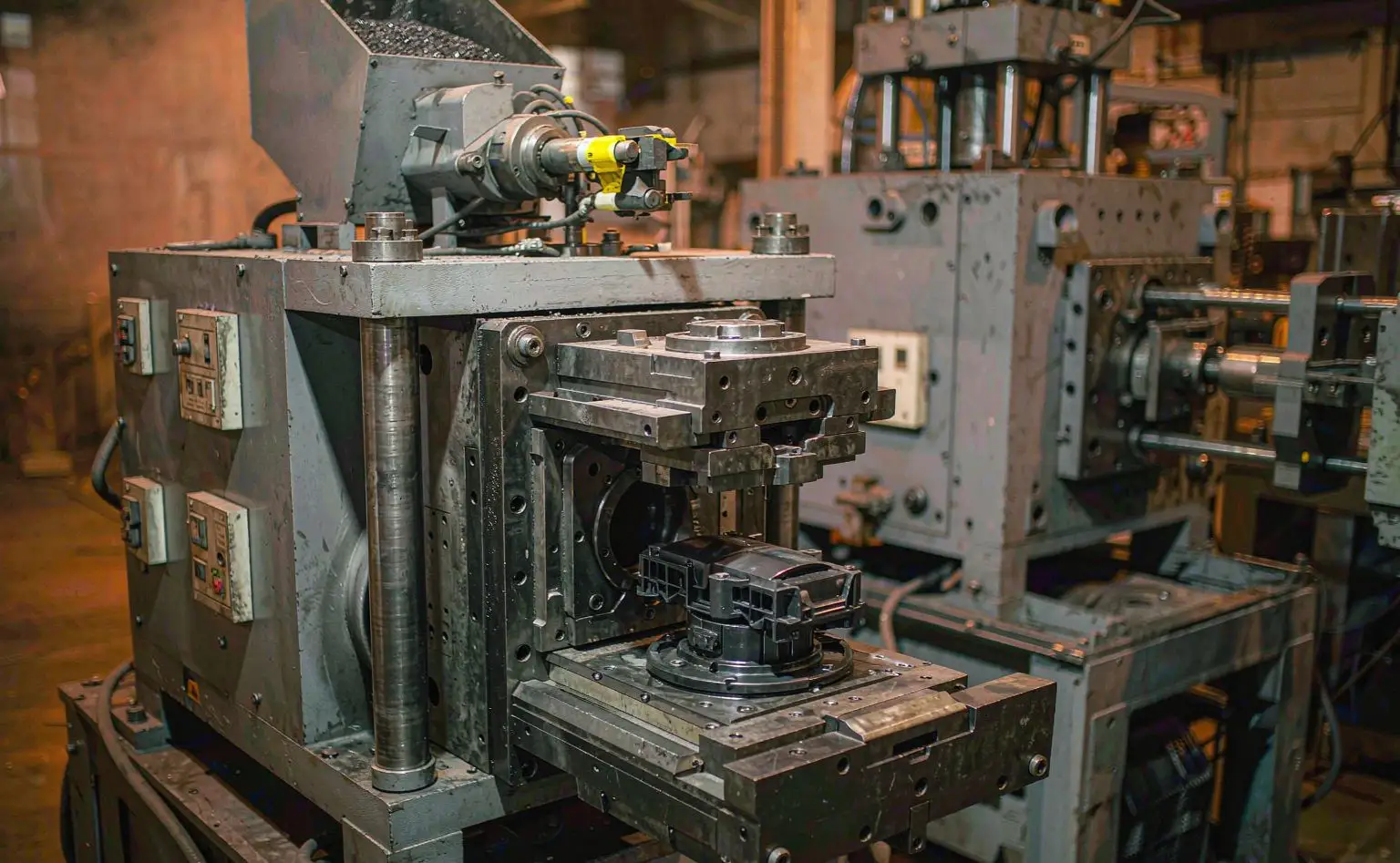
2. Housing compound: IPL at 0.8%-1.0%
Dose on compound weight. iHeir-IPL goes in at 0.8%-1.0% of compound weight, the lower end for dark housings and the upper end for pale and translucent parts. Once the recipe for a mould is set, keep it set rather than adjusting by feel per batch.
Where it goes in. Add it at compounding with the colour masterbatch, or blend a dried antimicrobial masterbatch into the granules before moulding. Dusting powder into the hopper lets it settle and gives parts that are treated in one area and bare in another.
Heat is not a problem. IPL is stable to 300-320°C, well above the moulding window, so it does not decompose in the barrel. On glass-filled PA, hold the temperatures on the process card instead of pushing them for flow.
Appearance and testing. At 1-2 μm and whiteness above 90 it does not shift pale or translucent colours. Antimicrobial rate is 99.99% or better and can be verified to ISO 22196 and GB/T 20944.3; it ships in 25 kg fibreboard drums and keeps 12 months stored dark at ambient.
| Stage | Material | Product and level | Process | Control point |
|---|---|---|---|---|
| Pack housing | PC/ABS, glass-filled PA | iHeir-IPL 0.8%-1.0% of compound | Compounding or pre-blend | Even dispersion, trial pale parts first |
| Cell holder and pack volume | Internal air | iHeir-D 0.1-0.2 g per sheet, 1 per pack | Placed before the cover goes on | Sheet over the holder, off the terminals |
| Colour box | Pulp tray, thermoformed insert | As above, 1 per box | Under the tray when boxing | Sheet not against the housing |
| Export carton | Corrugated | 1-2 sheets per carton | Placed before closing | Moisture film inside, seams taped |
| Sea container | Container air | Desiccant sticks by container size | Hung after loading | Humidity read before loading |
One boundary. IPL works in the plastic of the housing, sheets work in the air inside the pack and the box, and shop humidity is a ventilation and dehumidification job. The part most often forgotten is the air in the pack: an antimicrobial housing with no sheet inside still spots.
3. Inside the pack: how the sheet goes in
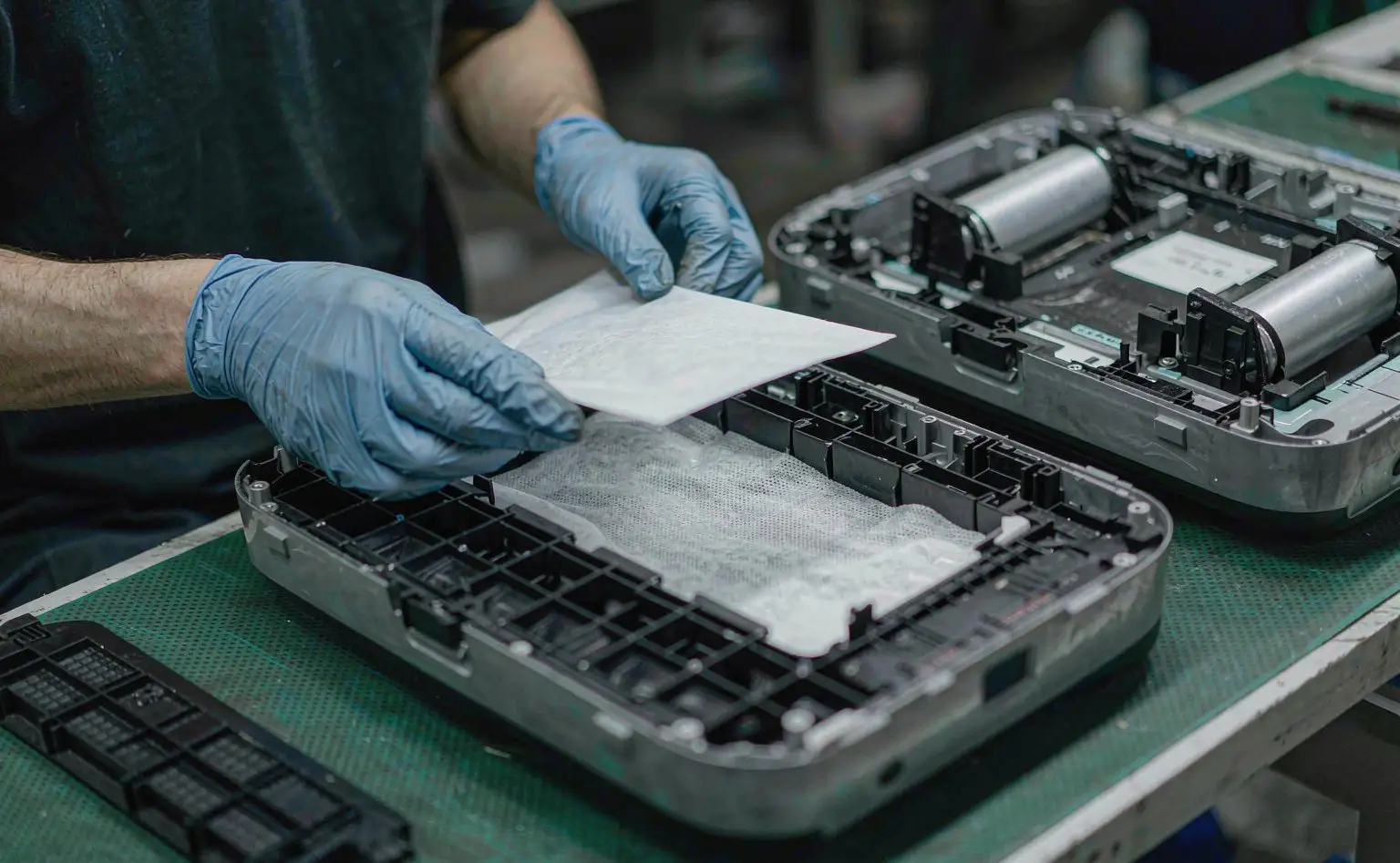
One sheet to start. Each iHeir-D sheet carries 0.1-0.2 g of active, and a standard 18 V pack gets one. A high-capacity pack or a twin-row cell layout has more internal volume and takes two. Count by volume, not by the amp-hour number.
Over the holder, off the terminals. Place the sheet on the top face of the cell holder or inside the top cover, clear of the cell terminals and the nickel weld points. Pressed onto a weld, the sheet is a contact risk and it tears during assembly.
Run a compatibility test. Three times the normal rate, sealed in a bag with an assembled pack, 3-5 days at room temperature, then check the inside of the housing and the terminals for darkening or tackiness. A battery pack is a live product; nothing goes inside without this test.
Dry the pack first. Hold the assembly shop below 60% RH and dry components before they come to the line. A sheet going into a wet pack is spent before the box is closed.
4. Colour box and inserts: sheet under the tray
Under the tray, not on top. Pulp trays take up water and blacken. Put the sheet between tray and box wall so it works on the air in the box without touching the housing.
Dry the trays. Check incoming pulp trays for moisture and dry anything above 12% before use. In the wet season a whole pallet of trays arrives damp, and three or five pieces pulled at random will show it.
Do not close the box immediately. Leave the packed box in the shop for a couple of hours so the air inside equalises before sealing. A warm part straight off a drying line condenses inside a closed box, and the sheet absorbs exactly that water.
The carton is the last layer. Line the carton with a moisture film, add 1-2 sheets and tape the seams. Container-level practice is covered in energy storage battery packs and power tools with grip compound and battery bays.
5. Inspection and rework: what passes, what does not
Three places to look. The texture and logo recess on the housing, the top face of the cell holder, and the four corners of the pulp tray. Those spot first and are the hardest to wipe; a white paper rub that comes away coloured means it is already in the surface.
Surface growth can be reworked. Wipe light surface growth with a neutral cleaner, dry it, re-sheet and re-box. Never use solvent: PC/ABS whitens on contact and the reworked part looks worse than before.
Blackened interiors are scrap. Once the holder or the tray has blackened into the fibre, cleaning will not bring it back; replace the part. Write the cause on the rework sheet so the next batch adjusts dosing and sheeting.
Keep rework separate. Store reworked packs in their own area and box them the same day. Mixed with waiting stock they take up moisture again and are back on the bench within a week.
6. Questions from the buyer
Q: The housing is plastic, so why does it grow mould?
A: The plastic feeds nothing. Growth sits on oil, release agent and hand moisture on the surface, and inside a half-closed pack with high humidity that is enough within days.
Q: Does an antimicrobial housing never spot?
A: No. It suppresses growth on the surface but does nothing about dust, oil or standing water. Dosing raises the floor; sheeting and shop humidity control still have to be done.
Q: Is a sheet inside the pack safe for the cells?
A: It does not touch the cells, sitting on the holder face or inside the cover. Because a pack is a live product, run the three-times compatibility test and confirm no tackiness or colour change before use.
Q: How many sheets does a container of packs need?
A: Count per pack, per box and per carton rather than per container: 1 per pack, 1 per box, 1-2 per carton. Container humidity is handled by sticks, after a reading is taken.
Dose the housing compound with iHeir-IPL at 0.8%-1.0% of weight at compounding or pre-blend; put one iHeir-D sheet at 0.1-0.2 g in each pack over the holder and clear of the terminals; put one sheet under the tray in each colour box and dry trays above 12% moisture; add 1-2 sheets and a moisture film to each carton; hold the assembly shop below 60% RH and run a three-times compatibility test on live product. Levels and packing are on the iHeir-IPL product page.


