




 View Count:4
 Date:2026-10-31
Can hiking backpack mould be prevented, or is it just part of the category? The back panel sits against a sweaty back and dries slowest, which is where most packs spot first, and a water-repellent shell does not stop vapour entering at the seams. The back-panel foam takes iHeir-FP at 0.5%-1.5% of foam weight in the foaming recipe, while shell fabric and webbing get a separate iHeir-BJ bath at 2%-3% o.w.f. This article covers both doses, the drying rule and the packing window.
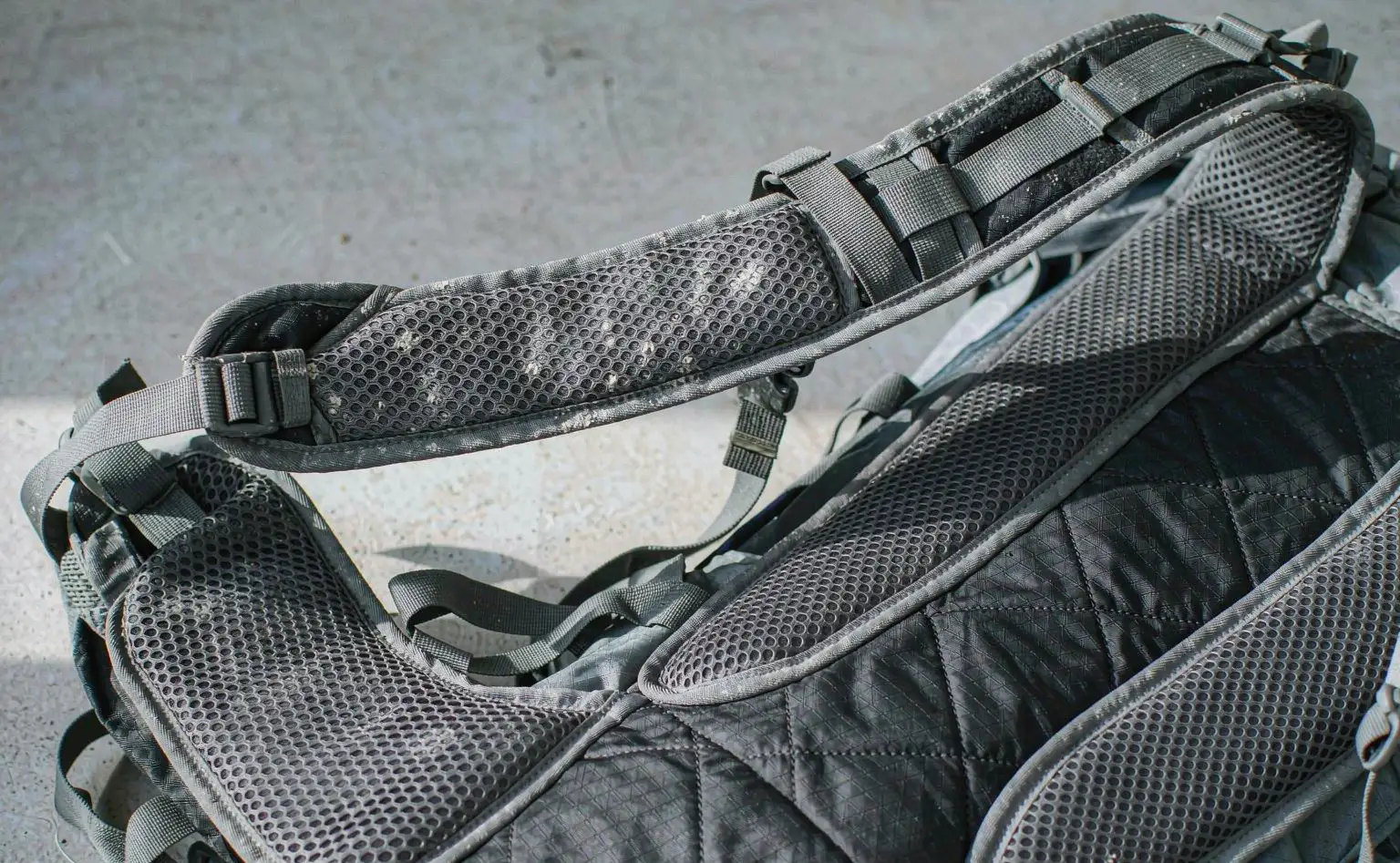
1. Why mould always starts at the back panel
A pack is three layers: a polyester or nylon shell, usually water-repellent; a foam back panel and shoulder straps in the middle; a lining and mesh inside. Metal hardware and zip teeth do not grow mould; the foam and the textiles do.
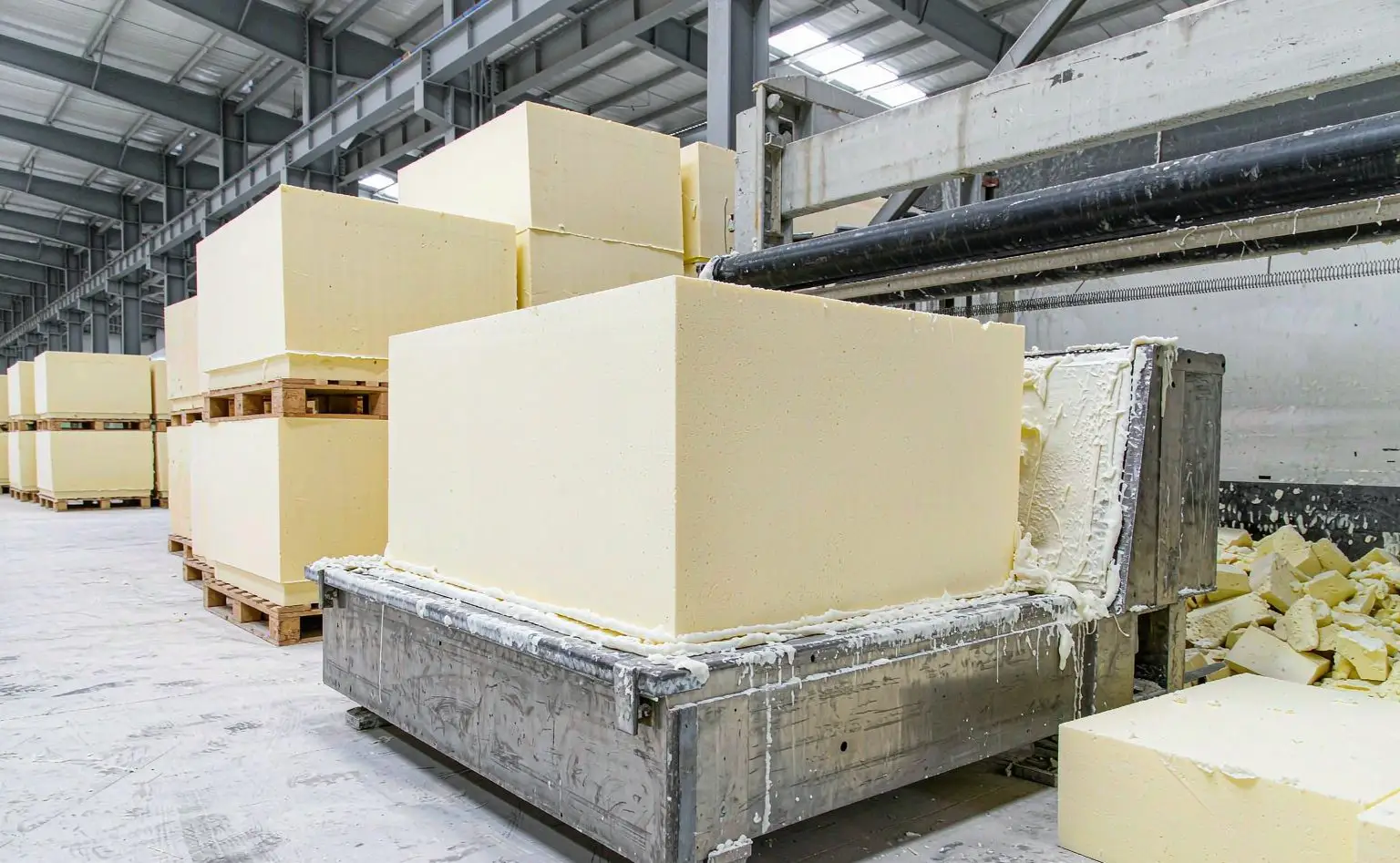
Foam is a sponge. Open-cell polyurethane takes up far more water than the shell, and the back panel and straps sit against skin, so sweat goes straight in. On the factory side the route is different: foam roll stock sits in a humid warehouse, spots on the surface, and cutting carries the mould into the cut face where it disappears inside the finished pack.
The shell fails at the coating and the seams. A water-repellent finish beads water on the surface, but it is not anti-mould and does not block vapour. Needle holes are channels, vapour passes into the foam, and damp foam is a growth medium. That is why a pack can look clean outside and be black inside the back panel.
2. Foam and fabric run on separate routes
The table lines up foam, shell, webbing and packing. Foam is dosed on total foam weight, fabric on fabric weight in o.w.f., and the two figures are not convertible.
| Part | Material | Product and level | Stage | Control point |
|---|---|---|---|---|
| Back-panel foam | PU foam | iHeir-FP 0.5%-1.5% of foam weight | Into the foaming recipe | Mixed into the polyol component |
| Shell fabric | Polyester/nylon | iHeir-BJ 2%-3% o.w.f. | Finishing bath | 70% pick-up, no anionic auxiliaries |
| Straps and webbing | PP webbing, elastic | Same bath, run through together | Same tank | Thick webbing wets out slowly |
| Packing and dispatch | PE bag, carton | Dry, bag each piece | Cartoning, storage | Store below 60% RH |
One boundary. An antimicrobial in the foam does not excuse the shell: sweat and oil on fabric and webbing grow mould too, and mould migrates from webbing into foam. Nor does a good shell help if the foam was already damp in the warehouse, because the mould source ships inside the pack. Both stages have to run before “prevented” means anything.
3. Back-panel foam: the antimicrobial goes into the foaming recipe
Foam takes iHeir-FP foam antimicrobial at 0.5%-1.5% of total foam weight. It is a clear liquid with a quaternary ammonium active, pH 6.5-7, stable across pH 1-11, miscible with water in any ratio, with an antimicrobial rate up to 99.99%, zero sensitisation and 25kg packs.
Which component it goes into. PU foaming runs on an A and B side: stir FP into the polyol (A) first, then mix with the isocyanate and foam. Do not pour it into the mix head, where the reaction is fast and a local high concentration disturbs cell structure, giving collapsed or hard patches. For thermoplastic foams such as EVA, add it at the mixing stage with resin and blowing agent.
Three points. Where to use the top of the range: regrind foam, recycled foam and low-density back panels, which go to 1.5%. Colour and odour: FP is clear and odourless so pale panels do not yellow, but run a small standing test for odour-sensitive contact parts. Expansion ratio: high-ratio foam has a large surface area, and the dose is on weight, so do not estimate by volume.
4. Shell and webbing: a separate anti-mould finish
Shell and webbing take iHeir-BJ textile anti-mould agent at 2%-3% o.w.f. on fabric weight. The bath runs at 21℃-50℃ and pH 4.5-8.5, ideally near 6, with a 70% wet pick-up; on that basis 3kg treats 100kg of fabric. Pre-mix with 9-13 times its water and add in portions.
How it slots in with the water repellent. They do not conflict, but the order matters: anti-mould finish first, dry, then the water repellent, then the final set. Reverse it and the repellent film wraps the fibre and the anti-mould agent cannot get in. A water repellent is not an anti-mould finish, and the boundary is set out in our export bag and luggage mould prevention piece.
Three conditions. Soft water. Cationic compatibility, because BJ cannot share a bath with anionic auxiliaries, so softeners and wetting agents must be cationic or non-ionic. Wet-out on webbing: PP webbing is thick and dense, so pre-wet before the bath and run an extra squeeze, or the surface is treated and the core is not.
5. Sewing, packing and dispatch
The sewing room risk is work in progress sitting overnight: cut panels, foam and webbing in totes, shop humidity rising, moisture returning. Cut foam the day it is used, raise totes off the floor, dehumidify the bench and bag finished packs the same day.
Field complaints are worth logging too. Buyers rarely report a pack that is mouldy throughout; they report a grey patch on the inside of the back panel and an odour on the strap lining. Both map to two factory habits: whether cut foam is used the same day, and whether the webbing really wet out in the bath. Writing those two lines into the work instruction is cheaper than rework.
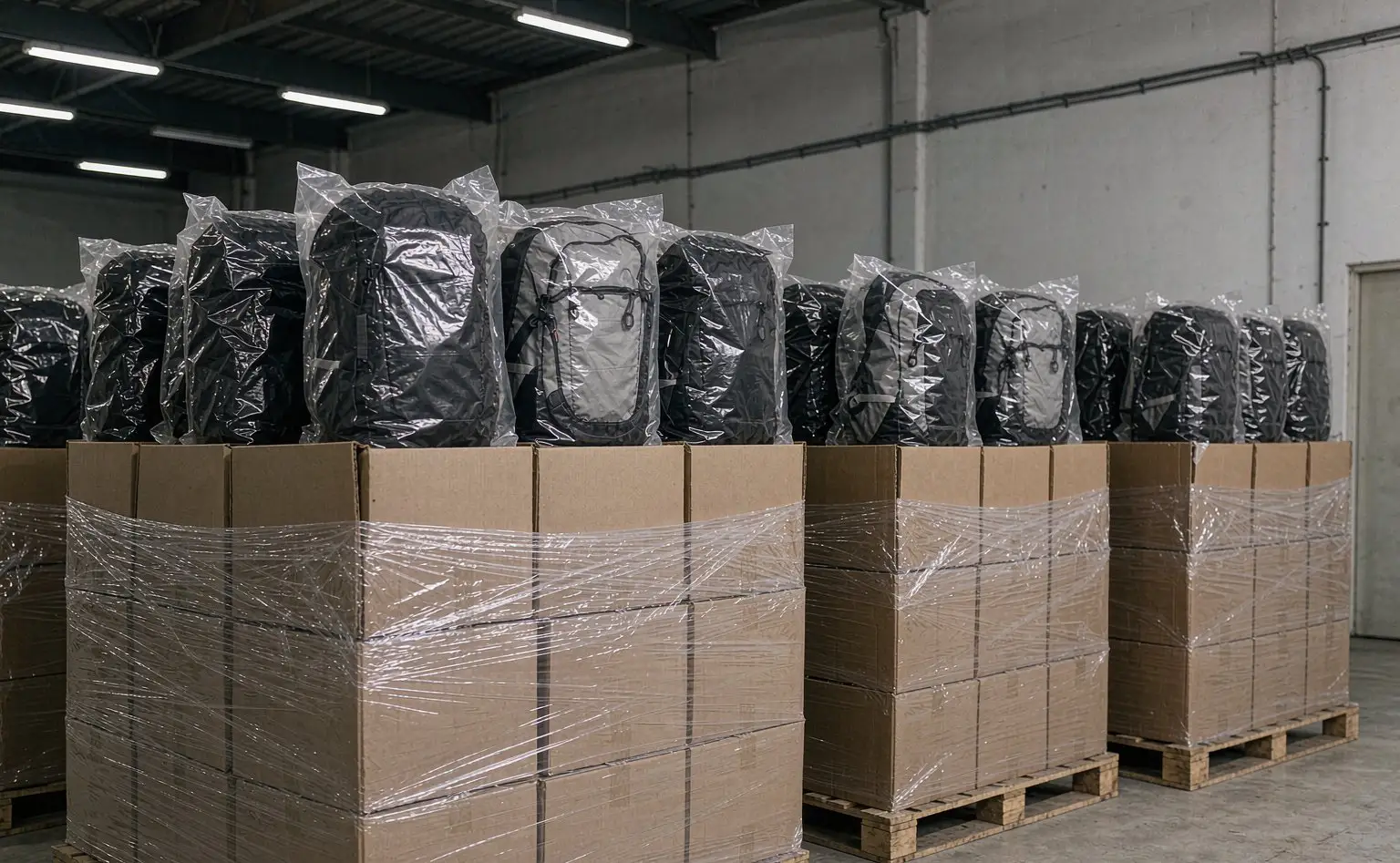
At packing, bag each pack in PE, add a moisture barrier inside the carton, and keep cartons on pallets 10cm off the floor and wall below 60% RH. In a full container, condensation does more damage than shop humidity, so leave an air path and keep cartons off the wall; see preventing container rain, and the full packing-to-container process is in bag export mould prevention.
Release at three levels: foam to ISO 22196 or ASTM G21, sampling the panel centre and the strap; fabric to GB/T 24346-2009; complete packs for 30 days at 30℃/85% RH, opened to inspect the back panel and webbing.
6. Questions on rebound, repellency and rework
Q: Does the antimicrobial affect foam rebound or feel?
At 0.5%-1.5% the effect on rebound is small. What matters is how it goes in: poured into the mix head it collapses cells, stirred into the polyol it foams evenly. When you change the formula, run a control: same foaming conditions, 7 days, then compare rebound and compression set.
Q: The shell is already water-repellent. Is anti-mould still needed?
Yes. A repellent controls how liquid water spreads on the surface; it does not stop vapour and it does not inhibit mould. A pack in service is damp with sweat and warm, and neither is covered by repellency.
Q: A finished pack has spotted. Can we just change the back panel?
Yes, but change the straps with it: the spots are usually already in the webbing, and webbing left in place re-contaminates the new foam. Dry the whole pack afterwards and redo the moisture protection at packing.
Four points to take away: dose the back-panel foam with iHeir-FP at 0.5%-1.5% of foam weight, stirred into the polyol before foaming, top of range for regrind; run shell and webbing through iHeir-BJ at 2%-3% o.w.f. with the bath at 21℃-50℃ and pH 4.5-8.5, a 70% pick-up, anti-mould before the water repellent; cut foam the day it is used, raise totes and dehumidify the sewing room; store below 60% RH with an air path in the container. A 1kg sample of each product can go out for a trial first; MOQ and lead time are on the iHeir-FP product page.


