




 View Count:31
 Date:2026-09-10
Jinjiang Sports Shoes & Apparel Anti-Mold: Antibacterial for EVA Midsole, Knit Upper & Activewear
Chendai and Chidian in Jinjiang, Fujian concentrate over 40% of China’s sports shoe capacity—contract factories for Anta, Xtep, 361 and brand overflow plants dominate export orders. The “athletic” DNA cuts both ways though: EVA midsole, PU lining, knit upper, and quick-dry activewear are all nutrient sources for odor bacteria and mold. One humid week in the container can turn a sealed shipment into a moldy, smelly return claim. This guide walks through six stages—from EVA antibacterial masterbatch, knit upper finishing, activewear deodorizing, warehouse storage threshold, sea-freight moisture, to Power Pak in-box protection—for a zero-mold, zero-odor Jinjiang shoe factory workflow.
1. The Dual Problem of Odor and Mold in Sports Shoes
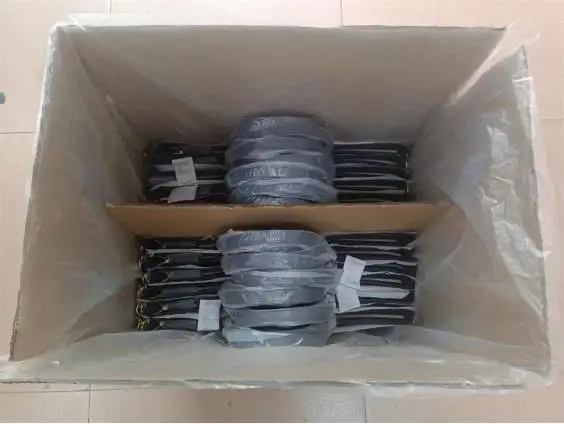
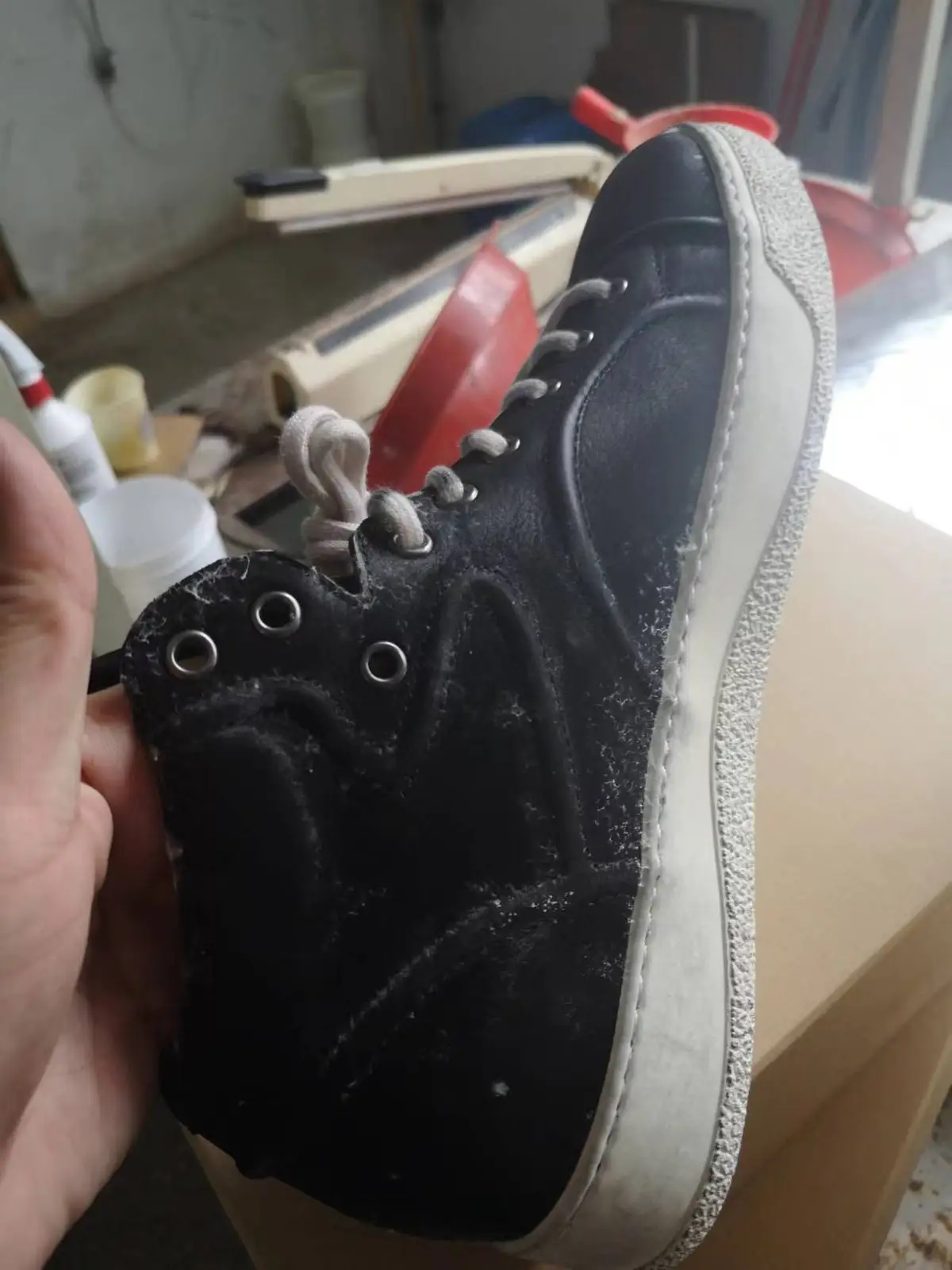
Most Jinjiang factory owners first meet an odor or mold claim thinking “we shipped clean goods.” The contamination hides inside the material layers: post-foaming EVA is an open-cell structure (about 70% porosity) and the residual foaming catalyst becomes a carbon source; perspiration drives the colony count to 10⁵-10⁶ CFU/g after a few wears, producing the typical foot odor. PU lining and insoles absorb 8-12% moisture at equilibrium and give mold spores their water source. Knit uppers (polyester/nylon blend) have large inter-fiber gaps where sweat accumulates in a warm, humid microclimate. Plus water-based PU adhesive and hot-melt glue contain PVA thickeners that feed mold directly. Stack these four nutrient sources and add Jinjiang’s humid spring (relative humidity above 85%RH regularly), and odor plus mold become inevitable. The only variable is timing.
The fastest risk indicator is finished-goods moisture regain: above 2% on EVA midsole or 6% on PU lining means immediate action; ambient humidity above 80%RH for any sustained period demands a dehumidifier or warehouse rotation.
2. Choosing EVA/TPU Antibacterial Masterbatch
Many small Jinjiang factories still rely on a post-production spray for EVA antibacterial protection—durable only to 5 washes before the effect drops to near zero. The correct approach is to load the antibacterial masterbatch directly into the EVA/TPU formulation, killing bacteria at the source.
| Material | Masterbatch | Loading | Process | Test result |
|---|---|---|---|---|
| EVA midsole | iHeir-FP foam antimicrobial | 0.5%-1% | Premix with beads before foaming, 110-130℃ ×15-20 min | ≥99% kill after 50 washes |
| TPU outsole | iHeir-ECO plastic antimicrobial | 1%-2% | Premix with TPU beads, injection 180-200℃ | ISO 22196 antibacterial activity ≥3.0 |
| Rubber outsole (EVA blend) | iHeir-PSZ104 inorganic plastic antimicrobial | 0.8%-1.5% | Add at the compounding stage | GB/T 31402 kill rate ≥99% |
Field test: iHeir-FP antibacterial EVA midsoles tested per ISO 22196 (antibacterial activity on plastics, 24h bacterial contact) on Staphylococcus aureus ATCC 6538 and Escherichia coli ATCC 8739 both delivered activity values ≥3.0 (kill rate ≥99.9%). The control EVA midsole without masterbatch saw bacterial counts multiply over 1000-fold within the same window.
Note: masterbatch selection must match the substrate process temperature. EVA foam needs iHeir-FP (rated for 130℃ foaming); TPU injection needs iHeir-ECO (rated for 200℃). Using a generic silver-ion antimicrobial at the wrong temperature can degrade and leach silver dust.
3. Antibacterial Finishing for Upper Fabrics and Lining
Knit upper (polyester/nylon), sandwich mesh lining, and PU sock-liner are the workhorses of a Jinjiang shoe factory. Antibacterial finishing is best applied at the last pad stage of the dye house:
- Knit upper: iHeir-BJ1000 silver-ion antimicrobial 0.5%-1% owf, single-dip single-pad with 70%-80% pick-up, dry at 100-120℃ for 2-3 min;
- Sandwich mesh lining: iHeir-333 textile antimicrobial 1%-2% owf in the same bath (also delivers anti-mite function);
- PU sock-liner: spray iHeir-Spray (M3D) water-based antimicrobial 1%-2% on the inner surface before bonding.
A Guangzhou contract sports shoe factory reported that knit uppers finished per GB/T 31402 (antimicrobial activity on plastic/textile) retained ≥99% kill against Staphylococcus aureus even after 30 washes.
Key: silver-ion antimicrobial (BJ1000) cannot be combined with organic antimicrobials (PSE, QAS) in the same bath—anionic groups chelate the silver ions and deactivate both.
4. Odor Control on Activewear Quick-Dry Fabrics
Jinjiang activewearwear factories (compression tops, yoga pants, running tees) work mainly with polyester-spandex 80/20 blends. These fabrics sit directly on sweaty skin, and bacterial growth causes the odor complaints brands receive most often. The solution:
- Quick-dry + antibacterial dual function: iHeir-333 textile antimicrobial 1.5% owf pad application together with moisture-management finishing—does not block fiber moisture transport;
- Targeted antibacterial at high-sweat zones: underarm and neckline can get an extra dose of iHeir-PA1000 silver-ion antibacterial 0.8% owf for stronger kill;
- Packaging deodorization**: place one Power Pak anti-mold & odor chip inside each folded garment bag—suppresses storage odor for 3-6 months.
5. Sports Shoes & Apparel Warehouse and Sea Freight Moisture
Jinjiang shoe and apparel export goes mostly by 20-foot and 40-foot containers to Europe, America, and Southeast Asia. Container rain, cross-ocean condensation, and a 25-45 day sealed transit all stack to encourage mold. The standard mitigation:
- Warehouse humidity threshold below 65%RH; start dehumidification above ≥75%RH;
- Place one Power Pak chip per shoe box (1-2 chips for larger sizes) and wrap each shoe in iHeir anti-mold packaging paper;
- Hang 4-6 T-1000 container desiccant sticks per 20-foot container before loading—each stick can absorb more than 200% of its own weight in moisture;
- Seal container door seams with waterproof tape to block sea-spray intrusion.
6. Antibacterial Testing (ISO 22196 / GB/T 31402) + FAQ
Antibacterial performance must be measured, not assumed. Two standards dominate Jinjiang factory testing:
- ISO 22196 (antibacterial activity on plastic/rubber): bacterial contact 24h then antibacterial activity value is calculated; ≥2.0 passes, ≥3.0 is excellent;
- GB/T 31402 (antibacterial activity on plastic/textile): equivalent to ISO 22196, with explicit post-wash requirements at 10, 30, and 100 washes.
Case: A Quanzhou sports shoe contract factory received a 320,000 RMB mold-odor claim from a German client in 2024—35% of shoe boxes showed visible spots plus foot odor complaint on arrival. Root cause: EVA midsole had no antibacterial masterbatch; upper had water-repellent finishing but no antimicrobial; shoe boxes contained no anti-mold chip; container was loaded without desiccant sticks. The corrective batch added iHeir-FP masterbatch to all EVA midsoles, BJ1000 finishing on uppers, one Power Pak chip per box, and 6 T-1000 sticks per container. Twelve months and zero complaints since.
FAQ:
Q1: Does adding antibacterial masterbatch affect the resilience and hardness of EVA midsole after foaming?
A: At proper loading (≤1.5%) there is no meaningful effect. iHeir-FP is formulated to match EVA foaming chemistry; 0.5%-1% loading keeps expansion ratio and Shore C hardness within 3% of the control. Overload (≥2%) starts to compromise resilience noticeably.
Q2: Will a Power Pak chip inside the shoe box affect wearing comfort or skin health?
A: No. Power Pak uses a mustard-extract active ingredient; concentration inside the sealed package is extremely low, and it volatilizes quickly after the box is opened. The product has passed SGS skin-contact safety per OECD TG 439 in vitro skin irritation—non-sensitizing and non-irritating.
Q3: Does antibacterial finishing on knit uppers and polyester mesh reduce color fastness?
A: iHeir-BJ1000 is a non-ionic silver-ion antimicrobial and does not affect disperse-dye or reactive-dye colorfastness (rub-fastness grade ≥4). A 24-hour small-sample test is recommended before bulk production to confirm.
Q4: Does antibacterial finishing on quick-dry activewear fabrics reduce moisture-management performance?
A: Non-ionic finishes like iHeir-333 do not block fiber pores. Cationic or organic-silicone-blend antimicrobials may reduce moisture transport by 10%-15% because of pore-blocking.
Q5: A client complains about moldy insoles—how do we do emergency treatment?
A: Light mold (white powder on the insole surface): air-dry 24h and spray iHeir-Clean mold-spot cleaner. Moderate mold (insole discoloration): replace insole and spray iHeir-Spray (M3D) for ongoing protection. Severe mold (rotted insole): full return. Emergency response can cut return losses by 70%.
Jinjiang sports shoe and apparel factories that want to build a systematic “zero-mold zero-odor” export pipeline can contact us for sample testing and a customized plan. Standard products like iHeir-FP foam antimicrobial, iHeir-BJ1000 silver-ion textile antimicrobial, and Power Pak anti-mold & odor chip are in stock and ship same-day for small orders.