




 View Count:6
 Date:2026-10-23
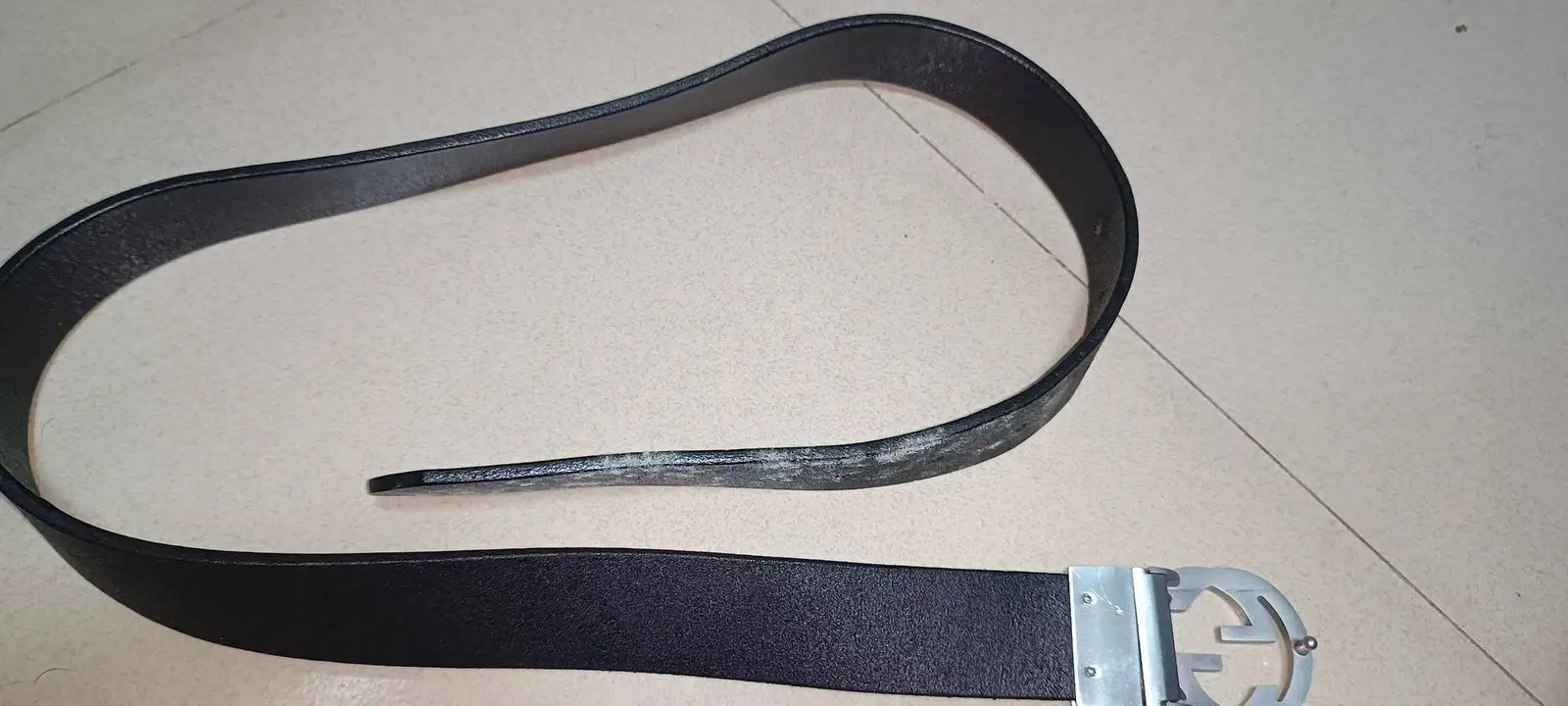
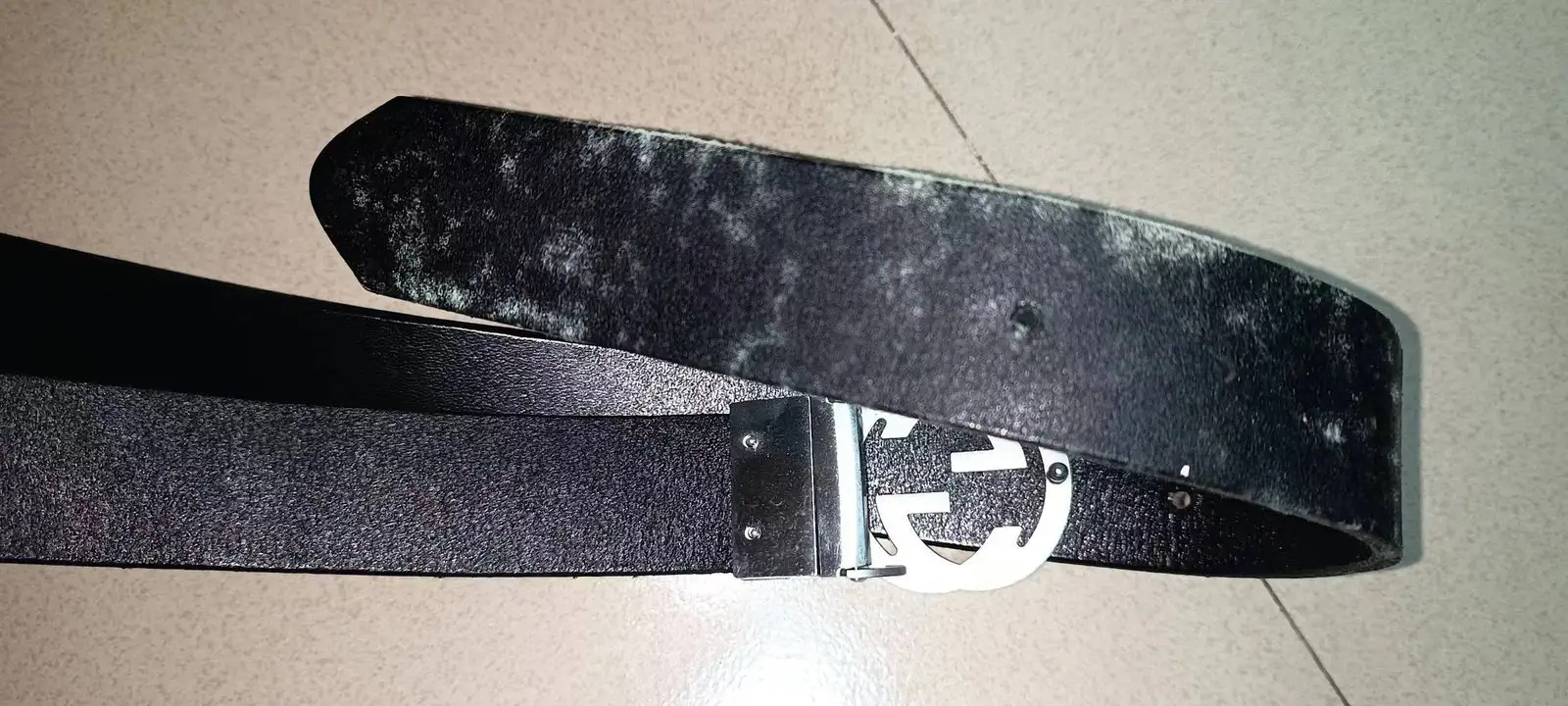
How should a mouldy leather belt be dealt with? Start by looking at where the spots are. On nine out of ten rework sheets the spots come out of the gap behind the buckle while the face is still clean: that gap holds sweat, dust and moisture, and a cloth cannot reach inside. The strap takes iHeir-PF leather antimicrobial agent at 0.05%-0.2% of hide weight in the tannery; the gap and the face take iHeir-Spray(M3D) sprayed or wiped on. This article gives the sequence and the checks for both stages.
1. Why the spots always start at the buckle gap
The buckle is the only place on a belt where two components sit against each other. The metal buckle presses on the strap, the gap between them is under a millimetre, and stitching or riveting closes it off, so a cloth cannot reach it and a brush cannot get in. Moisture from the air condenses on the metal in store, the dust in the gap absorbs it, and the two together make a small, stable damp environment.
The second reason is contact between metal and leather. Metal conducts heat quickly, so the buckle condenses first when the air cools; leather is hygroscopic, and the fibres along the gap edge draw the water in. Once mould grows on those fibres it spreads along the stitching.
The third reason is at the wearing end. A belt is worn against the body, salt and oil from sweat work into the gap, and the metal oxidises faster in that salt environment. Corrosion products and mould mix into a dark stain, the customer cannot tell which is which, and the lot is rejected as a cosmetic defect. That is why the order of work on a mouldy belt is clean the gap first, then treat; done the other way round, the mould is sealed in.
2. Strap, buckle and lining: three locations side by side
The table sets out the material, the method and the level for each. The strap is a tannery job, the gap and the lining are a belt-maker job, and the two use different agents on different stages, so they cannot be mixed into one operation.
| Location | Material | Method and level | Stage | Points to watch |
|---|---|---|---|---|
| Strap crust | Chrome-tanned cowhide | iHeir-PF at 0.05%-0.2% of hide weight | Chrome tanning, fatliquoring or finishing | No pH above 8, agent into water only |
| Buckle gap | Metal and leather edge | iHeir-Spray(M3D) sprayed or wiped, dried | After assembly, before bagging | Cationic, never with anionic agents |
| Lining and thread | Pigskin or fabric | Same M3D, one thin coat | Same batch as the buckle | No heavy coat, dry through |
| Packing and store | Finished belt | Desiccant and humidity control | Bagging and warehouse | Do not wrap tight in film |
The line between the two is clear. Mould on the strap has to be dealt with at the crust stage, because once the belt is made the agent cannot reach deep into the fibre; the buckle gap and the lining only appear on the finished article and can only be covered by surface treatment. Both stages, or the job is incomplete.
3. Strap: 0.05%-0.2% of hide weight at tanning and finishing
iHeir-PF leather antimicrobial agent is recommended at 0.05%-0.2% on hide weight, added directly to the process liquor at chrome tanning, fatliquoring or finishing and mixed thoroughly. Active content is 30±1%, pH of a 1% solution is 3-8, oral LD50 in mice is 1441mg/kg or above, and it ships in 25kg or 200kg plastic drums. Its main ground is chrome tanning: wet blue carries a high moisture content and sits in stacks for days, which makes it the intermediate most likely to grow mould.
Three rules, and dropping one wastes the batch. Add the agent to the water, never water to the agent: the reverse order drives the local concentration up and forms lumps that will not disperse. Hold pH below 8, so check the alkalinity of the tanning float and the pH of the fatliquor first. And keep it away from alkaline materials: dedicate a mixing drum.
Levels follow hide type and season. Thin calf or sheep for women’s belts runs 0.05%-0.1%; standard cowhide 0.1%-0.15%; heavy vegetable-tanned straps and orders that sit in stock beyond three months run 0.15%-0.2%. The deciding factors are moisture content and storage time.
4. Buckle gap and face: M3D sprayed or wiped, dried to a film
On the finished article the product is iHeir-Spray(M3D) water-based anti-mildew agent, applied by spraying, wiping or dipping the surface and then left to dry in air, which leaves a long-lasting protective film. It is a colourless to pale yellow solution for use at pH 4-10, effective at low levels with little odour, packed in 1kg, 5kg or 25kg plastic drums and stored sealed below 25C with a one-year shelf life.
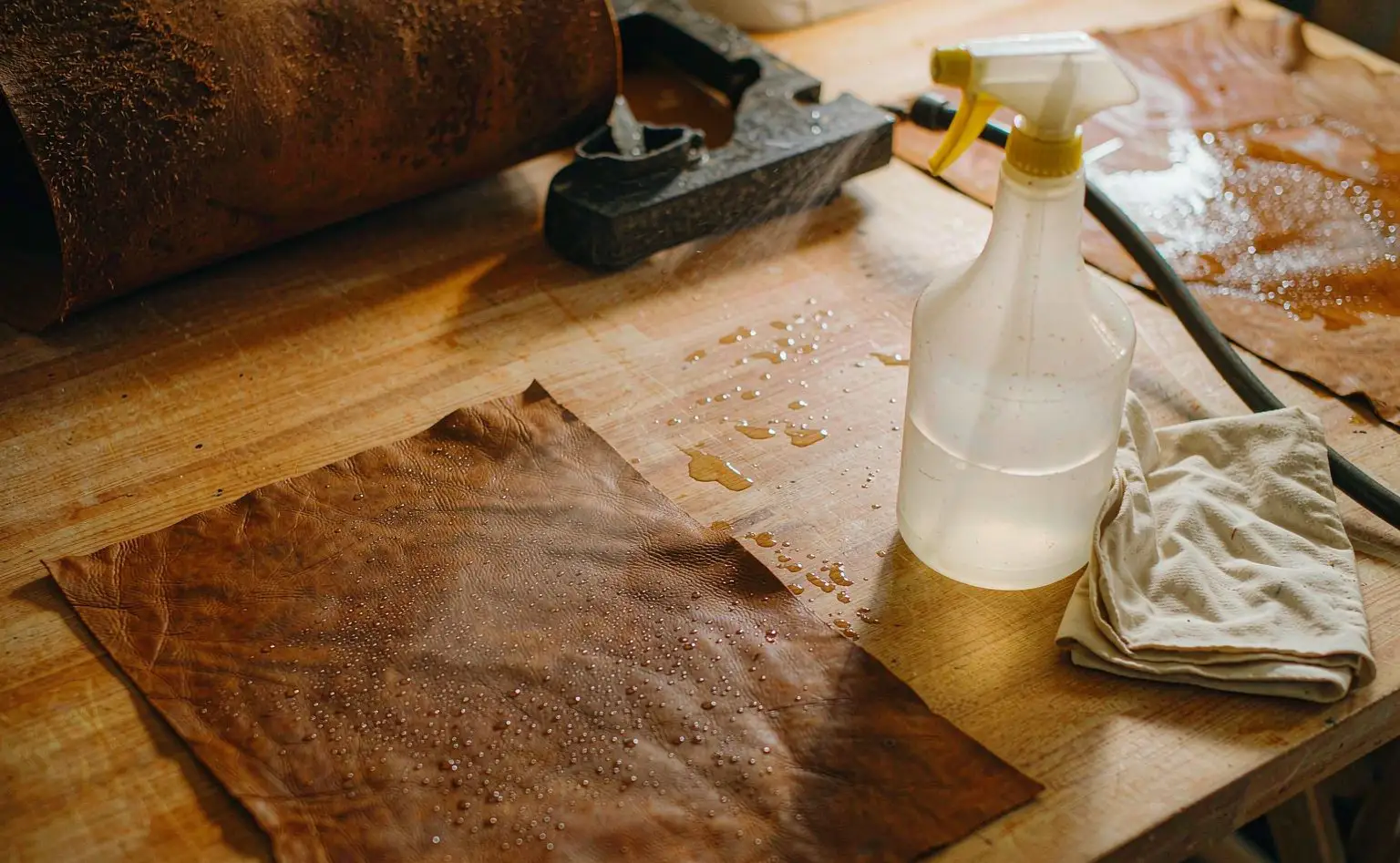
On the buckle gap, clean first. Work a soft brush with diluted solution into the gap, then lift the water out with a dry cloth; the product page treats an already spotted surface the same way, diluted solution first and then a soft cloth to remove the mould and the stain. Only then spray M3D, easing the buckle away from the strap so the mist reaches the bottom of the gap, and lay the belt flat to dry rather than bagging it straight away.
Two incompatibilities. M3D is cationic and must not be mixed with anionic surfactants or anionic polymers, which produce a precipitate and kill the effect; if the same order also gets a water repellent or a hand-feel agent, confirm the ionic nature of that product before running both on the same stage. And do not use it in an alkaline environment: it is specified for pH 4-10, and outside that window performance drops.
5. Packing, stock and export: keep the damp out of the bag
A belt is small, high-value and expensive to rework, so a weak packing stage undoes everything before it. Bag each belt with desiccant sized to the bag, to the upper end for long stock and sea freight. Do not wrap tight in film, because film against the face traps water on the leather. Keep the cartons dry, since damp board passes water to the belts.
In the warehouse, pallets off the floor, a gap to the wall and a dehumidifier through the wet season. In the container, absorbent material and a ventilation path. Before loading, open two cartons and feel the buckle gap for tackiness. The broader practice is set out in anti-mould solutions for leather processing and the rework sequence for mouldy leather in work in progress.
6. Questions we get: is wiping the face enough, and does it stain
If the spots are wiped off, is the belt fixed? What comes off is the surface growth; the root stays in the gap. Clean the gap, dry it, then apply M3D, and only then is the belt treated. Belts that were only wiped come back with spots in the same place within a fortnight, and the second rework costs more than the first.
Does M3D mark dark leather? It is a colourless to pale yellow solution and leaves nothing visible once dried. The risk is a heavy coat that has not dried, which leaves a faint mark that shows more on dark hides. Spray thin and lay flat to dry.
How is the result verified? Mould resistance goes to ISO 846 or ASTM G21 for a growth grade, with samples from the strap and the buckle gap separately. On the finished belt, bag with desiccant and hold at 30C and 85% relative humidity for fourteen days, then check the gap. Both products have samples and TDS for a trial on your own hide.
The four points to take away: iHeir-PF at 0.05%-0.2% of hide weight at tanning and finishing, pH below 8 and the agent poured into water only; clean the buckle gap, spray iHeir-Spray(M3D) with the buckle eased open, and dry before bagging; one thin coat on the lining and thread; desiccant in the bag, pallets off the floor and humidity controlled in the container.


