




 View Count:34
 Date:2026-09-18
Antimicrobial foam for vehicle interiors: do you add the agent during foaming or apply it after? Seat, headrest and floor-mat foam sits in a warm, humid cabin for years, and once it grows mould the result is odour complaints plus a full foam rework that is harder than replacing the fabric. Dosing iHeir-FP into the foaming mix at 0.5-1.5% of foam weight holds for the life of the part, while spraying iHeir-Spray(M3D) on shaped parts avoids any formula change. This article covers how the two routes divide the work, the dosing windows and the retests car makers expect, verified against ISO 22196.
1. How the two routes divide the work
The short answer: dose into the foam for series production, spray for shaped parts and rework. Dosing means blending the antimicrobial agent into the raw materials at the mixing stage, so the active ingredient spreads through the whole foam body, cut faces and cell walls included, and it does not wear off. Post-treatment means spraying the surface of the finished part, with no formula change, for orders that cannot wait for a material revision or only need surface protection.
Match the route to the order status:
| Route | Best for | Reference dosing | Strength and limit |
|---|---|---|---|
| In-foam dosing | New programmes, series sheets and profiles | iHeir-FP at 0.5-1.5% of foam weight | Durable and wash-fast; needs a formula revision and validation |
| Post-shaping spray | Shaped stock, rework, small trial runs | iHeir-Spray(M3D), even coat, air dry | No formula change, same-day; surface only |
Quality teams care about durability, R&D teams about how much the formula moves; the two routes answer one half each.
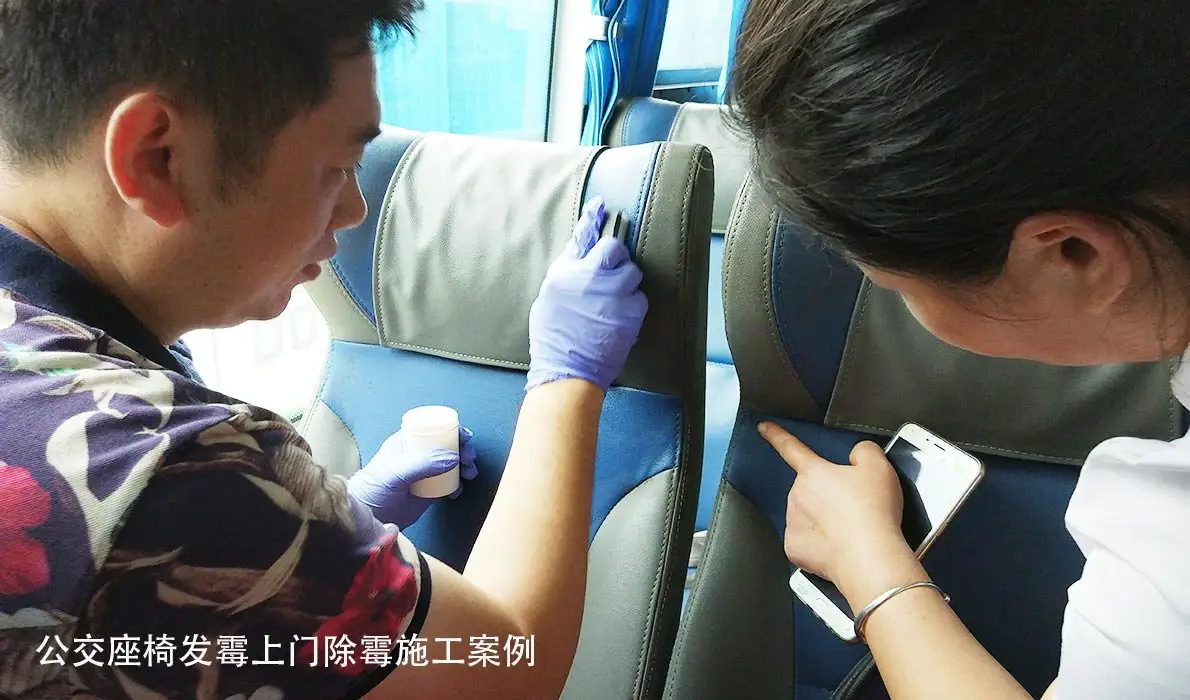
2. Dosing during foaming: iHeir-FP dosage and process window
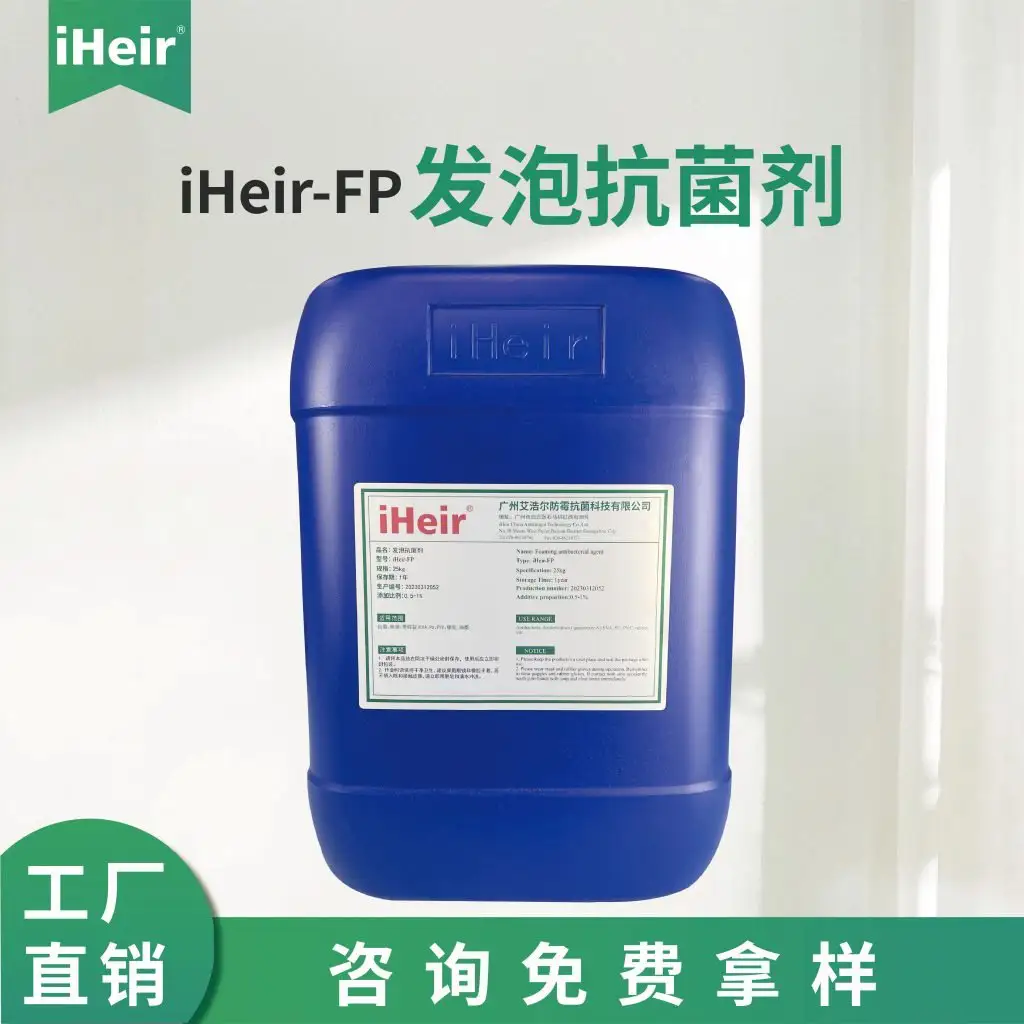
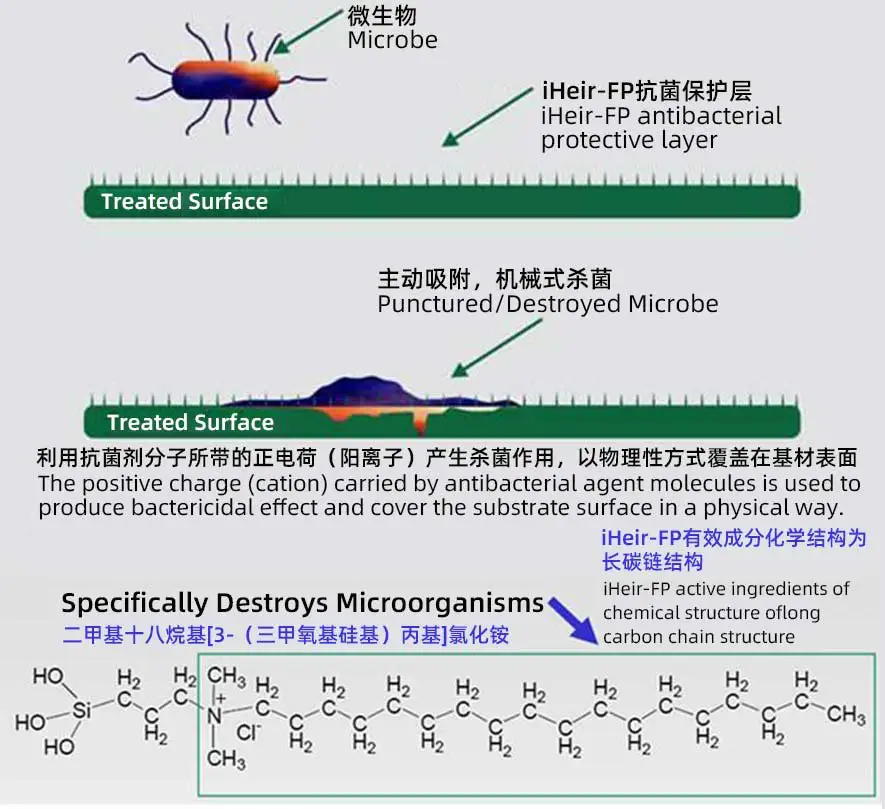
iHeir-FP foaming antimicrobial agent is a clear liquid built on quaternary ammonium salts and miscible with water at any ratio. It is added the same way as colour powder: blend it into the raw materials at the mixing stage, mix thoroughly, then run the normal foaming process. The recommended dosage is 0.5-1.5% of total foam weight, tuned to the performance target and process conditions, always confirmed with a trial batch first.
The process window is wide: it stays active from pH 1 to 11, is stable to light and heat, and works in PP, PE, PVC, EVA, EPS, PU and silicone rubber foams with an antibacterial rate above 99.99% and zero skin-sensitisation. It ships in 25 kg drums with a one-year shelf life. For R&D the practical benefit is that nothing else moves: no foaming-line changes, no drying step, the mixing rhythm stays as it is.
3. Where inorganic agents fill in: high heat and light colours
Two cases sit outside what FP covers. First, high-heat systems: where the adhesive layers or thermoforming steps around the foam run well above organic-agent windows, switch to iHeir-IPI001 inorganic zinc-ion antimicrobial agent at 0.8-1.0% of part weight. It withstands processing above 380 degrees C, carries zinc ion and active carrier at 99% or higher, disperses easily with a D90 under 3 microns, and resists discolouration and UV, which suits sun-exposed areas near the instrument panel.
Second, light-coloured and appearance parts: for pale foam and wrapped trims where any yellowing shows, use iHeir-PSZ104 inorganic plastic antimicrobial agent at 0.5-1.0% of part weight. It tolerates 300-320 degrees C, releases silver ions slowly, holds a 99.99% antibacterial rate and does not discolour. Organic and inorganic agents do not compete: FP in the foam body, IPI001 in adhesive layers and frames, PSZ104 on appearance parts, each holding its own position.
4. Spraying after shaping: the cheapest route to change
Shaped stock and rush orders go post-treatment: spray iHeir-Spray(M3D) water-based anti-mildew agent evenly over the surface and let it air dry, with no formula or tooling change and same-day turnaround. Three order types fit: a customer adds the antimicrobial requirement late, warehouse stock needs re-protection, or reworked parts need a fresh protective coat after cleaning.
Be clear with the customer about the boundary: a spray protects the surface only. Foam is an open-cell structure, so cut faces and the core carry no protection and the service life is shorter than dosing. That is why we position post-treatment as a stopgap and a bridge; series orders should still move the agent into the formula. The full treatment for car interiors is covered in our auto interior anti-mould guide.
5. The two retests car makers ask for
Vehicle parts face two gates beyond ordinary foam. Antibacterial rate is tested against ISO 22196 (foam parts are also commonly checked for anti-mould effect under ASTM G21), once before and once after dosing, with the report kept with the batch. Odour and VOC are the car-maker red line: quaternary ammonium salts are low-volatility, but odour grade and total carbon emission still have to be retested to the OEM method before and after dosing; if the result fails, adjust the dosage or move to an inorganic agent. This gate is never skipped.
Physical properties get retested too: adding 0.5-1.5% of liquid to the foam mix means resilience and compression set are measured again against the original standard, and the change counts as landed only when both stay in tolerance. For silicone and rubber composite parts, our silicone and rubber antimicrobial selection guide explains where the heat-resistance and food-contact requirements differ; do not reuse the same table across both.
6. FAQ
Q: Why does the in-foam dosage stop at 1.5%?
0.5% meets routine antibacterial targets and 1.5% is the recommended ceiling on the product page. Going higher adds little to the rate and can destabilise the foam, so treat the trial batch as the final word.
Q: Can FP and an inorganic agent be used together?
Yes, by division of work: FP in the foam body, IPI001 in adhesive layers or high-heat zones, PSZ104 on light appearance parts. Before mixing agents in one system, run a small compatibility sample to confirm no flocculation or discolouration, then scale up.
Q: The seat foam in a finished vehicle has mould. Now what?
Strip the cover, clean and dry the mould, then re-protect: spray Spray(M3D) after the surface is clean and dry, and reinstall once the retest passes. For batch rework we support on-site service, scheduled against the strip-and-fit workload.
Q: How do trials and ordering work?
FP, IPI001, PSZ104 and Spray(M3D) are all available as samples. Send us the foam type, foaming process and the car-maker test scope, we return a dosing and validation plan, and orders start at drum quantity. Welcome to contact us.