




 View Count:4
 Date:2026-10-23
How should leather wallet mould be handled? Start by identifying which layer the spots are on. On most rework sheets the mould is on the lining cloth while the face is still clean, because the lining takes up sweat and sits inside the fold where moisture cannot leave. The lining takes a thin wipe of iHeir-QF paste, and the crust takes iHeir-PF at 0.05%-0.2% of hide weight at finishing. This article gives the sequence and the levels.
1. The lining goes first, not the leather face
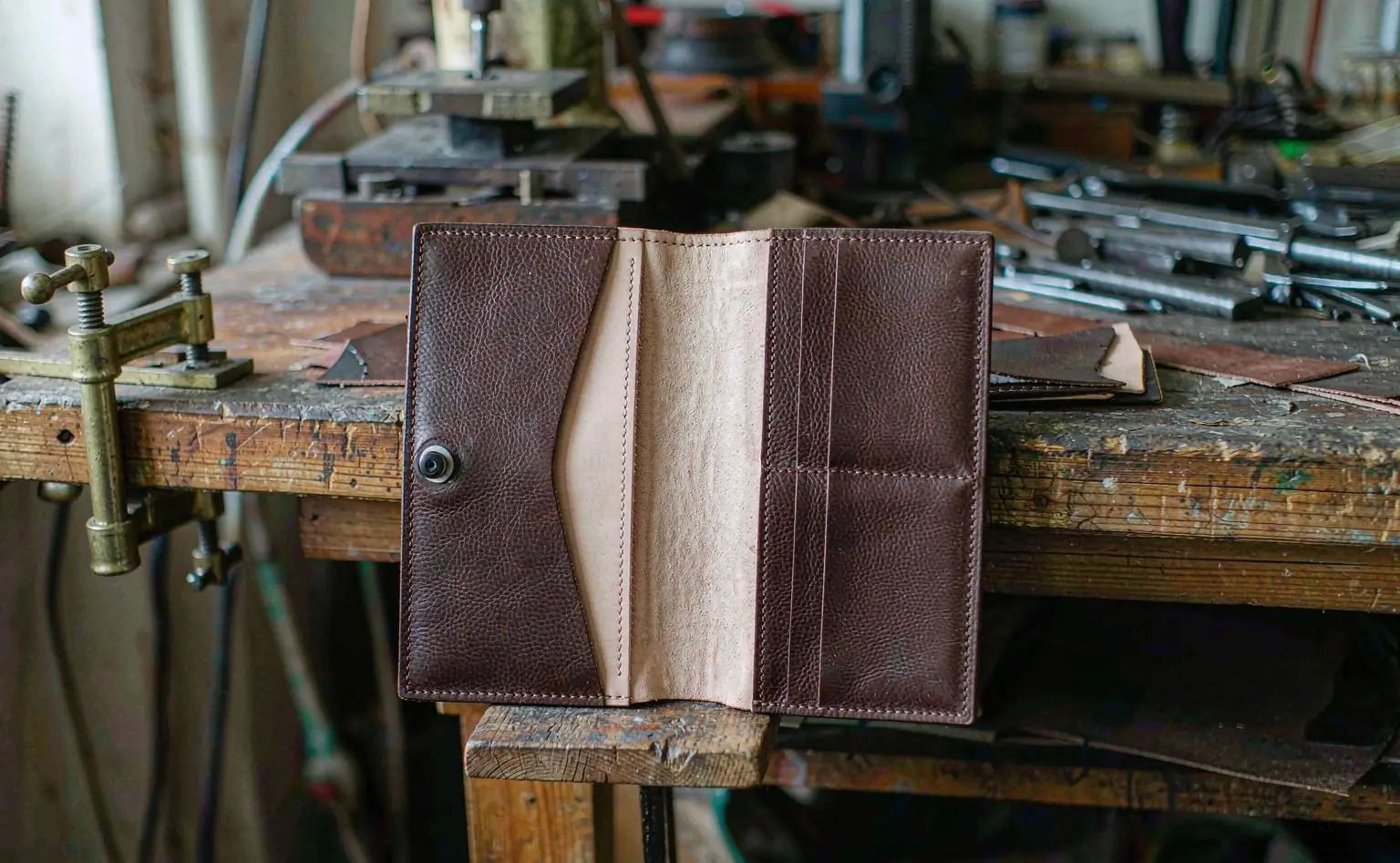
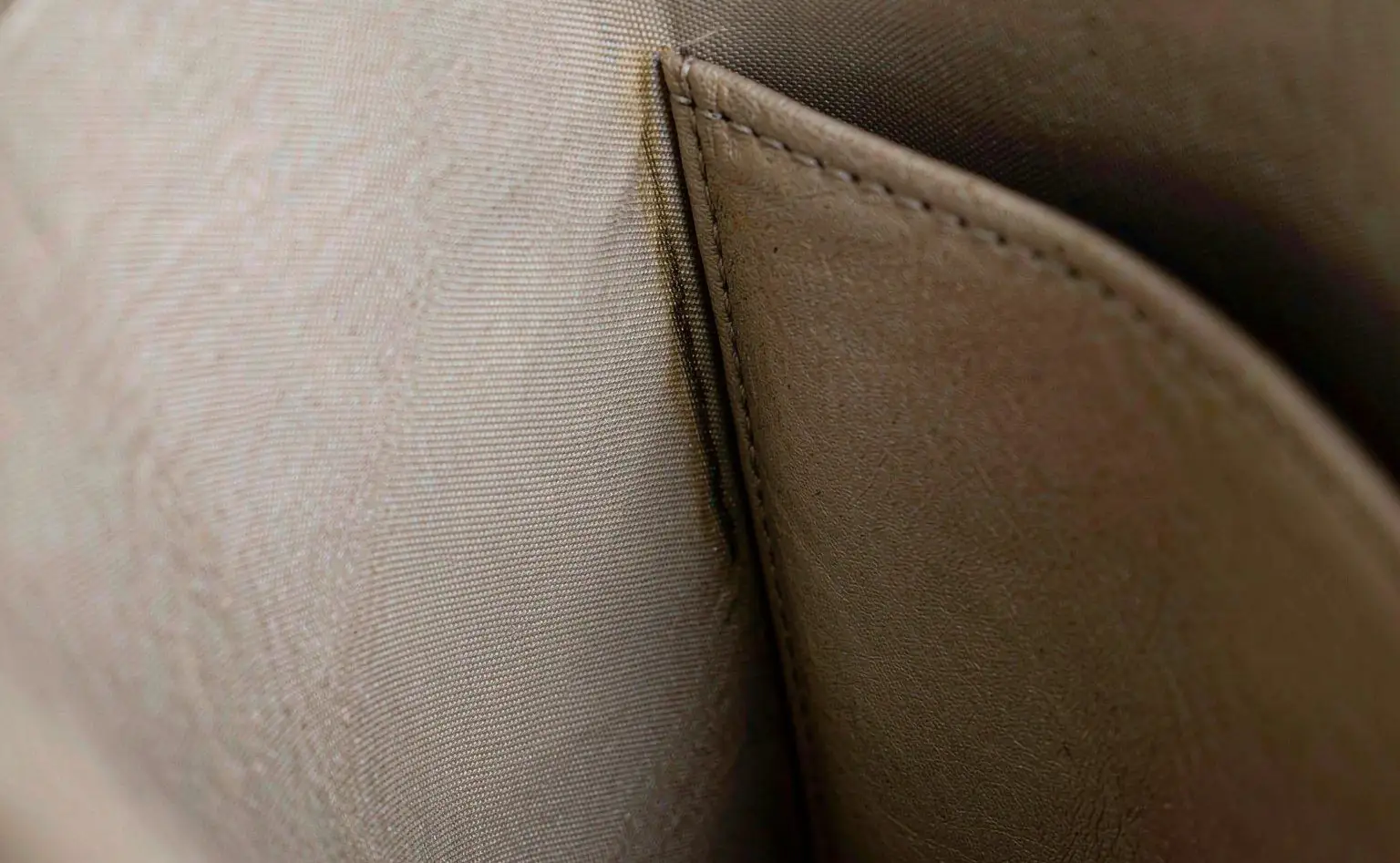
The construction decides where the mould lands. The outside is leather, the inside is a textile lining, and card slots and stiffeners sit between them; the three layers are bonded and held by stitching. A textile lining has voids between the fibres that hold water, while a finished leather face is relatively closed and takes water slowly. So when humidity rises the lining absorbs first, and once it is saturated mould grows on the fibres.
The second reason is the fold and the card slots. Once the wallet is folded, the lining is pressed inside the edge where ventilation is worst, and the card slot layers hold paper board or foam stiffener, which also takes up moisture. Mould starts on the lining, spreads along the stitching, and by the time spots appear on the face the inside of the wallet has already failed across a wider area.
The third reason is at the wearing end. A wallet lives in a pocket, where body heat and sweat vapour keep feeding the lining, and comes out into cooler air, so it condenses over and over. That is why the same batch can sit in a display case without a problem and come back from a customer with spots two weeks after purchase.
2. Lining, leather face and stitching: three locations
The table sets out the material, the method and the level for each. The lining and the face are different materials, one is a wipe and the other goes into the crust, and the order cannot be reversed.
| Location | Material | Method and level | Stage | Points to watch |
|---|---|---|---|---|
| Lining cloth | Textile or nonwoven | iHeir-QF paste, one thin wipe | After cutting, before sewing | Even and thin, dry before closing |
| Leather face | Finished leather | Same QF wipe, or iHeir-PF at 0.05%-0.2% in the crust | Finishing or finished wipe | PF below pH 8, into water only |
| Stitching and edges | Polyester thread, leather edge | Carry the paste into the seam | After sewing | Surface only will fail again |
| Packing and store | Finished wallet | Desiccant and humidity control | Boxing and warehouse | No tight film inside the box |
One hard rule on sequence: lining first, face second. The lining has to be dry before it is sewn, because sewing it damp seals water into the sandwich. The face comes afterwards because wiping it means pressing on the lining, so doing the face first wastes the pass.
3. Lining cloth: a thin wipe of QF, pH compatible to 9.5
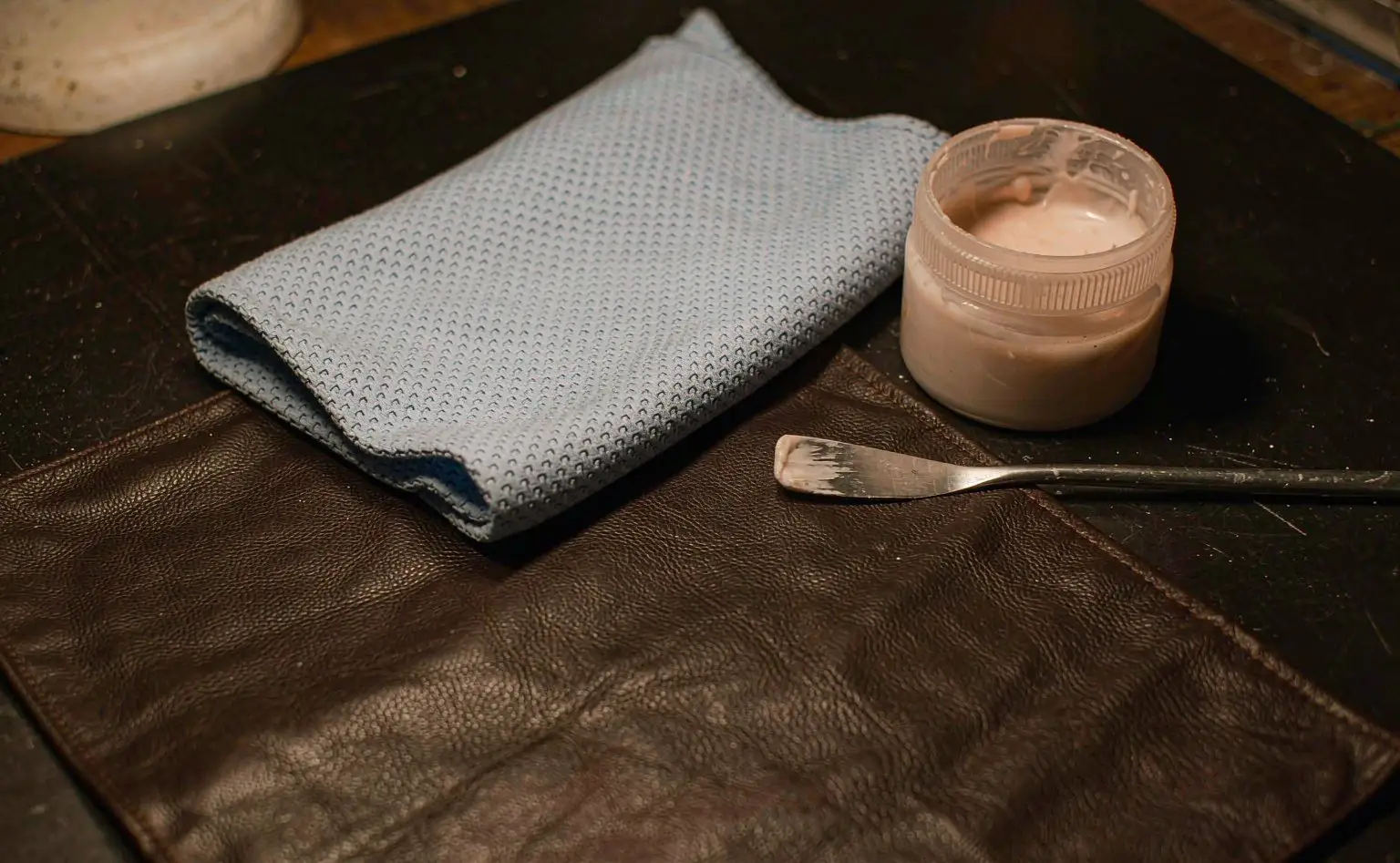
iHeir-QF anti-mould antibacterial paste is applied by wiping: pick up a little on a soft cloth and work it thinly and evenly into the surface so that it reaches the fibre skin. pH compatibility runs up to 9.5, it suits natural leather, synthetic leather and textiles, packing is 30kg per container, oral LD50 in guinea pigs is 12.27g/kg, and storage is recommended between -10C and 25C.
Three points on the lining. Even and thin: paste stacked on fabric stiffens it and leaves pale marks, so wipe until the paste is no longer visible. Dry before sewing, or the water is trapped in the sandwich. Halve the level on nonwoven: it drinks the paste quickly, and too much shows through to the front.
Where the lining is microfibre or reconstituted leather rather than textile, the method is the same but the surface should be pressed with the palm afterwards so the paste works into the skin. Microfibre has fine pores, and paste left sitting on the surface transfers to the leather face during sewing and leaves an oil mark.
4. Leather face: iHeir-PF at 0.05%-0.2% of hide weight
The face splits into two cases. Where the plant does its own finishing or recolouring, iHeir-PF leather antimicrobial agent goes into the process liquor at the finishing stage at 0.05%-0.2% on hide weight and is mixed thoroughly. Active content is 30±1%, pH of a 1% solution is 3-8, and packing is 25kg or 200kg drums. Three rules: pour the agent into water and never the reverse, hold pH below 8, and keep it away from alkaline materials.
Where the plant buys finished leather and does no finishing at all, PF belongs upstream, added by the tannery at tanning and finishing. Put that requirement into the technical agreement when the price is negotiated; it does more than any surface wipe afterwards. If the finished leather has already spotted in store, wipe it with QF and treat it from there, and do not expect a surface pass of PF to fix it.
Levels follow hide type and order cycle. Thin sheep or calf for wallets runs 0.05%-0.1%; standard cowhide 0.1%-0.15%; vegetable-tanned, heavy or long-stock orders run 0.15%-0.2%. Where QF is used on the face, do not put it in the same bath as a PF liquor, because the two systems are different and mixing them achieves nothing.
5. Stitching, edges and packing: keep the damp out of the box
Stitching and edges are the two places most often missed. After sewing, every needle hole is a capillary channel into the sandwich, water enters there and mould starts at the hole. Carry the paste onto the seam with the cloth so the thread is covered too, and press the folded edge with a fingertip rather than smearing the surface only. Passing the thread itself before sewing is more reliable still; polyester thread does not absorb water, but the wax it picks up in the finishing bath can carry it.
Three points on packing. Box each wallet with desiccant sized to the box. Do not wrap tight in film, because film against the leather seals water onto the grain. Check gift boxes for moisture: board boxes and flock bags both absorb water. In the warehouse, pallets off the floor and a gap to the wall; in the container, absorbent material and a ventilation path. Before loading, open two boxes and feel the stitching for tackiness.
The wider practice for leather goods is set out in leather and PU leather anti-mould specifications and leather goods mould prevention, with the rework sequence for mouldy leather in work in progress in a separate article.
6. Questions we get: can the face alone be wiped, and will the paste mark
Can we wipe only the leather face and leave the lining? No. The mould starts on the lining, and a clean face only means the season has not arrived; with the lining untreated the moisture in the sandwich still reaches the inside of the face. Lining first and face second is a sequence, not an option.
Will QF leave an oil mark or change the hand? Thin, even and dried through, it leaves nothing visible; marks come from a heavy coat or from closing the wallet while it is still wet. Pale and suede-finish leather is more sensitive, so try a piece of offcut first and confirm there is no shade difference before running the batch.
How is the result checked? Mould resistance goes to ISO 846 or ASTM G21 for a growth grade, with samples from the lining and the face separately. On the finished wallet, box with desiccant and hold at 30C and 85% relative humidity for fourteen days, then inspect the lining and stitching. Both products have samples and TDS for a trial on your own hide.
The four points to take away: wipe the lining with iHeir-QF after cutting and before sewing, dry until not tacky, then close; add iHeir-PF at 0.05%-0.2% of hide weight at finishing with pH below 8; carry the paste onto the seam and the folded edge rather than the surface only; desiccant in the box, moisture-tested gift boxes and pallets off the floor.


