




 View Count:2
 Date:2026-11-12
Why does a lunch box grow mould? The outside gets wiped every day, but the growth hides in the joint between lid and body, along the inner lid sealing rim and inside the shrink film: a month in the warehouse and the carton opens with a smell and a black ring in the joint. The routine is iHeir-IPL inorganic plastic antimicrobial at 0.8%-1.0% of compound weight in the body compound and, separately, in the inner lid compound, plus parts dried before sleeving and one iHeir-D vapour sheet at 0.1-0.2 g of active in the export carton. This article gives the dosing, assembly and packing parameters.
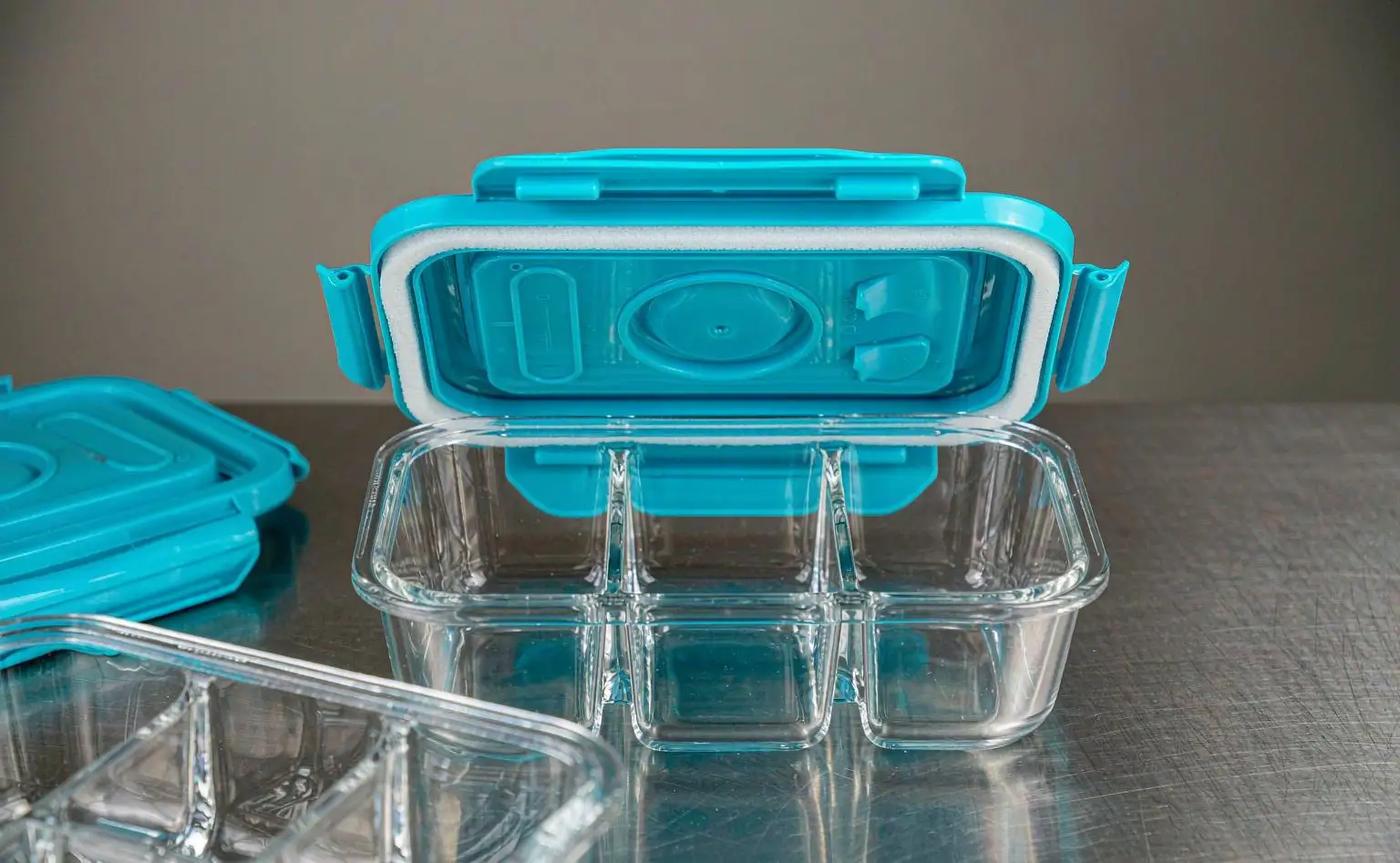
1. The mould is in the joint and the inner lid, not on the outside
Take a lunch box apart: body (PP or PS), inner lid, outer lid, sealing rim, clips, shrink film and carton. The outside is smooth and easy to wipe; what fails is the joint between body and lid, the sealing rim of the inner lid, and the small volume of air trapped under the film.
The joint holds water and food residue. Once the lid is closed, the joint is a narrow, deep channel; wash the box and close it before it is dry and the water stays in the channel. Oil and soup from a meal work into the same channel and do not wash out. That channel is the last place in the box to dry and the first to blacken.
The inner lid rim is the stuffiest spot. The inner lid presses on the rim of the body, and the thin layer of air between them does not move. Close the lid while the body is still warm from the tool and the moisture is sealed in, with a smell inside within a week.
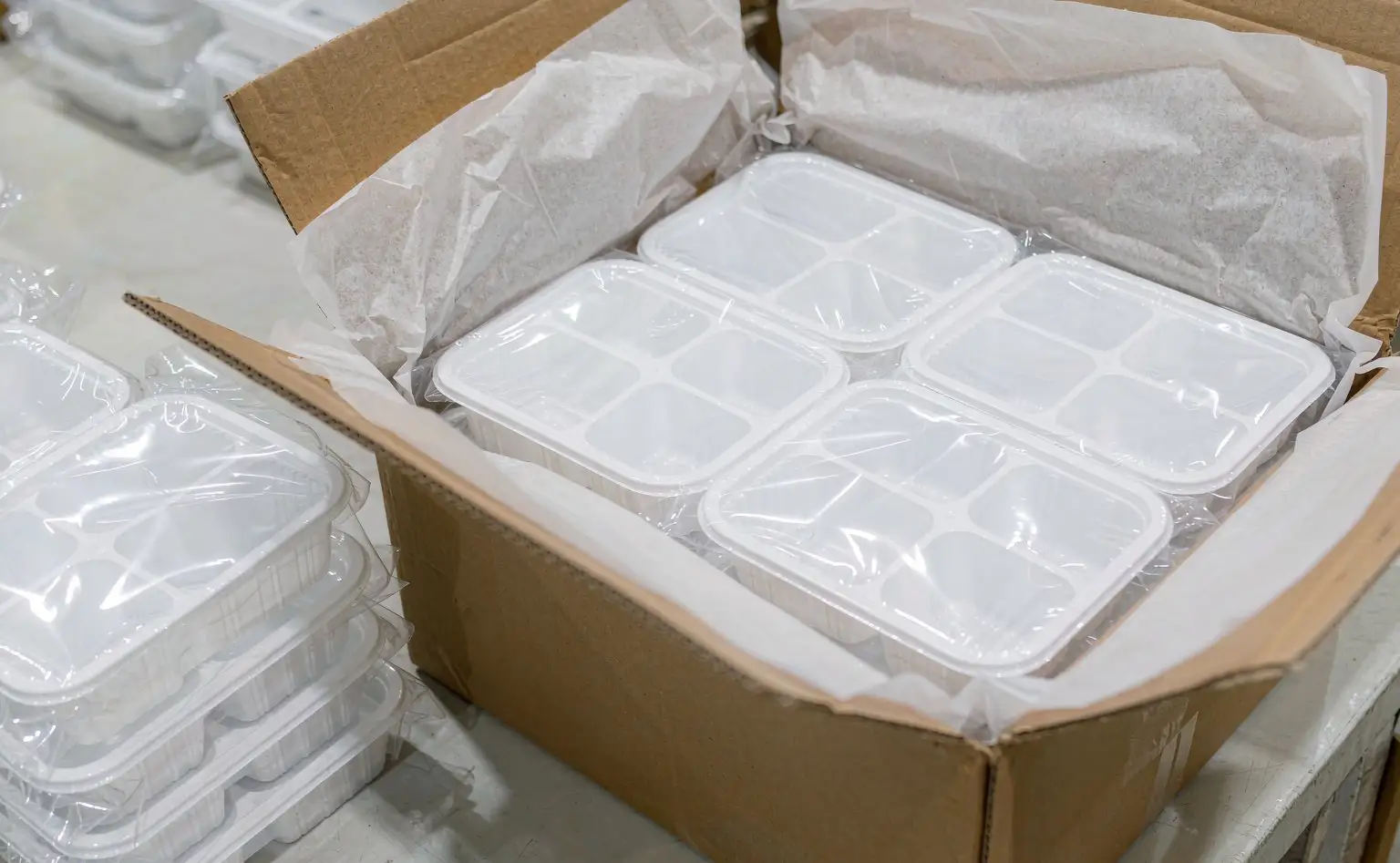
Shrink film is a greenhouse. Single units are filmed and then cartoned, and the air under the film has nowhere to go; film a box that is not dry and the water is locked in. The carton board takes up moisture, a sea container condenses, and the growth starts on the outside of the film before working in through the fold.
2. Body, inner lid and carton are counted on two different bases
The table lines up the body compound, the lid compound and the carton. Plastics are counted as a percentage of material weight, vapour paper in sheets, and one does not convert into the other.
| Part | Material | Product and level | Stage | Control point |
|---|---|---|---|---|
| Body | PP, PS | iHeir-IPL 0.8%-1.0% | Pelletising or pre-mix | Of body compound weight |
| Inner and outer lid | PP, PS | iHeir-IPL 0.8%-1.0% | Separate batch | Of lid compound weight, counted separately |
| Joint and assembly | Body, lid | Dry before closing | Assembly, before film | No water left in the channel |
| Carton | Corrugated | iHeir-D 1 sheet, 0.1-0.2 g | Cartoning | On the carton wall, off the product |
One boundary. iHeir-IPL sits in the plastic and deals with growth in the body and the lid themselves, still working after the box leaves the plant; the vapour sheet deals with the air in the carton and is finished when the carton is opened. Skip both compounds and no sheet in the carton will hold back mycelium already running in the joint.
3. Dose the body and the inner lid separately, each on its own weight
Two compounds, two calculations. Body and inner lid are often different materials (PP body, PP or PS lid) and different wall thicknesses. Dose each at 0.8%-1.0% of its own weight rather than copying the body ratio onto the lid.
Where it goes. Plants with a compounding line dose at pelletising into antimicrobial pellets; plants that mould directly pre-blend with the pellets for 10-15 minutes. iHeir-IPL is a white powder with whiteness above 90 and a mean particle size of 1-2 µm, so clear and light boxes do not visibly shift in colour, but poor dispersion leaves white specks and silver streaks.
Colour and clarity. Clear bodies are the most sensitive and may show haze at 1%, so press a 2 mm plaque first; dark and opaque boxes show nothing and are covered at the 0.8% low end.
Run a sample and check three things. Haze and colour; mechanicals to GB/T 1040, watching the clip that is opened and closed repeatedly; and heat, since boxes for hot meals need a heat-deflection check at service temperature rather than room-temperature data alone. iHeir-IPL is stable to 300-320°C, so melt temperature is not the constraint, formulation and dispersion are.
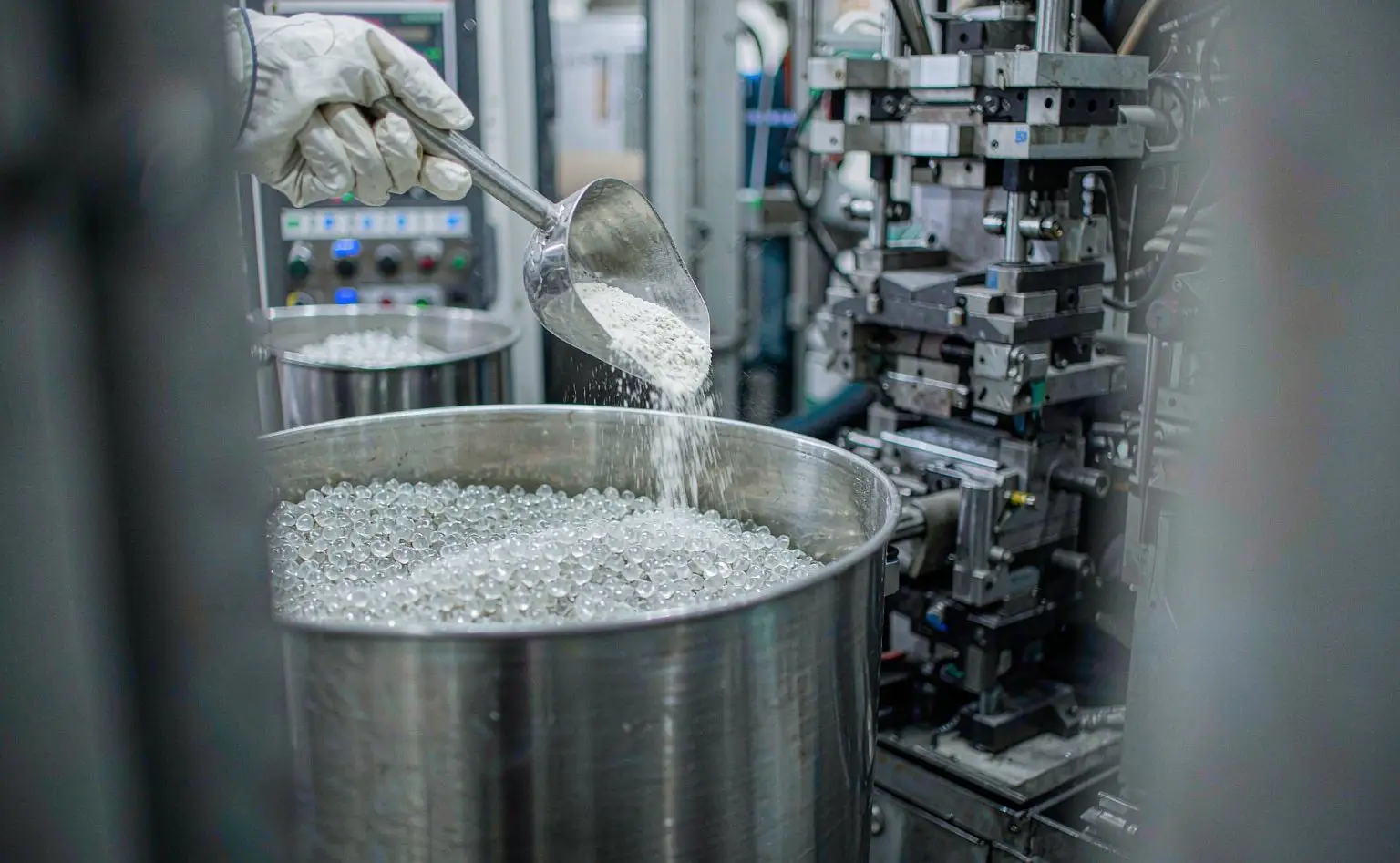
4. Moulding and assembly: dry before closing the lid, dry before filming
This section carries no product, and it is where lunch box plants take the most returns.
Dry the resin. PP picks up little moisture, PS picks up a lot. A hopper left open overnight leaves silver streaks and bubbles on the inner face, and those voids release water later, so growth starts on the inside.
Let parts cool. A body straight off the tool is still warm; stack it and it distorts, close it and the moisture is trapped inside. Bring parts down to shop temperature before closing the lid and before filming.
Wash and blow off. Where there is a washing step before assembly, blow the joint channel and the inner lid rim dry with an air gun. Water in that channel will not dry out by standing.
Shop conditions. Hold moulding, assembly and packing at 45%-60%RH with a dehumidifier in the humid season, and keep the filming station away from wash sinks and doorways.
5. One sheet in the carton, then storage and export
Cartoning takes one iHeir-D vapour sheet at 0.1-0.2 g of active, laid against the carton wall or under the divider, never pressed onto the product or its film.
Run a compatibility test. Seal several finished boxes with three times the normal amount of paper, mist a little water, keep paper between sheet and product and leave it a few days. Check the body for staining, the film for blooming and the print for change. iHeir-D has 70%±5 solids and can corrode poor-quality metal under damp conditions, so sets with metal clips or cutlery must be tested first.
Store and export. Hold the finished-goods store below 60%RH with cartons 10 cm off the floor and wall and stack heights that do not distort the boxes; line the container, hang desiccant sticks and check cartons for soft corners at loading. Comparable kitchen plastic work is in wash basins and masterbatch dosing, and humid kitchen and bathroom service in plastic parts under long-term high humidity.
6. Questions from buyers
Q: Both compounds are treated, do we still need a sheet in the carton?
A: Recommended. The plastic covers the parts themselves while nothing covers the air in the carton, and one sheet makes a container load steadier.
Q: Will a clear body haze up?
A: Somewhat. At 1% a 2 mm plaque shows haze; press a plaque first and drop to 0.8% or use a finer powder if it shows.
Q: The body is dosed, is it safe for food?
A: iHeir-IPL is an inorganic antimicrobial for plastics, dosed into the resin and encapsulated in the matrix with no separate surface treatment; for food-contact orders, supply documentation and test to the customer’s standard.
Q: The joint has blackened, will washing fix it?
A: Surface growth brushes off, but mycelium inside the channel cannot be reached and returns within a week. Downgrade the lot, and fix the two compounds and the assembly drying to stop it recurring.
Four closing points: dose the body and the inner lid each at 0.8%-1.0% of their own compound weight with iHeir-IPL at pelletising or in a 10-15 minute pre-mix, press a 2 mm plaque on clear parts and re-test to GB/T 1040 and at service temperature; let parts cool before closing the lid and blow the joint channel dry with an air gun, holding assembly at 45%-60%RH; confirm the inside is dry before filming and put one iHeir-D vapour sheet at 0.1-0.2 g of active in the carton after the three-times compatibility test; keep the store below 60%RH with pallets off the floor and line the container for export. Performance can be verified to ISO 22196 or GB/T 31402, a one-kilogram sample can be sent ahead, and lead times are on the iHeir-IPL product page.


