




 View Count:29
 Date:2026-09-10
Wenzhou Leather Shoe Factory Mold Prevention: Zero-Mold from Lasting to Carton
Wenzhou produces over 1.2 billion pairs of shoes annually—men’s, women’s, kids’, outdoor—mostly exported to Europe, the US, and the Middle East. Among shoe categories, leather footwear carries both the highest unit value and the highest mold risk: the leather itself holds proteins and oils, the lasting adhesive is water-based, and the shoe box is a small sealed space with poor airflow. The combination makes May-to-September a claim-prone period for every Wenzhou factory. This guide walks through five stages—incoming leather, lasting glue, shoe-box packaging, monsoon warehouse humidity, container ocean freight—with a reproducible zero-mold workflow.
1. Three Sources of Mold in Leather Shoes
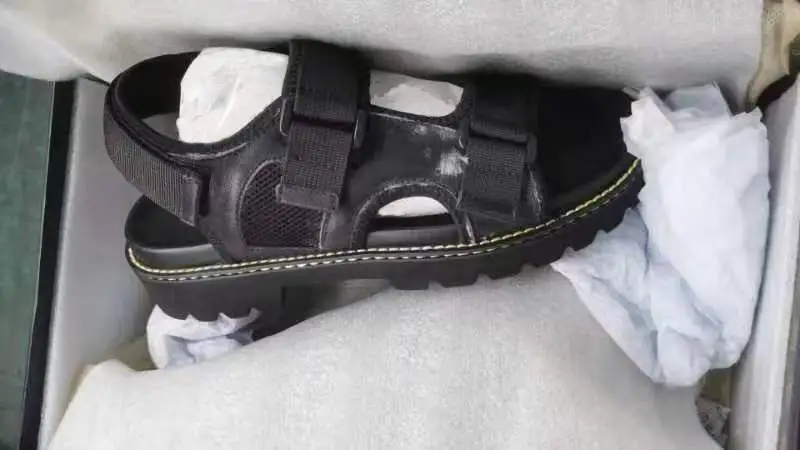
Wenzhou shoe factory claims typically show mold in three places:
- Upper / lining leather: genuine leather (cowhide, sheep, PU) retains 3%-8% collagen and fat residues—the perfect carbon and nitrogen source for mold;
- In-shoe glue line: water-based PU or starch adhesives carry 50%-60% moisture at application and need 8-12 hours to fully dry—any trapped moisture feeds mold;
- Inside the shoe box: a sealed 0.5-3 L box held above 75%RH for 7-10 days starts growing visible mold on the box surface.
These three rarely fail at the same time. Typically the sequence is: first the glue smell leaks out of the box corner, then dark spots appear on the lining, then surface mold blooms on the upper. By the time the customer complains, mold has been incubating 30-45 days.
2. Incoming Leather Inspection & Moisture Regain
Most Wenzhou factories source crust leather from Guangdong and Hebei—moisture regain is the single biggest predictor of downstream mold. We recommend every factory own a halogen-heat moisture meter and test every incoming batch:
| Leather type | Safe moisture regain | Risk threshold | Action |
|---|---|---|---|
| Chrome-tanned cowhide (upper leather) | 10%-14% | ≥16% | Above 16% needs 24 h airing or low-temp drying at 40-50 °C for 30 min |
| Sheep garment leather | 10%-12% | ≥14% | Same as above |
| PU synthetic leather | ≤3% | ≥5% | Above 5% usually indicates a raw-material issue—return the batch |
Leather stored above the safe range becomes a “ticking time flag”—even with downstream anti-mildew treatment, customer foot sweat plus sea-freight moisture will activate residual mold and trigger a complaint 30 days later.
Storage after incoming inspection matters too: stack on pallets ≥10 cm off the floor and ≥30 cm from walls, hold warehouse humidity below 60%RH. When humidity is high, run a dehumidifier rather than opening windows—Wenzhou’s spring/summer outdoor humidity is often higher than indoor.
3. Lasting & In-Shoe Anti-Mildew Treatment
The lasting stage is where glue concentrates. is the most glue-intensive process. Most Wenzhou factories use water-based PU adhesive, applied at 50%-60% water content and needing 8-12 hours to fully cure. Boxing the shoe before the glue dries pushes internal box humidity above 90%RH—mold’s optimal breeding range.
Recommended process upgrade:
- Heat-set after lasting: dry at 50-60 °C hot air for 30-60 minutes to drive glue-layer moisture below 8%;
- Spray iHeir-PF leather mildew inhibitor: dilute 1:5 with water (20% concentration), spray the lining, tongue, and underside of the insole once each—consumption ~5-10 mL/pair;
- Air-dry 30 minutes before boxing.
iHeir-PF is a cationic water-based formula that doesn’t affect leather breathability and works on chrome-tanned, vegetable-tanned, and PU leather. Lab test: 30 °C / 90%RH incubator for 28 days, treated shoes kept in-shoe mold counts ≤10² CFU/g, versus ≥10⁵ CFU/g on untreated controls.
Note: workers should wear masks and avoid direct eye contact during spraying.
4. Shoe-Box Packaging: Anti-Mold Paper & Desiccant Layout
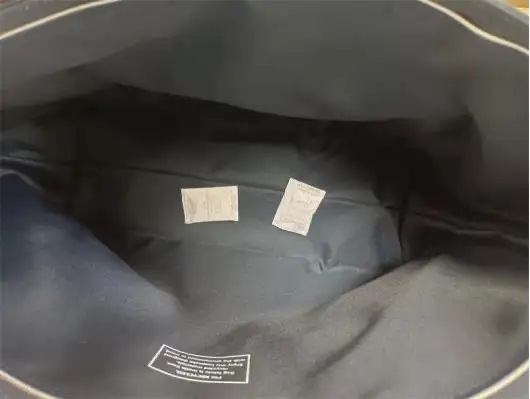
The most common question from Wenzhou factories: “Do I really need anti-mold chips inside the shoe box?” Answer: Yes, always. The box is small (0.5-3 L) and well-sealed—ideal for gas-phase anti-mildew. Standard layout:
- 1-2 Power Pak anti-mold odor chips per pair, sealed in a small transparent sachet and tucked into the shoe or box corner;
- 1 CH-10 anti-mildew desiccant pack (50 g) per master carton of 5-10 pairs—moisture absorption + mildew prevention combined;
- Wrap the master carton with iHeir anti-mold packaging paper as a physical moisture barrier.
Power Pak uses a slow-release mustard-derived active gas that covers glue layers, leather, and insole fabric. CH-10 combines calcium chloride desiccant with anti-mildew factor—each pack absorbs over 100 g of moisture. Total anti-mold consumables per pair cost roughly ¥0.4-0.8, far less than one claim’s freight + discount loss.
5. Wenzhou Factory Monsoon Warehouse SOP
Wenzhou’s May-to-September monsoon season is peak mold claim season—orders concentrate, humidity peaks, and export containers pile up. A single warehouse lapse can ruin an entire container. Recommended SOP:
- Log temperature and humidity at 9:00 and 15:00 daily in the finished-goods warehouse; trigger dehumidifier at 65%RH;
- Box stacking: lay flat, ≤6 layers high (avoid crushing), 1 cm gap between boxes for airflow;
- Pre-loading moisture check: any box with moisture regain ≥12% must be re-dried;
- If loading-day humidity ≥70%RH, hang T-1000 shipping container desiccants: 4-6 strips per 20 ft container, 8-10 per 40 ft;
- Ship within 24 hours of loading during monsoon—each extra day can raise internal container humidity by 5%-8%.
6. Sea Freight, Claim Case & FAQ
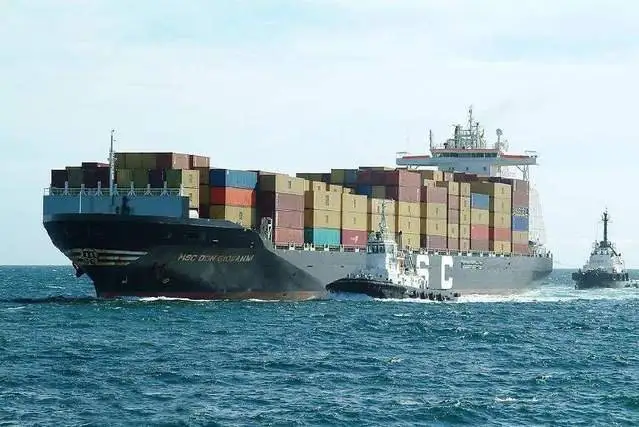
A 25-45 day ocean voyage is a mold incubator. Daytime sun heats container walls to 60-70 °C; night cooling back to 20-25 °C creates “container rain”—condensation that drips onto shoe boxes and seeps into the shoe.
Three essentials for sea-freight anti-mold:
- Hang 4-6 T-1000 shipping container desiccant strips per 20 ft container (each absorbs 2-3 kg of moisture);
- Wrap each pair in iHeir anti-mold packaging paper—the paper fibers themselves carry slow-release anti-mildew factor;
- Seal container door gaps with waterproof tape.
Case study: a Wenzhou men’s leather boot exporter shipped an 18-inch boot order to Santiago, Chile in July 2024. On arrival, 30% of shoe boxes showed mold spots—claim value ~¥250,000. Root cause: monsoon-day loading humidity 75%RH, no container desiccant, boxes wrapped only in plain thin paper. Corrective action: pre-loading moisture test mandatory, humidity ≥70%RH triggers T-1000 strips + inner anti-mold paper wrap. Six months of shipments since, zero mold complaints.
FAQ:
Q1: Will anti-mildew agent on leather affect subsequent dyeing or finishing?
A: iHeir-PF is cationic water-based, leaves no residue after drying, and and does not interfere with leather leather finishing, dyeing, or polishing. For vegetable-tanned or aniline leather, do a 24h sample test first to confirm no color shift before bulk use.
Q2: Will Power Pak anti-mold chips inside the shoe box create an odor when the customer opens it?
A: Power Pak uses mustard-derived actives at very low gas-phase concentration inside a sealed box—within 5 seconds of opening, odor threshold is ≤0.5 grade and doesn’t conflict with the natural leather smell. For customers extremely sensitive to mustard, switch to iHeir-D gas-phase anti-mildew agent.
Q3: Will genuine leather shoes stored 6 months in inventory grow mold?
A: Depends on storage conditions. With warehouse humidity ≤60%RH + Power Pak inside the box + desiccant, leather shoes can sit 9-12 months without mold. With humidity ≥75%RH, even with anti-mold chips, expect mold in box corners within 3-6 months. Inspect long-storage orders every 3 months.
Q4: How do I treat already-moldy leather shoes?
A: Light mold (white powder on leather surface) — wipe with iHeir-Clean mold stain cleaner + air-dry 24 h. Moderate mold (leather discoloration) — deep-treat with iHeir-CM mold remover then re-spray iHeir-Spray (M3D). Heavy mold (leather rot or odor) — scrap.
For a complete “zero-mold” Wenzhou shoe factory workflow, contact us for sample testing and process design. Standard products like iHeir-PF leather mildew inhibitor, Power Pak anti-mold odor chip, and T-1000 shipping container desiccant ship same-day on small orders.