




 View Count:26
 Date:2026-11-17
Can wardrobe mould be prevented? Yes, and the back panel decides it. Dip the carcass boards at 1:40 to a 15%-20% pickup, dry the back panel before the face goes on, and put 0.1-0.2 g iHeir-D gas-phase sheets inside the finished cabinet. The back panel sits a few centimetres off the wall with no airflow, and thin MDF takes up moisture fast; once its content crosses the line the spots start on the back, and by the time the front shows them the batch is downgraded. This article gives the dip criteria and the three checks.
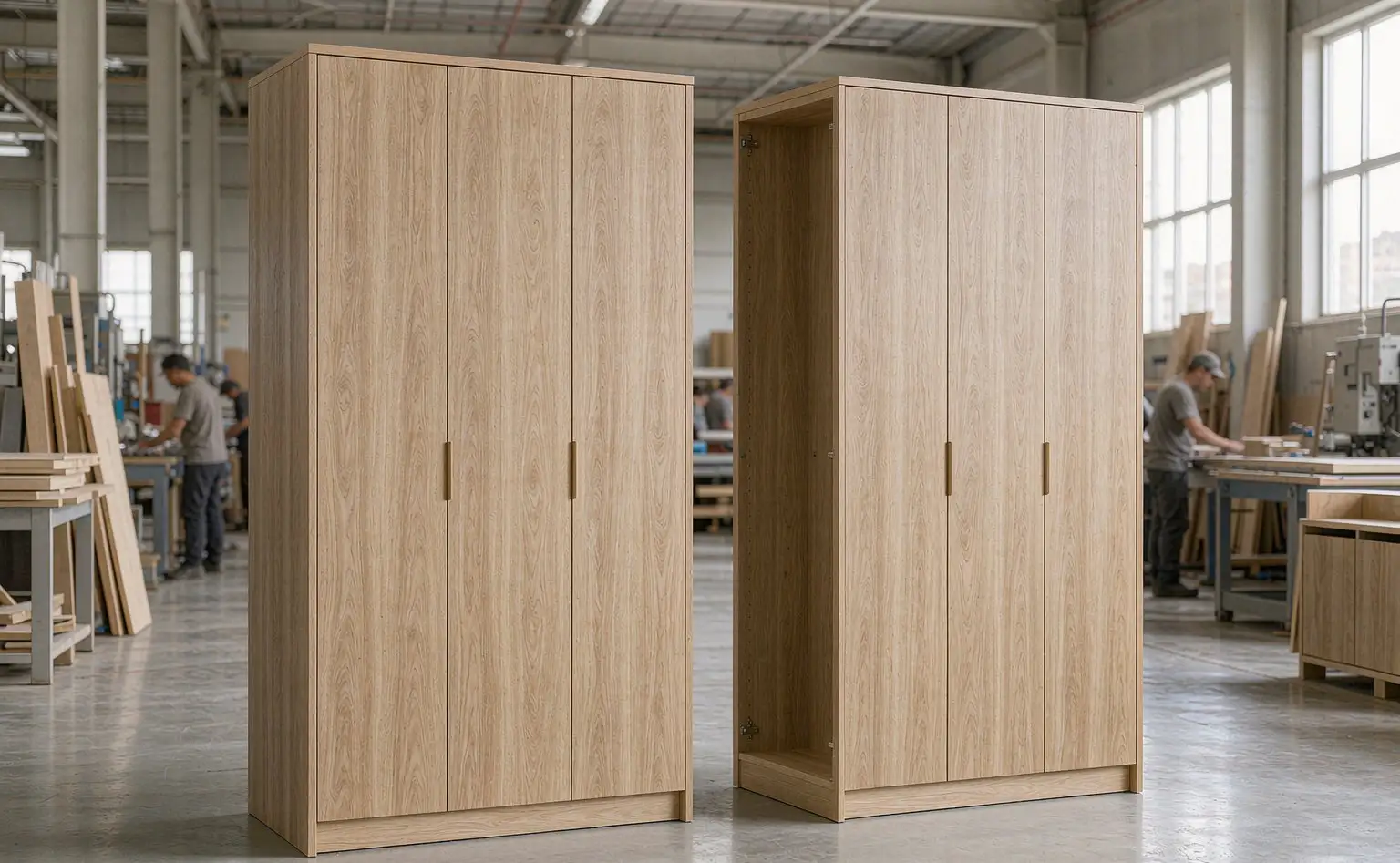
1. Where wardrobe mould comes from: the back panel, thin board, glue lines
A flat-pack wardrobe is carcass boards plus a back panel, with doors, shelves and fittings, cut, edged, drilled, assembled and packed before it is stored and shipped.
The back panel comes first. Usually 3-5 mm thin MDF, large in area and small in thickness; fitted, one face is against the wall and the other inside the cabinet, so neither gets air, and when the wall goes damp the back absorbs first.
The board itself comes second. MDF and particleboard leave the press with moisture in them, and the fibre is food for mould; edging closes four sides while the faces and holes stay open.
Glue lines and edge joints come third. The adhesive behind a face and along a band contains starch or protein; once water enters a joint, the glue line grows mould and the spot works inwards.
Of the three, the back panel decides whether the cabinet fails: a perfect carcass behind a mouldy back still reads as a mouldy wardrobe.
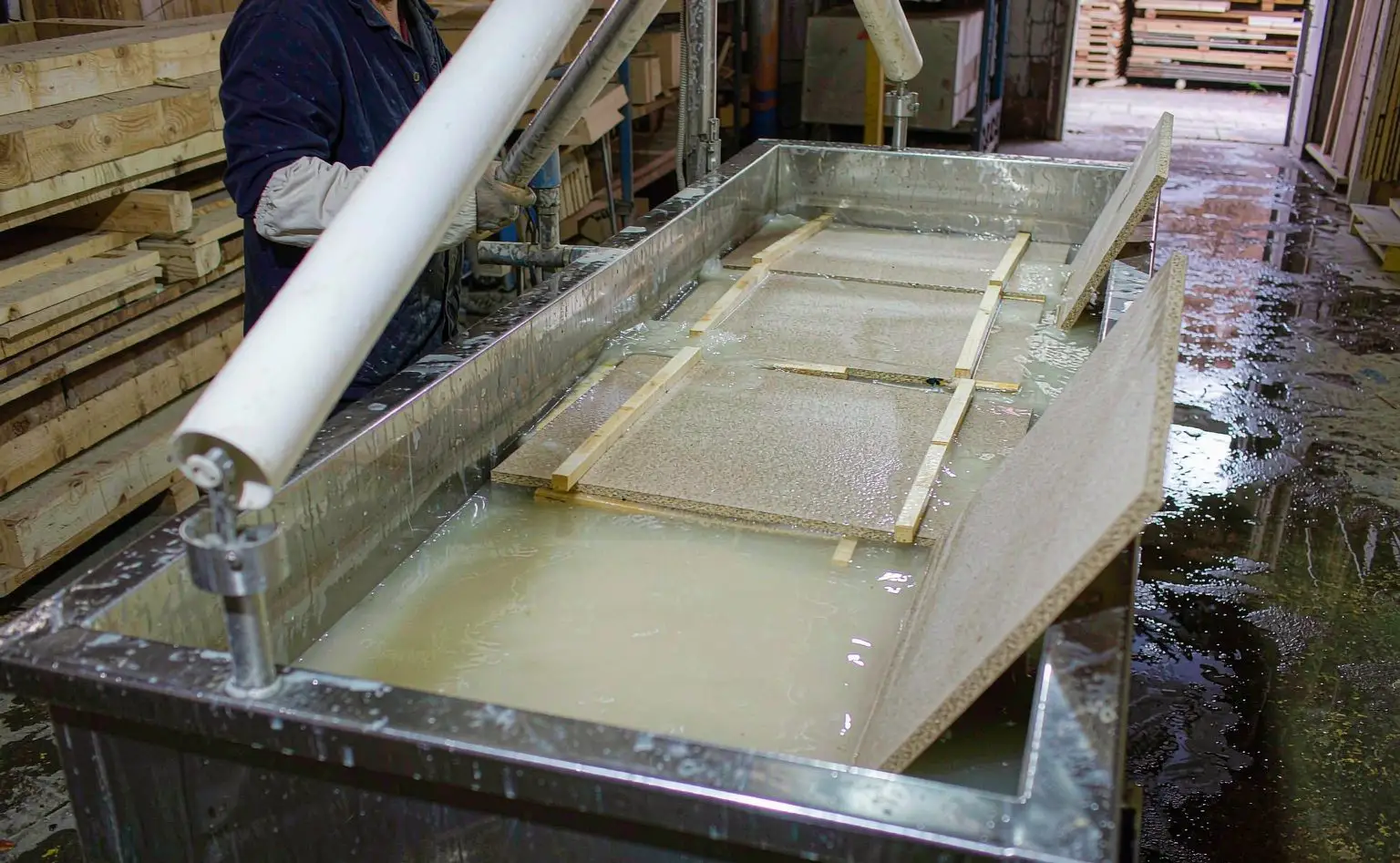
2. How to soak the carcass through: 1:40, 15%-20% pickup, five to ten minutes
A half-soaked board is untreated, so judge this step by pickup, not the clock.
The bath ratio. Use iHeir-M5 immersion fungicide at 1:40, 5 kg of agent to 100 kg of water, in a plastic or fibreglass tank; the product is acidic and should not sit against metal.
Soak to a 15%-20% pickup. The board goes fully under, until it has taken up 15%-20%, about five to ten minutes. Weigh three boards dry, soak, drain two minutes and weigh again, and only run the batch once the figure is in the window; thin board may take two or three minutes and thick board longer.
Drain before drying. Stand the boards until nothing drips, then dry; stacked wet, liquid sits between them and the middle never dries.
Look after the bath. Check level and strength once a shift and top up in ratio; when it turns cloudy or throws sediment, change it. M5 is acidic, so spent bath goes through the plant waste route.
3. How to dry the back panel before facing: moisture content is the hard limit
This step gets squeezed on a busy line and decides whether the back panel moulds.
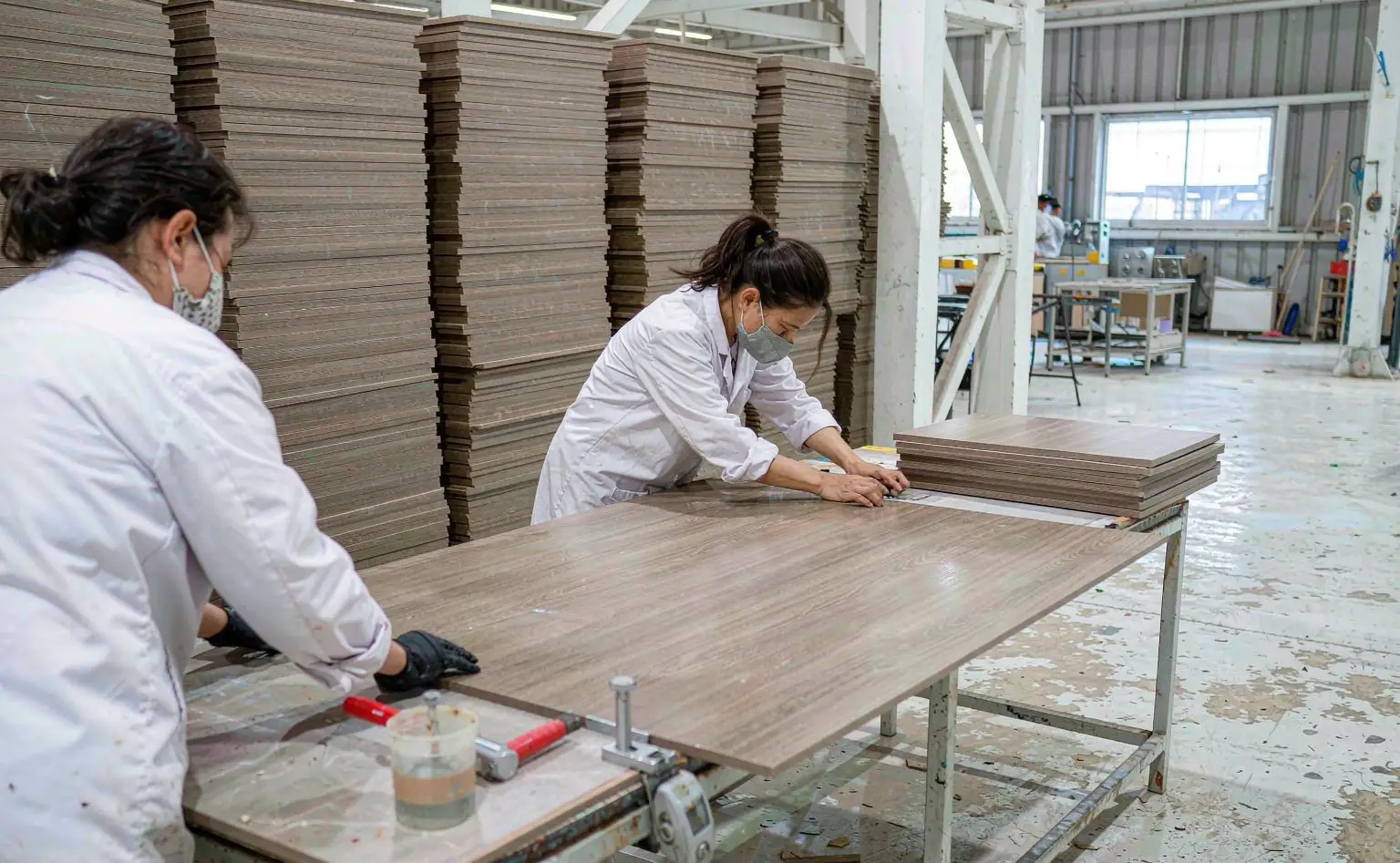
Dry before the face goes on. A dipped panel does not go straight into the press; dry it to the shop’s equilibrium, often 12%-14% in a southern rainy season, taken from the shop’s own readings. Meter each stack before facing and send the high ones back.
Run the oven to suit the thickness. Set the hot-air line for the board, on the low side for thin board; out of the line, stand the boards to cool 30 minutes rather than stacking them hot, then measure again.
Settle again after facing. Measure again before assembly, and leave the carcass 24 hours so the glue lines cure before it is bagged.
Edges and holes. Add fungicide to the edge glue and press the band tight; clear the drilled holes with a vacuum before packing.
| Part / stage | Material | Product and level | Stage | Control point |
|---|---|---|---|---|
| Carcass and shelves | Particleboard / MDF | iHeir-M5 at 1:40 | Dip | 15%-20% pickup, about 5-10 minutes |
| Back panel | Thin MDF | Same bath, then dried | Dip and dry | At shop equilibrium before facing |
| Edges and glue line | Adhesive, band | Fungicide in the edge glue | Edging | No lifting, no gap at the joint |
| Inside the cabinet | Finished carcass | iHeir-D 1-2 sheets (0.1-0.2 g each) | Packing | Upper top or side panel |
| Container | 20 ft / 40 ft | Barrier film and pallets, desiccant in the box | Loading | On the door, off the cargo |
One boundary. The bath covers the board, the oven the moisture, the sheet the air in the packing.
4. Packing and storage: a sheet inside, flat, never stood against a wall
Packed units then sit in the warehouse, where good board work can be wasted in a month.
A sheet inside. Put 1-2 iHeir-D sheets at 0.1-0.2 g each on the upper top or side panel; in a flat-pack carton, on the upper inner wall at the back-panel end.
Lining. Line the carton with barrier film and protect the corners; put foam between panels rather than board on board, which rubs holes in transit.
How to store it. Keep units flat on pallets, not stood against a wall for a fortnight, because that face is the back panel. Stack to the carton strength, with gaps and 20 cm off the wall.
Warehouse humidity. Hold the store below 60% RH and run a dehumidifier in the rainy season; check humidity inside the packing at outbound sampling.
5. What to check at inspection: the back of the panel, the meter, the edge
Three checks at inspection stop most of the complaints that follow.
The back of the back panel. Turn the panel over to the light: grey-green speckling, and water marks crept in from the edge joint. The face is covered by the decorative layer, so the back tells you more.
The meter. A pin-type meter on the face and end grain of the back and carcass boards, three points each; end grain usually reads 1-2 points higher, so it is a problem only when both are high.
The edge. A fingernail along the band joint: if it goes into a gap, the band is not pressed and moisture follows. Check the ends and the inside corner.
None of it needs a laboratory, and all of it takes ten minutes; written into the purchase checklist it is worth more than a claim.
6. Questions buyers ask
Q: Does the fungicide bath hurt the bond of the decorative face?
A: At 1:40, a 15%-20% pickup and drying to equilibrium, normally not; failures come from pressing a wet board, so the glue line has water in it.
Q: Can we treat only the back panel and skip the carcass?
A: Not advised. Shelves, sides and the bottom are all exposed inside the cabinet.
Q: Does a sheet inside the cabinet affect the hardware?
A: Vapour-phase paper can corrode poor-quality metal in damp, so check the finish on hinges and runners; on thin or bare carbon steel, bag-test at three times the dose.
Q: Is there anything seasonal about building cabinets in the southern rainy season?
A: Two things: lengthen the drying to suit the shop humidity, and run the dehumidifier with a check inside the packing. What passes in a dry month does not always pass in June.
Dip the carcass in iHeir-M5 at 1:40 to a 15%-20% pickup, about five to ten minutes, and drain before drying; dry the back panel to shop equilibrium before facing and measure again after; press the bands tight with fungicide in the glue and clear the drilled holes. Put 1-2 iHeir-D sheets at 0.1-0.2 g each on the top or side panel, line the carton with barrier film, store flat and off the wall below 60% RH, and inspect the back of the panel, the meter and the edge joint. Mould resistance can be verified to ASTM G21 and GB/T 1741, and the bath details are on the iHeir-M5 product page.


