




 View Count:16
 Date:2026-09-14
Engineering plastic parts are valuable – and delicate. A small-appliance panel, a PMMA light-guide plate, a PC transparent cover: buyers inspect them for the antimicrobial report and for zero visual defects at the same time. Yellowing, rising haze, rainbow streaks – any one of them is grounds for rejection. That raises the bar for antimicrobial selection: adding an agent is easy; adding one without yellowing, haze or blooming is the real skill. This guide walks through transparent and light-colored PC, PMMA, ABS and AS/PS parts in order: pain points, temperature, chemistry, optics, audits and testing.
1. Three Pain Points in Transparent and Light-Colored Parts
The same antimicrobial that behaves perfectly in a black PP crate can fail badly in a transparent PC panel, for three reasons. First, color shift: silver ions migrate within the polymer, and at high loadings or high processing temperatures, clear parts turn gray and light parts turn yellow – fatal for appliance panels delivered against a color chip. Second, haze: if inorganic antimicrobial particles are too coarse or poorly dispersed, they turn a uniform transparent medium into a scattering one; transmittance drops, haze rises, and PMMA optical parts look milky. Third, blooming: poorly compatible additives migrate to the surface as a white film, very visible on high-gloss finishes and quick to collect dust. The common fix across all three: choose a grade designed for transparent systems, control particle size and dosage, and verify by molding trials. For the appliance-side context, see our article on antibacterial agents in home appliances.
2. Temperature First: Processing Windows and Heat Limits
Engineering resins run hotter than commodity plastics, so step one is a heat check: PC injection molding at 260-300 degrees C (some grades to 320), PMMA at 220-260, ABS at 200-240, AS/PS at 200-260. This single criterion eliminates most organic antimicrobials – many organics begin decomposing below 260 degrees C and yellow inside a 280-degree PC barrel before the part even ejects. For PC and transparent systems, inorganic chemistry is the default: silver- and zinc-based inorganic agents are stable above 500 degrees C with generous margin.
PC has one more trap of its own: trace moisture at high temperature triggers hydrolysis, dropping molecular weight and making parts brittle and yellow. Dry PC at 120 degrees C for at least 4 hours before molding. This has nothing to do with the antimicrobial, yet yellowing investigations routinely blame the additive first – check drying, then the formula. ABS, containing a butadiene phase, is inherently sensitive to thermo-oxidation, so design the antimicrobial together with an antioxidant package (a primary antioxidant such as Irganox 1010 at 0.1-0.2%) to suppress yellowing from both directions.
3. Silver vs Zinc in Transparent Systems: Field Performance
In transparent systems the two inorganic workhorses behave differently enough to matter. Silver ion is the efficiency champion: low minimum inhibitory concentrations against E. coli and Staphylococcus aureus, the best antibacterial-rate numbers at equal dosage. But high-temperature ionic migration is exactly what drives yellowing – push past roughly 1% in clear PC or PMMA and a perceptible gray cast appears. Zinc ion is milder but nearly colorless and thermally robust; its visual interference in transparent systems is close to zero. Its weakness is that alone it cannot reach top antibacterial rates, and mold suppression at normal dosages runs light.
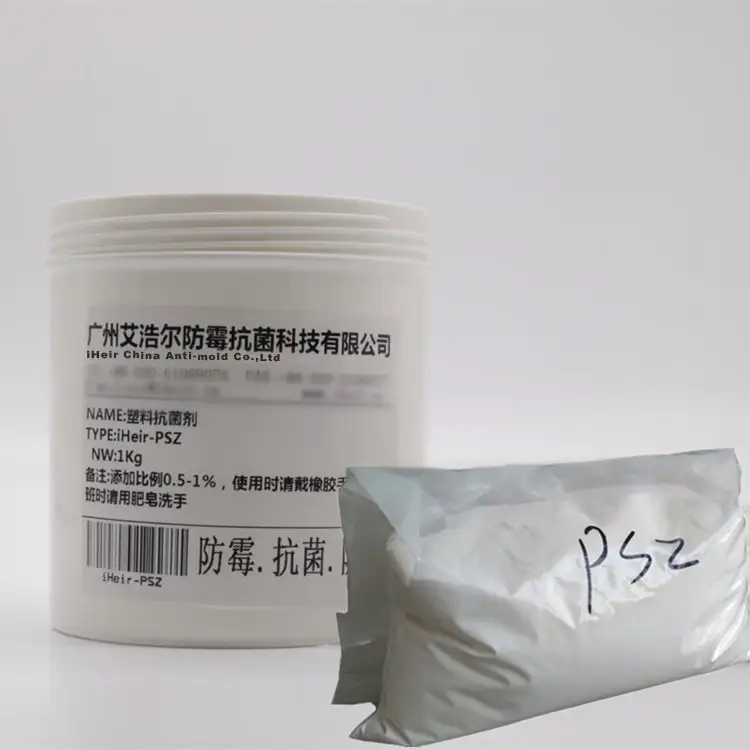
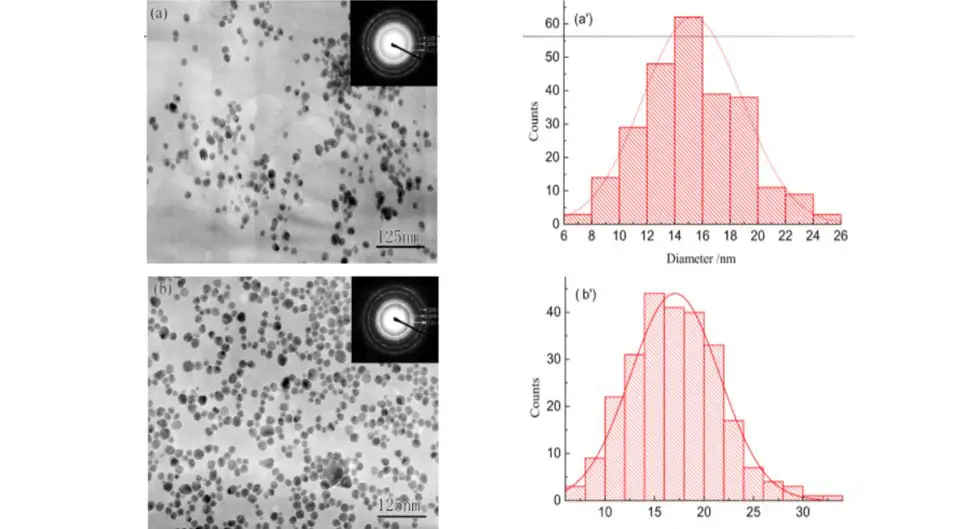
Hence the engineering answer for transparent parts: silver-zinc combination – zinc as the color-stable, long-lived base, silver in small proportion for efficacy, total loading held at 0.4-0.8%. Particle size is the second hidden variable: transparent systems demand sub-micron antimicrobial powder (mean particle size below 1 micron) plus a high-shear compounding pass for secondary dispersion, which is what keeps haze in check. iHeir-IPL inorganic plastic antimicrobial was designed specifically for light and transparent resins, while iHeir-PSZ104 inorganic plastic antimicrobial takes the silver-zinc hybrid route; both carry application data on PC panels and PMMA light-guide parts, so the choice comes down to your color-difference tolerance.
4. Balancing Dosage Against Optical Performance
A transparent formulation is a seesaw between antibacterial rate and optical metrics. Practical balance points from the industry: for standard transparent housings (PC panels, AS covers), dose 0.4-0.8% and hold transmittance loss under 2% and haze gain under 1.5%, confirmed by trial. For optical-grade PMMA (light guides, lenses), be conservative: cap at 0.5% and run full optical verification. For light opaque parts (ABS appliance housings, ivory panels), the budget is generous – 0.8-1.2% with color difference accepted at delta E of 1 or less.
For processing, use the concentrate-then-let-down approach: first compound the antimicrobial into a high-loading dedicated masterbatch (20-30%), then meter it precisely to the target ratio. Dispersion uniformity beats sprinkling powder into the resin by a wide margin. During trials, measure three things alongside antibacterial data: transmittance and haze per ASTM D1003, yellowness index (delta YI, change of 2 or less accepted), and appearance stability after 168 hours of damp-heat aging at 65 degrees C and 90% relative humidity – much yellowing does not show up at the press; it appears after humid aging.
5. Antibacterial Requirements and Factory Audits for Electronics Housings
Remote controls, switch panels, appliance door handles and kitchen-machine housings are the most-touched surfaces in a household and the main stage for branded “antibacterial appliance” lines. Procurement teams typically ask for three documents up front: an ISO 22196 antibacterial-rate report (negotiations start at 99%+), a durability statement (most brands expect a 5-10 year claim, grounded in the non-migrating, non-depleting nature of inorganic actives), and RoHS/REACH compliance declarations. Auditors focus on two items: change control – is the antimicrobial recipe inside the engineering-change process, with retesting on every change; and batch retention – are retained samples traceable per lot. Get those two right and the audit rarely stalls.
Component priorities differ. External high-touch parts (handles, knobs, panels) live on antibacterial-rate data; internal structural parts carry weak antibacterial demand and need not absorb the cost. For adjacent scenarios, see why headphones get moldy – electronics anti-mold packaging for storage and shipping mold, and toilet and bathroom antimicrobial solutions for long-term efficacy in humid environments.
6. Testing and Acceptance + FAQ
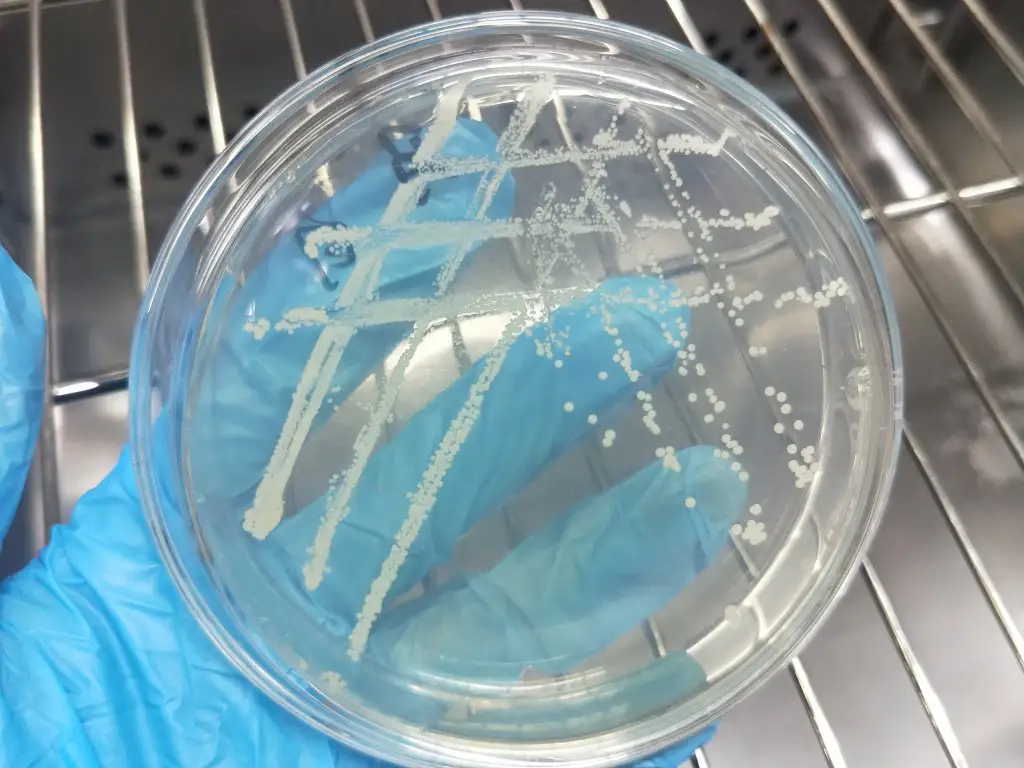
Acceptance for transparent engineering parts runs on two parallel tracks. The antimicrobial track: quantitative ISO 22196 (report states organisms, 24-hour incubation, rate values), plus the 28-day GB/T 2423 mold test graded 0-1 for anti-mold claims. The optical track: transmittance and haze per ASTM D1003, yellowness index per GB/T 15596 or ASTM D1925, and appearance grading after damp-heat aging. Both tracks must come from the same formulation batch – sending separate samples that cannot be reconciled will cost you credibility with the buyer.
FAQ
Q1: Will an antimicrobial additive cause stress cracking in PC?
A: Inorganic agents do not themselves trigger stress cracking; residual internal stress plus media contact is the cause. Control drying and mold temperature, anneal parts, and standard 0.4-0.8% dosing carries no added risk.
Q2: Can a dosed transparent part still pass RoHS/REACH?
A: Yes. Inorganic silver-zinc agents are not on the RoHS restricted list; attach the supplier’s composition declaration and third-party screening. For EU exports, add an REACH SVHC screen for extra safety.
Q3: Can slightly yellowed transparent parts be saved?
A: Formed yellowing is essentially irreversible and batch rework is unrealistic. Cut losses: audit the drying process and barrel residence time, switch to a transparent-specific grade, and re-verify by trial before resuming production.
Q4: Is there a minimum order for trials?
A: Antimicrobial powder samples start at 1 kg; masterbatch trials are best at 25 kg or more to reflect true dispersion. We support the full trial-and-testing cycle.
Antimicrobial protection for transparent and light-colored parts is antimicrobial engineering inside a visual tolerance: temperature screens the chemistry, silver-zinc combination controls color shift, sub-micron powder controls haze, and two-track testing closes the loop. For dosage recipes and optical comparison data on PC, PMMA and ABS, contact us – we will build a trial plan around your parts and brand requirements.