




 View Count:24
 Date:2026-11-06
How should waist bag mould be treated? The outer shell is usually water-repellent nylon that sheds a drop, but the lining is plain polyester or oxford cloth with no repellence, so sweat vapour and carton moisture travel inward and the mould starts there. The routine is 2%-3% o.w.f. iHeir-BJ textile mildew inhibitor for lining and webbing in one finishing bath, and iHeir-D vapour sheets at 0.1-0.2g of active matter in place of the carton partitions. This article covers the bath, the wet pickup and the packing.
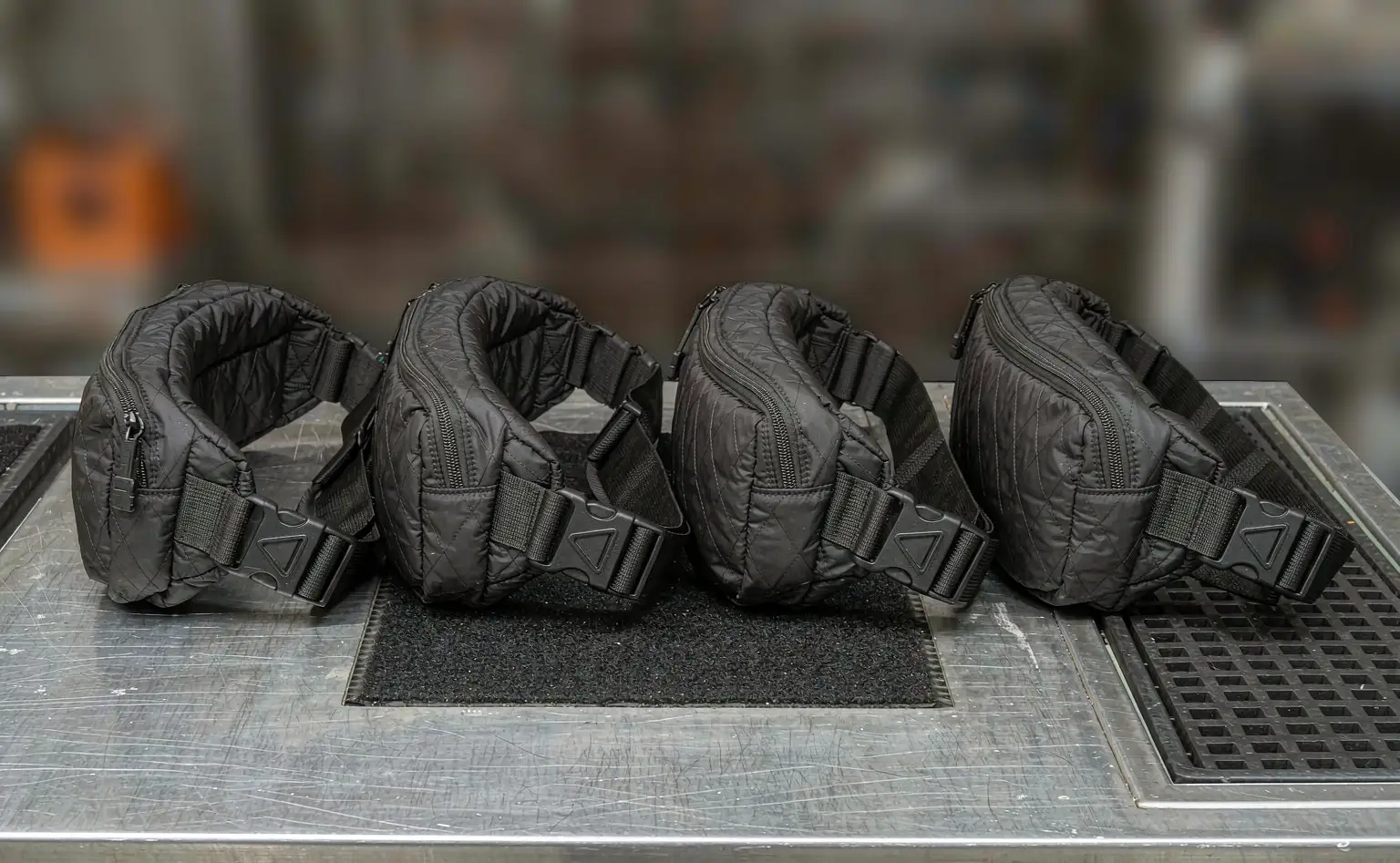
1. The mould starts in the lining, and the shell cannot stop it
Take a waist bag apart: nylon or polyester shell, water-repellent finish, lining, binding tape, webbing and buckle, zip and zip tape, foam padding, printed hangtag and colour card, carton and dividers. Plastic buckles and metal pulls do not mould; the exposure is the lining, binding and webbing, then the cards, dividers and carton.
The lining is where vapour ends up. A repellent shell keeps water out and also keeps it in, so sweat from the wearer passes through seams and the zip and is held by the lining, which sits against the colour card and the foam with the least airflow in the bag. That is where the spot starts.
The zip tape is the second way in. Zip tape is woven from polyester filament, the join between teeth and tape has gaps, and water enters along the teeth; the fuzz raised where the slider rubs takes water even faster. Inspectors walk straight past this area.
The cards and carton are the third source. Hangtags, colour cards and inner cards are coated or white board that takes water quickly, and carton dividers are corrugated board reaching 12% equilibrium moisture in a wet season, sitting against the bag and passing moisture into the lining.
2. Fabric and packaging take separate units
The table lines up the shell, the lining, the webbing and the carton dividers. Fabric is dosed on weight of goods, paper on active matter per sheet, and the two are not convertible.
| Part | Material | Product and level | Stage | Control point |
|---|---|---|---|---|
| Lining, binding tape | Polyester, oxford | iHeir-BJ 2%-3% o.w.f. | Finishing bath | 21-50℃, pH 4.5-8.5 |
| Webbing, zip tape | Polyester filament | iHeir-BJ 2%-3% o.w.f. | Same bath as the lining | Wet pickup held at 70% |
| Carton dividers | Corrugated, white board | iHeir-D 0.1-0.2g per sheet | Packing | Paper against a pale lining |
| Hangtag, colour card | Coated board | iHeir-D one sheet beside them | Packing | Only works in a closed box |
One boundary. iHeir-BJ in the fabric protects the lining and webbing, the vapour sheet in the carton protects the space around the bags. Fabric only leaves the dividers and carton to mould, paper only leaves the spots inside the lining. Both stages, and the carton opens clean.
3. Lining and webbing in one bath
Lining and webbing take iHeir-BJ textile mildew inhibitor at 2%-3% o.w.f. on weight of goods. Choose by protection period: 2% gives roughly a year and more, 3% reaches two to three years, so fast domestic turnover runs at 2% and an export lot that sits in a container runs at 3%.
Bath conditions. Hold the bath at 21-50℃ and pH 4.5-8.5, ideally 6, with softened water, because calcium and magnesium in hard water react with the agent and waste active matter. Hold wet pickup at 70%: a 5% drift in pickup is a 5% drift in dose, so mangle pressure and line speed have to be steady.
How to add it. Dilute with 9-13 times its volume of water first and add slowly to the bath rather than pouring concentrate in. Linings are usually softened for handle, and softeners are often anionic and cancel the agent, so confirm the ionic type before finishing and give the anionic ones their own bath.
Count lining and shell separately. A lining is thin and carries less liquor than a heavy shell, so count each on its own weight when they share a bath; run both in one bath and the pickup averages out, which leaves the heavy fabric under-dosed.
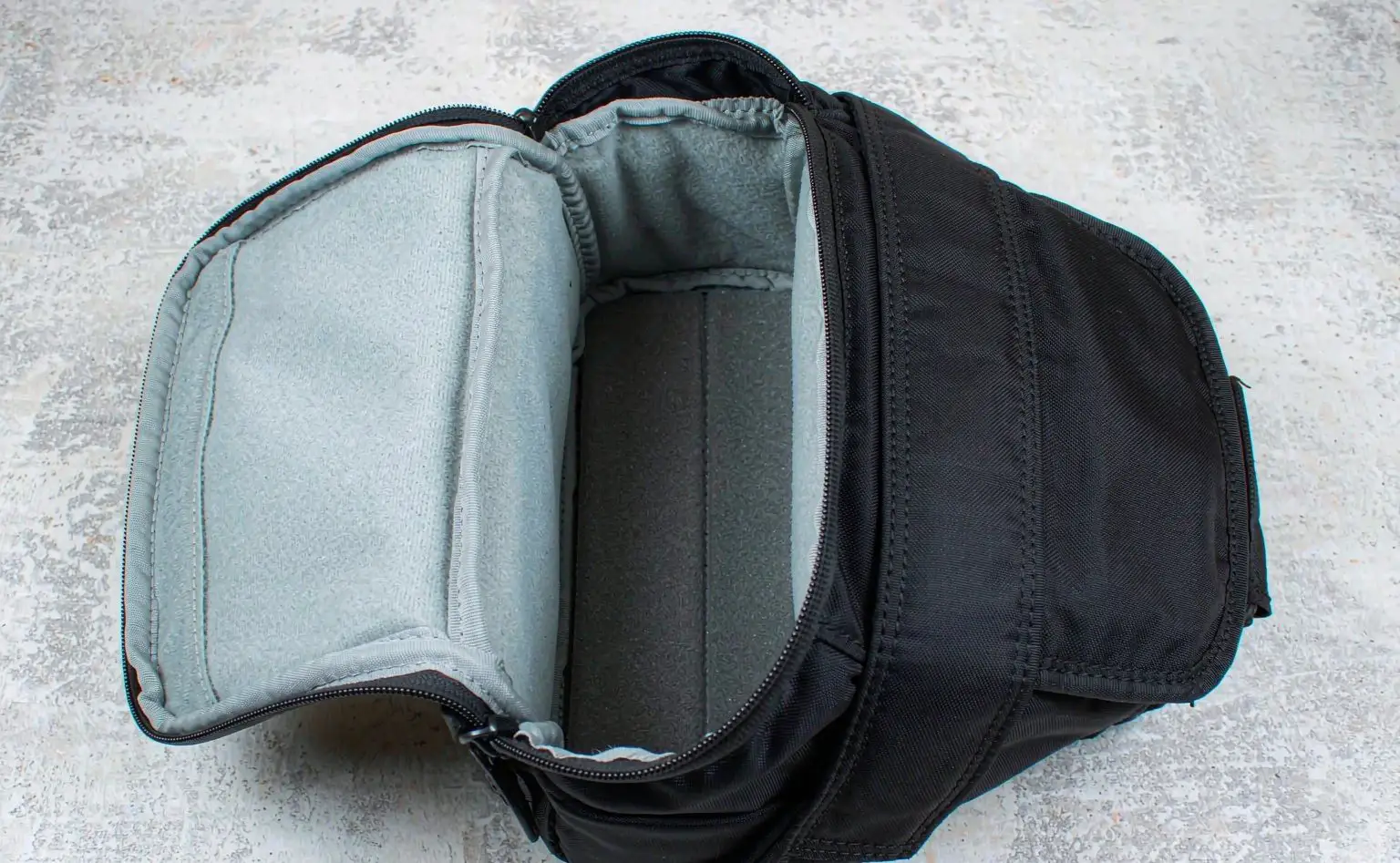
4. Zip tape, seams and the foam pad
Zip tape and sewing thread are the easiest items to miss in the whole process. The tape is densely woven polyester filament, yet water still enters along the teeth; the thread runs back and forth through the binding and the lining seam and dries slowly once damp.
Zips. Where a zip can be removed, run the tape through the same bath as the lining and dry it thoroughly before fitting. A finished zip that cannot be removed should not be wetted at all, and metal pulls oxidise in a damp box, so run the 3-times compatibility trial before storing them with vapour sheets.
Thread. Thread is a tiny share of the weight and goes through the bath with the fabric, so it needs no separate dose; but too much tension opens needle holes that let water through, and that is a process fix rather than an additive one.
The foam pad. The foam on the back panel is open-cell polyurethane, which holds water and dries very badly, so it is the reservoir inside the bag. Dry the foam before lamination and do not sew immediately after bonding; let the water in the adhesive film disperse first.
5. Swapping the dividers for vapour sheets
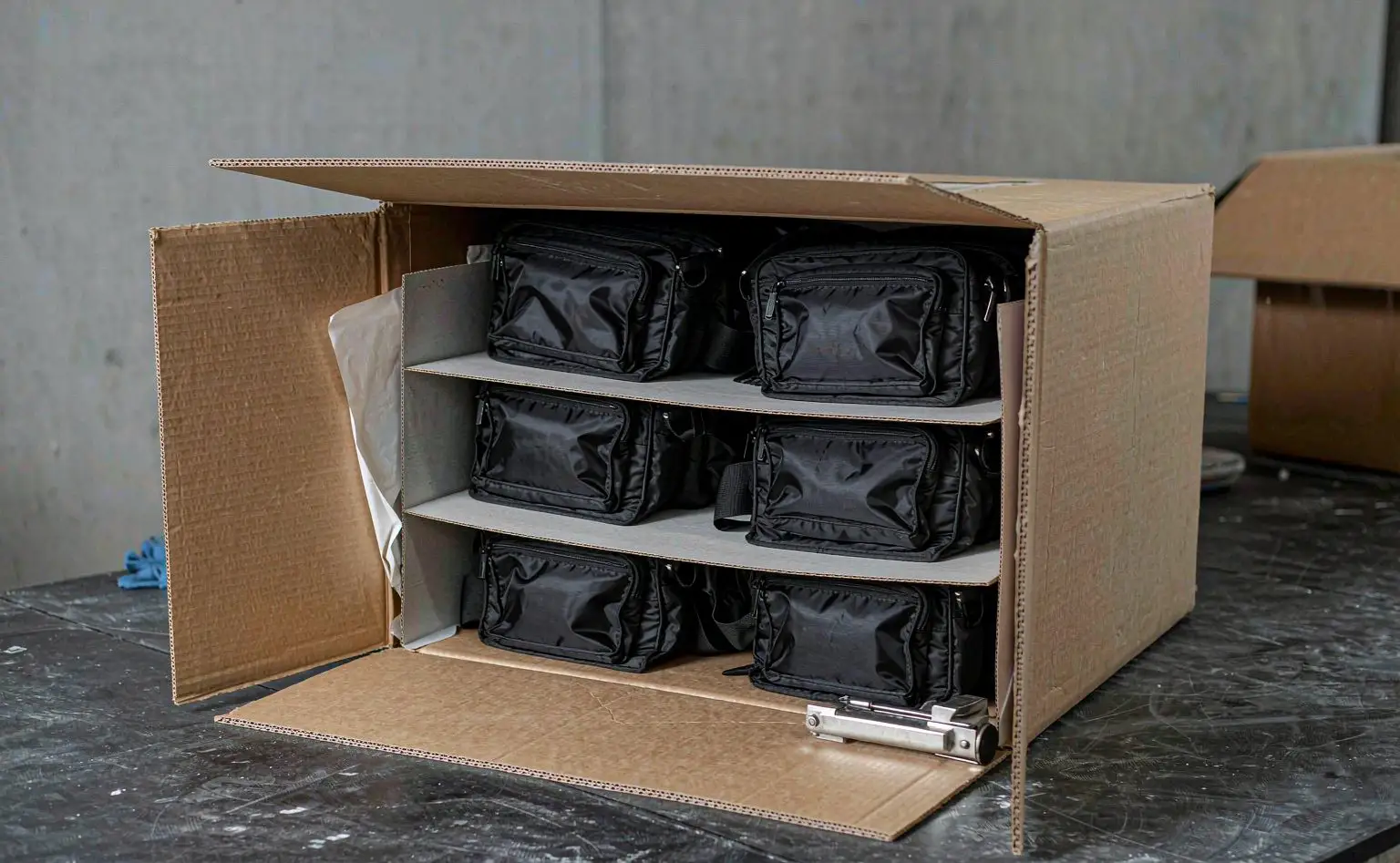
At packing, replace the divider with a paper that carries a vapour-phase agent, or slip an iHeir-D vapour sheet beside the existing divider, at 0.1-0.2g of active matter per sheet. It is an ink-coated paper that holds a concentration in a closed volume, so it works once the carton is sealed.
How many. A ten-piece carton takes one sheet per divider layer plus one on the carton wall, and the count goes up for a large carton, many layers or a long sea leg. On pale linings keep a thin paper between the vapour sheet and the fabric rather than laying it on the cloth.
Trial compatibility first. Seal three times the normal dose with a finished bag, mist a little water, separate with paper, and inspect after a few days for yellowing on a pale lining, dulled buckles or a hazed coating. iHeir-D carries 70%±5 solids and can corrode poor-quality metal when damp, so bags with metal pulls go first.
Bags and cartons. Use micro-perforated bags and never vacuum them, because moisture that cannot leave the bag beats any sheet. Pallets 10cm off floor and wall, store below 60% RH, and reseal a carton after a sampling check.
6. Questions on shell, zips and sheet counts
Q: The shell is already repellent nylon, so does the lining need treatment?
Yes. Repellence handles water from outside, while the lining faces sweat vapour and carton moisture; untreated, the mould starts inside, where nobody sees it until the bag is opened.
Q: Can the zip go through the bath with the lining?
A removable zip can, provided it is dried right through afterwards. A finished zip should not be wetted, and its metal parts would rust, so that case is handled by the vapour sheet at the packing stage.
Q: Ten bags in a carton, how many sheets?
One per divider layer plus one on the wall, so four for a ten-piece carton in three layers, going up for a large carton or a long sea leg.
Q: Will the finish yellow a pale bag?
At the recommended dose in a neutral bath at pH 6 the risk is low. Overdosing, a hot bath or hard water all push shade shift, so compare whiteness on a small sample first.
Four points to take away: run lining, binding and webbing through one finishing bath at 2%-3% o.w.f. of iHeir-BJ, bath at 21-50℃, pH 4.5-8.5, softened water, 9-13 fold dilution first, pickup at 70% and anionic softeners in their own bath; run removable zips with their tape and dry them through, and dry the foam before lamination; replace the carton dividers with vapour paper or slip an iHeir-D sheet beside them at 0.1-0.2g each, after a trial at three times the dose; grade to GB/T 24346-2009 and hold a full carton 30 days at 30℃/85% RH. A 1kg sample and a pack of sheets go out for a trial, with MOQ on the iHeir-BJ product page.


