




 View Count:6
 Date:2026-09-16
Mould in nonwoven rolls has a signature: the outside looks clean, the customer unwinds and finds patches two or three layers in, and the roll comes back. Wiping the surface fixes nothing, because the growth started in the core. Work out where the moisture came from first, then close both lines.
1. Find the source: three moisture routes into a roll
Workshop humidity comes first. If residual moisture has not been driven off before winding, and shop relative humidity sits above 65 percent for long stretches, the surface is already hospitable. The night shift and early morning hours bring the temperature down and condensation forms on equipment and roll surfaces, so rolls wound in that window are the ones that fail two weeks later.
Core heat is the one most often missed. Winding generates tension and friction heat, and the inner layers cool far more slowly than the outside. As the roll equalises to room temperature, moisture condenses between the layers and creates a sealed damp pocket, which is exactly why inner mould appears near the core.
Floor moisture closes the list. Damp floors, rolls standing directly on the ground or on pallets set too low, rolls stacked against a wall, and non-breathing stretch wrap together guarantee that the roll at the bottom of the stack goes first after two or three months, however good the finishing line was.
The investigation is straightforward: hang temperature and humidity loggers in both the workshop and the warehouse for a week, and take a probe moisture reading from the inner layers within 24 hours of winding. Match the data against the batch that failed and the source is usually obvious.
2. Grade the roll: rework or downgrade
Three tiers, judged on unwinding. Surface mould confined to the outermost few metres is handling contamination, cut the affected layers, clean and rework. Core mould in spots or patches concentric with the layers, visible two or three layers in, depends on depth and area: shallow it can be trimmed and reworked, through the body it is downgraded. Where a musty smell, tackiness or a clear loss of strength is present, downgrade or scrap, because the growth has entered the fibre and cleaning only changes appearance, not mechanical performance.
Do a hand tear test against a sound roll during grading. A roll that feels dead, tears short or smells sour should not go back on a converting line. For rework, spray the affected area with a mould remover, wipe stubborn spots with a soft cloth and let it air dry, then re-check moisture content. Wrapping a roll that is not fully dry simply seals the water back in.
3. The workshop line: where the finish goes in, and at what dose
The point of the workshop line is to get the active substance into the fibre as the web is formed, not after it becomes finished goods. Three routes cover most production setups.
| Route | Dosage | Suits | Watch out for |
|---|---|---|---|
| Padding | 20-40 g/L, pH 6-8 | Continuous nonwoven lines with controllable wet pickup | Set wet pickup and drying temperature together, drying can run up to 170 degrees |
| Exhaustion | 2-4 percent o.w.f., pH 6-8 | Whole rolls or goods through a bath, low equipment cost | Convert the bath concentration by liquor ratio and top up as it depletes |
| Spraying | Dilute 25-50 times, spray evenly | Retrofit on finished goods, surface rescue on rolls | Adjust for thickness and line speed, surface effect only |
iHeir-PG composite nonwoven antimicrobial agent runs all three routes: padding at 20 to 40 g/L with pH held between 6 and 8, whole roll exhaustion at 2 to 4 percent o.w.f., and spraying at a 25 to 50 fold dilution. It needs no heat setting to fix, simply drying, and drying can run up to 170 degrees, which suits lines without a stenter. Shake before use and keep the working area above 0 degrees. Where anti-mite performance matters as well, iHeir-BJ textile mildew inhibitor goes on by padding at 2 to 3 percent o.w.f., pH 4.5 to 8.5, soft water only, and never in the same bath as anionic auxiliaries. Driving inner layer moisture down before winding does more than adding extra chemistry.

4. The warehouse line: vapour phase protection and stacking
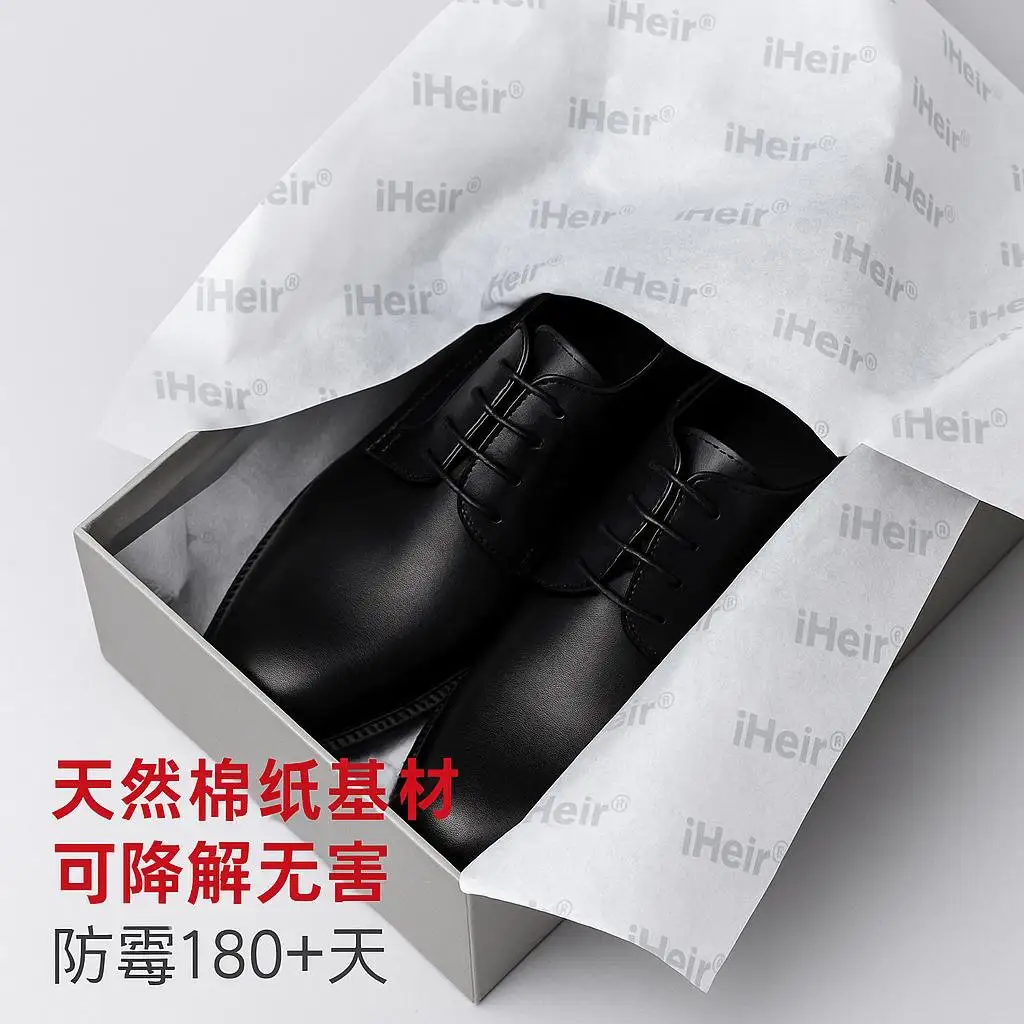
Finishing covers the fibre surface, but a damp core still fails, so storage is the second line. iHeir-D vapour phase antimicrobial agent is converted into anti-mould paper or sachets, each carrying 0.1 to 0.2 grams of active substance, and releases slowly inside a sealed pack so the roll core and dead corners are covered as well. Wrap the paper with the roll or place a sachet in the core, then seal the pack. Finished paper should be sealed promptly, since it loses effectiveness once it takes up moisture.
Stacking and dehumidification make up the other half. Rolls go on pallets with at least 10 cm floor clearance, stacks keep a 30 to 50 cm aisle from the wall, stack height is set by roll diameter so the bottom layers are neither crushed nor starved of air, and warehouse relative humidity is held between 55 and 65 percent, with dehumidifiers running through the wet season. Rolls without outer wrapping should not share stacks with cartons or timber pallets. Run first in first out, and open and inspect any batch held longer than 90 days.

5. A four week plan to close both lines
Do not spread the work out in one pass. In week one, trace the sources and grade existing stock into rework, downgrade and scrap, and place the humidity loggers. In week two, bring the in-line finish up on two pilot batches and record wet pickup and drying temperature. In week three, fix storage: pallets, stack positions, dehumidification and packaging. In week four, hold a retention sample and send a core specimen for an ASTM G21 assessment, then write the proven settings into the process card and the warehouse procedure once the data holds.
For a whole store or a full stack of retrofit treatment, work zone by zone, and judge afterwards by smell whether an odour adsorbing product and extra ventilation are needed. Storage humidity and stacking practice are covered further in our factory warehouse moisture control plan.
6. FAQ
Q: The surface of the roll looks clean, so why does the customer report mould inside?
The moisture source is in the core. Inner layers cool more slowly than the outer ones after winding, so water condenses between layers and creates a sealed damp pocket. Control inner layer moisture before winding and add vapour phase protection in the core.
Q: Can already mouldy rolls be trimmed and reused?
It depends on depth. Mould confined to the outermost metres can be cut away, cleaned and re-checked for moisture. Concentric patches through the layers can be trimmed if shallow, otherwise downgrade. A roll that smells musty, feels tacky or tears short should not return to a converting line.
Q: The finish already contains an antimicrobial, do we still need sachets in storage?
Yes. Finishing covers the fibre surface and cannot reach the core or the air space inside a pack, which is exactly what vapour phase protection is for. They are two separate lines and neither replaces the other.
Q: What relative humidity should the workshop hold?
Below 65 percent at the winding station and between 55 and 65 percent in storage. Run dehumidifiers through the wet season and avoid the low temperature window where condensation forms. Our notes on nonwoven goods going mouldy after warehousing cover the same troubleshooting approach, and a sample trial always precedes volume.
Send us the roll specification, line type and the mould pattern you are seeing and we will propose a process and storage plan before any volume commitment. Contact us.