




 View Count:13
 Date:2026-10-21
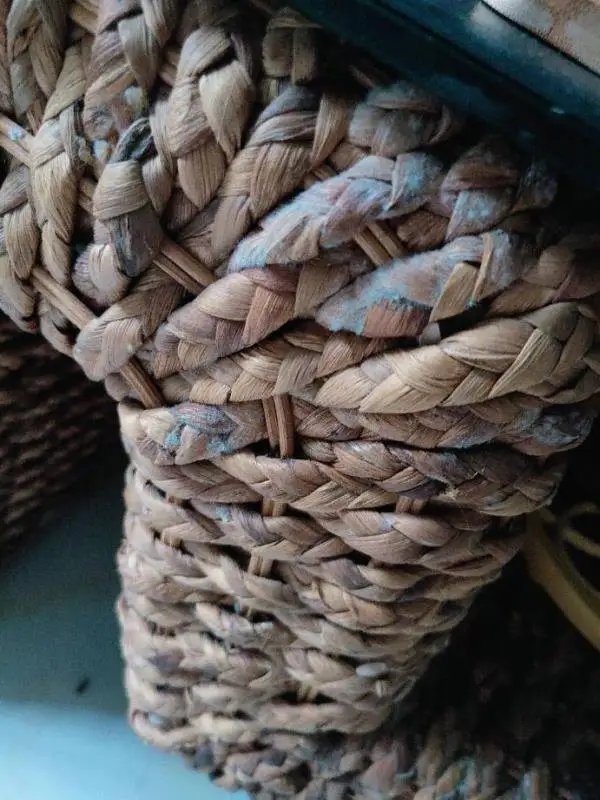
What is done with a mouldy wicker cat bed? First decide whether the material was under-treated or the storage went damp. The wall is thick and tightly woven, so a dip that is too short leaves the additive on the surface only, which is the material side; a treated lot stacked in a damp warehouse is the storage side. The bed goes through iHeir-M5 immersion type bamboo and wood fungicide at 1:40 for 5-10 minutes to a 15%-20% weight gain, and the pack carries paper made with iHeir-D gas phase antimicrobial and mould inhibitor at 0.1-0.2g per sheet. This article gives both dilutions, the criteria and the export packing routine.
1. Decide whether the bed was under-treated or stored damp
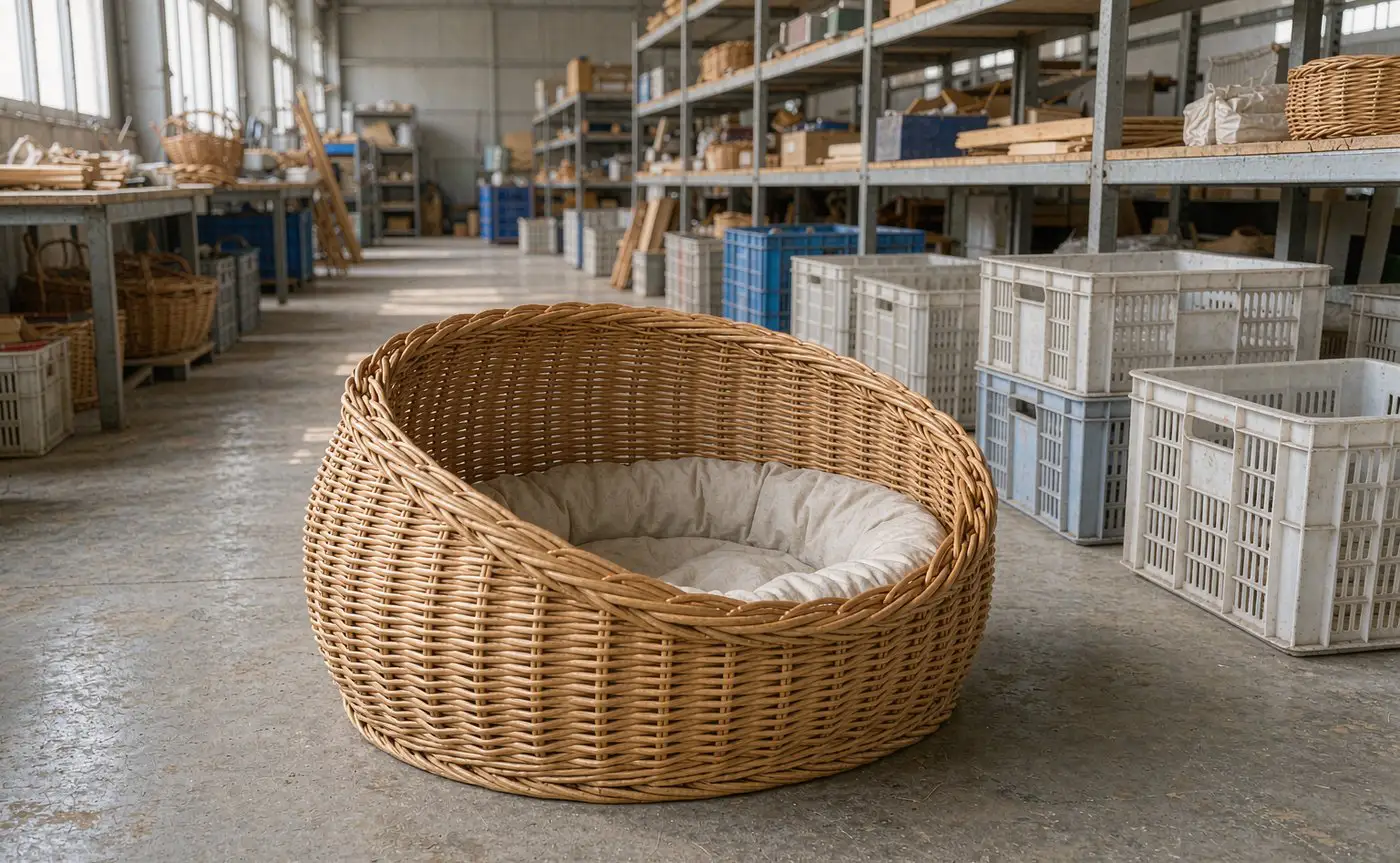
A cat bed is a hollow bowl, thick-walled and tightly woven, using far more material than a tray of the same opening: a dip is slow to penetrate and drying is slow, so packing early seals water in.
The storage side fails more often. The lot is made, inspected, then stacked waiting for a sailing date, and a wet season or container condensate puts moisture back into the wall from both faces. It does not necessarily feel wet, but the moisture content has climbed, mould grows inside the pack, and the customer opens the carton to a sheet of it.
The order of checking: the material, by cutting one bed to see whether the bath reached the core, then the store, by the humidity log and a damp liner.
2. Bed, packing and store: three stages compared
The table sets out the stage, the object, the means and level, the criterion and the caution on one sheet.
| Stage | Object | Means and level | Criterion | Points to watch |
|---|---|---|---|---|
| Bed treatment | Woven bed | iHeir-M5 at 1:40, dipped 5-10 minutes | 15%-20% weight gain, fully submerged | M5 is acidic: plastic tanks only, no alkaline mixing |
| Drying | Dipped bed | Stand to drain, air or sun dry | Wall dry through, no standing water | The base holds water, so stand it mouth down |
| Inside the carton | Carton and liner | iHeir-D paper at 0.1-0.2g per sheet | No musty note, no spots on the bed | Paper against the liner, not on the bed face |
| Store and shipment | Finished stack | Pallets up, gap to the wall, humidity held, absorbent in the container | No damp carton, stable moisture | Sample a carton before and after the wet season |
The first two rows are the material side and the last two the damp side; neither stands alone, because under-treatment defeats humidity control and high humidity exhausts the additive.
3. Bed dip: M5 at 1:40, 15%-20% weight gain, time set by the wall
iHeir-M5 immersion type bamboo and wood fungicide is a reddish-brown liquid for bamboo ware and for wood, cane, rattan, palm and grass articles against mould. Mix at 1:40 (5kg of M5 to 100kg of water), submerge the bed completely, and hold it until the weight gain reaches 15%-20%, roughly 5-10 minutes. Lift, drain, air or sun dry, then pack; packing is 25kg to the drum with a one-year shelf life.
How the time is controlled: go by weight gain, with 5-10 minutes as a reference band and three baseline beds; turn and vent the bowl, since it carries an air pocket into the tank; and keep tanks plastic, because M5 is acidic and must not meet metal or alkaline material. Dipping without weighing is how a lot ends up half treated.
A bed drinks far more than small parts, so mix by the drum and top up by shift rather than waiting for the concentration to fall.
4. Packing and store: D paper at 0.1-0.2g per sheet
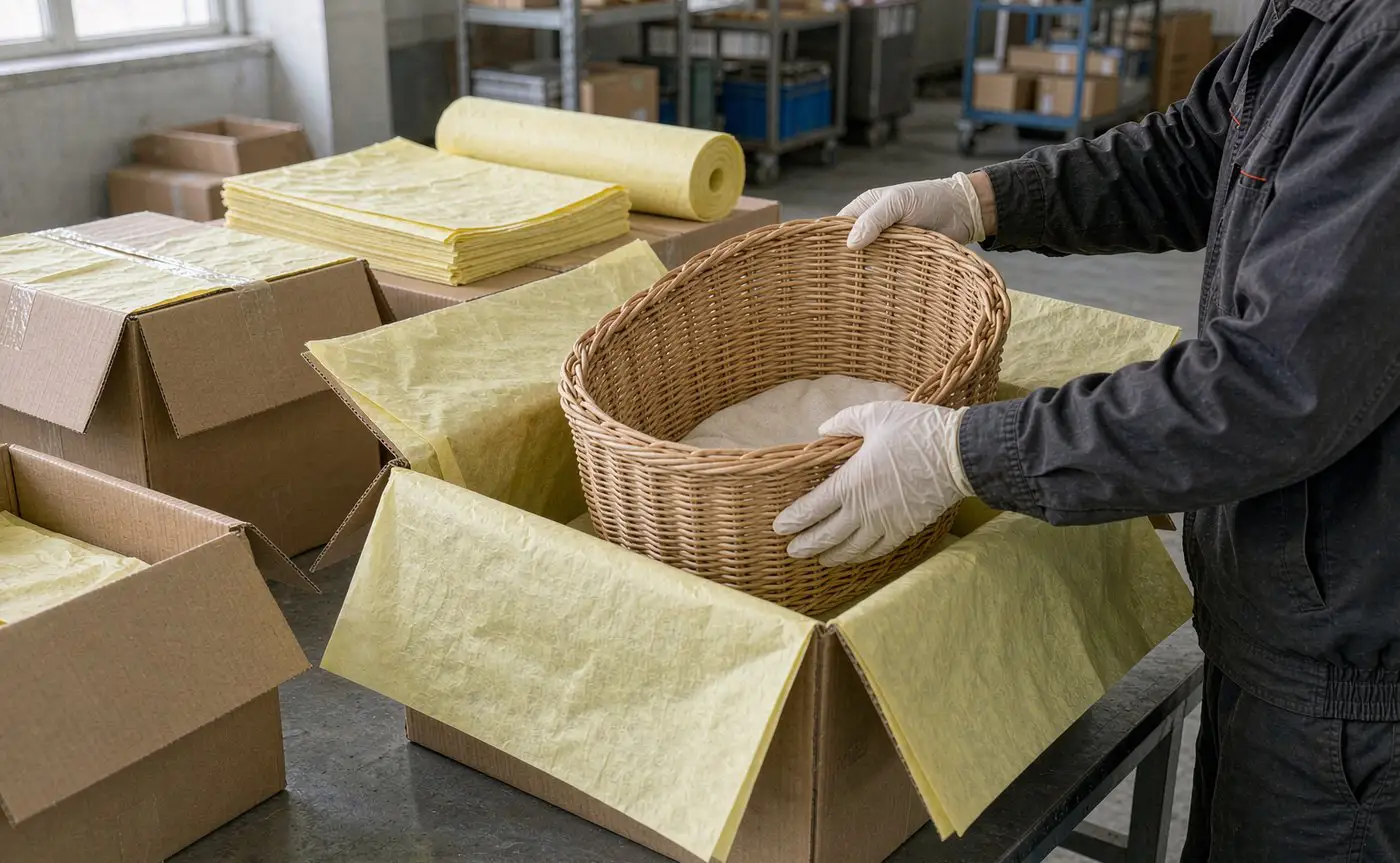
The damp side follows. Inside the carton, iHeir-D gas phase antimicrobial and mould inhibitor is a yellow liquid at 70%±5 solids made into paper, whose vapour reaches the wall and the dead corners; the level is 0.1-0.2g per sheet, set by carton volume and storage conditions.
Three rules: against the liner and around the bed, never pressed onto the face; one or two sheets, more for large beds and sea freight; and put in as the carton is packed.
D ships in 25kg drums, closed, dry and out of light with a one-year life, and the paper should be sealed into the pack quickly. Where metal clips are fitted, run a triple-dose trial for corrosion.
5. Drying, stacking and export: joining the two passes
Between the passes sits drying: stand the bed mouth down, and never stack a wet bed with dry ones. Sample the moisture by lot before the carton is closed.
Stacking follows the export routine: pallets up, a gap to the wall, absorbent material in the container, and two cartons opened for a smell check before loading. A cat bed is bulky and leaves a lot of void in the carton, so container condensate finds the seams easily, and the cartons in the bottom row are the first to show it.
For the customer: indoors, the additive holds mould back but not continuous damp, so paper in the pack and ordinary ventilation are part of the plan, and a line of storage advice on the carton keeps that visible after the goods leave the factory.
6. Questions: is storage control optional, and what if the bed distorts
Can storage control be skipped? No. In a humid warehouse the moisture content of the bed climbs, the active leaches away over a long wet period, and once the moisture goes past what the material tolerates the mould returns. The material pass handles the organism and the storage pass handles the water, which is why the figures in this article are quoted as a pair rather than as one number.
The bed distorts? Check the dip time, the bath strength and whether it lay flat while draining, and reshape while half dry with the mouth down.
Should the paper travel with the goods? It helps through transport and storage; where a customer wants all inserts out, follow that and mark the carton instead.
Closing figures: bed dipped in iHeir-M5 at 1:40 to a 15%-20% weight gain in 5-10 minutes, plastic tanks only and no contact with metal or alkaline material; drained mouth down, moisture sampled by lot and packing held until the wall is dry through; iHeir-D paper at 0.1-0.2g per sheet, one or two sheets per bed, with a triple-dose trial where metal clips are fitted; store pallets up with humidity held, and absorbent material in the container.


