




 View Count:7
 Date:2026-10-22
How do you rescue a mouldy red silk gift box? Start by deciding whether the silk or the lining went first: the two are handled in different places. The silk is a fabric, so its finish belongs in the stenter trough at the fabric mill, with iHeir-BJ textile mildew inhibitor at 2-3% o.w.f. The lining and the cavity work on a vapour phase, using iHeir-D anti-mould paper at 0.1-0.2g per sheet. This article sets out that division of labour and the order of work on failed boxes.
1. Silk or lining first: the two look different
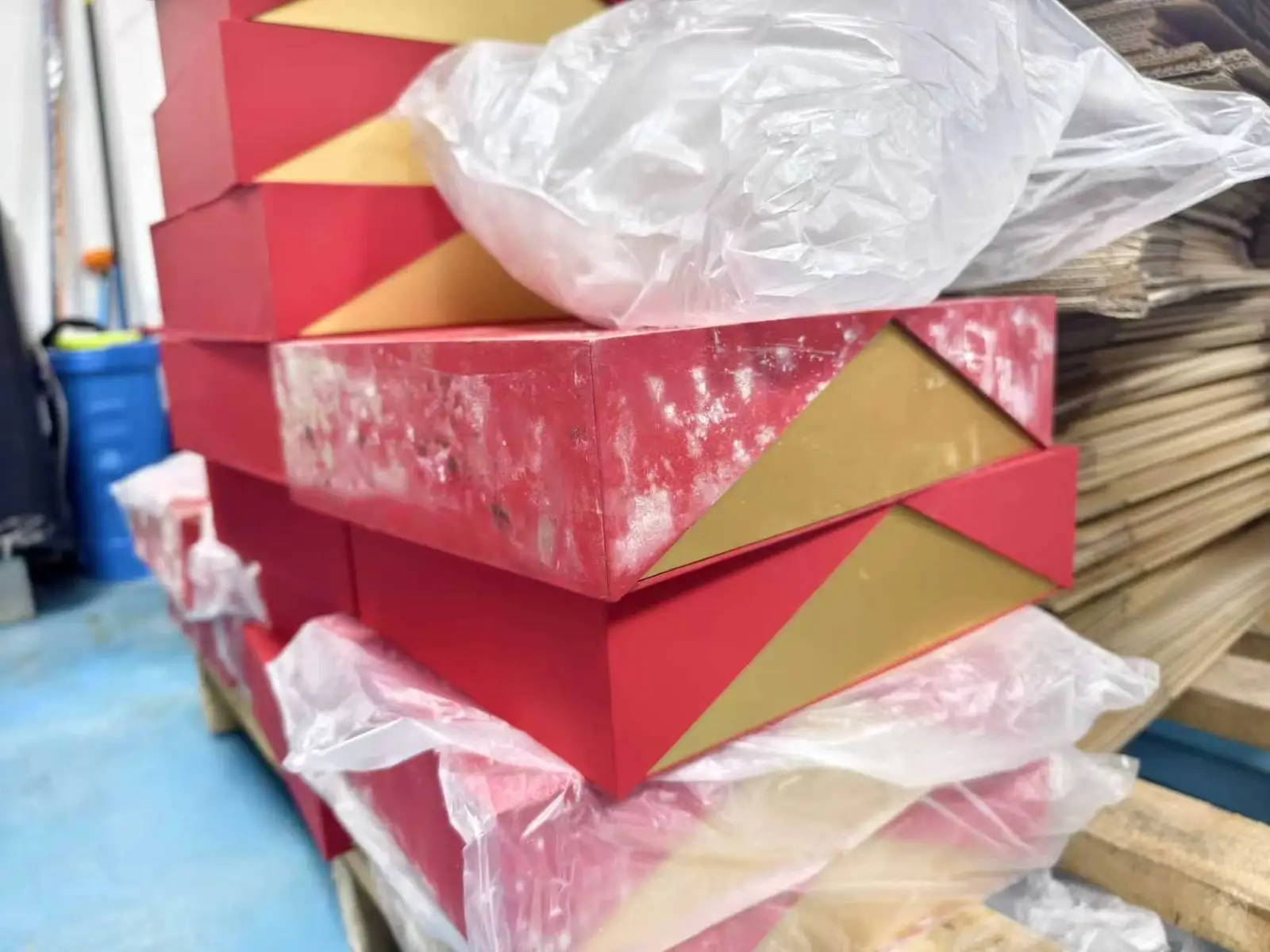
Mould on the silk shows as white patches that follow the weave, with a fuzzy feel and a darkened base colour; press a finger on it and the mould comes off on the skin. This mould was almost never created at the box factory. The silk arrives as finished fabric, the spores come with it, and nothing grows until the boxes are made up and sit in a damp warehouse in the rainy season.
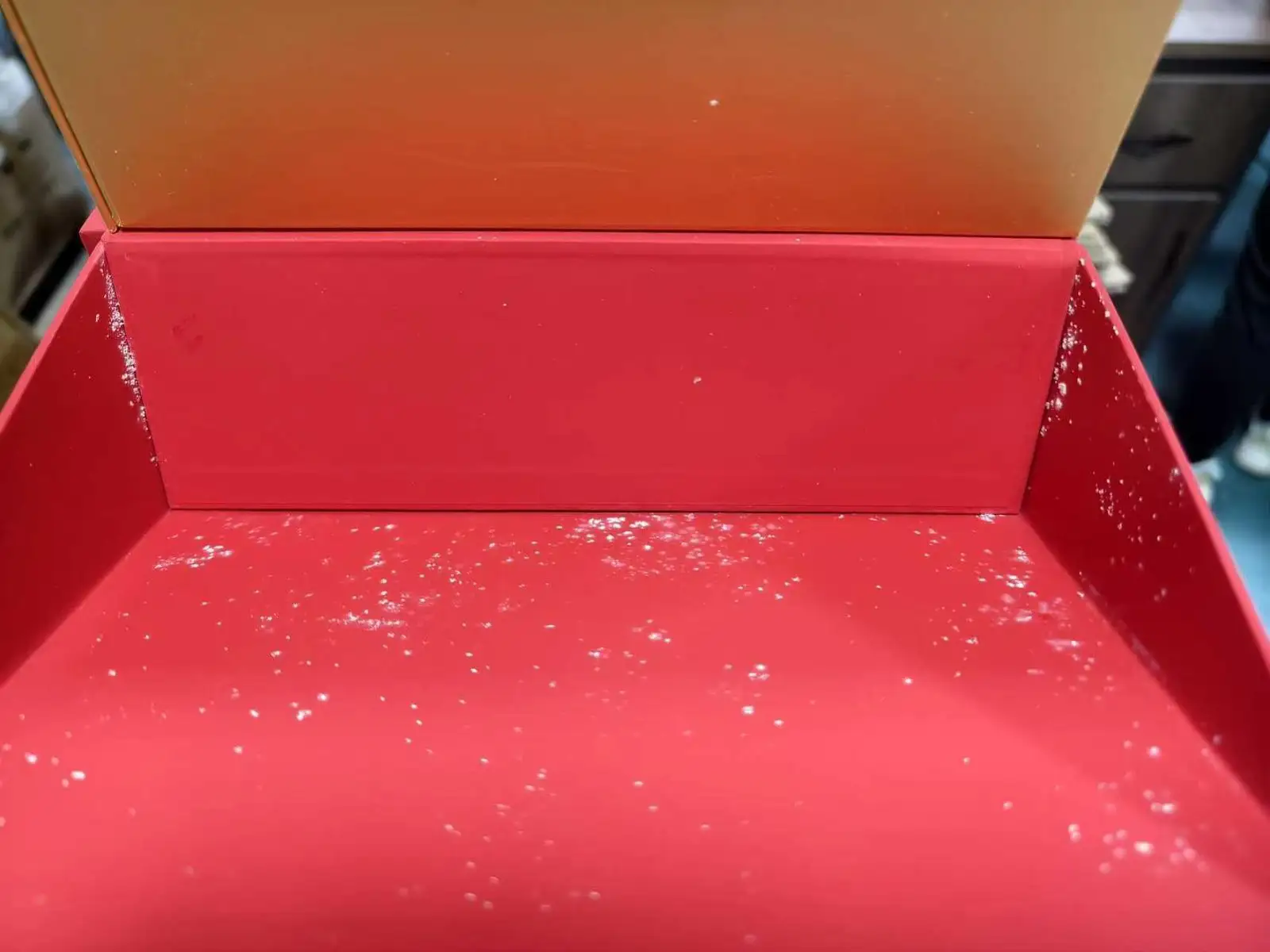
Mould in the lining clusters at the base and the four corners, densest on the back of the lining and near the glue line where lining meets board, and the cloth yellows when it is peeled back. That one belongs to the packing stage: the cavity is a closed space, both the lining and the greyboard take up moisture, water in the adhesive has not left, and once the box is closed it cannot escape.
2. Silk, lining and cavity: three stages side by side
The table sets out the three stages with the measure, the level, the check and who owns it. Purchasing can use it to place responsibility.
| Stage | Object | Measure and level | Check | Owner |
|---|---|---|---|---|
| Silk | Red silk fabric | iHeir-BJ at 2-3% o.w.f. in the stenter trough | 21-50C, pH 4.5-8.5, on dry fabric weight | Fabric mill or dyehouse |
| Incoming | Silk received | Finishing record and moisture content, plus a mould test on a sample | No spots, no musty note, moisture within spec | Box factory QA |
| Lining and cavity | Lining, greyboard, cavity | Anti-mould paper with iHeir-D at 0.1-0.2g per sheet | No musty note on opening, no spotting | Box factory packing |
| Finished store | The stack | Off the floor, away from the wall, humidity held, absorbent material in the container | No damp marks on cartons | Warehouse and dispatch |
The row most often skipped is the second. The silk finish is applied at the fabric mill, which the box factory cannot see or control, so the only gate is incoming inspection: ask the supplier for the finishing record and test one length on arrival. Skip that gate and nothing done later will recover the batch.
3. Silk: finishing belongs in the stenter trough, iHeir-BJ at 2-3% o.w.f.
iHeir-BJ textile mildew inhibitor is a clear, colourless to pale yellow liquid, 8.0% active and water-soluble, for furnishing, industrial cloth and sportswear fabrics, covering mould, bacteria and dust mites together. Standard practice is to dilute BJ with pure water and add it to the stenter trough, running at 21-50C and pH 4.5-8.5, at 2-3% o.w.f. on dry fabric weight, which is 3kg of product per 100kg of fabric.
Three details decide the result. First, pre-mix and add in portions: dilute BJ with 9 to 13 times its weight of water, then dose in portions; poured in at once it clusters and goes on unevenly. Second, the hydrophilic agent goes in first: 67kg of pure water at pH 4-6, then 0.1% cationic hydrophilic agent (about 70g), then BJ. Third, allow for wet pickup: o.w.f. is against dry fabric weight while what lands on the fabric depends on pickup, so the liquor volume has to be recalculated at the 70% figure.
One more rule: BJ is cationic, so anionic softeners or fixing agents cannot share the bath without a compatibility trial. Golf bag and gift box linings are mostly dark, where a shade difference shows, so run a sample before releasing bulk.
4. Lining and cavity: iHeir-D paper at 0.1-0.2g per sheet, with a metal-closure trial
The lining stage works on a vapour phase. iHeir-D gas-phase antimicrobial and mould inhibitor is a yellow liquid at 70%±5 solids with particles below 5 microns; it is an anti-mould ink used to make antimicrobial paper and coatings, and its vapour reaches the corners of a closed cavity. The level is 0.1-0.2g per sheet of paper or per sachet, set by cavity volume and storage conditions.
Position it against the base of the box or between the lining and the greyboard, never pressed onto the silk, because vapour cannot reach what it covers and it can leave a mark. One small sheet goes into a single box, the upper end for sets, thick linings and sea freight, added after the lining is glued and the cavity is dry rather than while the adhesive is still wet.
Metal parts are the trap specific to gift boxes. D can corrode poor-quality metal in damp conditions, and red silk boxes commonly carry magnetic closures, metal corners and handles. Run the compatibility trial at three times the normal level: three times the paper into a sample box, a little water sprayed on, the paper separated from the part, the box closed for a few days, then a check for fading and rust.
5. Rescuing boxes that have already gone mouldy: sort, clean, downgrade
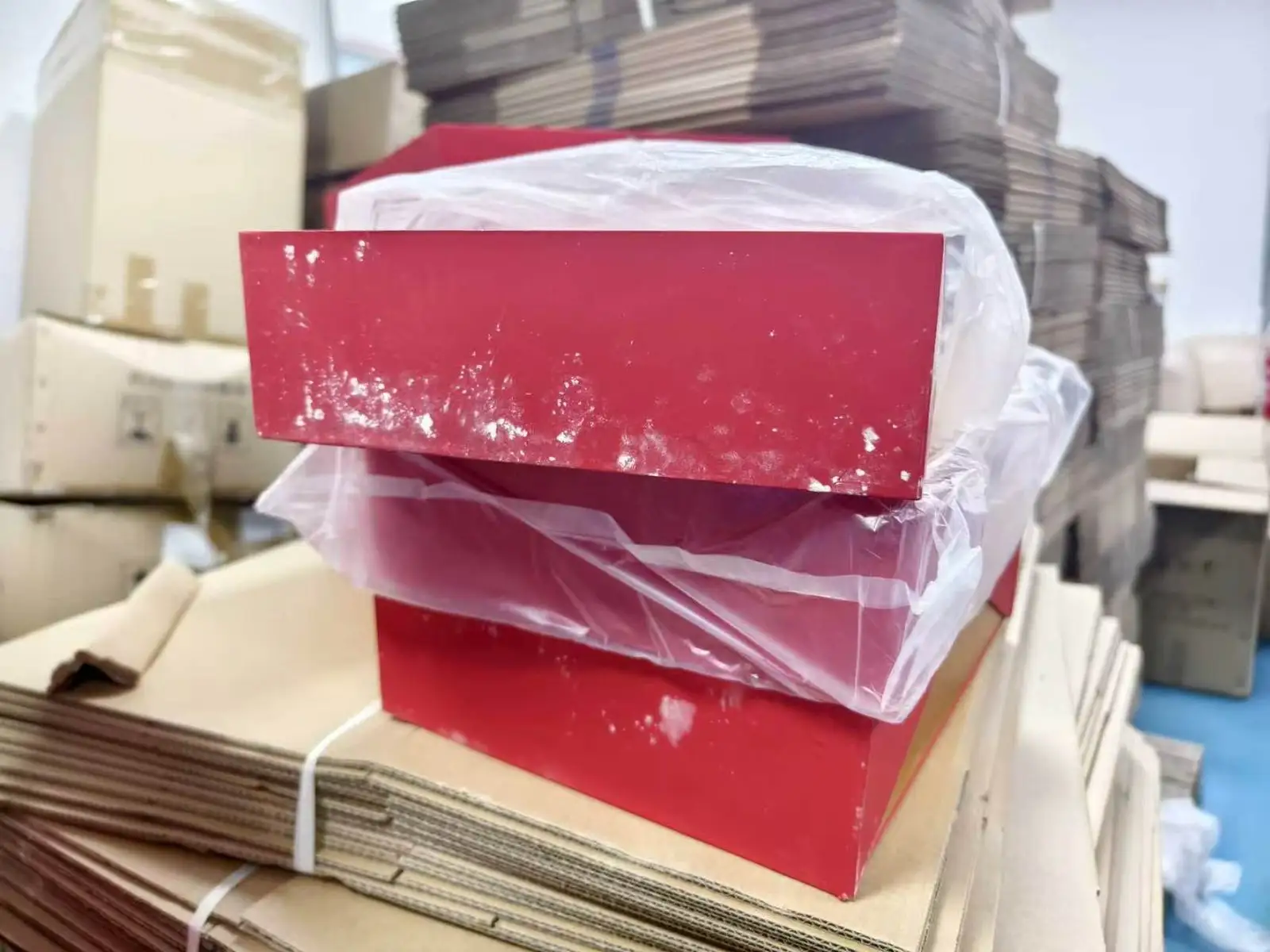
The conclusion first: a box whose silk has gone mouldy does not come back at its original grade. The mycelium has gone into the fibres, cleaning removes what is on the surface, and the shade difference and fibre damage stay where a buyer will see them. So the first step is sorting, not cleaning.
Grade one, a few spots at the corners and base with clean silk: strip and replace the lining, dry the cavity, add one sheet at the upper level, sell as non-appearance stock. Grade two, spotting on the silk but small and inside a fold: clean, then downgrade to a gift box. Grade three, sheets of mould and a musty smell: scrap it, and do not wash it, because red silk bleeds and washing spreads the colour. Clean with a soft cloth and a neutral detergent and blot dry immediately.
Then go back to the cause: the finishing record for that fabric lot, the humidity log, the drying time for the lining adhesive. One of the three will not match, and fixing it stops the next batch. The textile grade standard under GB/T 24346 is the basis to put in front of a supplier at acceptance, and boxes that failed over a festival peak follow the same route as a mooncake box that went mouldy.
6. Questions: can a finished box be sprayed, and how is bleeding controlled
Can a finished box just be sprayed with an anti-mould agent? Not advisable. Silk is dense, so a sprayed active sits on the surface and comes off with handling. Do it in the stenter trough.
How is the shade protected during finishing? Run a sample of the same lot at 21-50C and pH 4.5-8.5 and compare the shade; hold the wet pickup so the liquor on the fabric is not excessive; and dry properly, because stacking with the moisture still in seals water into the cloth. For orders with a tight colour-fastness requirement, write the process conditions into the purchase order.
What can be supplied when a customer asks for reports? Reports applied for by our own company can be supplied; reports commissioned by a customer on the customer’s own product are not quoted, by number or by conclusion. Mould resistance runs to ISO 846 or ASTM G21, antimicrobial performance to ISO 22196, and textile mould resistance has its own basis under GB/T 24346.
Closing figures: silk finished in the stenter trough with iHeir-BJ at 2-3% o.w.f., 21-50C and pH 4.5-8.5, pre-mixed and added in portions; the box factory gates the incoming finishing record; the lining takes iHeir-D paper at 0.1-0.2g a sheet, with a three-times trial where metal closures are used.


