




 View Count:42
 Date:2026-10-08
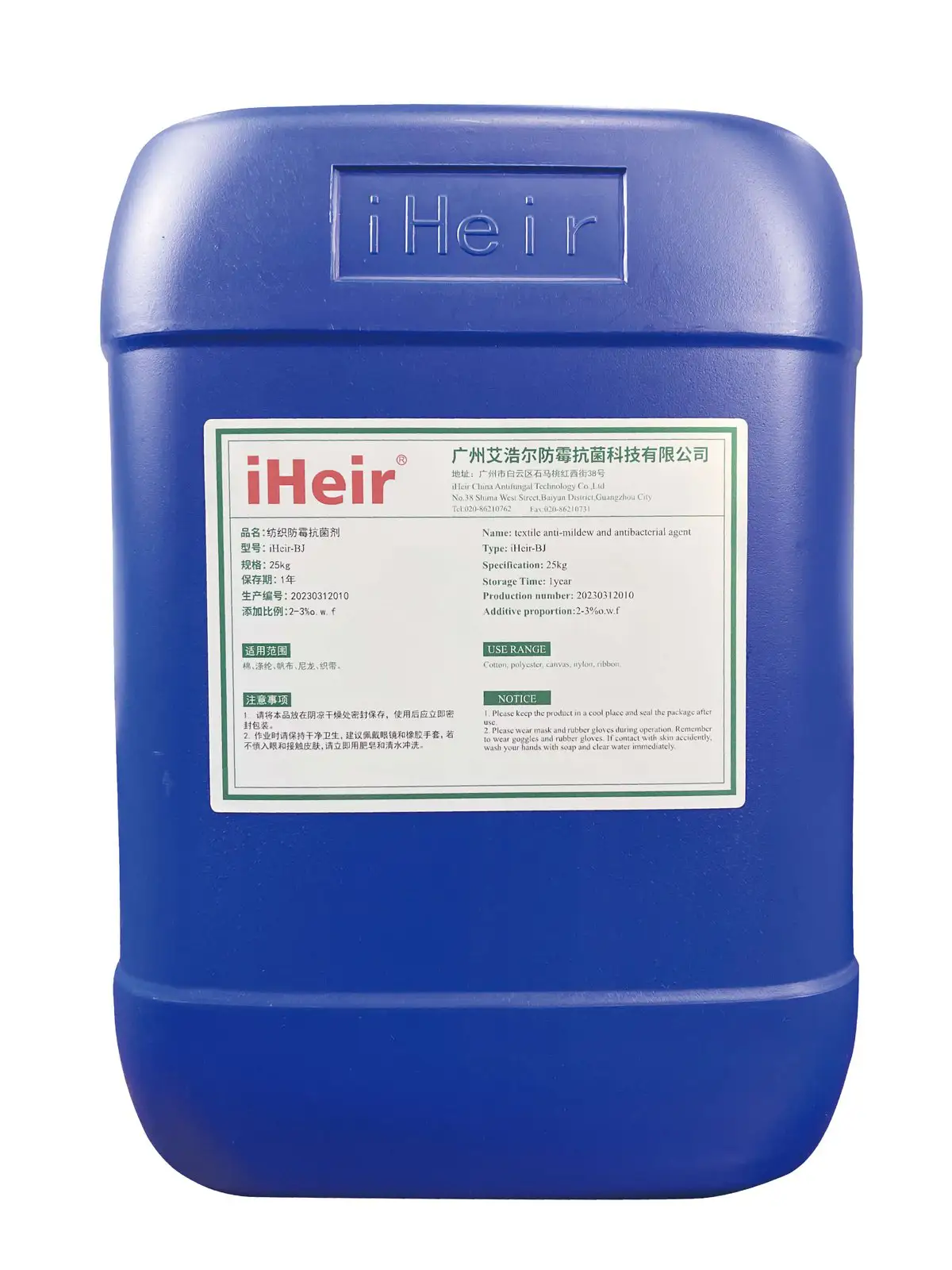
How should woven label mould be treated? A woven label is a strip of woven webbing and a hang tag is a paper card, two materials with quite different reasons for going mouldy, so the quantities and the loading are calculated separately. The label takes iHeir-BJ textile mildew inhibitor at 2%-3% o.w.f. in the padding bath, held at 21-50 degrees and pH 4.5-8.5, while the hang tag and card take iHeir-D gas-phase antimicrobial and mould inhibitor, with 0.1-0.2 g of active content per sheet. This article covers the two points and the figures.
1. A woven label and a hang tag are two materials with different sources of mould
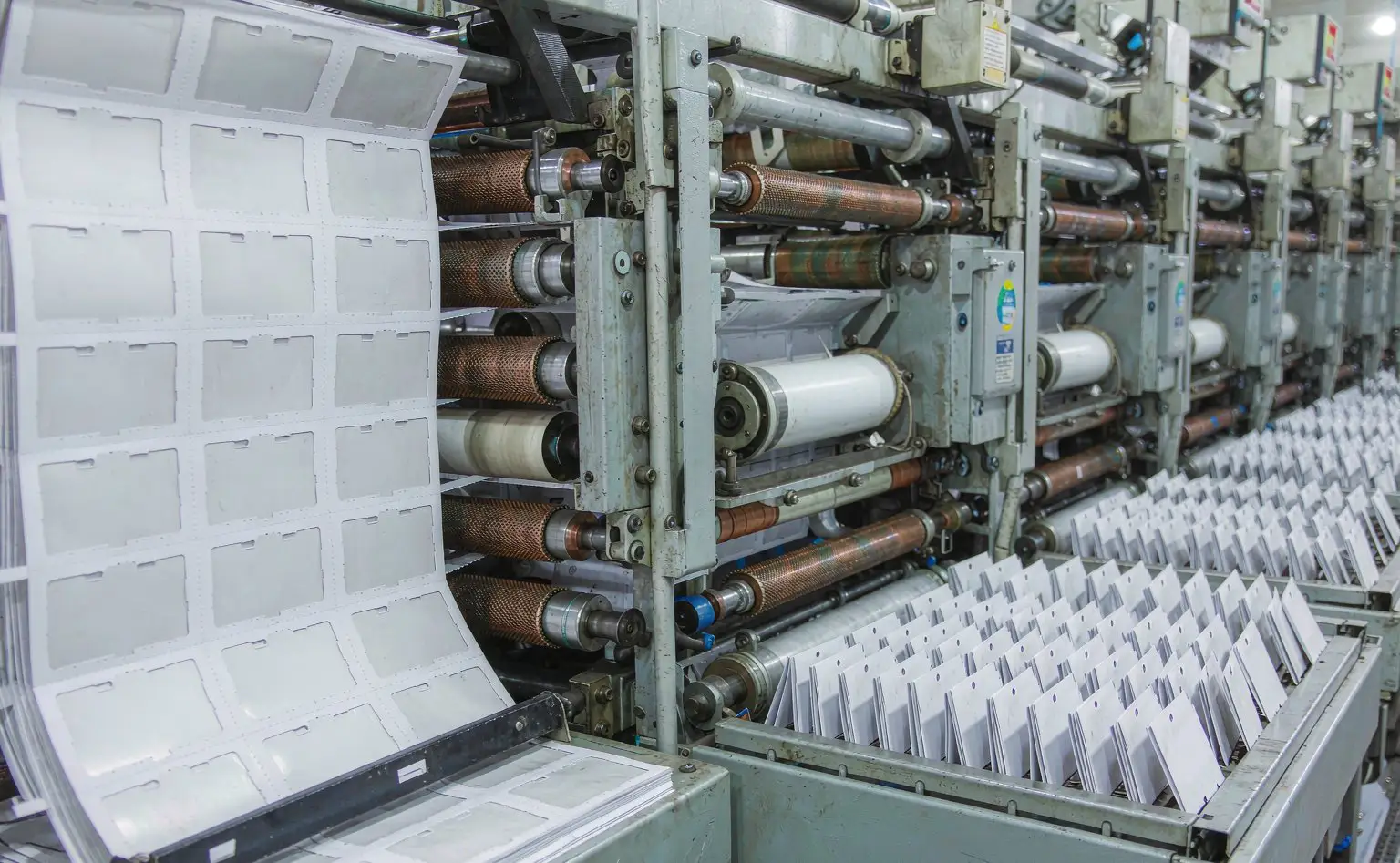
A pack of trims on a garment looks like one small item, but it is two materials mixed together. Woven labels, webbing and main labels are textiles, and the fibres take up moisture so the mould grows inside the yarn; hang tags, cards and wash-care labels are paper and take up damp faster, with mould starting on the surface and the cut edges. Once the two are packed together, the damp the cards take up migrates to the textiles, so each material needs its own treatment, and covering only one leaves the other to mould.
The two also pick up damp at different times. The labels collect damp at weaving and finishing, the cards at printing and die-cutting, and once both are boxed the sea voyage adds another temperature swing in which the cards are the first to fail in the pack. When a buyer opens the carton and sees a mouldy tag, the whole trim pack is usually rejected, and the loss is counted on the full pack.
On the line, a trim plant weaves the labels first and finishes them second, while the cards are printed and die-cut on another line. Both treatments are done before the stringing and the mixed packing: the labels in the padding bath, the cards when the gas-phase paper goes into the pack. Treat it after the pack is sealed and only the outside is covered.
2. The two points at a glance: label webbing and hang-tag card
The table lines up the part, the stage, what is treated, the product, the figures and the points to watch, so it can serve as the first draft of a process card.
| Part | Stage | Treated item | Product | Figures | Points to watch |
|---|---|---|---|---|---|
| Woven labels, webbing, main label | Padding | Dry fabric weight | iHeir-BJ textile mildew inhibitor | 2%-3% o.w.f. | Bath 21-50 degrees, pH 4.5-8.5; cationic, never with an anionic aid |
| Hang tags, cards, care labels | Packing | Paper | iHeir-D gas-phase antimicrobial and mould inhibitor | 0.1-0.2 g per sheet | Gas-phase paper printed with a special ink, placed by pack and kept apart from the cards |
| Label sewing thread | Sewing | Thread | Same bath as the labels | On the fabric figure | Use treated thread, so the seams do not become a leak point |
| Trim mixed store | Stacking / packing | Air in the pack | Humidity control only | Below 60% relative humidity | Trims sit at the bottom of the carton and mould first; sheets by stack |
Four rows, one conclusion: the labels are figured on dry fabric weight and the cards by sheet, one on material weight and the other by count, so the two cannot be converted, and the mixed store takes no agent at all.
3. Label and webbing: BJ in the padding bath at 2%-3% o.w.f.
The label line is completed in the padding or dipping stage. Add iHeir-BJ textile mildew inhibitor at 2%-3% o.w.f. on dry fabric weight, with the bath at 21-50 degrees and the pH between 4.5 and 8.5, ideally near 6. Premix it with 9-13 times its volume of water and add it in portions to avoid a local spike; hold the wet pick-up at 70% and add 0.1% of a hydrophilic agent to improve the hand. After normal drying and setting the anti-mould layer is fixed on the fibre, and 2% broadly supports a year or more of protection while 3% reaches two to three years.
Three details. First, a label is narrow and thin, so it carries little liquor per unit weight; control the wet pick-up, because too much liquor drags out the drying. Second, BJ is cationic, so it must never share a bath with an anionic aid; if the labels also need softening or antistatic finishing, check the ionic nature of those aids before fixing the bath order. Third, use soft water, since calcium and magnesium in hard water weaken its fixation on the fibre.
4. Hang-tag card: iHeir-D gas-phase paper at 0.1-0.2 g per sheet
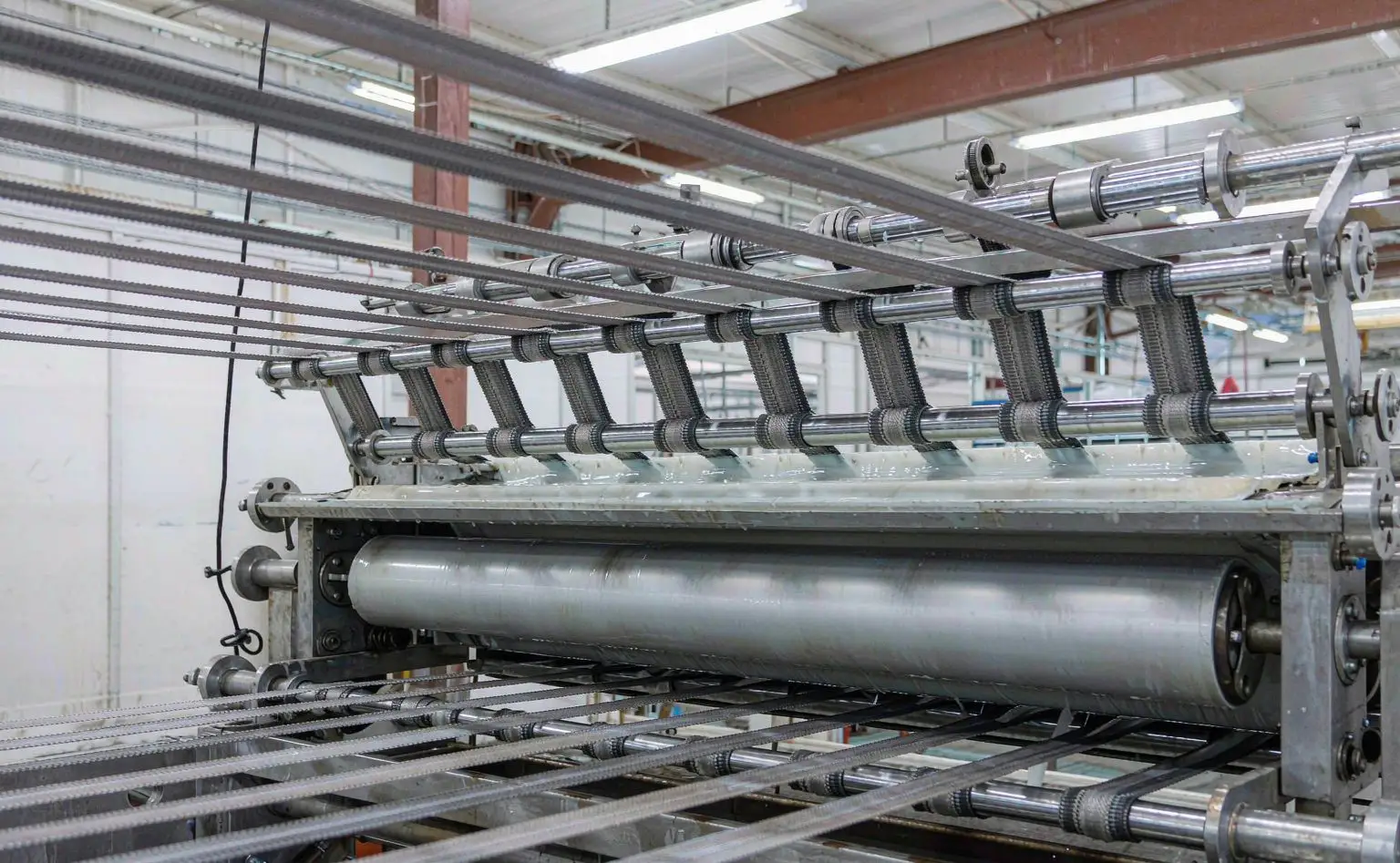
The card line is completed at the packing stage, with gas-phase paper. Paper or sachets made with iHeir-D gas-phase antimicrobial and mould inhibitor carry 0.1-0.2 g of active content per sheet; place them by pack and keep them apart from the cards, and the active content releases slowly into the space inside the pack to hold down the humidity and the mould. It is a product printed with a special ink and works by gas-phase diffusion, not by spraying the paper surface.
Three details. First, the quantity is by sheet, not by paper weight: a bigger pack takes more sheets and a smaller one fewer, and it does not convert into grams per square metre. Second, leave a gap between the gas-phase paper and the cards it protects; pressed flat at the bottom of the pack, the gas cannot spread and the sheet is wasted. Third, cards take up damp fastest, so the packaging paper should also be an anti-mould grade; see how to choose anti-mould packaging paper.
5. The mixed trim store and export packing: the stage no agent is dosed
The mixed store matters just as much. Bagged trims are stacked tight at the bottom of the carton, air movement will not carry damp out of the core of a stack, so place gas-phase sheets by stack, keep them apart from the goods with liner paper, and hold the store below 60% relative humidity. For batches held a long time, dry the goods before packing, because condensation after the carton is sealed starts the damp cycle.
Packing can also use desiccants by carton type. A sea voyage is long and the day-night swing is wide, so condensation inside a box is harder to control than in a warehouse. Test the long-term growth by ASTM G21 and hold a complete sample per batch, since testing the labels alone or the cards alone does not count.
6. Questions that come up: one figure for both, or padding the cards too
Can the labels and the tags share one figure? No. The labels are figured at 2%-3% o.w.f. on dry fabric weight and the tags at 0.1-0.2 g per sheet, one on material weight and the other by count, so the two do not convert and copying a number either wastes material or falls short.
Can the cards go through the padding bath too? No. Wet cards crease and soften and the printed face is spoiled; the paper side runs on gas-phase paper, a different route from the textile bath.
Can extra loading in the mixed store cover a long spell in storage? No. Damp in storage is an environment problem, not a concentration problem, and extra loading only raises cost. Hold the store below 60% relative humidity, place sheets by stack, and dry the goods before packing.
Two points carry the work: the labels and webbing are treated in the padding bath (iHeir-BJ at 2%-3% o.w.f., bath 21-50 degrees, pH 4.5-8.5, cationic and never with an anionic aid), and the hang tags and cards run with gas-phase paper at the packing stage (iHeir-D at 0.1-0.2 g of active content per sheet, placed by pack with a gap to spread), while the mixed store and export pack preserve both by humidity control and gas-phase sheets. Samples and TDS sheets are available for a trial on your own line.


