




 View Count:31
 Date:2026-10-15
Plastic shoe rack mould is best handled in two stages rather than one. The moulded part takes iHeir-ECO plastic antimicrobial agent in the mixing stage at 0.3%-1.0% (PE and PP 0.3%-0.5%, PVC 0.5%-1.0%, on total plastic weight), while storage and packing take iHeir-D gas-phase antimicrobial and mould inhibitor as paper or sachets at 0.1-0.2 g of active per sheet. This article explains why the two stages are kept apart, how each is dosed, and what to watch when the finished racks are stacked.
1. Why a plastic shoe rack goes mouldy
Plastic itself is not food for mould. What fails is the thin film of water and dust that collects on the surface and in the joints. A shoe rack is injection moulded, and although the face looks smooth, the lattice holes, the ribs and the assembly joints all trap dust. Wet shoes from a rainy day go on to the rack, water runs down through the holes and settles in the corners, and once the temperature is right that film of water is where mould takes hold.
The moulded part also carries a hidden source of moisture. Plastic granules are dried before processing, and when drying is incomplete or the proportion of regrind is high, water is left inside the part. If that batch is boxed the moment it leaves the mould, the moisture is sealed in and only comes out again when the goods reach a hot, humid region, which shows up as a musty smell on opening the carton and spots that return a few days after being wiped off.
Storage is often the bigger risk. A shoe rack is bulky, holed and stacked densely, and where the warehouse has no forced ventilation the damp air of the rainy season can spot a whole stack within days. The moulded part and the warehouse are therefore two separate accounts: the first is settled inside the plastic, the second in packing and stacking, and neither can stand in for the other.
2. The moulded part and the warehouse at a glance
The table lines up the two stages with the place where the agent goes in or in, the figure and the points to watch, as a first draft of a process and packing instruction.
| Stage | Where | How | Figure or criterion | Points to watch |
|---|---|---|---|---|
| Moulding | Mixing drum | Masterbatch blended with the granules before moulding | iHeir-ECO at 0.3%-1.0% (PE/PP 0.3%-0.5%, PVC 0.5%-1.0%, on total plastic weight) | Keep processing temperature below 320 degrees; add before plastification and stir evenly |
| Storage and packing | Inside the carton, inner packing layer | Gas-phase paper or sachets placed by layer | iHeir-D at 0.1-0.2 g of active per sheet | Separate the inhibitor from metal parts with paper; seal the carton before it goes to store |
| Finished-goods stacking | Warehouse racking | Humidity control and an air gap | Relative humidity below 60% | Off the wall and off the floor, first-in first-out |
Three rows make the division of work clear: the first is done inside the moulding, the second inside the packing, and the third is the warehouse discipline that holds the result. Miss any row and the problem shows when the customer opens the carton or puts the goods on the shelf.
3. The moulded part: ECO added in the mixing stage
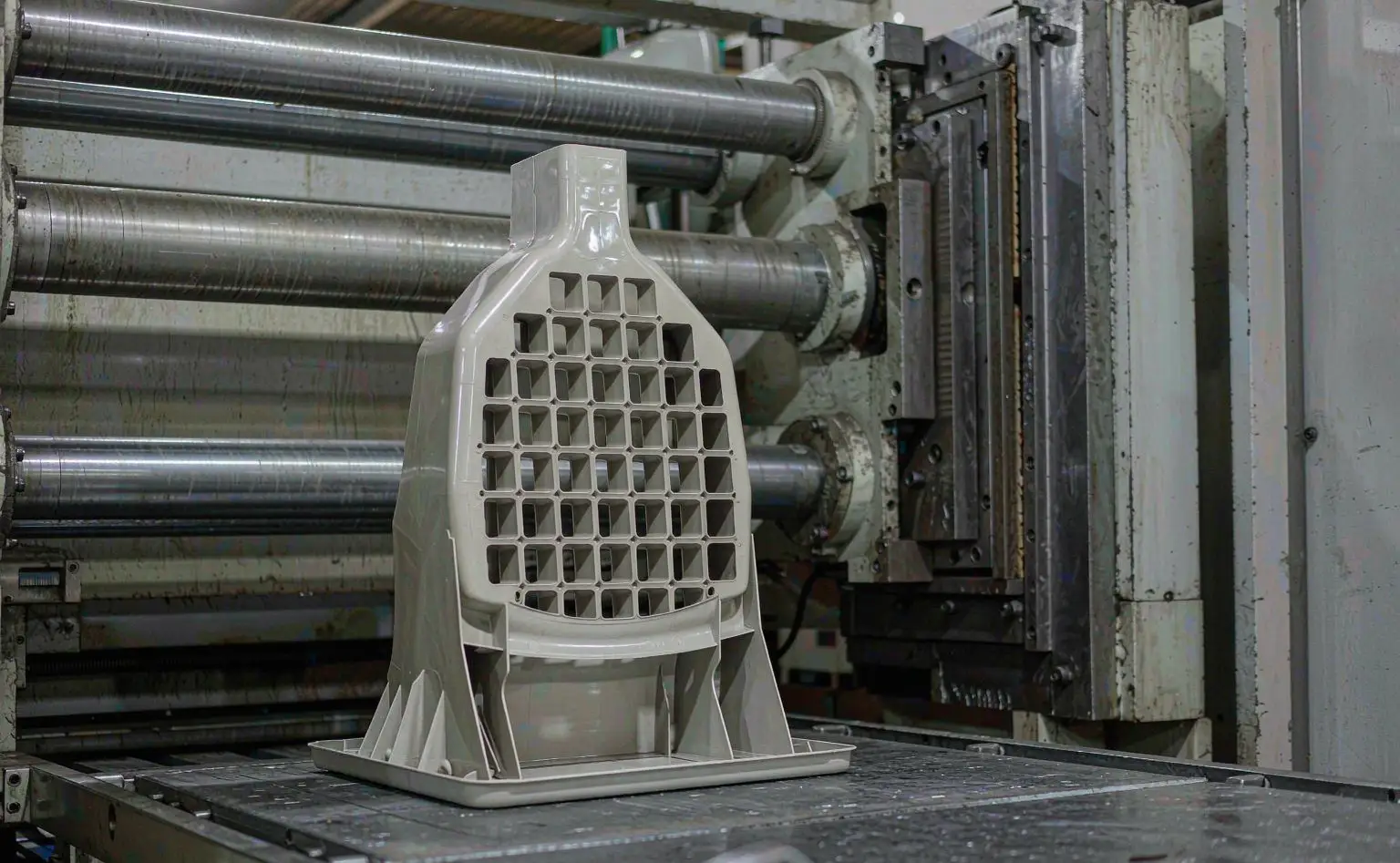
The moulded part takes iHeir-ECO plastic antimicrobial agent at 0.3%-1.0%, with PE and PP at 0.3%-0.5% and PVC at 0.5%-1.0%, always on total plastic weight. It is a grey-white powder, supplied as an internal masterbatch, blended with the granules in the mixing stage and compatible with ordinary injection moulding and extrusion, so no extra equipment is needed.
Its advantage is that the active ingredient runs through the whole part rather than sitting on the surface, so the rack keeps its protection after being walked on, washed or wiped. Add it before plastification; mix it badly and one batch comes out good on one side and poor on the other. Watch the processing temperature above all: thermal stability reaches 240 degrees, and the melt should be kept below 320 degrees, because an excessive temperature drives the active off and the addition is wasted.
4. Storage and packing: D gas-phase paper by the sheet
Storage and export packing take iHeir-D gas-phase antimicrobial and mould inhibitor, supplied as paper or sachets, each holding 0.1-0.2 g of active. It is a placement product: the active is released slowly and spreads evenly through a closed space, which suits whole cartons of finished goods and long sea voyages, and it is used in packing for footwear materials, garments and leather goods.
Placement comes down to separation and closure. The inhibitor must be separated from the goods by paper, because a rack with metal fittings or dark dye carries a risk if the two touch, and the usual method is to lay the paper in the bottom of the carton and tuck sachets between the layers before sealing. That spreads the vapour far more evenly than dropping sachets into a corner. In a large, humid warehouse the quantity has to be raised to suit the volume and the humidity rather than copied from a small carton.
Keep this stage separate from the moulding stage. The ECO goes into the plastic and looks after the part itself; the D goes into the packing and looks after transport and storage. Do both and the goods carry an unbroken line of protection from the mould to the customer.
5. Stacking and dispatch: keeping both stages in place
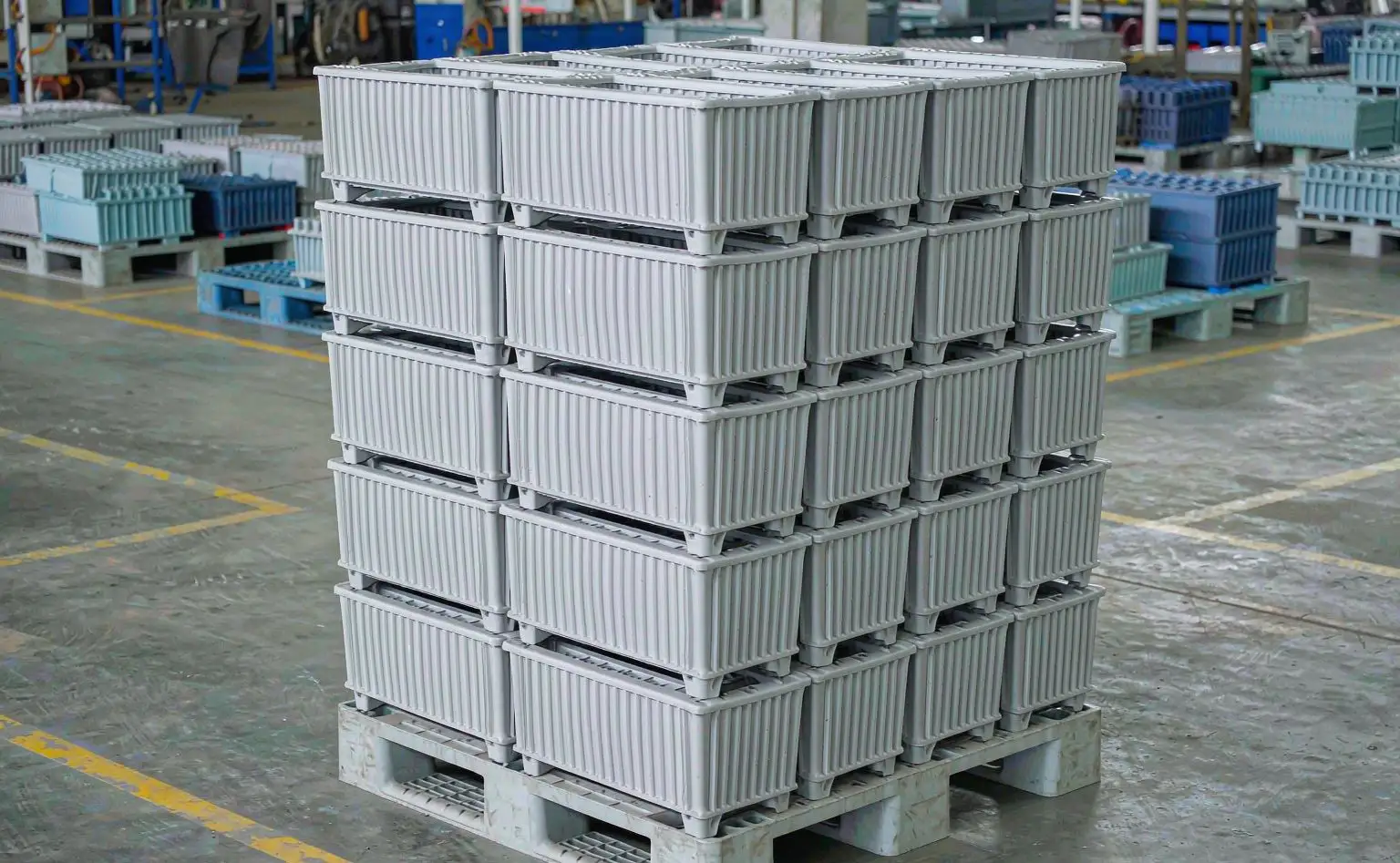
Once both stages are done, stacking is where the work is most easily lost. Finished racks should not sit on the floor or against a wall: keep pallets off the ground, leave an air gap between stacks and turn the stock first-in first-out. Hold warehouse relative humidity below 60%, and in the rainy season run a dehumidifier or ventilate on a schedule rather than let damp ruin a whole stack in a few days.
Export lots need one more look. Once the carton is sealed and loaded into the container, the day-night temperature swing makes condensation run down the inside of the walls, and humidity control at that point matters as much as it does in the warehouse. The way the stages are separated follows the same principle as the note on plastic parts going mouldy in stock before export, and it runs alongside the moulding addition rather than replacing it.

6. Questions that come up: surface treatment only, and reworking damp stock
Is a sprayed treatment on the surface enough? Not advisable. A spray stays on the outermost layer, and assembly, foot traffic and washing take it off quickly, while the inside of the part stays bare. The agent belongs in the plastic, carried through the part by the masterbatch, which is the only way to get a consistent and lasting result.
Can racks that have gone damp and spotted be reworked? It depends where the mould is. Where it sits only in the film of dust on the surface, clean the parts, dry them thoroughly, box them again and add gas-phase inhibitor to the packing. Where it has reached the plastic or the assembly joints, cleaning only addresses the surface and the growth returns, so those lots are better isolated and downgraded. Reworked parts must be dried right through, or boxing them damp seals the water back in.
Two points carry the work. The moulded part takes iHeir-ECO plastic antimicrobial agent at 0.3%-1.0% on total plastic weight in the mixing stage, and storage and packing take iHeir-D gas-phase antimicrobial and mould inhibitor at 0.1-0.2 g of active per sheet. Stacking then holds relative humidity below 60%, so the work done at both stages stays in the goods. Samples and TDS are available to check the configuration.


