




 View Count:40
 Date:2026-09-04
“My latex pillow and latex mattress are growing mold — what should I do?” More and more consumers and bedding factories are asking this question. Latex is marketed as breathable and anti-mite, but once the rainy season or a sea-freight voyage arrives, black spots on the pillow surface and a musty smell under the mattress are common. Our lab sample statistics for 2025 show mold-test submissions for latex products rose roughly 35% year on year, concentrated in natural latex pillows, latex mattresses and latex gloves. This guide covers the causes, the treatment and source-level prevention, so pillow factories, mattress makers, exporters and households can each act on it.
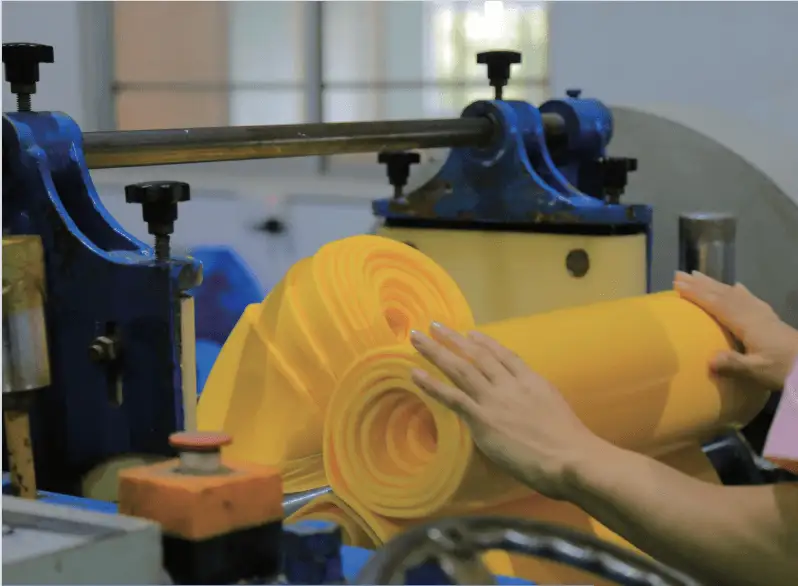
1 Why Do Latex Pillows and Mattresses Grow Mold? Three Root Causes
Latex mold is not bad luck — it is determined by the material itself. Understand the three causes and you know where prevention must start:
- Cause 1 — natural latex protein feeds mold. Natural latex tapped from rubber trees contains water-soluble proteins (typically 0.5-1.5 mg per 100 g of latex). Mold such as Aspergillus niger and Penicillium breaks down protein to grow, so at equal humidity latex molds faster than purely synthetic materials. Cheap latex with poor deproteinization has a clearly higher mold risk.
- Cause 2 — latex absorbs moisture and holds it. Latex foam is an open-cell sponge; it can absorb 2-5% of its own weight in water. In humid southern weather or after sweat penetration, the internal humidity of the core stays above 70% RH for long periods — right in the mold growth range (65%-95% RH).
- Cause 3 — the production process leaves hidden risk. In the Dunlop process (foam, then one curing step), insufficient drying leaves finished moisture above 10%. In the Talalay process (freeze, then cure), poor washing leaves more protein residue. Curing at 110-120°C does not kill mold spores already in the latex — spores are controlled by antimicrobial additives in the formula, not by heat.
In short: latex molds because it carries its own nutrient, absorbs water, and the process can leave residue — all three together. Silicone, another soft material, contains no protein and barely absorbs water, so it molds far less easily. The different approaches are explained in our guide on silicone products that got moldy.
2 Already Moldy? Clean First, Then Decide Whether to Keep It
Treatment must be done in three steps. Do not reach for boiling water or bleach first:
Step 1 — judge how deep the mold goes. Turn the pillow or mattress over and look at the cut edge: if spots are only on the surface, pale, with no odor penetrating, treatment is worth trying. If mold has reached the inside, turned the foam yellow-black and brittle, or a strong musty smell is present, discard it — hyphae may have grown deep into the cell structure, surface cleaning only treats the symptom, and continued use carries an allergy risk from both mold spores and latex protein.
Step 2 — surface cleaning. Dampen a soft cloth with 75% medical alcohol or diluted neutral detergent (such as dish soap), wipe the mold spots gently, then wipe again with a clean wet cloth. Latex hates strong alkali, strong acid and direct sun: bleach accelerates cracking, and UV makes latex hard and brittle. Dry it in a cool ventilated place, never in direct sunlight.
Step 3 — dry thoroughly before use. At home, use a dehumidifier or the air-conditioner dry mode to bring core moisture below 8% before putting the pillowcase back on. For lingering odor, place a small odor-absorbing sachet inside the pillowcase (see the FAQ below for selection).
For factories, moldy finished goods should not be scrapped or dumped at low price straight away — evaluate rework first. See our full process for professional mold rework of products.
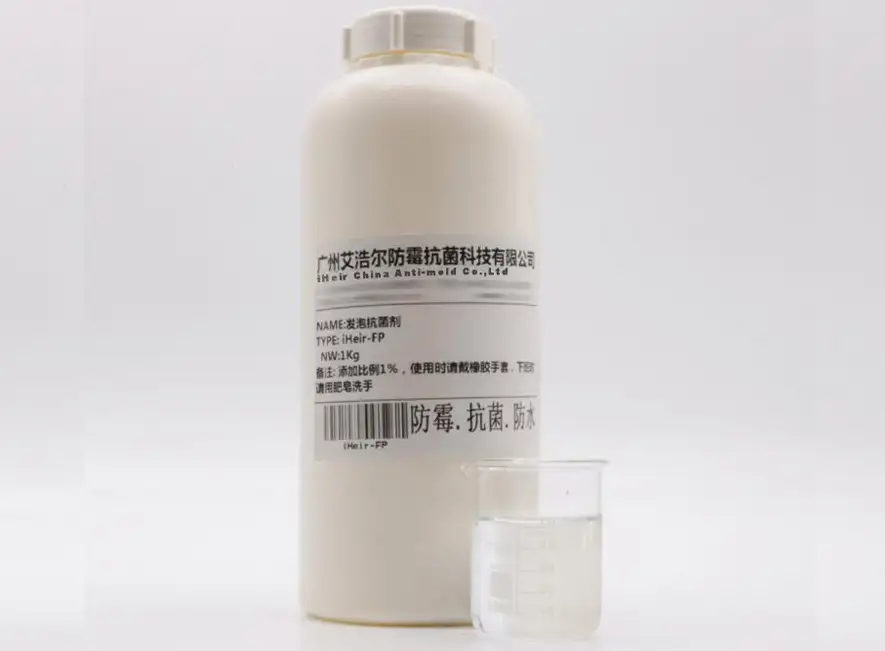
3 Stop Mold at Source: Antimicrobial Dosing in Latex Compounding
Cleaning moldy goods is reactive. Pillow and mattress factories really need products that do not easily mold from day one — that means mixing an antimicrobial into the latex at the compounding stage so the active ingredient coats every cell wall of the foam, not just the surface.
Three selection rules:
- Dark-colored latex: use GG907. GG907 is an organic zinc-ion antimicrobial cream designed for silicone and rubber systems and compatible with latex. Dose at 1%-2% on dry rubber (start gradient tests from 0.5%), add it with the latex and curing agents before foaming, and mix evenly. It tolerates the 110-120°C curing profile without affecting foaming ratio.
- White, light or clear products: use GGIPL. GGIPL is a transparent antimicrobial paste that will not yellow white latex — the right choice for white latex pillows and mattresses for export. Compare the two on the GG907 antimicrobial cream page and the GGIPL antibacterial paste page.
- For food-contact or baby products, verify compliance first. For latex pacifiers and teats that go into the mouth, choosing an antimicrobial demands extra care: confirm it meets the target market’s food-contact rules (e.g. FDA 21 CFR, EU 10/2011) and ask the supplier for the MSDS and migration test report before ordering. Test methods include ISO 22196 / GB/T 31402 (surface antibacterial) and GB/T 1741 (mold resistance).
One warning: do not pour a general-purpose mildew agent into latex. Latex is a water-based foaming system; oil-based agents (some solvent-type OIT/DCOIT products) disperse unevenly and can cause local yellowing or under-curing. For elastomers like latex, choose grades labeled compatible with silicone and rubber. The general logic of selection is covered in types of plastic antimicrobial agents and mold inhibitor vs antimicrobial agent — mold control stops “growing mold”, antibacterial control stops “growing bacteria and odor”, and bedding should ideally have both.
4 Environment Control: Workshop and Warehouse Humidity
Adding antimicrobials to the formula does not mean you can relax environment control. Antimicrobials suppress spores that are already present; if warehouse humidity stays too high for weeks, mold can still enter through damaged packaging and grow. Recommended standards for latex workshops and warehouses:
- Keep relative humidity at 55%-60% RH; run dehumidifiers in the rainy season. Above 65% RH mold growth accelerates visibly.
- Check finished moisture ≤8% before packing: incompletely dried foam is the number-one cause of sea-freight mold. Test moisture batch by batch on export orders.
- Store 15 cm off the floor and 30 cm from walls, keep air moving, and keep stock away from windows and damp walls. Wet wooden pallets “infect” the goods above them — control pallet moisture too.
- In humid seasons, combine moisture-absorbing products in the warehouse, e.g. T-1000 container desiccant sticks for the sea-freight leg and large desiccant bags for long-term storage.
For the full warehouse checklist (floor, walls, dehumidifying frequency), follow warehouse mold prevention for factory storage.
5 Packaging and Export Shipping: Do Not Let a Container Ruin in the Last Ten Days
Latex pillow exports usually fail not at the factory but at sea. Even with a clean factory, the container’s day-night swing (40°C by day, 20°C at night) condenses moisture inside the box (“container rain”), and dry pillows can be “steamed” moldy by the internal humidity. Export batches must include:
- Sealed inner packaging: latex pillows are usually vacuum-compressed in PE bags. Vacuum packing isolates moisture well — check every seal; for non-vacuum packaging, add one anti-mold chip inside each bag.
- Dry cartons: keep carton moisture below 12% before loading; never reuse damp, softened boxes.
- Container desiccants: hang 6-8 T-1000 sticks in a 20ft container and 10-12 in a 40ft, distributed along the wall corrugations without touching cargo. For dosage calculation read how much desiccant goes in a container.
Real case: A latex pillow exporter in Zhejiang shipped a 40ft container to Europe in summer 2024; about 30% of the goods arrived moldy and the client demanded a full return. Our on-site audit found three problems: insufficient drying after foaming (finished moisture 12%-14%), a finished-goods warehouse beside a river (75%-85% RH all summer), and no desiccants in the container. The fix: dose GG907 at 1.5% on dry rubber, add finished-moisture checks at ≤8%, run 24h dehumidification at about 58% RH in the warehouse, and hang 10 T-1000 sticks per container. No mold complaints in the next two summers. Before changing any formula, always run gradient samples (0.5%, 1%, 1.5%, 2%) to confirm rebound rate and odor are unaffected — then scale up.
6 FAQ: Latex Mold Prevention
Q1: Can I still use a moldy latex pillow? Light surface spots that clean up and dry out are fine to keep; if mold reached the core, the smell is strong, or the user is allergy-prone, replace it. A latex pillow is not worth a health gamble.
Q2: Why does my latex mattress always mold in the same area? Usually sweat penetration + poor breathability + high room humidity working together. Solution: dehumidify, rotate the mattress regularly, use a moisture-proof underlay, and for severe cases the mattress needs antimicrobials at the compounding stage.
Q3: Which molds faster, latex or memory foam? Memory foam (polyurethane) contains no protein and is more mold-resistant at equal humidity, but it is stuffier and less breathable — it can still mold in a southern summer. Both need humidity control and, ideally, antimicrobial bedding.
Q4: Do latex pillows imported from Thailand mold too? Yes. Mold depends on protein residue, moisture content and storage humidity — not origin. If an import gets damp in transit it molds exactly like an export; moisture logic is the same in both directions.
Q5: How do I simply protect latex pillows at home? Three habits: keep bedroom RH below 60%; air the pillow 2-3 hours in shade every two weeks (never in direct sun); and use a washable absorbent pillowcase if you sweat at night.
Q6: How do we verify an antimicrobial works in our latex formula? Two steps: lab samples first — ISO 22196 for antibacterial rate and GB/T 1741 or AATCC 30 for mold grade — then follow a production batch through a 28-day high-humidity challenge (85%+ RH). iHeir’s industrial microbiology lab supports testing on your own materials; contact us to arrange gradient samples and testing.