




 View Count:23
 Date:2026-10-28
Tackle box mould: which part do you treat first? Most plants dose the body and then find mould in the foam, and the box goes back for rework anyway. A tackle box is two materials: a PP injection-moulded body that takes a plastic anti-mould powder, and PU foam dividers that take a foam antimicrobial — different addition points, different bases. The body takes iHeir-JS117 at 0.5%-1.0% of finished weight and the foam takes iHeir-FP at 0.5%-1.5% of foam weight. This article covers both addition points, the bases, and the drying and assembly rules.
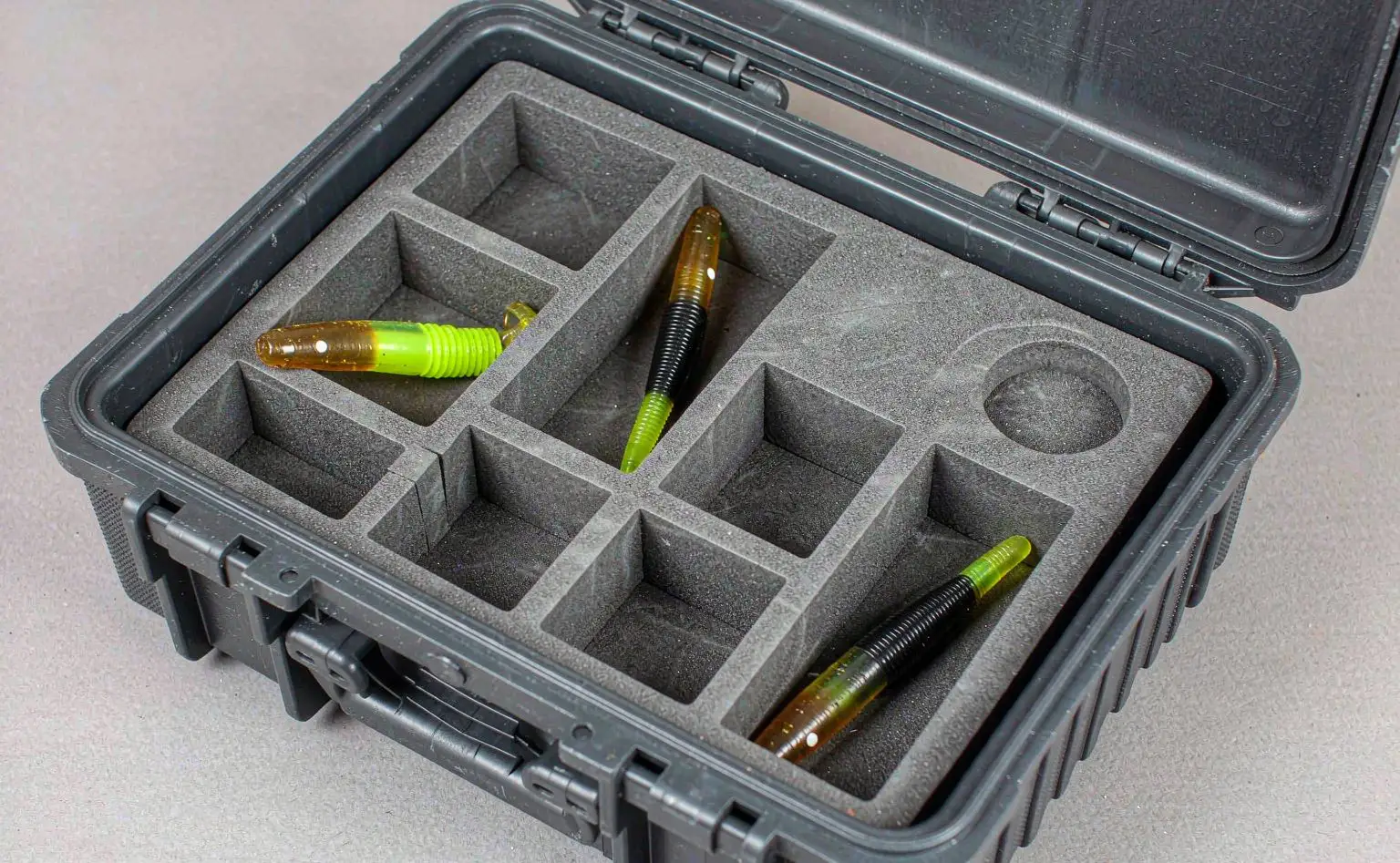
1. A tackle box fails in two places
The first is the PP body. PP takes up very little water, but the latch channels and the gasket groove are traps, and so is the ribbed pattern on the base. Boxes come back from a trip with water in them, that water sits in the channels, and spots start exactly there.
The second is the PU foam dividers. Foam is an open-cell structure and holds an order of magnitude more water than plastic; water off hooks and lures ends up in the foam, and once foam is wet the inside dries very slowly. Mould grows from within — the surface still looks fine and the inside is black.
The third is the closed box after assembly. Once the lid shuts, the interior is a closed space and moisture from the foam circulates inside, settling on the body and on metal hardware. Rusted hardware, mouldy foam and spotted plastic usually appear together.
So the line has to be treated in two stages: the powder goes into the body at the mixing stage, the antimicrobial into the foam at the foaming stage, and everything is dried before assembly. Body only, and the foam still fails; foam only, and the latch channels still grow mould.
2. Body and foam are counted separately
The table sets out body, foam, assembly and packing. The body is dosed on finished part weight, the foam on foam weight, and the two bases are not interchangeable.
| Location | Material and stage | Product and level | Addition point | Basis |
|---|---|---|---|---|
| Body, lid | PP injection moulding | iHeir-JS117 0.5%-1.0% | Mixing stage, blended with resin | Finished part weight |
| Foam dividers | PU foaming, slitting | iHeir-FP 0.5%-1.5% | Foaming stage, into the foam system | Total foam weight |
| Latches, hinges | Plastic parts, assembly | Carried in with the body | Before assembly | Counted in the body |
| Packing and export | Bagging, cartoning, loading | Desiccant plus store humidity control | Packing and loading | Carton volume and container type |
Two boundaries. First, the two additives do not swap: JS117 is a powder dispersed into resin before moulding, while FP is a foam-system antimicrobial with a pH window of 1-11, built for the foaming step. Powder pushed into foam will not disperse and does nothing; a foam antimicrobial pushed into an injection compound does not match the process window.
Second, the body does not also take an antimicrobial: the problem in a tackle box is mould, not a plate count, so the powder is the right fit. Only where a customer specifies an antimicrobial rate for the body would a second, inorganic product come in — and that would be a third product, which this article does not cover.
3. Body moulding: blend the powder with the resin
The body uses iHeir-JS117 plastic anti-mildew powder at 0.5%-1.0% of finished weight. Active content is above 97%, D50 110μm, bulk density 380 kg/m³, melting range 100-120℃, heat resistance 280℃; it does not dissolve in water and is non-leaching, and PVC, PU, polyolefins, polyester, TPE and rubber are all on its application list.
The addition point is the mixing stage: dry blend it with PP pellets in the mixer before the machine, or compound it into a masterbatch first — masterbatch disperses more evenly and suits a thin-walled body. PP moulds around 200-230℃, well inside the 280℃ limit, so the active content survives the shot.
Three mistakes recur. Calculating on virgin resin: colour masterbatch, filler and regrind all count toward finished weight, and using virgin resin alone under-doses. Feeding damp, caked powder: JS117 is specified below 0.2% moisture, an opened bag takes up water, and the powder clumps in the mixer and shows as white specks. Not topping up regrind: regrind fed back needs topping up in proportion, or content falls batch by batch.
One more detail: the latch channel and gasket groove are the high-risk locations. Fill and cooling have to be right there; a short shot or a sink mark creates a deeper water trap, and no additive rescues a structural defect.
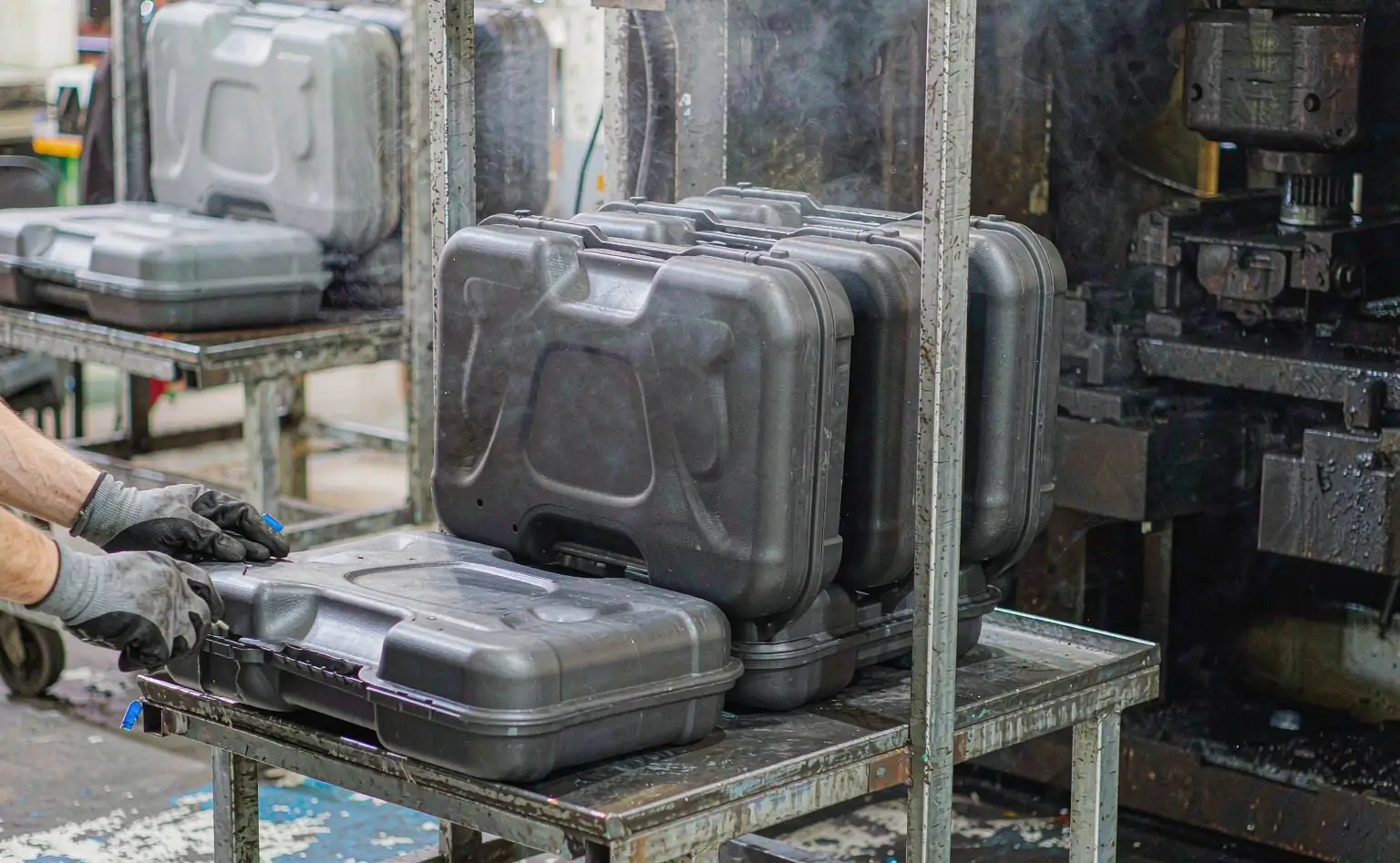
4. Foam dividers: the antimicrobial goes into the foam system
The dividers use iHeir-FP foam antimicrobial agent at 0.5%-1.5% of total foam weight. Its pH window is 1-11, the antimicrobial rate reaches 99.99%, it ships in 25kg packs, and the oral LD50 is above 5000 mg/kg.
The addition point is the foaming stage: blend it into the polyol component before foaming so it goes in with the reaction and ends up on the cell walls. Foam is open-cell, so a spray applied afterwards only reaches the surface while the inside of the cells stays unprotected; added with the foam, a cut section is protected too.
Three operating points. Calculate on foam weight, not finished foam weight — density changes a great deal through foaming, and the wrong base makes the dose drift. Watch the foaming temperature: the reaction is exothermic, so the agent has to be blended before the temperature climbs. Fit soon after slitting: cut foam takes up shop moisture quickly, so use the day’s cut the same day and store the rest sealed.
Foam also has a moisture problem at the door. Once wet, the inside dries very slowly, so dry the foam before assembly — below 60℃ down to 3% moisture — because packing it damp seals the water into the closed box.
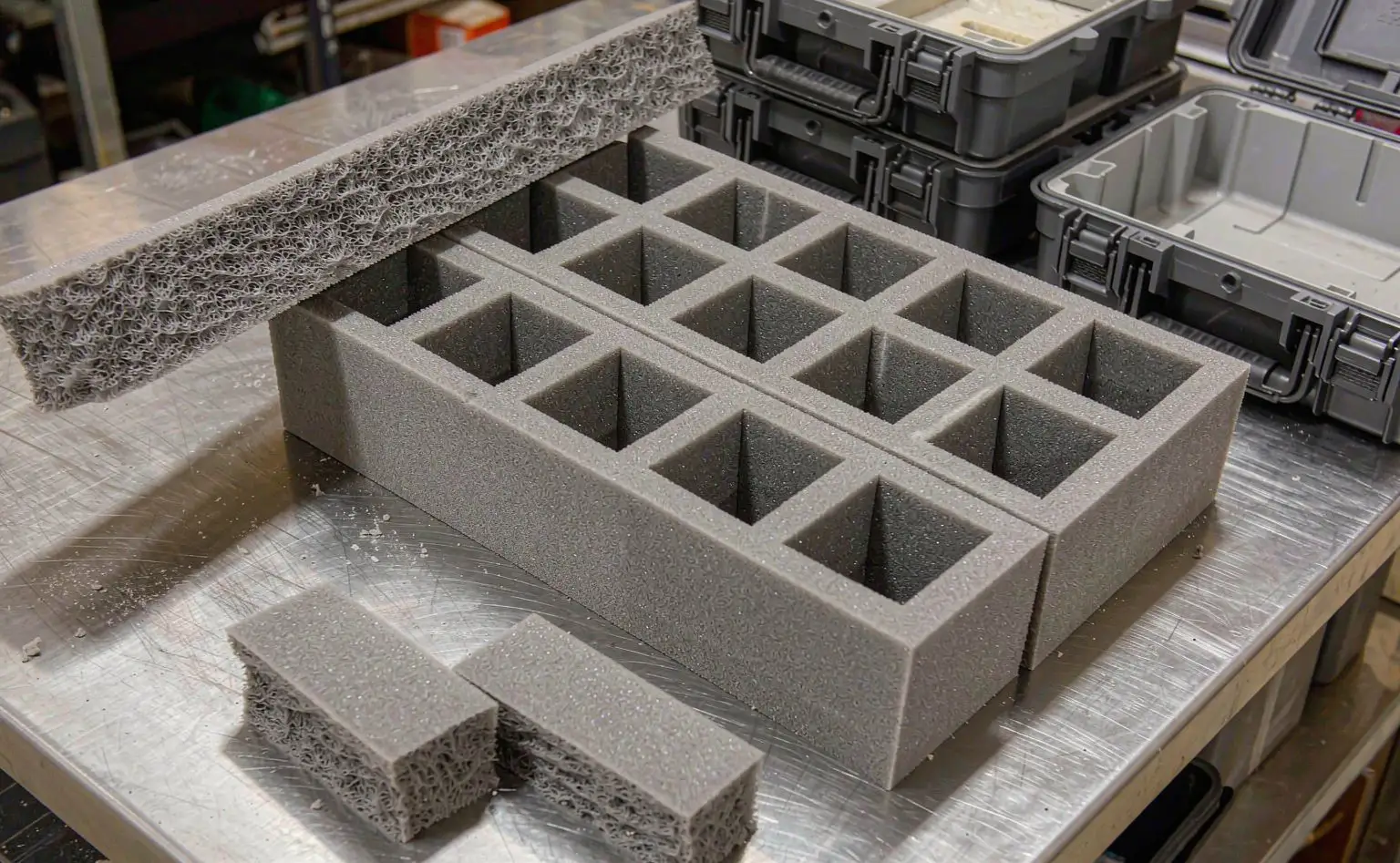
5. Assembly, packing and export
Three things at assembly: blow the body dry — latch channels and base ribs, including mould-release residue; dry the foam below 3% moisture; hold the shop at 60% RH or below with dehumidifiers in the wet season.
Tackle boxes are mostly export orders: leave an air path in the container, no carton against the wall or under the ceiling, because the day-night swing condenses water on the ceiling and the cartons at the wall come back damp first. The mechanism is the one described in condensation in sea freight containers.
Verify at three levels: body on a mould resistance test to GB/T 24128 or ASTM G21, sampling body and lid; foam to ISO 22196 for antimicrobial rate plus a moisture reading; finished box for 30 days at 30℃/85% RH, then inspect the latch channels, the base ribs and a cut section of foam.
6. Questions on white specks, foam hardness and boxes that already have mould
Q: We added 1% powder and the body shows white specks. First decide whether it is undispersed powder or filler bloom. JS117 at D50 110μm dry-blended into a thin wall can show specks, so move to masterbatch or extend the mixing time. A continuous white film is more likely lubricant or release agent migration.
Q: Does the antimicrobial make the foam harder or less resilient? At 0.5%-1.5% the effect on cell structure is small, and poor resilience is usually a foaming formula or cure-time issue. If the foam does harden, start at the 0.5% floor and confirm the antimicrobial rate still passes.
Q: Can a box that already has mould still ship? Spots on the body can be wiped, dried and retreated. Once foam has grown mould the interior is contaminated, so replace the dividers — foam is cheap and washing it is not worth the labour. A batch with replaced dividers has to be dried and assembled again, or the mould is back within a week.
Four points to take away: body at 0.5%-1.0% iHeir-JS117 on finished weight at the mixing stage, masterbatch for even dispersion and regrind topped up; foam at 0.5%-1.5% iHeir-FP on foam weight, added with the foaming system and cut the same day; blow the body dry and dry the foam below 3% moisture with the shop at 60% RH; desiccant in the box, an air path in the container, and 30 days at 30℃/85% RH before release.


