




 View Count:12
 Date:2026-10-22
How is mould prevented on a golf bag? Two places are made of different materials and have to be treated separately. The lining and dividers are fabric, where mould starts in the fibres, so iHeir-BJ textile mildew inhibitor goes into the stenter trough at 2-3% o.w.f. The club grips are rubber or TPE, where mould grows on sweat and oil, so iHeir-JS117 plastic anti-mildew powder goes into the compound at 0.5%-1% of finished weight. This article gives the addition point for each and the storage rules.
1. Two places: the lining fabric and the rubber grips
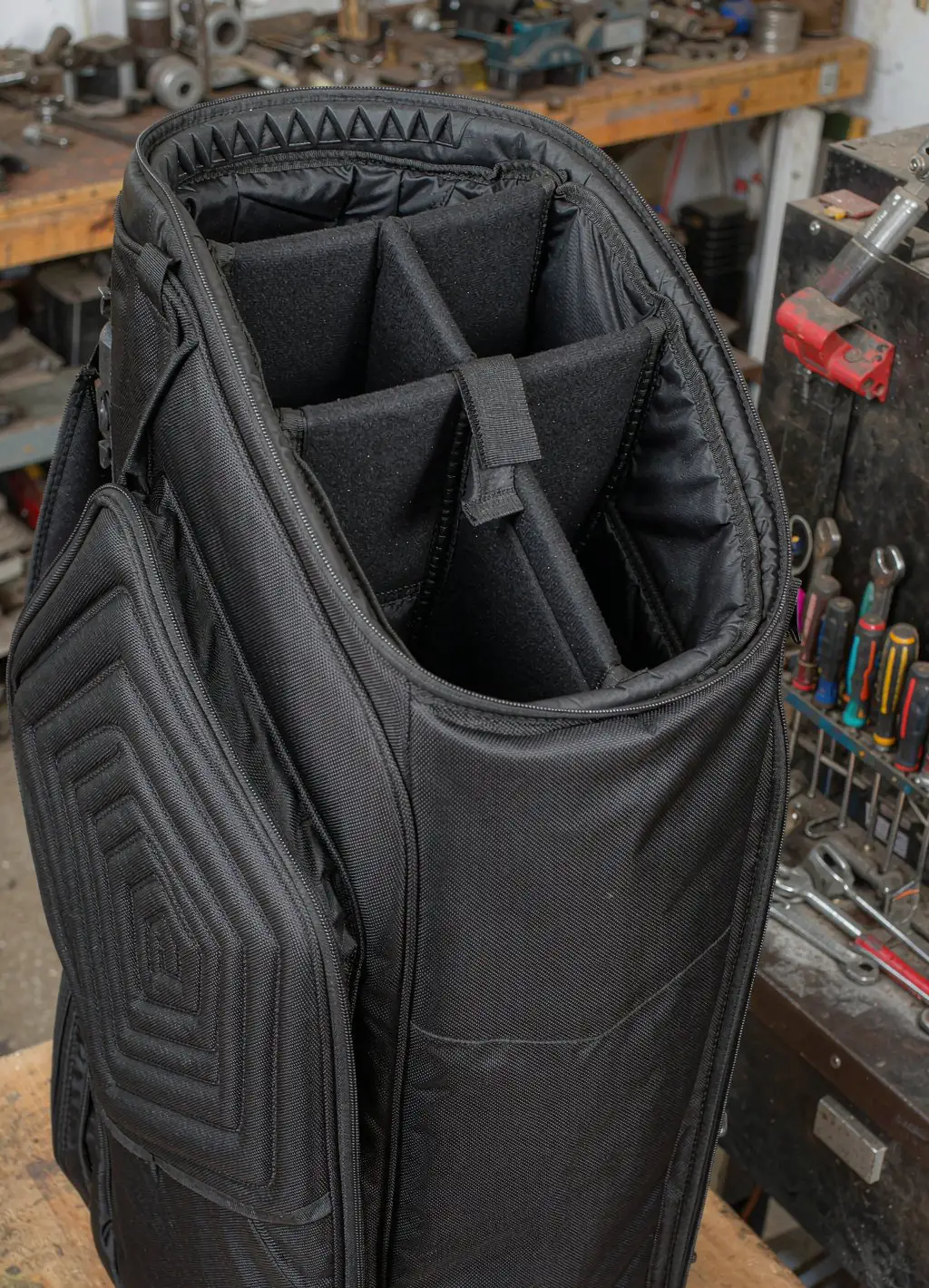
A golf bag is a half-closed tube: open at the top, closed at the base, with the lining and dividers forming cells that the clubs sit in. After a round the club heads carry soil and the grips carry sweat, and once the clubs go in and the top is closed, the bag spends the night as a warm, wet, enclosed space, which is the condition mould prefers.
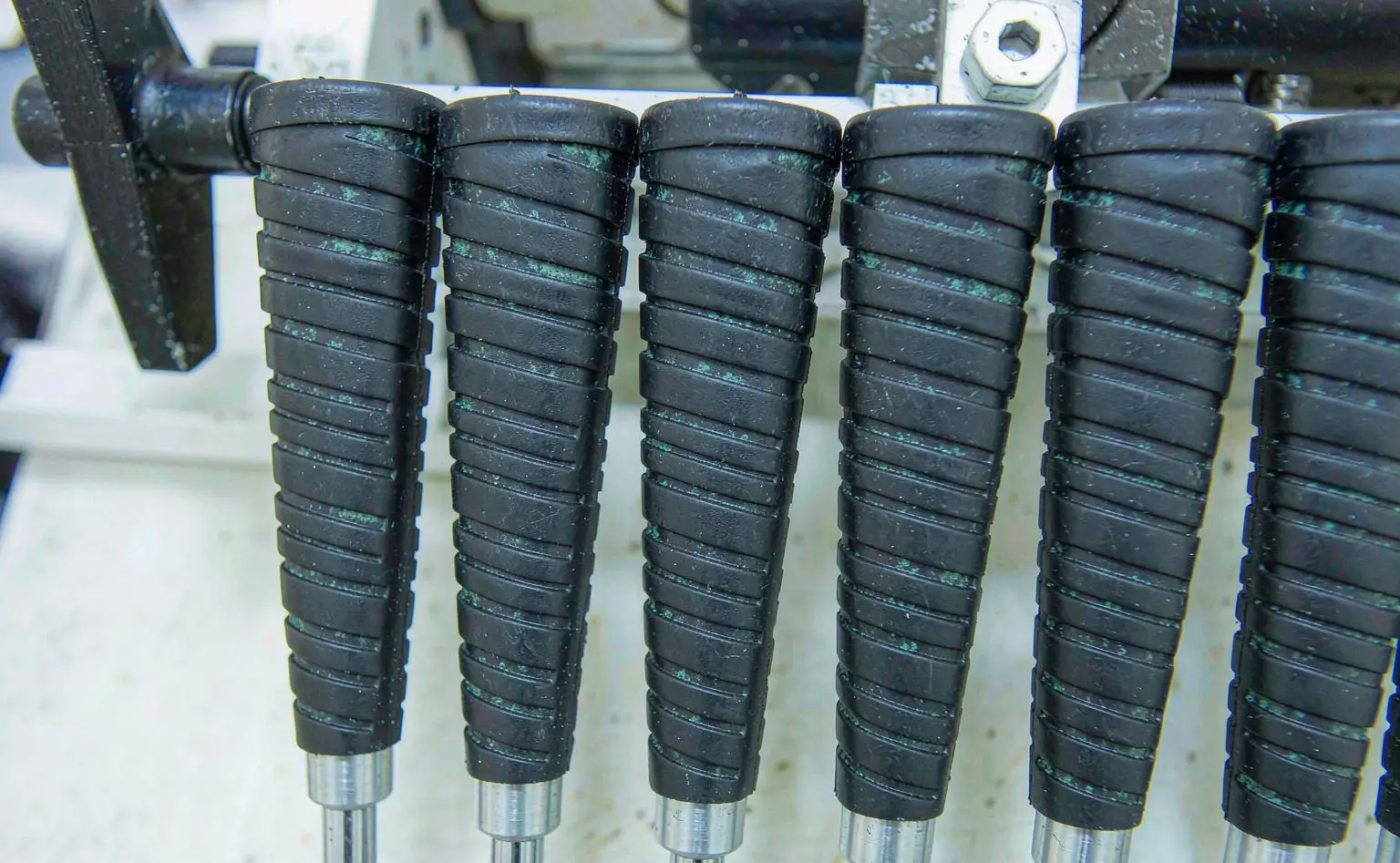
The two materials show mould differently. On polyester or nylon lining it appears as sheets of white following the weave, denser on the back because the back does not ventilate. On rubber or TPE grips the spots are small and dark, concentrated in the grooves of the pattern, impossible to wipe out, and over time the surface goes tacky and sour-smelling.
Responsibility follows the same split: the lining belongs to the fabric mill, the grips to the rubber compound, and the base and the store to the warehouse.
2. Fabric and rubber: the two lines side by side
The table sets out both lines with the additive, the addition point and the basis for the calculation. They do not transfer from one to the other.
| Location | Material | Addition point and level | Check | Points to watch |
|---|---|---|---|---|
| Lining and dividers | Polyester or nylon | iHeir-BJ at 2-3% o.w.f. in the stenter trough | 21-50C, pH 4.5-8.5, on dry fabric weight | Cationic, so no anionic auxiliaries in the bath |
| Webbing and thread | Same fabric family | As above, finished with the fabric | Same batch, same bath | Run a sample first on dark shades |
| Club grips | Rubber or TPE | iHeir-JS117 at 0.5%-1% of finished weight at mixing | Dispersed before forming | Pre-blend the powder |
| Store and export | The whole bag | Off the floor, away from the wall, humidity held, absorbent material in the container | No damp marks at the base | Do not leave the top open to the aisle |
The owners are different too: the fabric stage sits at the mill, the grip stage with whoever compounds the rubber, and the bag factory controls incoming inspection and the finished store. Purchasing should negotiate those three separately.
3. Lining and dividers: iHeir-BJ at 2-3% o.w.f. in the stenter trough
iHeir-BJ textile mildew inhibitor is a clear, colourless to pale yellow liquid, at least 8.0% active and water-soluble, for furnishing, industrial cloth, sportswear fabrics, garments, protective gear and footwear, covering mould, bacteria and dust mites together. Standard practice is to dilute BJ with pure water and add it to the stenter trough, running at 21-50C and pH 4.5-8.5, at 2-3% o.w.f. on dry fabric weight, which is 3kg per 100kg of fabric.
Three details decide the result. First, pre-mix and add in portions: dilute BJ with 9 to 13 times its weight of water, then dose in portions, because poured in at once it clusters and part of a lot ends up unprotected. Second, the hydrophilic agent goes in first: 67kg of pure water at pH 4-6, then 0.1% cationic hydrophilic agent (about 70g), then BJ. Third, allow for wet pickup: o.w.f. is against dry fabric weight, so the liquor volume has to be recalculated at the 70% figure.
One more rule: BJ is cationic, so anionic softeners or fixing agents need a compatibility trial before sharing the bath. Golf bag linings are mostly dark, where a shade difference is obvious, so run a sample before releasing bulk. For matching a product to a fabric and a process, the criteria in choosing a textile anti-mould agent are the same.
4. Grips: iHeir-JS117 at 0.5%-1% of finished weight, in the compound
The grip stage is usually skipped, because “rubber does not grow mould” is a common assumption. The rubber itself is not broken down by mould, but the surface is in constant contact with sweat, oils and course soil, all of it organic food, and the non-slip pattern is a place where soil collects and cannot be wiped or dried.
iHeir-JS117 plastic anti-mildew powder is a white to pale yellow powder, specific gravity 1.21, more than 97% active, bulk density 380 kg/m3, mean particle size 110 microns (D50), built on a nitrogen heterocycle phenol-alcohol compound, effective in PVC, PU, silicone resin, polyolefins, polyester and TPE, resistant to leaching and free of arsenic. On grips the dosing is 0.5%-1% of finished weight at the mixing stage, dispersed through the compound before forming.
Three points. First, pre-blend: mix the powder with a small portion of the same compound before it goes into the main batch, because specks and local embrittlement matter on a part that takes load and will crack. Second, pro-rate the regrind: grip moulding recycles a fair proportion of sprue. Third, do not rely on the surface: the spots sit in the grooves, a sprayed coat does not bond there and wears off in two rubs. The process side is covered in anti-mould work on EPDM, NBR and reclaimed rubber.
5. Stitching, assembly and the finished store: three actions
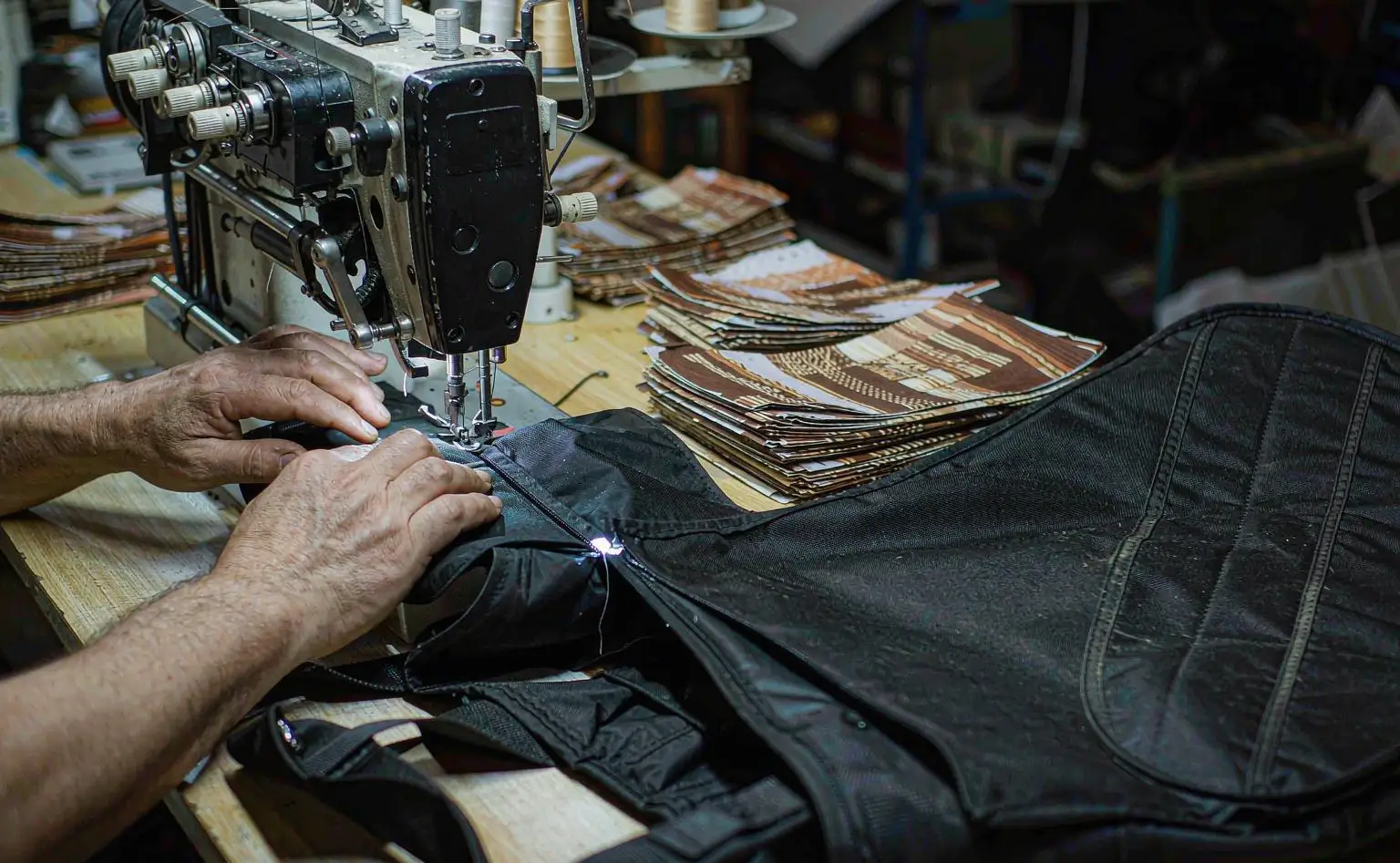
The first is stitching and assembly: clean hands while the lining goes into the body, because machine oil and sweat on the cloth are where mould starts, and the humidity of the stitching room matters, since cut panels left overnight in the rainy season take up moisture.
The second is drying before the clubs go in: blow the inside of the bag dry after assembly, and pay attention to the ring at the base where water collects. The third is the store and dispatch: bags are bulky and have to stand, so the face against the wall takes up moisture first. Pallets under the stack, a gap to the wall, the top not left open to the aisle, absorbent material in the container, and two bags opened for a smell check before loading.
6. Questions: can the grips be sprayed, and can the whole bag be dipped
Can finished grips be sprayed with an anti-mould agent? Not advisable. Rubber has low surface energy, a sprayed active does not bond, and two rounds of play and a couple of wipes remove it; the spots are also inside the grooves. Put JS117 into the compound at 0.5%-1% of finished weight instead.
Would dipping the whole bag solve both places at once? No. A bag contains rubber grip areas, metal fittings and foam padding; a full dip leaves the foam wet, rusts the metal and ages the rubber. Fabric is treated as fabric and rubber as rubber.
How is the effect verified? Fabric goes through ISO 846 or ASTM G21 for a growth rating and ISO 22196 for antimicrobial performance, with GB/T 24346 as the textile basis; rubber samples must be finished grips containing the additive, not raw compound.
Closing figures: lining and dividers in the stenter trough with iHeir-BJ at 2-3% o.w.f., 21-50C and pH 4.5-8.5, pre-mixed with 9-13 times water and dosed in portions with wet pickup allowed for; grips at 0.5%-1% of finished weight with iHeir-JS117 at the mixing stage, pre-blended and with regrind pro-rated; and a store with pallets, a gap to the wall and a smell check before loading.


