




 View Count:8
 Date:2026-10-30
How should skateboard mould be treated, when the whole problem hides between the plies? The root cause is moisture in the maple veneer and water left in the glue line, and the grip tape seals the only way out. One mouldy deck returned costs a batch, and the buyer starts doubting the glue bond. Soak the veneers in iHeir-M5 at 1:40 to a 15%-20% weight gain, and add iHeir-JS at 1%-2% of glue weight where a water-based emulsion glue is used. This article covers both doses, the press settings and the drying before grip tape.
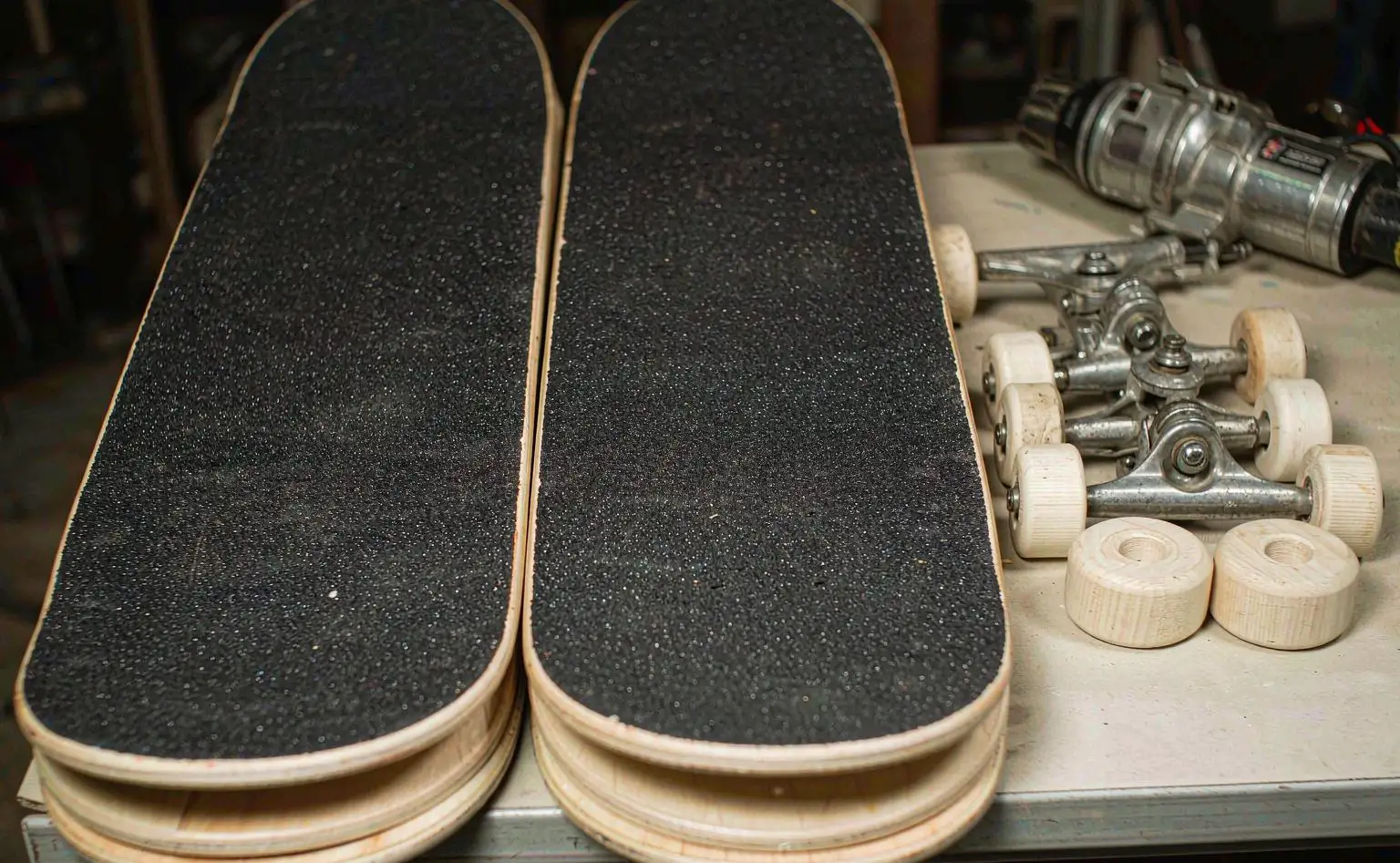
1. Mould starts in veneer moisture and the glue line
A deck is seven or so maple plies cross-laid, glued and hot pressed, then taped, edge-sealed and drilled. Maple takes up moisture readily, and loose veneer gains several points of moisture in a few days on the rack; if the plies go into the press wet, or the glue spread is heavy and its water has not left, the press seals that water between the plies.
The grip tape seals the exit. Once tape is down, moisture cannot leave that face; the back carries lacquer or edge sealer, which also blocks it. Water can only creep out at the edges and the truck holes, and where it cannot, the plies go mouldy and dark, the glue line whitens and the laminate blisters — strength goes with it.
Edge sealing needs to breathe. A fully sealed edge looks neat and shuts the last vent. The workable approach is a thin sealer coat with micro-openings, or a water-based sealer that lets residual vapour pass.
2. Veneer and glue line are handled separately
The table lines up veneer, glue, pressing and taping. The veneer is judged by weight gain, the glue by percentage of glue weight, and one does not convert into the other.
| Stage | Object | Product and level | Process | Control point |
|---|---|---|---|---|
| Veneer | Maple plies | iHeir-M5 at 1:40, 15%-20% gain | Dip before lay-up | Fully immersed, drip after removal |
| Glue line | Water-based emulsion glue | iHeir-JS 1%-2% of glue weight | Stirred into the glue batch | No overdose above 2% |
| Pressing | Lay-up | No additive, moisture and pressure control | Hot press | Veneer moisture to the process card |
| Taping | Deck face and tape | No additive, drying control | Dry before taping | Surface dry, no vapour |
One boundary. Reactive glues such as epoxy and polyurethane take no fungicide: they carry no water, the glue line offers no carbon source, and an additive can disturb curing. On that route the whole defence is veneer moisture and press settings. Only the water-based emulsion route carries water into the line and needs a dose.
3. Veneer: dilute 1:40 and soak to a 15%-20% weight gain
iHeir-M5 is a reddish-brown liquid with high solids, strong penetration, resistance to leaching and tolerance of acid, alkali and humidity. Mix the bath at 1:40, keep the plies fully immersed with nothing above the surface, and soak to a 15%-20% weight gain, about 5-10 minutes. Lift, drip, then air or sun dry until the surface is dry and the moisture has settled before lay-up.
Thin stock needs a tight hold on time. Maple plies usually run 1.2-1.8mm; over-soak and they take too much water, then cup and check while drying. Weigh three plies of the same size to set the time instead of going by feel. When stacking wet plies, slip paper between them — the plies pressed face to face dry slowest.
Three points. Ratio: settle whether 1:40 is by volume or by weight and keep it plant-wide, or batches will drift. Replenishment: a working bath weakens with use, so top up with concentrate against the weight-gain data. Compatibility: a soaked ply darkens slightly, so trial the shade before a clear finish.
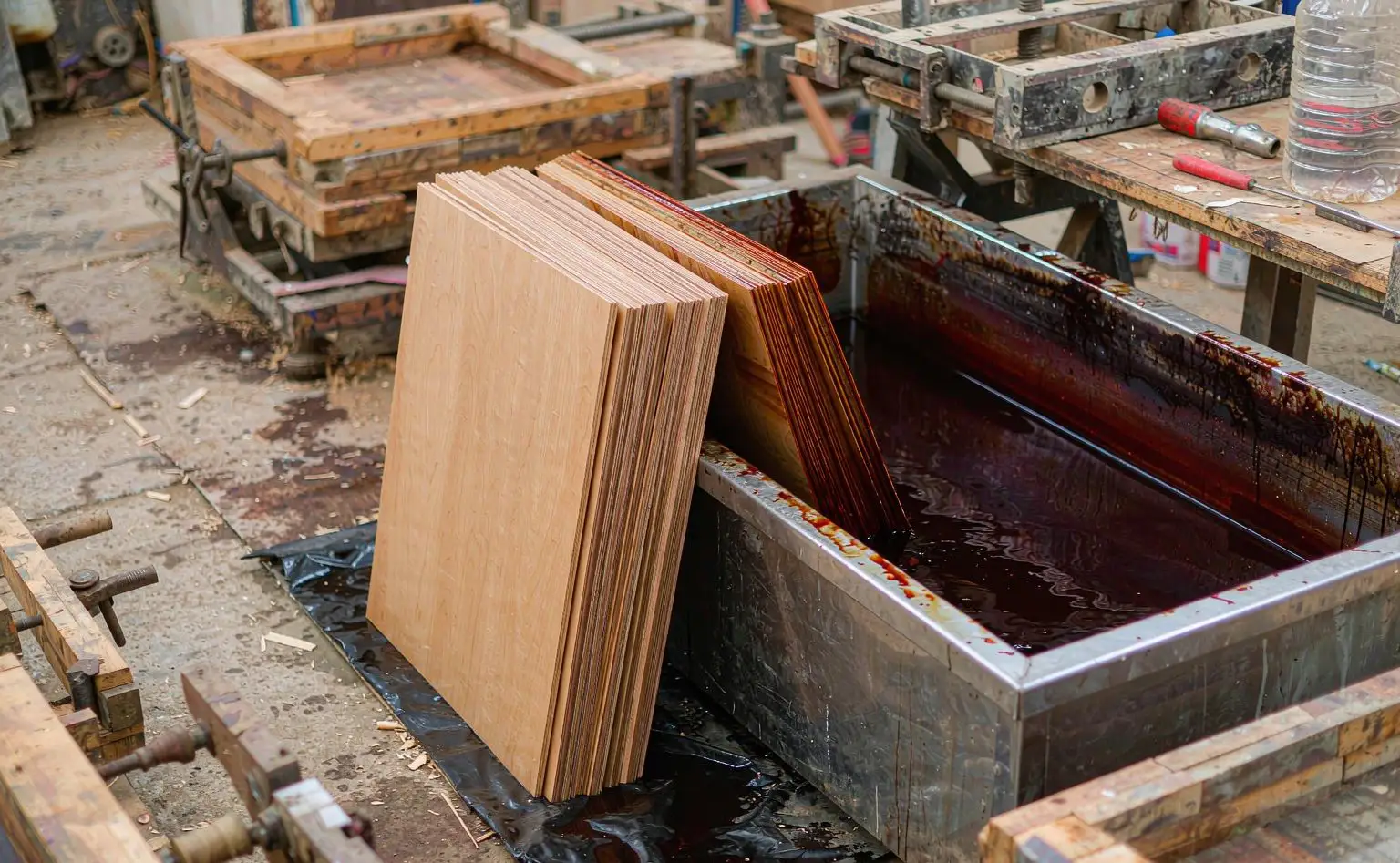
4. Glue line: 1%-2% into the water-based emulsion glue
Where the lay-up uses a water-based emulsion glue — PVA or a modified emulsion — add iHeir-JS glue fungicide at 1%-2% of glue weight. It is a clear, colourless liquid at 45% active content, specific gravity 1.02, pH 6-7, viscosity 3cps at 25℃, miscible with water in any ratio; it goes into the glue batch with stirring and needs no change to hardener or filler.
Into the mixing pail, not onto the ply. Weigh the glue, add the agent at 1%-2%, stir slowly for five minutes until even, then run the glue spreader. Sprinkling on the ply or pouring into the trough gives an uneven line. Above 2% the initial tack suffers, and a bond that opens in service is a worse risk than the mould it was meant to stop.
Control the spread as well. Keep the spread to the existing process: a thicker line means more water and slower escape at the press, and residual water in the line is the most direct cause of deck mould. The additive suppresses what lands there; it cannot drive the water out.
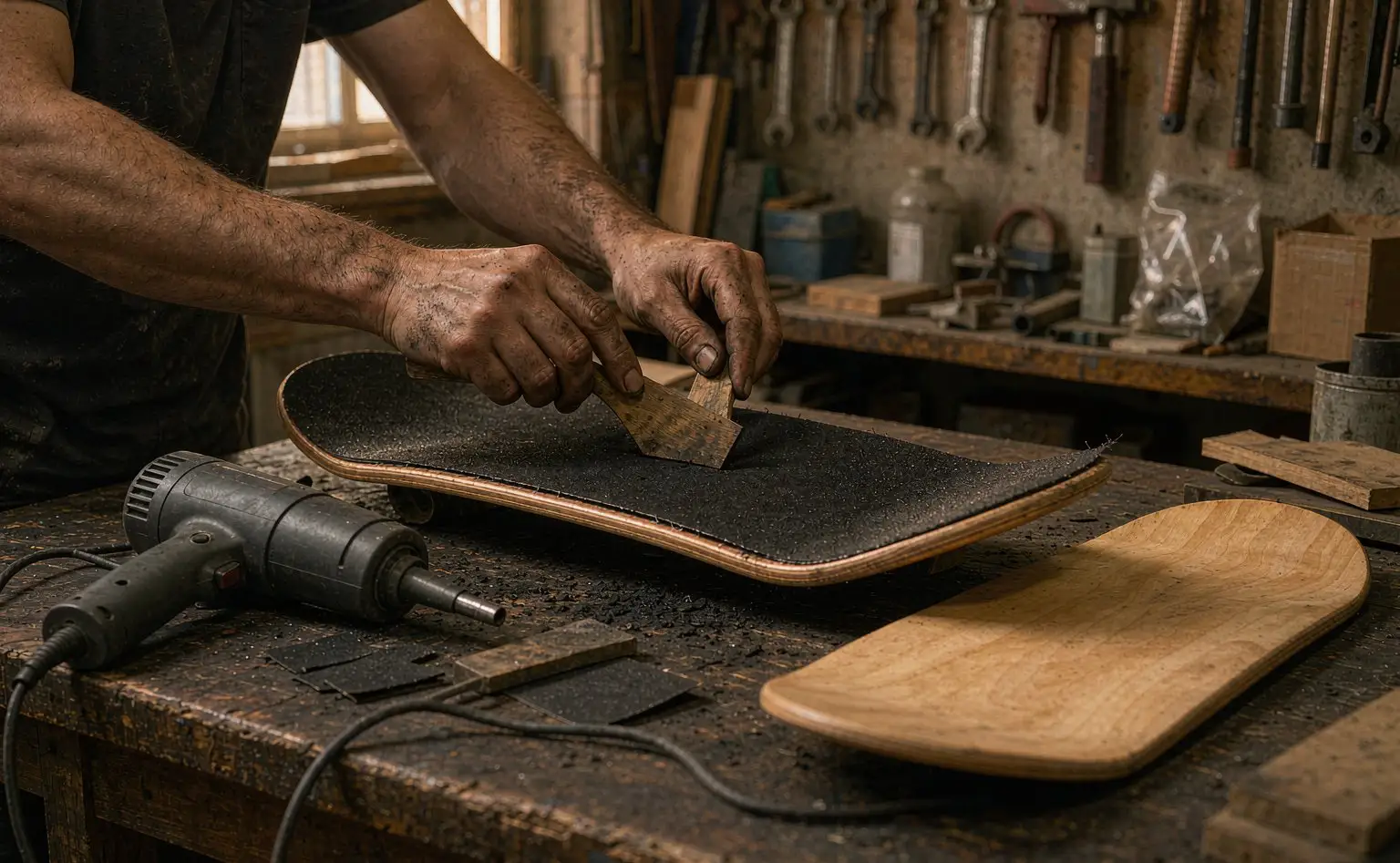
5. Pressing, taping and the finished-goods store
Press as before: veneer moisture to the process card, spread by weight, press temperature and time unchanged. Let the pressed deck rest before taping so residual vapour can leave.
Dry before taping. Run the face through hot air or a drying tunnel until it is dry and free of vapour, then apply tape; once the tape is down, that face is closed. Keep the edge sealer thin with micro-openings instead of building an airtight shell around the edge.
Store below 60% RH, decks standing rather than stacked, first in first out, and leave an air path in the container; the logic is in condensation in sea freight containers. Release on three levels: weigh three plies after the dip for weight gain; test the deck to GB/T 18261, sampling at the edge and at a truck hole; hold whole cartons 30 days at 30℃/85% RH, then check the face, the tape edge and the sealed edge.
6. Questions on bond strength, cure time and sanding back
Q: Does the veneer dip hurt the glue bond?
At a 15%-20% gain, dried back to a settled moisture before lay-up, the bond is unaffected. When it drops, the usual cause is pressing before the plies are dry, with water sealed between them; a peel control separates an additive effect from a drying fault.
Q: Does the additive change the glue cure?
At 1%-2% the effect on a water-based emulsion is small; above 2% the initial tack falls. After any change, press a small batch and measure open time and green strength before scaling up.
Q: Can a mouldy deck be sanded back and used?
Surface bloom can be sanded, then flatness and tape adhesion re-checked; where mould has reached the plies and the glue line has gone white or black, the deck is scrap. A reworked lot needs both the veneer dip and the pre-taping drying redone.
Four points to take away: soak the plies in iHeir-M5 at 1:40, fully immersed, to a 15%-20% weight gain (about 5-10 minutes), then drip and dry to a settled moisture before lay-up; add iHeir-JS at 1%-2% of glue weight to a water-based emulsion glue in the mixing pail and stay under 2%; press to the existing process, dry the face before taping and keep the edge sealer micro-open; store below 60% RH and release whole cartons on 30 days at 30℃/85% RH. A 1kg concentrate sample and a 1kg glue-additive sample can go out first; MOQ and lead time are on the iHeir-M5 product page.


