




 View Count:7
 Date:2026-10-30
How is wood carving mould handled? It splits into two stages: blank moisture decides whether the piece can grow mould, and the deep grooves decide whether the liquor ever reaches the wood. One mouldy ornament costs a lot reworked and an inspection date lost. Soak the blank in iHeir-M5 at 1:40 until it gains 15%-20% in weight (about 5-10 minutes), drip and air-dry it, then carve; brush the cut faces and grooves with the same liquor once or twice afterwards. This article covers the dip, the dosage for the grooves and the paper in the box.
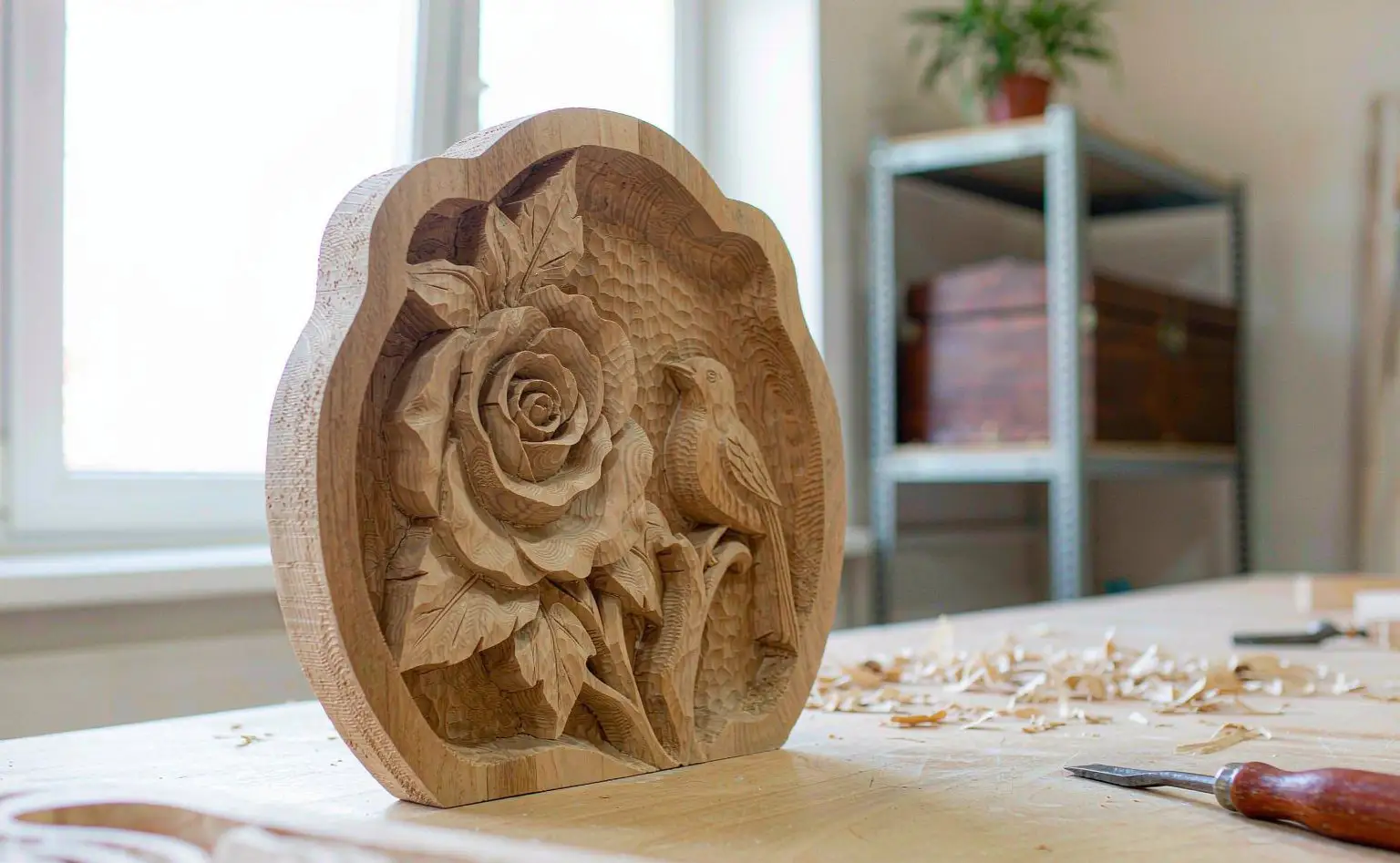
1. Mould starts at the blank and in the deep grooves
Carving stock is usually camphor, basswood, a rosewood family hardwood or pine, and moisture content is the first line. A blank that is not dried through keeps pushing water outwards at the finished stage; once the lacquer goes on, that water cannot leave and sits under the film. Given enough of it, mould appears first at tool cuts, glue joints and the base — the places with no coating.
The second line is the deep groove. Pierced work, deep relief and incised lettering leave channels that sanding cannot reach and lacquer cannot fill, so the wood stays bare; moisture moves in and out of that layer all year and spores get a stable landing site. Neither line is closed by polishing the surface.
Why the blank stage is the effective one. A blank is solid wood with no film in the way, so the liquor follows the grain inwards. Soaking after carving swells the detail and lifts the grain, and it damages lacquer and wax work that then has to be redone — more expensive than the treatment itself. Hence the order: treat the blank, then brush after carving.
2. Blank dip and post-carving brushing are separate stages
The table lines them up. The dip is judged by weight gain, the brushing by passes, and one does not replace the other.
| Stage | Object | Method and level | Time | Control point |
|---|---|---|---|---|
| Blank | Squared blank after drying | iHeir-M5 at 1:40, fully immersed | 15%-20% weight gain, about 5-10 minutes | Nothing above the liquor, drip after removal |
| Drying | Soaked blank | Air dry or sun dry | Until the surface is dry and moisture settles | No forced high heat, or it checks |
| After carving | Cut faces, deep grooves, pierced walls | Same liquor, brushed 1-2 passes | Passes spaced to touch-dry | Wet at the bottom of the groove |
| Packing | Piece and gift box | iHeir-D 0.1-0.2 g per sheet | At boxing | Paper facing in, box sealed |
One boundary. The liquor is not a coating: it goes into the wood to suppress fungi and does not seal the surface. The reverse also holds — no thickness of lacquer saves a blank whose moisture never came down, because the water still sits under the film. Moisture is controlled by drying and dip time, the surface by lacquer and wax, and the mould protection by penetration.
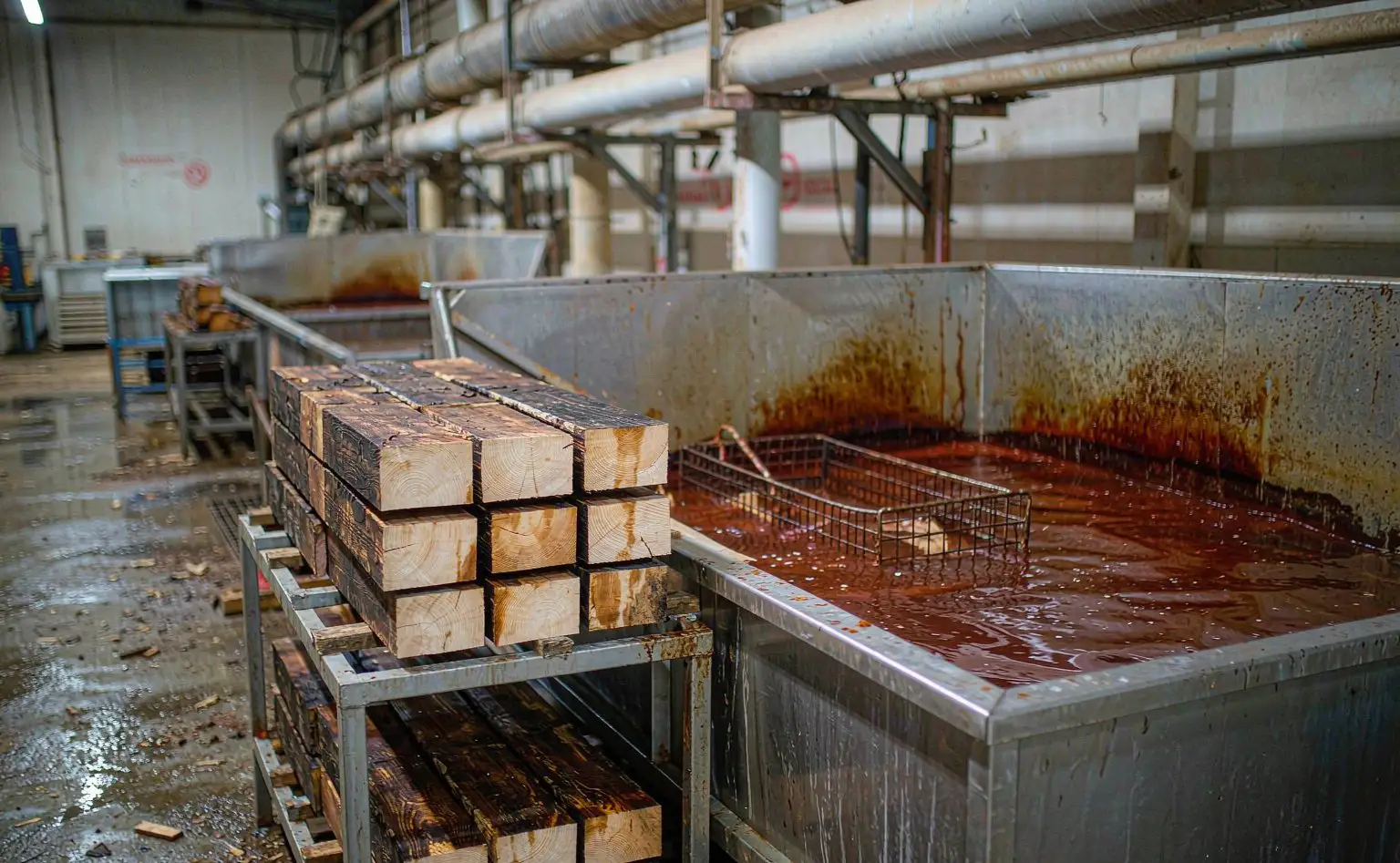
3. Blank: dilute 1:40 and soak to a 15%-20% weight gain
iHeir-M5 immersion-type bamboo and wood fungicide is a reddish-brown liquid with high solids, strong penetration, resistance to leaching, and tolerance of acid, alkali and high humidity; it suits bamboo, wood, rattan, fern, palm and grass articles. Shake before use — a little floating matter is normal. Mix the bath at 1:40, keep the blank fully immersed with nothing above the surface, and soak to a 15%-20% weight gain, which takes about 5-10 minutes.
How to know the gain is there. You do not weigh every piece: weigh three blanks of the same size dry, soak, weigh again, and use that ratio as the time basis for the batch. Thick stock and dense hardwood penetrate slowly, so take the longer time; thin stock and softwood the shorter. Lift out, drip, then air or sun dry until the surface is dry and the moisture has settled before carving.
Three points. Level: hold floating blanks under, because whatever sits above the liquor is untreated. Replenishment: a working bath loses strength with use, so top it up with concentrate against the weight-gain data instead of adding water. Drying: no forced high heat, or the surface dries before the core and the blank checks — and a checked blank is all groove later. The product ships 25kg to a drum and keeps a year, dry and out of light.
4. Deep grooves: brush after carving until the bottom is wet
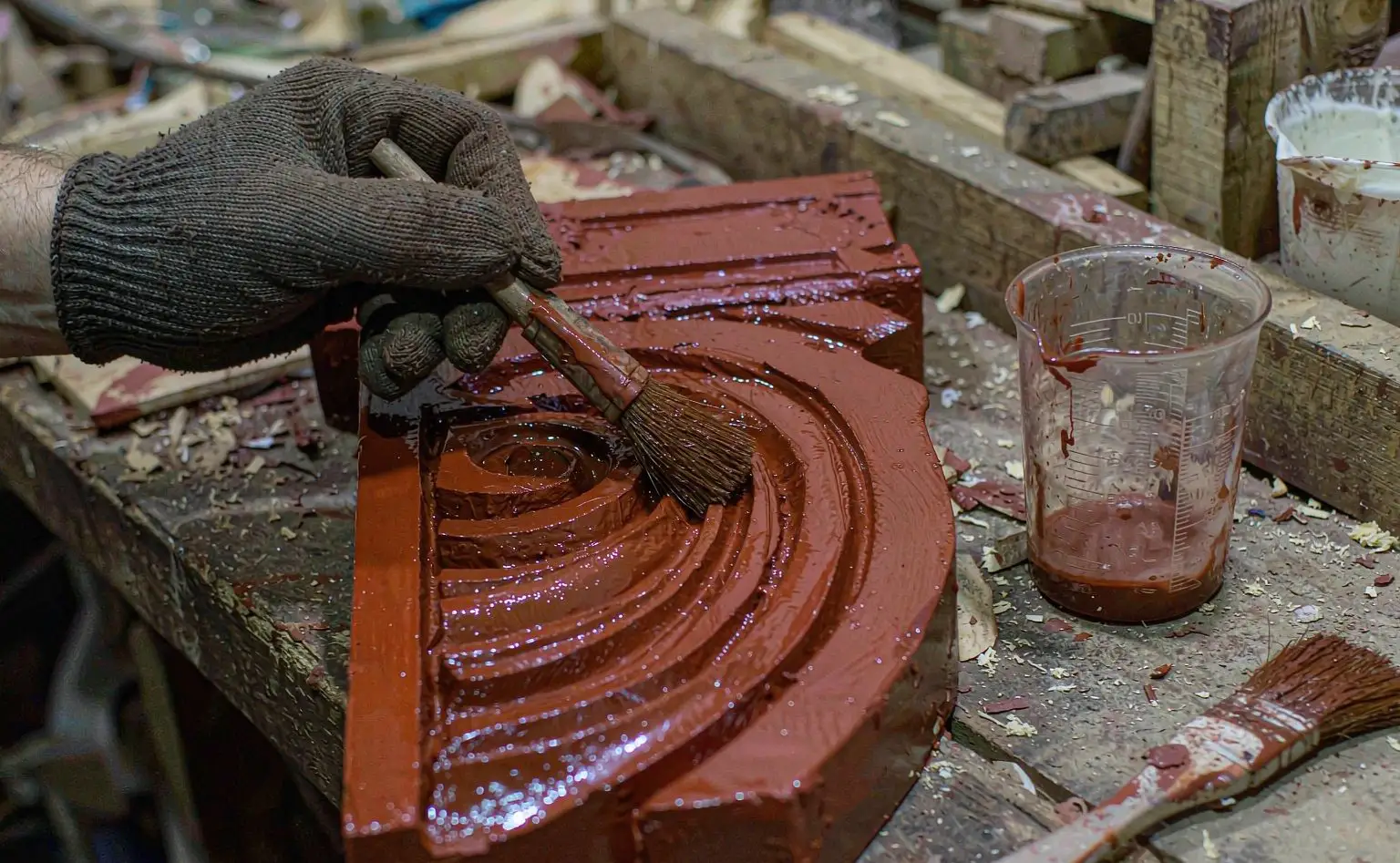
Carving cuts the treated surface away and exposes wood that never took liquor; the deeper the groove, the more is exposed. Brushing after carving is therefore not optional: same liquor, 1-2 passes, concentrated on three places — the bottom of deep tool channels, the inside walls of pierced pieces, and the base and back that never get a coating.
Technique: a small brush loaded with liquor, worked along the direction of the cut until the bottom of the groove is visibly wet, not just the lip; let the first pass dry to touch before the second, and do not wipe with water between passes. After brushing, leave the piece until the surface is not tacky before sanding and lacquering, or the coating loses adhesion.
Where a third pass pays: deep relief with flowers and birds, the inside of a pierced brush pot, and plaques with incised lettering — the most dead corners. Two passes, dry, then a local touch-up beats flooding the piece.
5. Lacquer, packing and export
Lacquer and wax follow the existing process; once the liquor is dry it does not hurt adhesion. For clear finishes, trial a scrap blank first to confirm no shade shift or bloom before a batch. When sanding, do not cut through the treated layer in the grooves — that undoes the brushing.
Packing uses iHeir-D gas-phase anti-mould paper, 0.1-0.2 g of active content per sheet, solids 70%±5, 25kg per drum, one year shelf life. It releases into a closed space, so position and closure decide the result: against the box wall with the face towards the piece, box sealed. Wrap the piece in soft paper first so the coated sheet does not rub the lacquer, and set the sheet count by a packing trial.
Store below 60% RH, first in first out, and leave an air path in the export container; the logic is in condensation in sea freight containers. Release on three levels: weigh three blanks after the dip for weight gain; test the finished piece to GB/T 18261, sampling at a groove and at the base; hold whole boxes 30 days at 30℃/85% RH, then open and check grooves, feet and liner.
6. Questions on warping, finished pieces and shade
Q: Will the blank warp or check after soaking?
Held to a 15%-20% gain, dripped and then air or sun dried, it usually does not. Checking comes from over-soaking followed by forced heat; on thick stock, two shorter dips beat one long one.
Q: Does a lacquered piece still need brushing?
Not on an intact film, but cut edges, joints and the base expose wood and do need a touch-up: dab with a brush, let it dry, then wipe off the excess so no mark stays on the lacquer.
Q: Does brushing change the colour in the detail?
M5 is reddish-brown, so pale woods such as basswood and pine darken slightly; trial it on a scrap before a clear finish. Under a dark lacquer or wax it is invisible. Always trial on scrap, never on a finished piece.
Four points to take away: soak the blank in iHeir-M5 at 1:40, fully immersed, to a 15%-20% weight gain (about 5-10 minutes), then drip and dry it before carving; brush the same liquor into the cut faces 1-2 passes, concentrating on groove bottoms, pierced walls and the base; confirm the treated layer is dry before lacquer and do not sand through it; put iHeir-D paper at 0.1-0.2 g per sheet into the box by volume, face in and box sealed, and store below 60% RH. A 1kg concentrate sample can go out for dip and brush trials first; MOQ and lead time are on the iHeir-M5 product page.


