




 View Count:32
 Date:2026-11-13
Skirting board mould: how do you know the substrate is soaked through, and how do you dry the back before filming? Under-soak and the core takes mop water, then goes black in two months. Solid wood and finger-joint stock go into iHeir-M5 immersion-type bamboo and wood fungicide at 1:40 to a 15%-20% weight gain and dry back. MDF cannot be soaked and is held by edge sealing and a back groove. Blow the back dry before filming, then put iHeir-D in the bundle. This article gives the soak, drying and packing parameters.
1. Why the skirting is the dampest line in a room
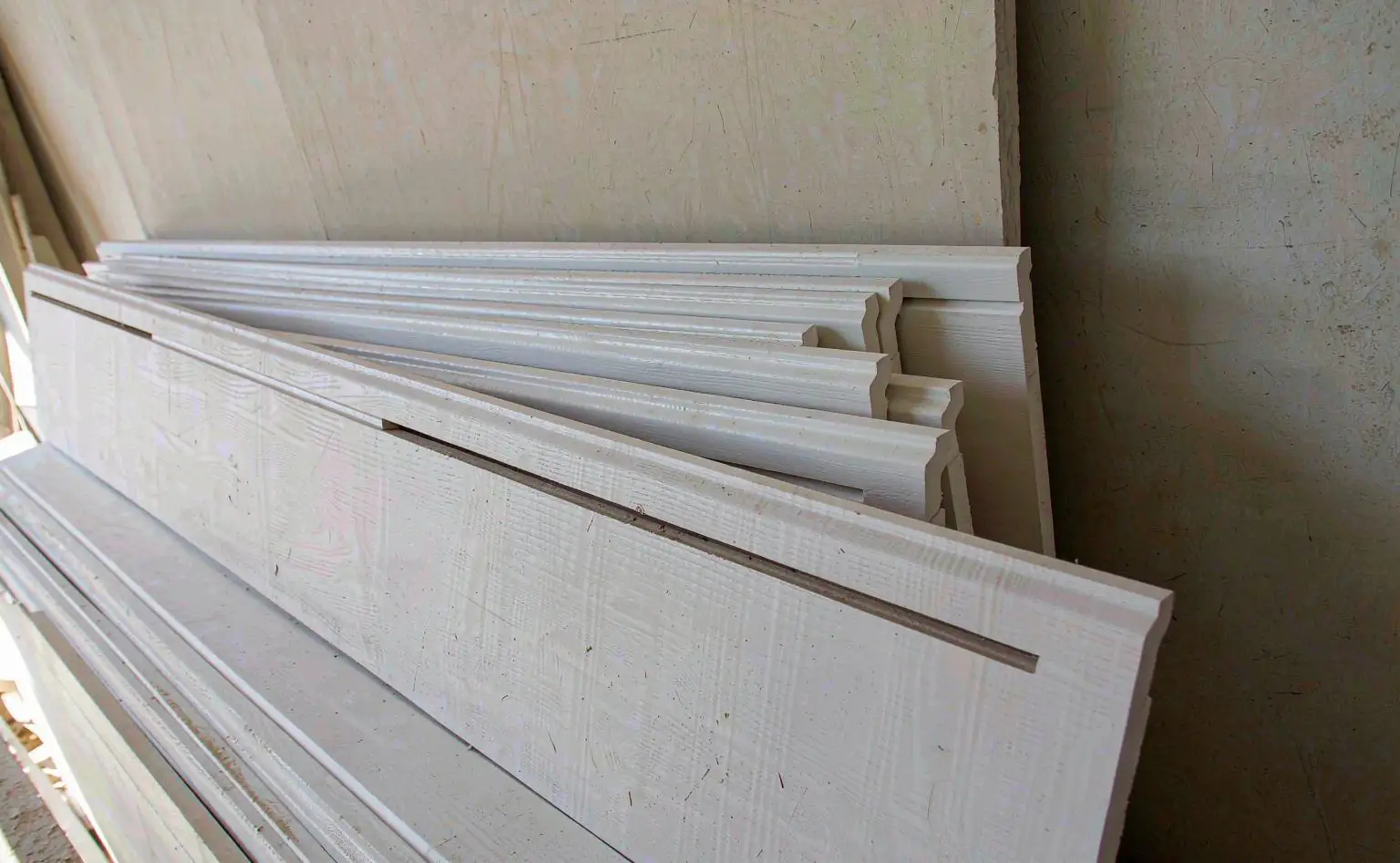
The working conditions are harsher than a door or a cabinet: the bottom edge sits a dozen millimetres off the floor, the back lies against a wall that is usually the coldest surface in the room, and the face takes mopping and wiping. Together that is a permanent humidity gradient.
Moisture gets in by two routes. One is the ends and the back: boards are cut on site, the end is open timber and draws floor moisture directly, and a back that is filmed but not sealed still lets the substrate take up water. The other is the face joints: film seams and corner joints pass water into the board.
Once growth starts inside the substrate it cannot be wiped off. Most spots on a skirting are yellow-brown stains that have come through from the back or the end, and when the board is taken off the section is already black. Those pieces can only be replaced, and at project handover that usually means rejecting the batch.
2. Two families of substrate: soakable and not
This is where skirting work most often goes wrong: the same product with a different substrate needs the opposite treatment.
Solid wood, finger-joint board and plywood can be soaked. These take up limited water and recover on drying, and a dip carries the fungicide into the fibre, which deals with the cause.
MDF and HDF must never be soaked. They are pressed from fibre and resin, and the thickness swell after water does not come back; strength and screw holding both drop. That family goes the other way: a moisture groove on the back, sealed edges all round, moisture controlled before filming, with vapour-phase sheets in the pack as the last line.
Ask one question at the purchase order: solid timber or MDF. If nobody can answer, treat it as MDF and keep the batch out of the dip tank.
| Substrate | Soakable | Product and level | Key stage | Control point |
|---|---|---|---|---|
| Solid wood, finger joint | Yes | iHeir-M5 1:40, 15%-20% gain | After cutting, before filming | Soaked through, ends too |
| Plywood | Yes, shorter dip | As above, at 15% | After cutting | No delamination |
| MDF, HDF | No | No dip | Edge seal, back groove | Moisture to spec before film |
| Bundle and pack | — | iHeir-D 0.1-0.2 g per sheet | Packing | Sheet in the middle of the bundle |
One boundary. iHeir-M5 covers the substrate itself and stays inside it; iHeir-D covers the closed space in the bundle. A substrate that was never soaked through cannot be rescued by sheets, and a well-soaked board packed without moisture control still smells at opening.
3. Soaking at 1:40 until the weight gain reaches 15%-20%
Dilution. iHeir-M5 at 1:40 in water, water first then concentrate, stirred even. The dosage is set by weight gain, not by soak time. Use the bath the same day; left open overnight, concentration and level both drift.
When to stop. Judge by a 15%-20% weight gain, not by the clock. Weigh three strips before and after and average; thin stock and ends take up fast, thick stock and knots need longer, and running on minutes alone always leaves a few strips dry in a mixed batch.
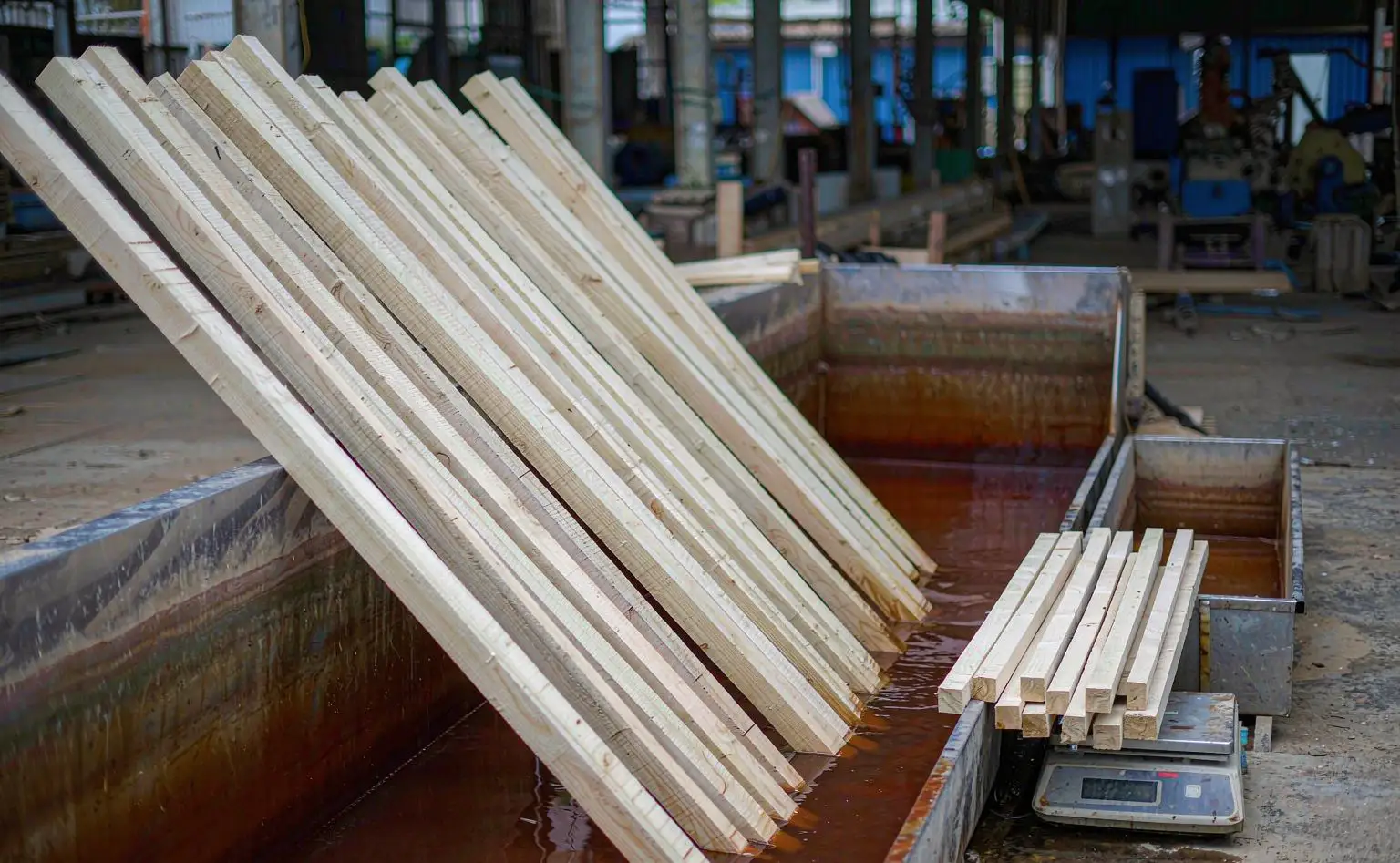
How to soak. Stand the strips or stack them in layers with the liquid above the timber and a weight to stop floating, ends down so they take liquor. iHeir-M5 is a red-brown liquid with strong penetration and resistance to leaching, and the end grain darkens after the dip, which is normal.
Drain on the way out. Rack the strips until they stop dripping, then move them to the drying rack or the kiln. Stack them straight from the bath and the lower courses stay in liquid, which over-soaks them and makes drying harder.
4. Blow the back dry before filming, and seal the edges
Surfaces are usually finished with PVC film, melamine paper or paint. Filming seals water inside the board, so moisture has to be on spec first: most plants hold timber at 8%-12% and MDF at 6%-10%, by their own process card.
How to dry the back. Before filming, blow the back and the ends clear of free water and dust with air or an air knife; soaked strips hold water in the groove. Send them into the machine only when the surface is not cold to the touch and the weight is steady.
Seal properly. Ends and groove mouths are open faces, so edge sealer or edge banding has to cover them fully; on MDF all four edges are sealed, and one missed edge is one open door for water.
Shop humidity. Hold filming and packing at 45%-65%RH, run a dehumidifier in the humid season and never leave filmed boards out overnight, since the night-time drop condenses water back onto them.
5. Bundles and storage: where the sheets go
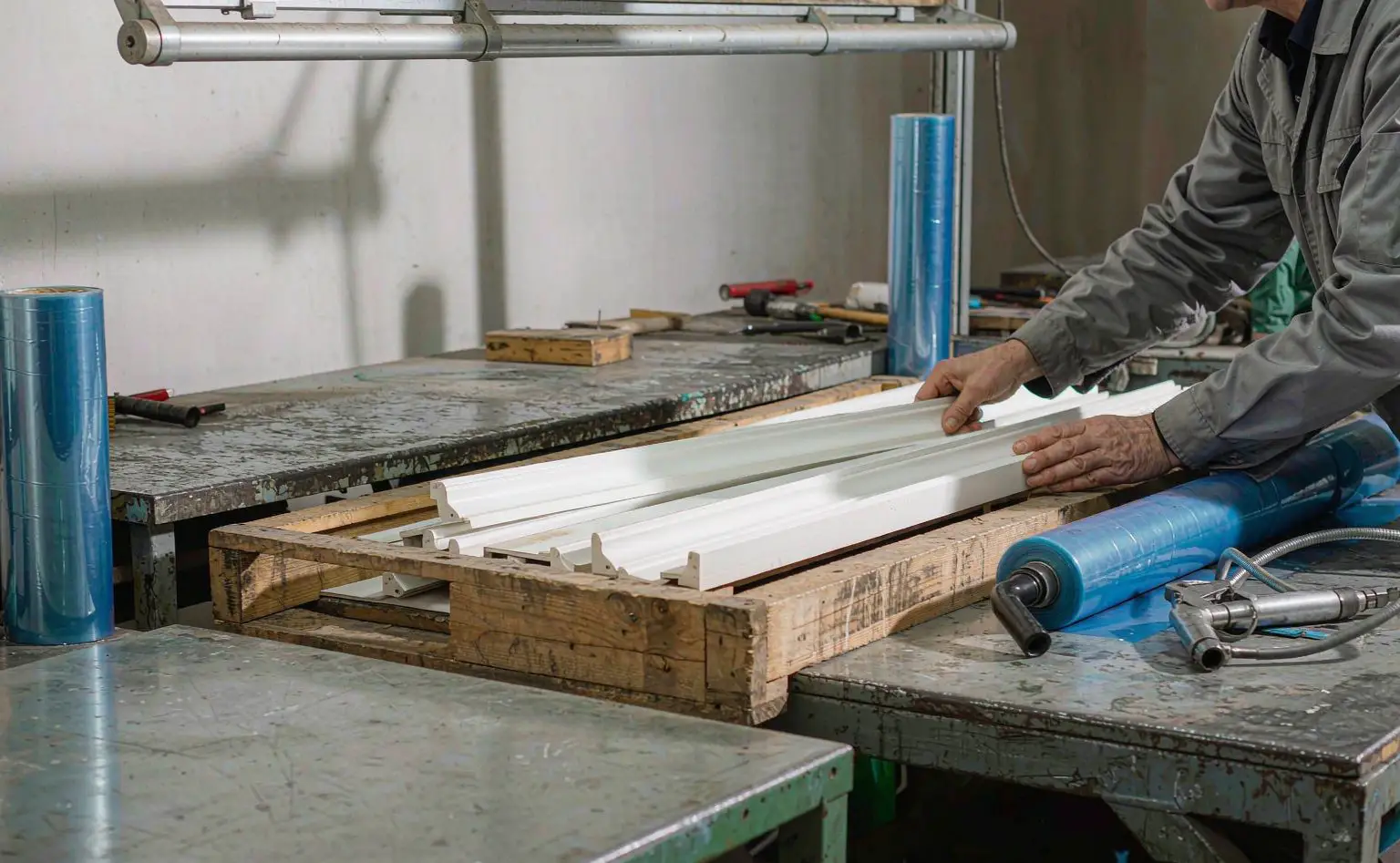
Packing uses iHeir-D gas-phase anti-mould paper, each sheet carrying 0.1-0.2 g of active. A bundle of 10-20 boards takes 1-2 sheets placed in the middle rather than at the two ends: a vapour-phase inhibitor spreads by diffusion, so the middle position covers the whole bundle.
Close the bundle. Shrink or stretch film has to be sealed at both ends, because an open bundle simply vents the active. Project orders are often split into small bundles and each one needs its own sheet.
Storage and transport. Hold the store below 60%RH with pallets 10 cm off the floor and 30 cm off the wall; avoid loading in rain and never put damp trims in the same truck. On site, boards stacked against a wall that is still drying will pick up moisture again, so tell the installer to leave a gap for air.
Comparable work. Timber soaking is set out in door core board soaking at 1:40, and moisture control from timber to finished store in solid-wood furniture export.
6. Questions from the line
Q: Is there no way to protect an MDF skirting?
A: There is, just not by soaking. Sealed edges, a back moisture groove, moisture control before filming and vapour-phase sheets in the bundle cover most project conditions.
Q: What is the difference between 15% and 20% gain?
A: Five percentage points of liquor uptake. Thin stock in a dry season takes 15%; thick stock with knots in the humid season takes 20%, set by substrate and season.
Q: The end grain darkens after soaking, will the buyer object?
A: iHeir-M5 is red-brown and the end grain darkens, which is normal. Most ends are covered by edge sealing; for natural-finish ends confirm on a colour sample first.
Q: The film blisters after filming, is that the fungicide?
A: Usually it is moisture that was not controlled and is now sealed in. Measure substrate moisture first, then check glue weight and roller temperature before blaming the additive.
Four closing points: soak solid wood and finger-joint stock in iHeir-M5 at 1:40 to a 15%-20% weight gain, judged by weight rather than time, ends down, drained on racks before drying; never soak MDF and instead seal all four edges, cut a back moisture groove and hold 6%-10% before filming; blow the back and ends dry with air before filming and send boards in only when they are not cold and the weight is steady; put 1-2 sheets of iHeir-D at 0.1-0.2 g in the middle of each bundle, close the ends and hold the store below 60%RH. Performance can be verified to GB/T 18261 or ASTM G21, a one-kilogram sample can be sent ahead, and lead times are on the iHeir-M5 product page.


