




 View Count:28
 Date:2026-11-13
Is wetsuit mould preventable? Most of it is, but mould does not start in the face fabric; it comes from the layer where the neoprene sheet is bonded to the lining. Bond a damp sheet or leave the adhesive plain, and the bag smells within three months. The route is dry the sheet until no free water sits on it, treat the lining with iHeir-BJ textile mildew inhibitor at 2%-3% o.w.f. before bonding, and add iHeir-JS glue mildew inhibitor at 1%-2% of glue weight. This article gives the drying, finishing and glue parameters.
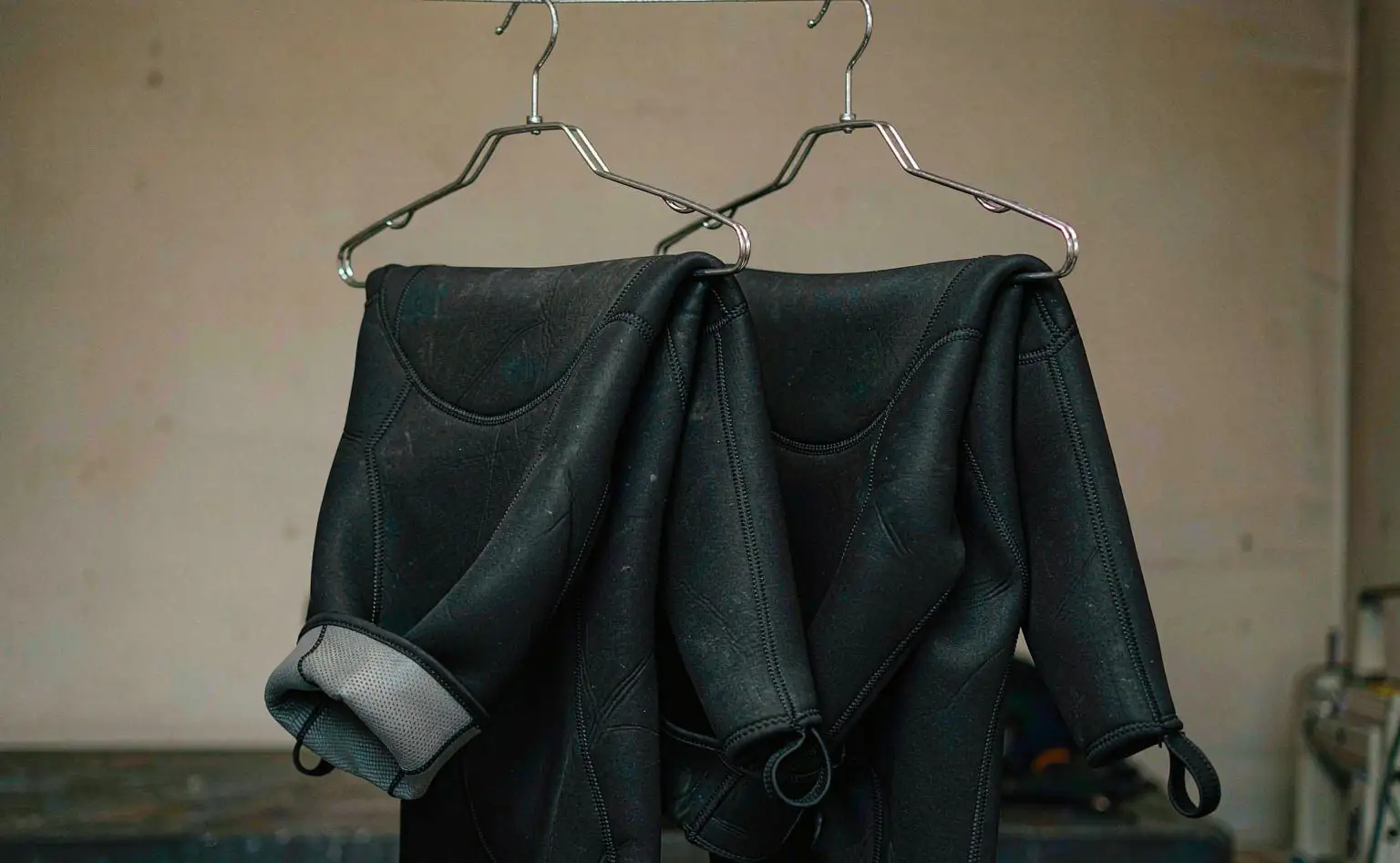
1. Why wetsuit mould comes out of the bonded layer
The build is thin: an outer skin of neoprene, an inner nylon knit, one layer of laminating adhesive between them, and seam tape over the joints. Neoprene is a closed-cell foam, so water does not enter the cells, but its surface and its cut edges do take up water, and a cut edge is open.
Nylon lining takes up moisture far faster than rubber. It absorbs sweat when worn and seawater when diving, and a suit rolled up and bagged before it dries leaves all of that water at the interface between lining and adhesive. That interface gets no air and is hard to wipe, which makes it the dampest layer in the garment.
The adhesive is food as well. Neoprene and polyurethane adhesives contain resin and plasticiser, and once the glue line stays damp the growth starts there, travels along the seam into the lining, and only then shows as black spots on the face. By that point the whole laminate is contaminated.
2. Why the lining can only be treated on its own range
The route is lining knitting and finishing, cutting, sheet cutting, adhesive coating, bonding, maturing, seam taping, sewing, inspection and packing. Once the laminate is pressed, the lining can never be treated again: the adhesive film seals the back of the cloth, liquor cannot get in, and a finished suit cannot be dipped whole.
So the lining finish has to happen in the stenter trough at the dyehouse, on the same line as dyeing and washing. Put that sentence in the fabric order: the lining is finished for mould resistance before coating or bonding, with a retention sample per batch. Raise it after the fabric reaches the wetsuit plant and the only option left is to reject the lot.
The application is the standard knit route: iHeir-BJ at 2%-3% o.w.f., pre-mixed into 9-13 times its volume of water and fed to the trough in portions, bath at 21-50°C and pH 4.5-8.5 (around 6 in production), pick-up at 70%. iHeir-BJ is cationic and must not share a bath with an anionic softener, so run that as a separate pass.
| Part | Material | Product and level | Stage | Control point |
|---|---|---|---|---|
| Lining | Nylon knit | iHeir-BJ 2%-3% o.w.f. | Dyehouse stenter | 21-50°C, pH 6, soft water |
| Neoprene sheet | Expanded chloroprene | Dried before bonding | Before coating | No free water, dry cut edge |
| Laminating glue | Two-part CR or PU | iHeir-JS 1%-2% of glue | Make-up | Trial cure and peel first |
| Packing | Poly bag, carton | Dry goods only | After inspection | Moisture to spec, bag controlled |
One boundary. The lining product covers the fibre and keeps working while the suit is worn; the glue product covers the glue line and the bonded interface. Skip the lining and no dose in the glue holds the face; skip the glue and the glue line is still the first band to mould.
3. How dry the neoprene has to be before bonding
This is the step most often skipped, because rubber is assumed not to care about water. The opposite is true: neoprene sheet holds surface water and its cut edge absorbs it.
Judge by hand and by weight. Take the sheet from the store or the wash tank through a 40-50°C drying room or a rack until no free water sits on it and no water shows under hand pressure. Weigh three sheets from the batch and confirm the spread is inside the process window before coating.
Look at the edge. A cut edge is an open face and takes up water most obviously. If the edge looks dark and feels cold, it is still wet, and another 30 minutes of drying is cheaper than a rejected lot.
Humidity in the coating room. Hold coating and bonding at 45%-65%RH and 20-28°C, run a dehumidifier in the humid season, and never move sheets from the drying room to the bench across open yard, since one trip gives back all the dryness.
4. Dose the glue with iHeir-JS at 1%-2% and trial the cure
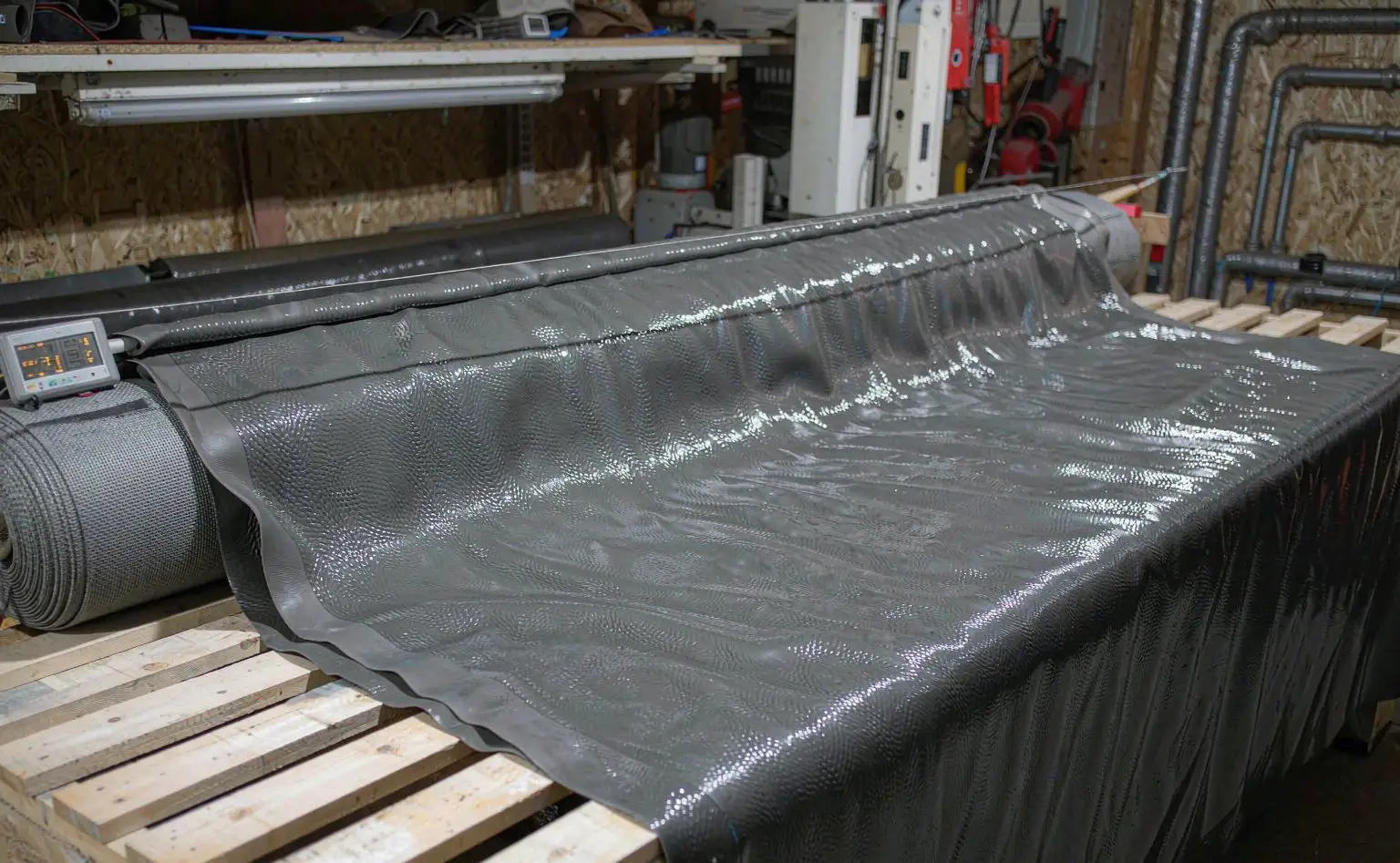
The bonding adhesive takes iHeir-JS glue mildew inhibitor at 1%-2% of glue weight. It is a liquid for waterborne systems with 45% active content, pH 6-7 and a viscosity of 3 cps at 25°C, fully miscible with water, so it stirs straight in with no extra solvent.
Add at make-up. Drip it in while stirring, mix 10-15 minutes, then add the hardener in a two-part system. Reverse that order and the hardener encapsulates the inhibitor, the distribution is uneven and half the sheet comes out treated.
Trial 5 kg first. Make up one batch at 1% and one at 2%, bond two test panels and run peel (in the manner of GB/T 7124) and tensile tests to GB/T 528, checking peel strength, cure time and how the film feels. The usual problems with an inhibitor in a waterborne adhesive are a slower cure and a tacky film, so prove it small before scaling.
Respect the pot life. Use each batch within its pot life and never top up the trough: the dose lands unevenly.
5. Inspection and packing
Do not shorten maturation. Let the laminate mature at least 24 hours before taping and sewing. Mature for less and water and solvent are still inside the laminate, sealed in for later.
Check three places. Seam tape, the lining edge at cuff and collar, and the inside of the zip. Those are the first to spot, so pull 3-5 pieces per batch, look at colour and smell, and keep a retention sample where there is any doubt.
Control the packing. Bag only dry goods, add a desiccant or an anti-mould sheet, seal the bag, keep damp trims out of the carton and hold the store below 60%RH; line the container for export and look at every collar before loading. The same glue-line logic is set out in the cycling jersey low-temperature route, and adhesive dosing in snowboard core soaking and top sheet gluing.
6. Questions from the line
Q: The lining is treated, does the glue still need the additive?
A: Yes. The lining covers the cloth, the glue covers the glue line, and with only one done the other fails first.
Q: What happens if we bond a sheet without drying it?
A: The water is sealed at the interface, peel strength drops first and the glue line moulds after. It does not show immediately, it shows a month into the sea freight.
Q: 1% or 2% in the glue?
A: Standard styles at 1%-1.5%; full-container export, long transit or an unstable shop at 2%. Set it by order cycle on the make-up card.
Q: A finished suit has spotted, can it be washed?
A: The surface cleans, but the laminate is already contaminated and it returns. Downgrade the batch rather than shipping it as first quality.
Four closing points: treat the lining in the dyehouse stenter with iHeir-BJ at 2%-3% o.w.f., pre-mixed into 9-13 times its volume of water, at 21-50°C and pH 6 in soft water, never with anionic auxiliaries, padded at 70%; dry neoprene until no free water sits on the face and the cut edge is no longer dark, holding the coating room at 45%-65%RH; add iHeir-JS at 1%-2% of glue weight at make-up, mix 10-15 minutes before the hardener and trial 5 kg at each level with peel and tensile panels; mature the laminate at least 24 hours, bag only dry suits with moisture control inside and hold the store below 60%RH. Performance can be verified to GB/T 24346 or ASTM G21, a one-kilogram sample can be sent ahead, and lead times are on the iHeir-JS product page.


