




 View Count:35
 Date:2026-10-24
How should a mouldy shirt be treated, and where does the mould actually start? At the collar and the cuffs, and a carton that spends one wet season in a warehouse comes back for rework. A top-up finish at the collar and cuffs with iHeir-BJ textile anti-mould agent at 2%-3% o.w.f., and 0.1-0.2g of iHeir-D per anti-mould sachet in the packing, close both ends. This article gives the bath conditions, the difference between flat-packed and hanging, and the rework order for shirts already spotted.
1. Mould on a shirt starts at the collar and the cuffs
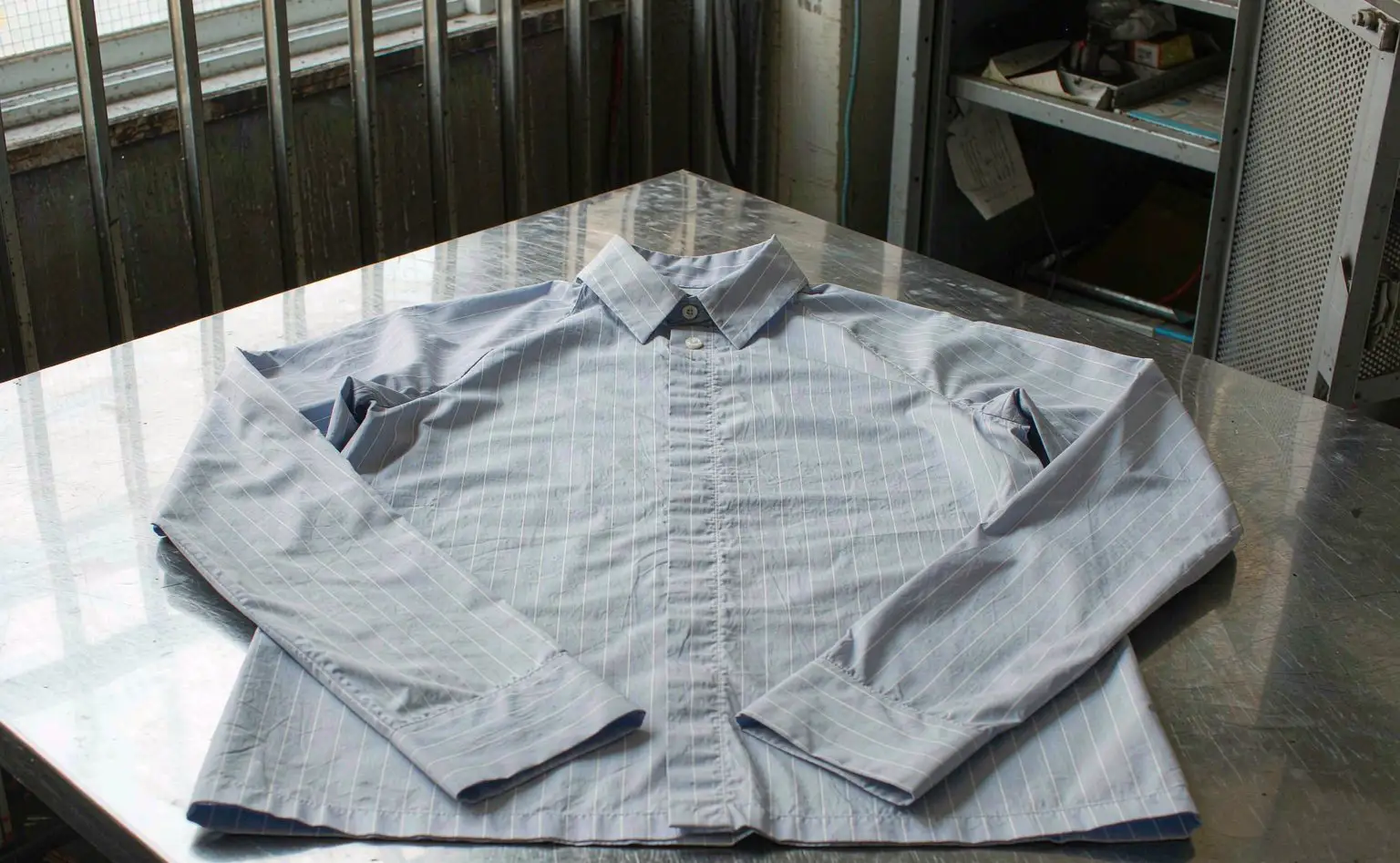
A shirt goes mouldy in patches. The fabric has been pre-treated throughout, yet spots always appear first inside the collar, along the cuff edge and at the hem: those two bands sit against the neck and wrists, where sweat, sebum and hair oil collect, and that soil is food for mould. If the shirt is not dried through, the water is locked in the interlining and the cuff fold as well.
The finish adds a second layer: most shirts get an easy-care or wrinkle-free finish, and the resin films the fibres so the cloth looks crisp and water gets out less easily. An under-dried shirt feels dry but still carries water in the interlining, and once stacked and bagged the humidity inside the bag climbs, so mould starts at the collar tips and cuff folds, first grey specks, then patches.
The third place is storage and shipping. Export shirts are flat-packed, dozens to a carton, and once on a pallet in a container nothing ventilates; over a month at sea the cartons take up and give off moisture, and the middle of the stack suffers while the outer shirts stay safe. So the treatment has two stages: a top-up at finishing, and a gas-phase layer in the packing.
2. Finishing stage and packing stage side by side
The table sets out material, product, level and stage for each; one is a wet process and one is dry storage, and the two bases are calculated differently.
| Location | Material | Product and level | Stage | Watch out for |
|---|---|---|---|---|
| Collar, cuffs | Cotton or poly-cotton, interlining | iHeir-BJ 2%-3% o.w.f. | Pad-dry in finishing | Never with anionic auxiliaries |
| Whole garment | As above | Same BJ, same band | Stenter trough | pH 4.5-8.5, soft water |
| Finished packing | Flat-packed or hanging | iHeir-D 0.1-0.2g per sachet | Bagging and cartoning | Seal the bag at once |
| Hardware and trims | Metal buttons, decorative studs | Compatibility test with D | Before packing | Test corrosion at 3x |
| Export stacking | Finished cartons | Desiccant plus container control | Cartoning and loading | No sealed shrink film |
Keep the two bases apart. Fabric dosage is on fabric weight (o.w.f.), and a 70% pick-up means only seven tenths of the fabric weight goes in as liquor; packing dosage is on grams of active per sachet, which follows the number of garments and the bag volume, not the fabric weight. The two cannot be converted into each other.
3. Collar and cuffs: a top-up finish at 2%-3% o.w.f.
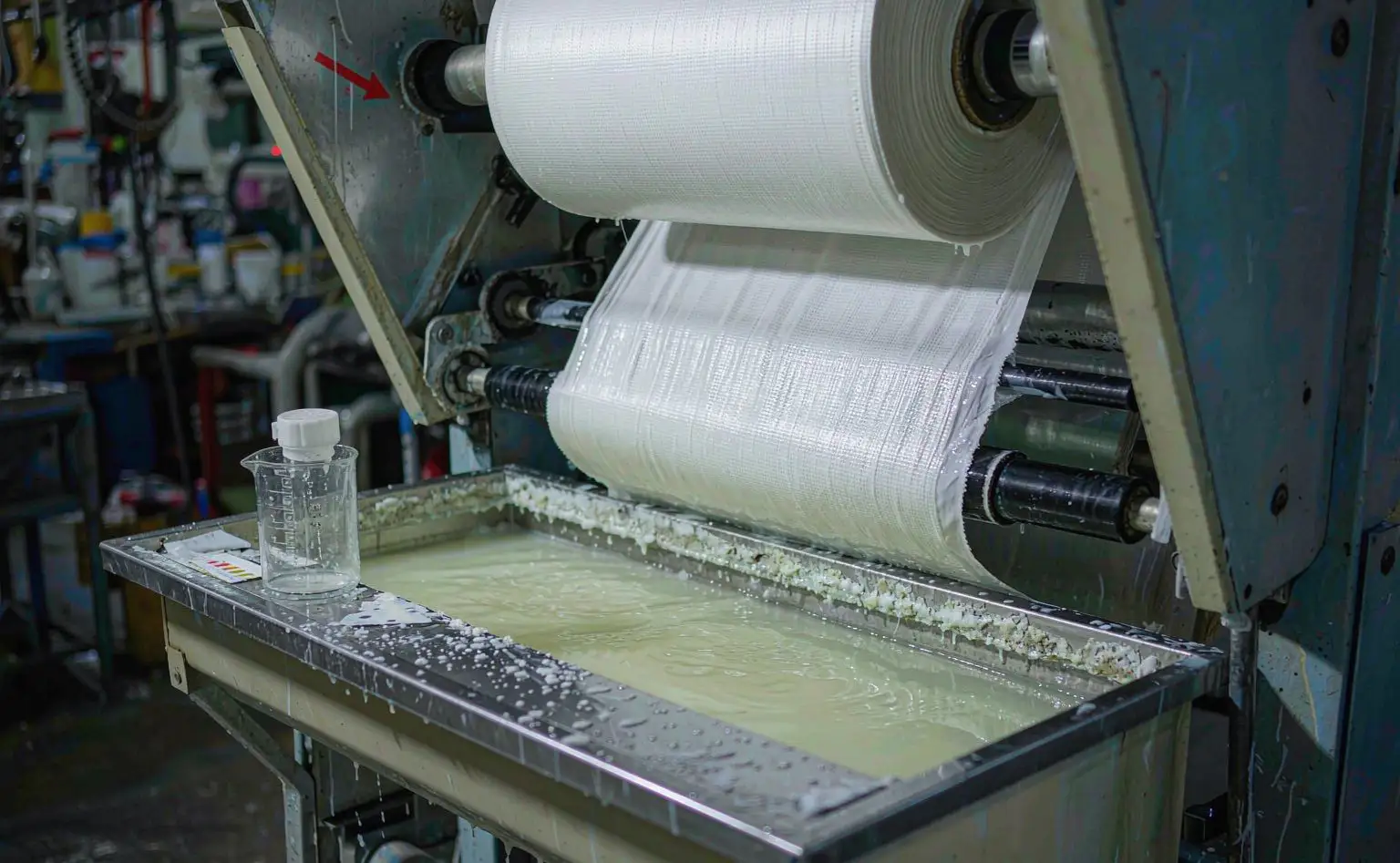
iHeir-BJ is applied by padding: 2%-3% o.w.f., bath at 21-50C, pH 4.5-8.5 (6 is ideal), soft water. One step is not optional: pre-mix the BJ with 9-13 times its volume of water and add it to the bath in portions, because neat concentrate poured in gels locally and prints patches on the cloth. Add 0.1% cationic wetting agent to the bath, 70g to 67kg of pure water.
The two levels match two service lives: 2% gives more than a year, 3% gives two to three years. Domestic styles that turn over fast run at 2%; export orders with a long sea leg run at 3%. Three kilos of BJ treats 100kg of fabric, so work the liquor volume back from fabric weight and the 70% pick-up rather than guessing a liquor ratio.
Three rules. Never in the same bath as an anionic auxiliary: BJ is cationic and the bath will precipitate, so check the ionic nature of softeners, wetting agents and antistats before they go in. Soft water only, since calcium and magnesium react with the agent. Keep the bath below pH 8.5. Drying decides the result: the face must be dry and so must the interlining, and the same rule is set out in how to choose a textile anti-mould agent.
4. Finished store and cartoning: 0.1-0.2g of iHeir-D per sachet
Packing uses iHeir-D gas-phase anti-mould agent, an anti-mould ink used to make treated paper and sachets, covering the gaps inside a bag or carton by vapour. The usual load is 0.1-0.2g per sheet or sachet, set by the environment and the space; solids are 70% plus or minus 5, packing is 25kg drums, kept closed, dry and dark with a one-year shelf life and used up once opened.
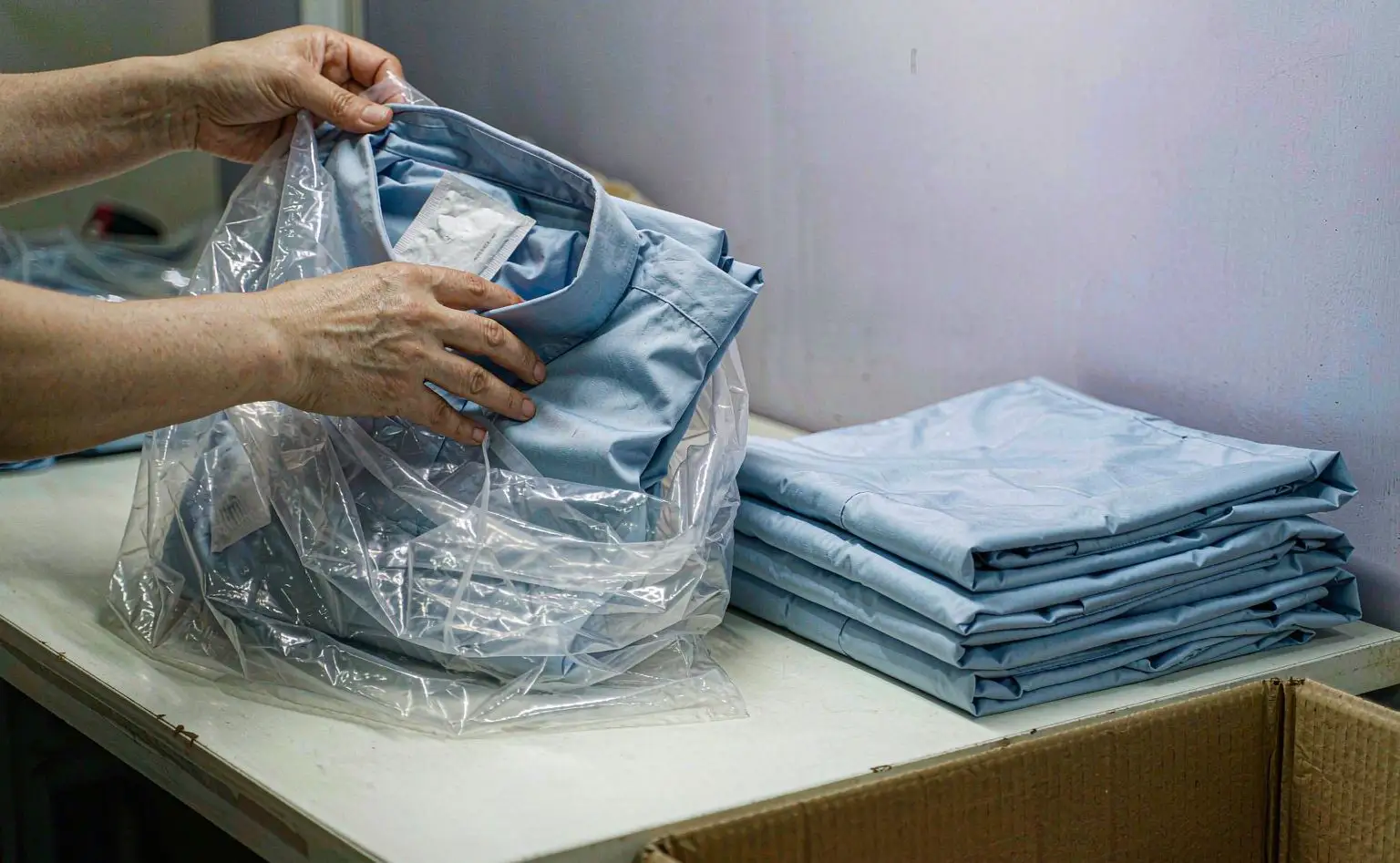
Placement follows the pack style. Flat-packed: one treated sheet between the folded shirts or at the bag opening, one per bag, with desiccant sized to the carton, and seal the bag immediately because an open bag vents the vapour into the shop. Hanging: hang a sachet on the rail every 10-15 garments and cover with a dust bag rather than a vacuum bag, which squeezes the vapour out.
One risk is easy to miss: metal buttons and studs. D can corrode poor-quality metal in damp conditions, so run a compatibility test at three times the normal load, sealed in damp heat and checked for discolouration, blackening and white rust. Gradings and sampling are covered in textile mould resistance grade GB/T 24346.
5. Shirts already spotted: grade first, then set the rework order
A spotted shirt is not automatically scrap; grade it first. Surface bloom, white specks only on the face, comes off with a soft brush and a mould remover and is invisible after washing, so it ships as first quality. Mould in the fibre, black dots that survive washing, is downgraded or dyed dark. Mould through the interlining, with a blistered, brittle collar and a musty smell, is scrap, because rework costs more than the cloth.
The order cannot be reversed: remove the mould, wash, dry, then re-apply the finish. Two mistakes cost the batch: applying the finish first, so the remover washes the fresh agent off, and bagging before the shirt is dry, which seals water into the interlining. Re-apply at 2%-3% as in section 3, at 3% for rework, since the fabric has been through one wet process already.
Keep rework in its own area and label it, never in the same stack as new goods, and pull 5% of the batch after bagging to check the collar tips, cuff folds and hem. Rework and whole-batch damp problems are set out in mouldy shirt returns and garment rework.
6. Questions we get: does the top-up affect handle or easy care
Does a top-up at the collar and cuffs stiffen the collar or kill the easy-care effect? At 2%-3% o.w.f. the effect on stiffness is limited; what stiffens a collar is resin load and pressing parameters. Trial three sets on the same fabric, at zero, 2% and 3%, with a handle panel and crease recovery angle together.
Can we skip the finish and rely on the sachets? No. A sachet works on the air inside the bag, not on the water held in the fibre; an export order sits in a container for a month, and a shirt with no finish of its own still spots when the bag is opened. Do both stages, and if the budget is tight take the finish from 3% to 2% rather than dropping it.
How is the result verified? Fabric runs to GB/T 24346 or AATCC 30 for a growth grade, sampling the treated collar cloth rather than greige; a finished shirt is bagged with a treated sheet and held at 30C and 85% RH for 14 days, then opened to check the collar tips and cuffs.


