




 View Count:31
 Date:2026-11-13
How should sports bottle mould be handled? First work out which part moulds: the inside wall of the body, the silicone gasket in the lid, and the damp air inside the colour box take three answers. Dose the body compound with iHeir-IPL inorganic plastic antimicrobial agent at 0.8%-1.0% at the pellet stage, where its 300°C heat resistance sits inside the moulding window; the gasket and nozzle cannot use it and need the silicone route. Each colour box takes one sheet of iHeir-D carrying 0.1-0.2 g. This article gives the dosing, process window and inspection basis.
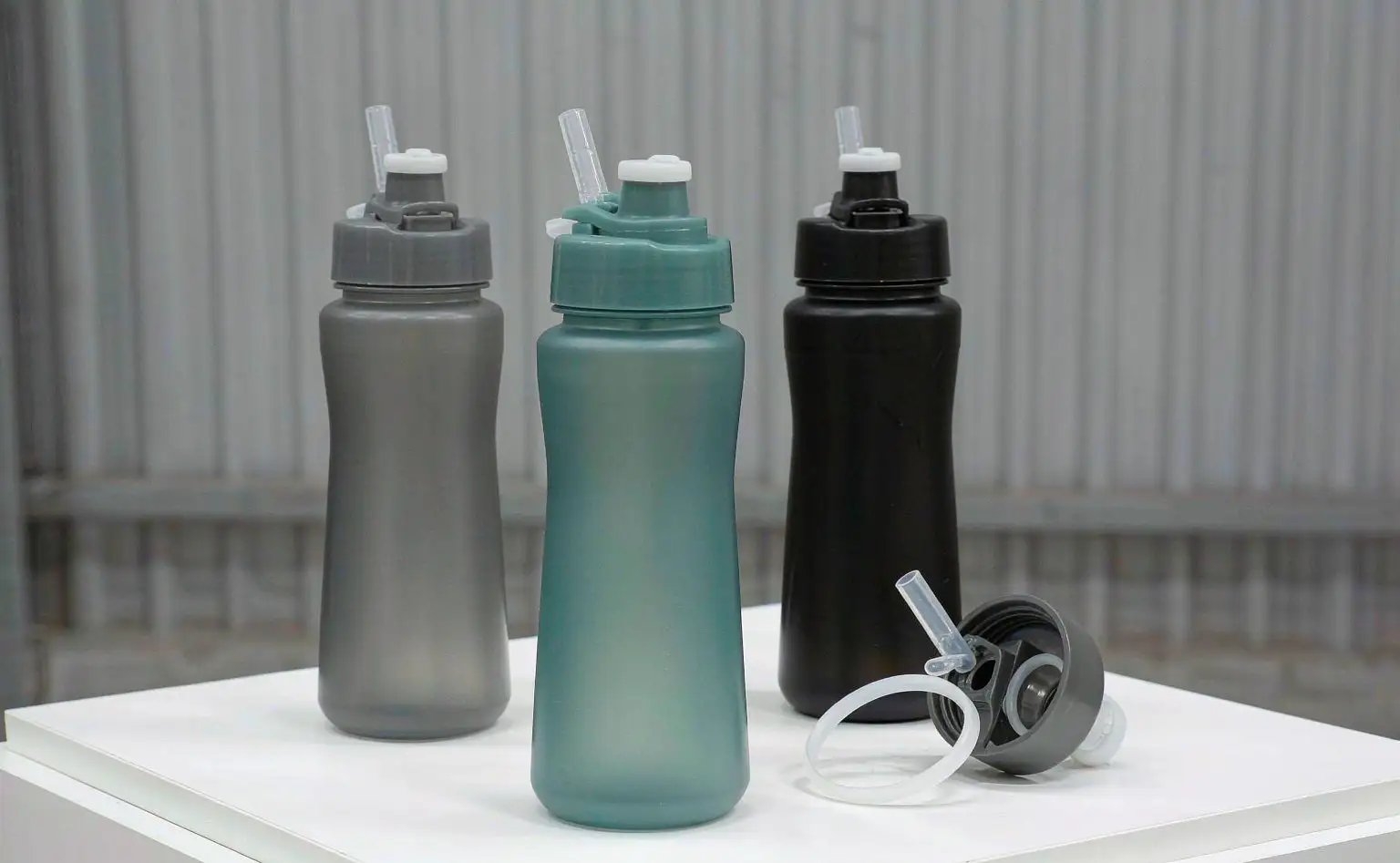
1. Three places bottle mould hides: inner wall, gasket gap, colour box
The build is simple: body (Tritan, PP or PC), lid, silicone gasket, nozzle or flip top, colour box. Water left inside the body, the gap between gasket and lid, and the damp air in the packed box are three independent paths.
The inner wall is a water problem. Preforms and bodies that are sleeved before they are blown dry keep that water inside, and plants that leak-test with water need to be stricter still: a bottle emptied halfway and boxed is a cup of water for the mould.
The gasket gap is the hardest to clean. The silicone gasket sits in a groove in the lid and only comes out for washing; sugar and protein from use, plus water in the thread, produce black spots within two or three days. This is where most complaints land.
The colour box is the long tail. Boxes are grey board wrapped in art paper, and the board takes up moisture. In a sea container the air inside warms and cools, water condenses on bottle and box wall, and growth starts at the bottom of the box.
2. The body compound: 0.8%-1.0% at the pellet stage
This stage uses iHeir-IPL inorganic plastic antimicrobial agent at 0.8%-1.0% of the finished part weight. It is a white powder with whiteness above 90, a mean particle size of 1-2 μm and a specific surface of 10-15 m²/g, and it works across a broad spectrum.
Where it goes. Into the compound at the pellet or mixing stage, blended with the resin into an antimicrobial masterbatch or dry-blended directly, then moulded or blown. Coating it onto the finished surface achieves nothing, because the powder never enters the matrix and washes off in two rinses.
Why this grade. iHeir-IPL withstands 300°C and survives processing at 300-320°C, while Tritan moulds at 260-290°C and PP at 200-230°C, so the window has room. On colour it is a white powder above 90 whiteness, which keeps shade drift small on light and transparent parts.
Setting the level. Start standard styles at 0.8% and use 1.0% for thick walls and tight appearance specs. Run a 25 kg batch first and check dispersion, shade and antimicrobial result before scaling.
| Part | Material | Product and level | Stage | Control point |
|---|---|---|---|---|
| Body | Tritan, PP | iHeir-IPL 0.8%-1.0% | Pellet or mixing | Even dispersion, shade checked |
| Lid | PP, Tritan | Same compound, same batch | Moulding | Dosed with the body |
| Silicone gasket, nozzle | Food-grade silicone | Separate silicone route | Post-cure after moulding | Dried, moisture checked |
| Colour box | Grey board, art paper | iHeir-D 0.1-0.2 g per sheet | Packing | Box dry, sheet off the bottle |
One boundary. iHeir-IPL covers the plastic matrix and stays there; the sheet covers the closed space in the box; silicone is a third material and has to be treated on its own. Mix the three up and the usual result is a treated body with an untreated gasket, and the complaints keep coming.
3. The moulding and blowing window
Temperature is not the constraint. iHeir-IPL withstands 300°C and Tritan runs at 260-290°C while PP runs at 200-230°C, so both sit inside the window. Watch the residence time instead: a high regrind ratio and long stoppages can still overheat a zone and agglomerate the powder.
Dispersion matters more than the dose. Inorganic powder dry-blended tends to clump, so a masterbatch diluted at the machine is steadier. Cut three sample points at inspection and look for white specks, which mean the batch never mixed through.
Colour and clarity. A powder above 90 whiteness has little effect on light colours, but clear parts need a haze check: run a trial on transparent styles and confirm transmission before fixing the level.
Food-contact compliance. A bottle is a food-contact article, so the finished part has to be tested to GB 4806.7 for migration and organoleptics, and for the destination market on export. Test the finished article, never substitute a raw-material report.
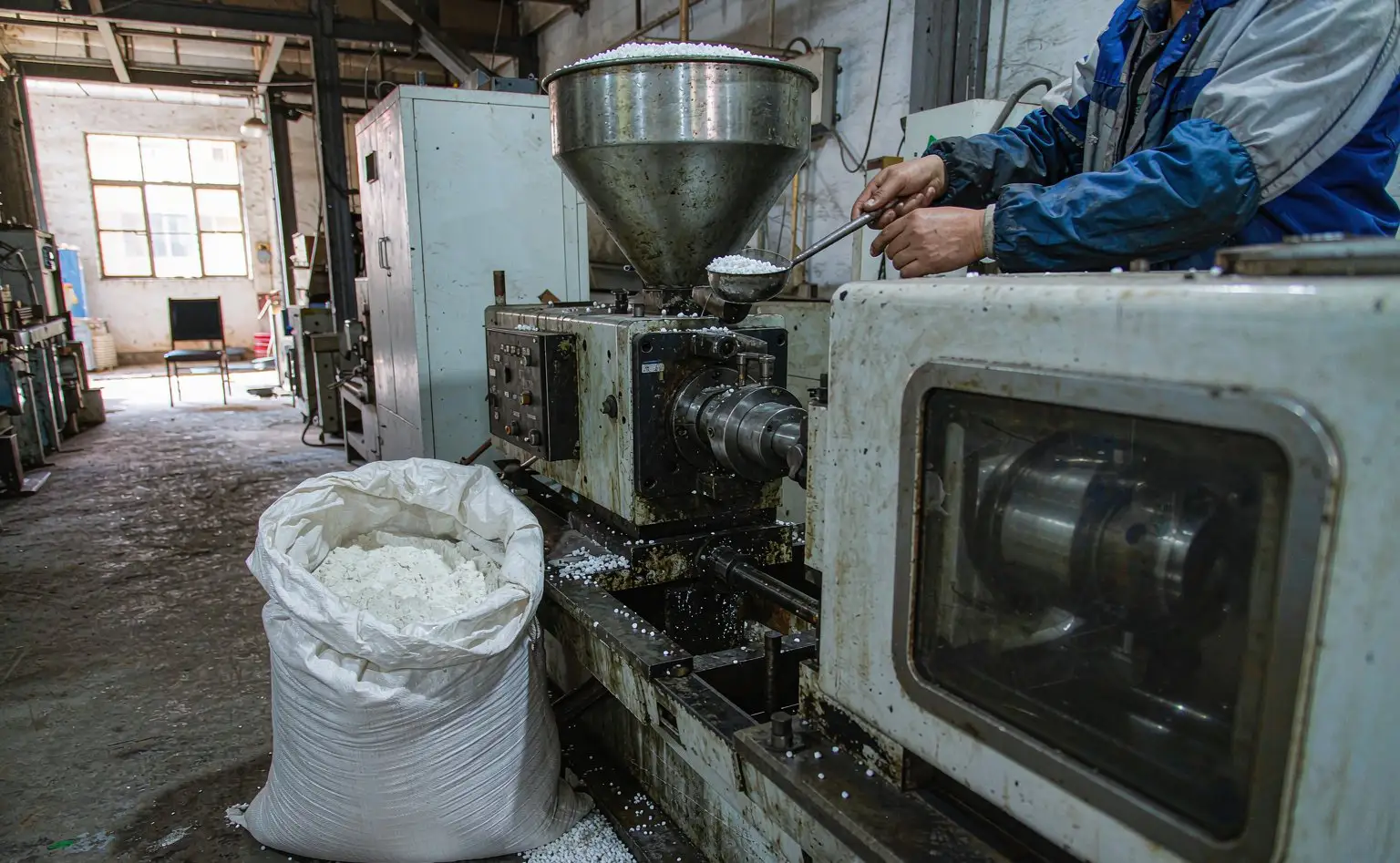
4. The silicone gasket and nozzle: a separate line
Silicone parts cannot use iHeir-IPL. It is an inorganic powder designed for a plastic matrix, it disperses poorly in silicone and can bloom after curing. Silicone runs on its own antimicrobial paste, and this article only sets out the process and inspection basis, with the grade chosen separately for the silicone part.
Add at the compounding stage. A silicone antimicrobial paste goes in during mixing, stirred through before moulding, which is not the same as pellet blending in plastics. The level is counted on the silicone weight and follows the datasheet of the grade chosen.
Post-cure properly. Moulded gaskets get a post-cure to drive off volatiles; an under-cured gasket smells, and fitted to a lid it becomes a permanent odour source.
Check moisture before assembly. Weigh-check gaskets and nozzles by batch after drying and put them on the line only on spec. No misting at the station and dry gloves are the two rules most often broken.
5. Assembly, leak testing and colour boxes
Empty the test water. Plants that leak-test with water have to empty and blow out every bottle before assembly; water left in a bottle overnight is the start of the next mould batch.
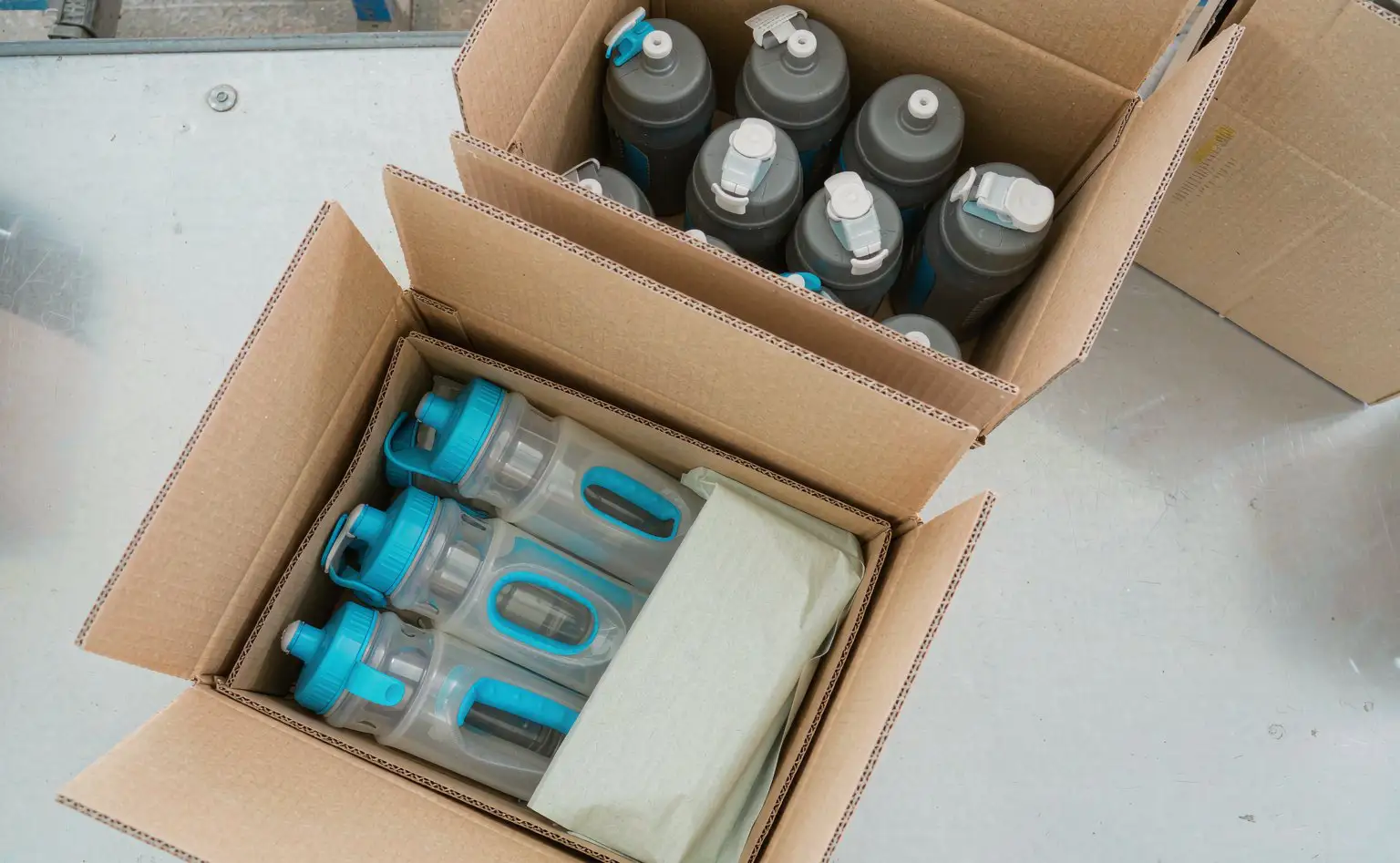
Sheet in the box. Put one iHeir-D sheet at 0.1-0.2 g in each box, tucked to one side rather than against the bottle, and make sure the lid closes properly, since an open box simply vents the active.
Storage and export. Hold the finished store below 60%RH with cartons off the floor and wall, line the container for export and open a few boxes to smell them before loading. The same plastic-plus-packing logic is in lunch box body and inner lid dosing, and silicone with sheets in swim goggle straps and case sheets.
6. Questions from the line
Q: The body is dosed, can we leave the gasket alone?
A: No. Silicone and plastic are different materials, the body product does not enter silicone, and the gasket needs its own treatment.
Q: How much difference is there between 0.8% and 1.0%?
A: A quarter more additive. Standard styles are covered at 0.8%; thick walls, tight appearance specs or a customer-specified grade go to 1.0%, set by part type on the process card.
Q: Does the additive affect clarity?
A: A white powder adds haze on clear parts. Trial transparent styles first, measure transmission, then fix the level and the grade.
Q: Does the water from leak testing really matter?
A: It does. Water in the bottle plus a closed box is a constant-humidity chamber, and the smell arrives in two or three days.
Four closing points: dose body and lid compound with iHeir-IPL at 0.8%-1.0% through a masterbatch at the pellet stage, mould Tritan at 260-290°C and PP at 200-230°C, and check dispersion and shade; run the silicone gasket and nozzle on the silicone paste route, added at compounding, post-cured, dried and moisture-checked before assembly; empty and blow out every leak-tested bottle, put one iHeir-D sheet at 0.1-0.2 g in each colour box and close the lid; hold the store below 60%RH and line the export container. Antimicrobial performance can be verified to GB/T 20944.3 or ISO 22196, food-contact compliance to GB 4806.7 on the finished article, a one-kilogram sample can be sent ahead, and lead times are on the iHeir-IPL product page.


